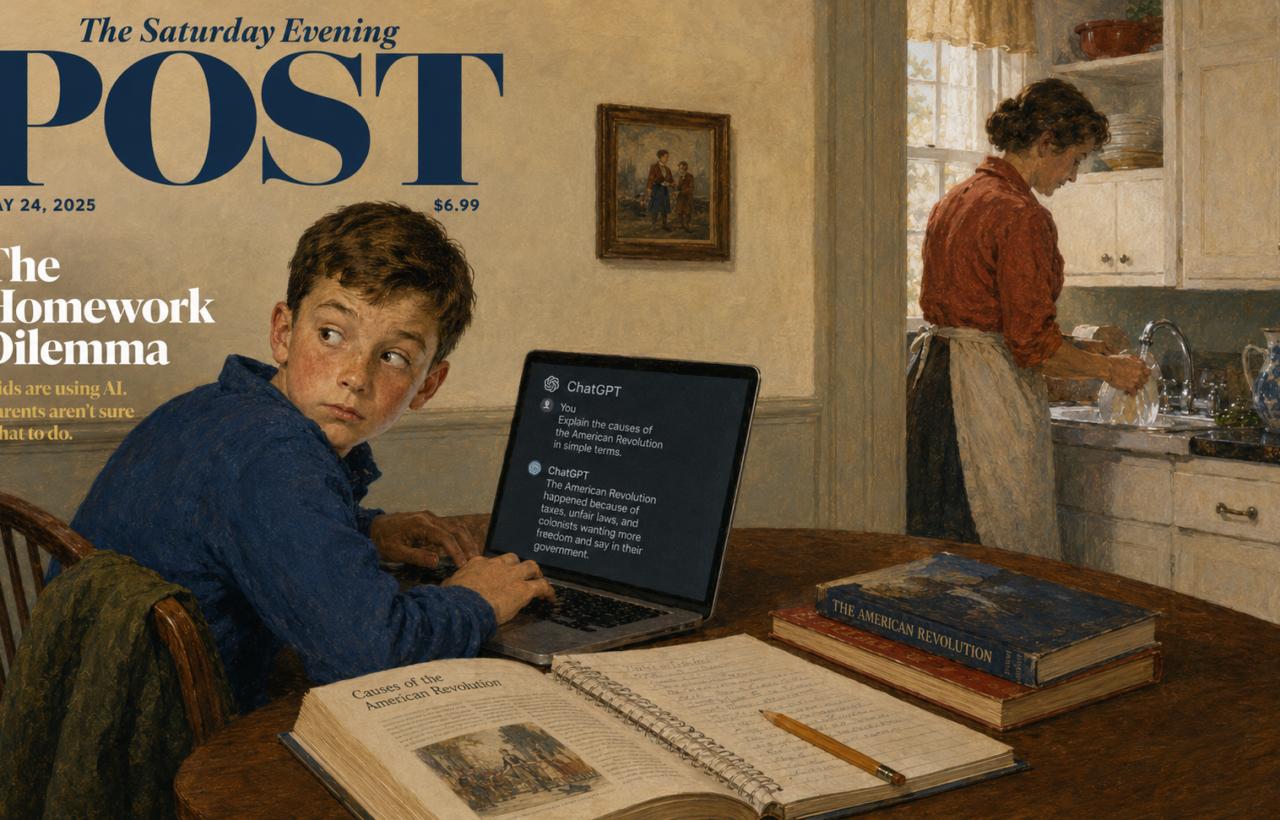
AI tools have changed the homework conversation for families. The concern is no longer only whether a child copied from a classmate or searched for an answer online, but whether they used a chatbot or writing tool to do thinking that was supposed to be their own.
Kars4Kids Parenting frames the issue plainly: kids are using AI to complete schoolwork, and parents may underestimate how common academic shortcuts can be. The available source excerpt is brief, so the most useful approach is to focus on what parents can ask, clarify, and watch for without assuming the worst about every child.
Why AI Cheating Feels Different
Traditional cheating often leaves a visible trail: identical answers, copied passages, shared test notes, or suspiciously perfect work. AI use can be harder to spot because the output may look original, fluent, and tailored to the assignment. That makes the parent role less about catching a single act and more about helping a child understand where assistance ends and misrepresentation begins.
There is also a gray area. A student might use AI to brainstorm essay topics, explain a confusing concept, summarize their own notes, or polish grammar. Those uses can be meaningfully different from asking a tool to write the assignment. The ethical question is whether the student is still doing the learning the teacher intended to measure.

What The Source Actually Reports
According to Kars4Kids Parenting, the issue sits against a longer history of student dishonesty. The excerpt cites a survey of 700,000 high school students conducted between 2002 and 2015, saying 95% admitted to some form of academic dishonesty or cheating-related behavior. Because the supplied source text cuts off mid-sentence, that statistic should be treated as reported context from the source, not as a complete independent finding.
The important takeaway for parents is not that every child is trying to deceive adults. It is that academic pressure, convenience, and unclear rules have always created temptation. AI simply makes the shortcut faster, cleaner, and easier to rationalize.
Key Takeaways For Parents
- AI use is not automatically cheating; the line depends on the assignment, the teacher’s rules, and how much thinking the student outsourced.
- A calm conversation is usually more useful than a surprise interrogation, especially when school policies are still evolving.
- Parents should ask about process, not just finished grades: notes, drafts, sources, revisions, and what the child can explain in their own words.
- The goal is to build judgment, because children will keep encountering AI tools in school, work, and daily life.
Questions That Reveal More Than Accusations
A parent does not need to become an AI detector. In fact, detection tools can be unreliable and can turn a learning problem into a trust problem. Better questions focus on the student’s choices and understanding.
- What did the teacher say is allowed for this assignment?
- Did you use any tools to brainstorm, outline, edit, calculate, translate, or write?
- Which parts are fully yours, and which parts came from a tool?
- Can you explain the main idea without looking at the final answer?
- What would you do differently if the teacher asked for your drafts?
These questions avoid treating the child as guilty by default. They also teach a practical habit: being able to describe how work was produced. That habit matters whether the student is using AI, a tutor, a parent, a grammar checker, or a study group.
How To Set Household Rules That Match School Rules
Families can reduce confusion by making AI expectations explicit before there is a problem. A workable rule does not have to ban every tool. It can separate support from substitution.
- Allowed: asking for a simpler explanation of a concept, generating practice questions, checking grammar after a draft is written, or organizing study notes.
- Ask first: using AI to outline an essay, rephrase large sections, solve multi-step homework, or translate work for submission.
- Not allowed: submitting AI-generated writing, answers, code, or analysis as if the student created it independently.
Parents should also encourage children to follow the teacher’s disclosure rules. If a class has no clear policy, the safest default is transparency: the student can say what tool was used and what it was used for. That shifts the focus from secrecy to accountability.
What To Watch For Without Overreacting
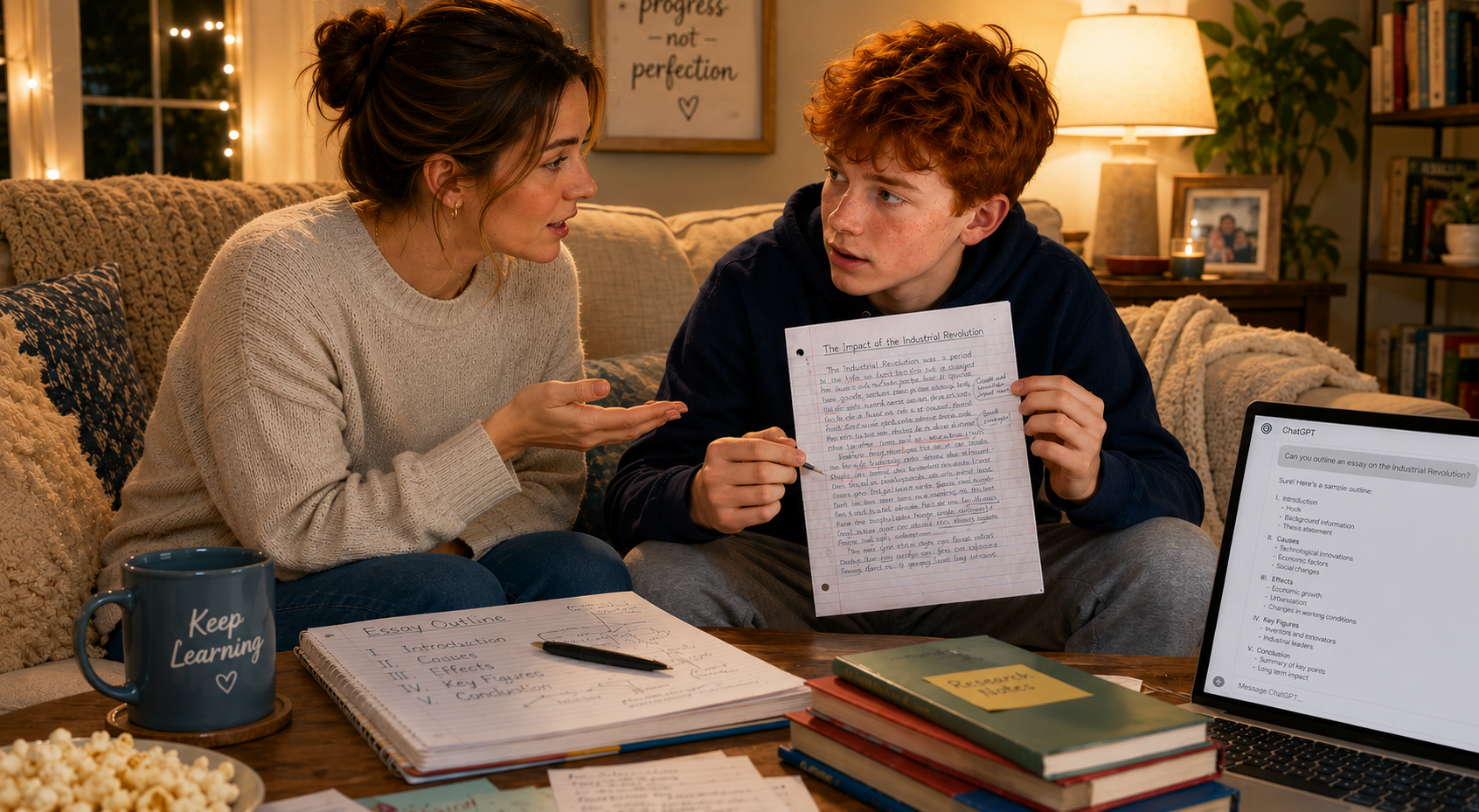
Some warning signs are practical rather than dramatic: a child cannot explain vocabulary in their own assignment, the work is far more polished than usual, drafts are missing, or answers appear instantly after a difficult prompt. None of these proves cheating on its own. They are reasons to slow down and ask about the process.
The stronger long-term response is to connect integrity with learning. If AI completes the assignment, the grade may improve while the skill stays weak. Parents can make that tradeoff visible by asking what the child is supposed to practice: argument, reading comprehension, calculation, research, revision, or problem solving.
AI is likely to remain part of school life, so the parenting task is not only enforcement. It is helping children develop the judgment to use powerful tools honestly, disclose them when required, and still do the hard work that builds real competence.
Inspired by this post on Kars4Kids Parenting.