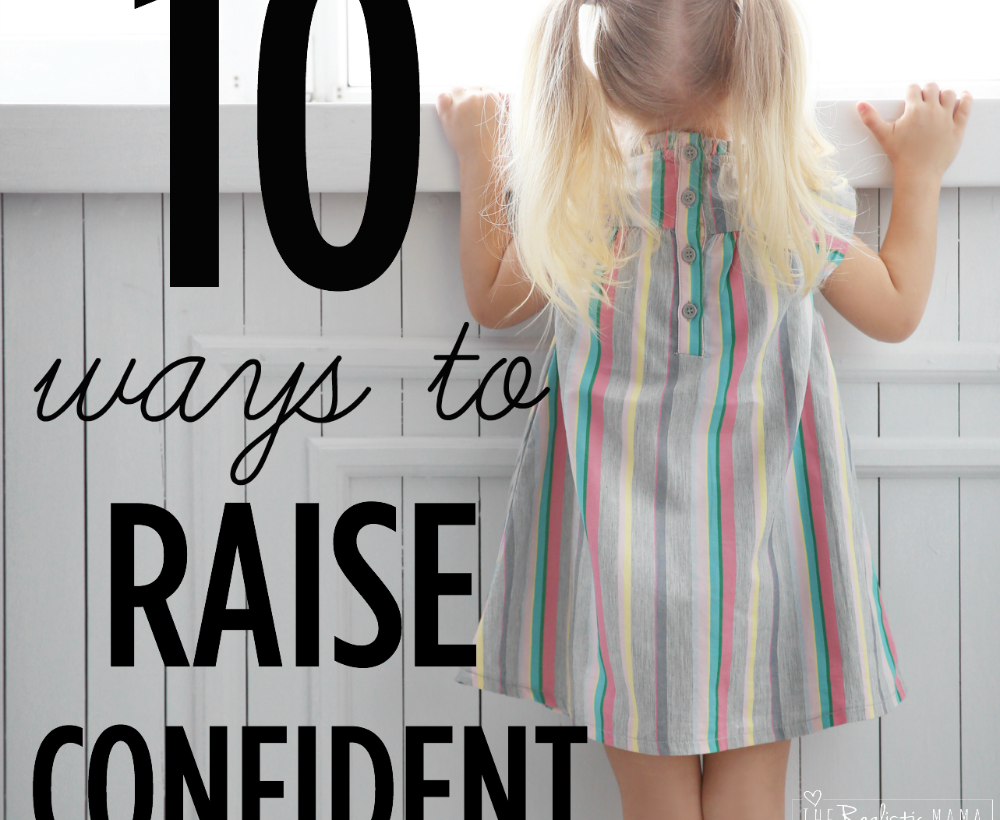
Confidence in children is often built in ordinary moments: trying something new, making a choice, solving a small problem, or imagining a different way to play. The Realistic Mama frames the topic as a practical parenting question, offering ideas for cultivating confidence at home.
The available source excerpt is brief, so the details that can be attributed are limited. It says the original article shares 10 ideas and begins with encouraging exploration and imagination. The guidance below uses that reported starting point, then adds general parenting context without claiming extra specifics from the source.
What The Realistic Mama Reports
According to The Realistic Mama, the article is written from a parent-to-parent perspective and focuses on fun ways to continue building a child’s confidence. The excerpt specifically names exploration and imagination as the first idea.
That framing matters because confidence is not only about praise or outward boldness. In family life, it often shows up as a child’s willingness to try, ask questions, make mistakes, recover, and keep participating. A child who feels safe exploring is more likely to see effort as part of learning rather than proof that they are failing.
Why Exploration Helps Confidence
Exploration gives children practice with decision-making. When a child builds a pretend store, invents a story, mixes art materials, or investigates how a toy works, they are doing more than staying busy. They are testing ideas, noticing results, and learning that their choices can shape an outcome.

For parents, the useful shift is to see some unstructured play as confidence work. The goal is not to make every activity educational or impressive. The goal is to create enough room for a child to initiate, experiment, and feel ownership over the process.
How Parents Can Support Without Taking Over
A common tension is that adults want to help, but too much correcting can quietly remove the child’s sense of agency. Support works best when it gives structure without controlling every move.
- Offer choices that are real but manageable, such as which activity to start with or which materials to use.
- Ask open questions before giving instructions, especially when a child is problem-solving.
- Let harmless mistakes stand long enough for the child to notice and adjust.
- Comment on effort, strategy, curiosity, and persistence instead of only praising the final result.
- Keep expectations age-appropriate so confidence is built through reachable challenges.
This does not mean children should be left without guidance. Boundaries, safety rules, and routines still matter. The confidence-building piece is allowing space inside those boundaries for the child to participate actively rather than simply follow directions.
Key Takeaways
- The Realistic Mama identifies exploration and imagination as one route to cultivating confidence in children.
- Confidence grows when children get repeated chances to try, choose, adjust, and keep going.
- Parents can help by creating safe opportunities for independence instead of stepping in too quickly.
- Encouragement is most useful when it notices process, effort, and problem-solving, not only success.
A Simple Way To Apply It At Home
One practical approach is to choose a small window of the day where the child leads. It could be a pretend-play setup, a craft tray, a backyard search, a block-building challenge, or a story made from household objects. The parent can stay nearby, provide safe materials, and resist the urge to make the play look a certain way.
If the child gets stuck, a prompt such as “What do you want to try next?” keeps ownership with them. If frustration appears, the adult can acknowledge it and help break the task into smaller steps. That balance of warmth, patience, and space is often where confidence has room to grow.
The source presents confidence as something families can keep practicing, not a trait children either have or lack. That is the most useful lens: everyday chances to explore, imagine, and recover can become quiet building blocks for a more self-assured child.
Inspired by this post on The realistic mama.