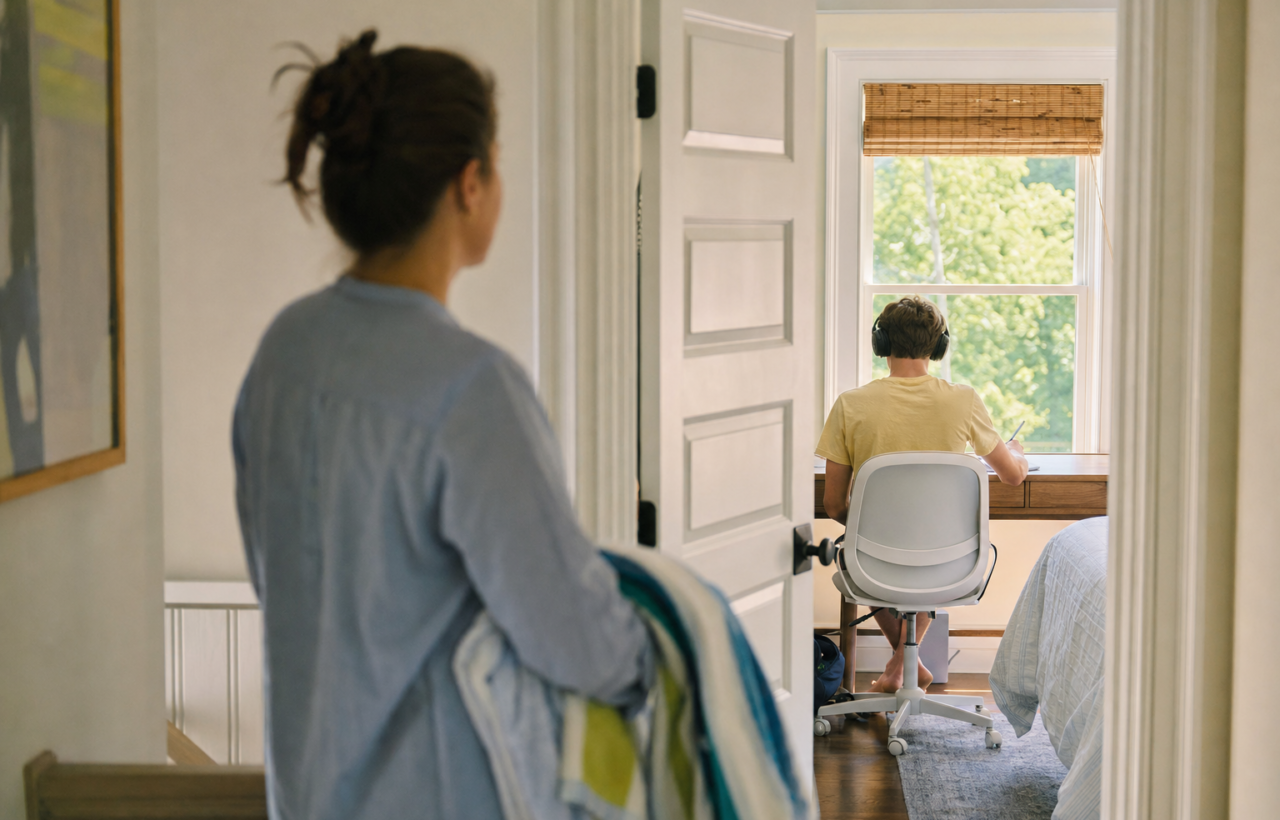
Parents reports that a mom on TikTok captured a feeling many families recognize: older kids spending much of summer in their rooms while a parent wonders whether they should be doing more.
With only a brief source summary available, the useful question is not whether every teen bedroom day is good or bad. It is how parents can separate normal summer independence from patterns that deserve a closer look.
Why Teen Summer Can Trigger Parent Guilt
Summer is often imagined as a season of family outings, outdoor time, camps, trips, and shared memories. That picture fits younger children more easily than teenagers, who may want more privacy, more control over their schedules, and more time with their own interests.
According to Parents, the TikTok post resonated because the parent was not describing a dramatic crisis. She was describing a quieter mismatch: a parent expecting summer to look active and connected, and teens choosing their rooms instead.
That mismatch can make parents feel as if they are failing, even when the situation may simply reflect a developmental shift. Teenagers often need more autonomy than younger kids, and parents may need to adjust from directing the day to staying available around the edges.
Room Time Is Not Automatically a Problem
A teen being in their room does not, by itself, tell the whole story. The concern depends on what else is happening around it: whether they are sleeping normally, eating, communicating, seeing friends in some form, keeping up with responsibilities, and showing interest in anything beyond isolation.
This is where parents can move from guilt to observation. Instead of treating every closed door as evidence of a wasted summer, it helps to look for patterns. A teen who wants downtime after a demanding school year may need space. A teen who seems withdrawn from almost everything may need more support.
Key Takeaways for Parents
- Parents reported on a TikTok mom whose older kids were spending summer in their rooms, leaving her feeling guilty.
- Teen privacy and downtime can be normal, especially when parents are used to planning more of the day.
- The better question is not how many hours a teen spends in a room, but whether their overall pattern seems healthy.
- Low-pressure connection often works better than guilt-driven demands for constant family time.
How to Respond Without Turning It Into a Battle
Parents do not have to ignore the issue, but the first move does not need to be a lecture. A calmer approach is to create a small amount of structure while leaving room for independence.
- Set a few basic expectations, such as meals, chores, sleep routines, or getting outside when possible.
- Offer specific invitations instead of vague pressure, such as asking a teen to join a short errand, walk, or casual meal.
- Keep check-ins brief and non-accusatory: ask how they are doing before asking why they are in their room.
- Look for changes in mood, functioning, or connection rather than focusing only on location.
The goal is not to make summer look like childhood again. It is to keep a relationship open while teens practice having more say over their time.
When Guilt Can Become Useful Information
Guilt is uncomfortable, but it can point to a real parenting question: is this guilt about a teen’s actual needs, or about a parent’s picture of what summer should look like?
If the answer is mostly expectation, parents may be able to loosen their grip. If the answer is concern, they can respond with curiosity and consistency. That might mean asking more direct questions, creating predictable family touchpoints, or seeking professional guidance if a teen seems persistently distressed or disconnected.
The Parents piece highlights a common summer feeling, but the practical takeaway is broader: teen independence can look quiet, messy, and different from the summers parents remember. The work is to stay connected without measuring good parenting by how often everyone leaves the house together.
Inspired by this post on Parents.