
Good sportsmanship is not a speech parents give once after a bad loss. It is a pattern children absorb from the leagues they play in, the adults around them, and the way wins and mistakes are handled after the game.
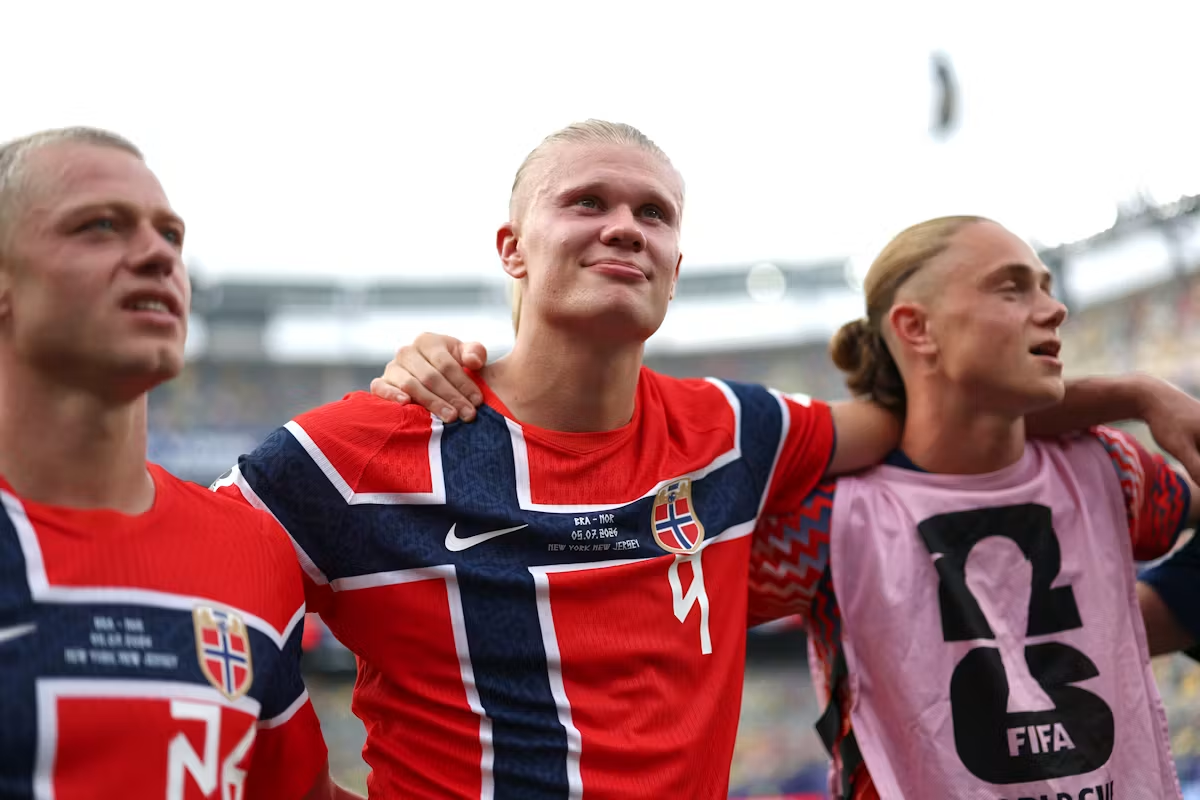
Scary Mom used the 2026 World Cup attention around Norwegian footballer Erling Braut Haaland as a starting point for that conversation, pointing to clips of him helping opponents up, acting lighthearted on the field, and showing respect to support staff. The useful question for parents is not how to produce a star athlete. It is how to make respect feel normal in youth sports.
Sportsmanship Starts Before The Score Matters
Children learn what adults reward. If the only moments that get attention are goals, medals, standings, and scholarships, it is hard for a child to believe that kindness on the field matters just as much.
According to Scary Mom, youth sports can feel unusually intense even though only 2% of youth athletes receive a scholarship. That statistic matters because it challenges a common family tradeoff: treating every practice like a high-stakes audition can crowd out the social and emotional benefits that make sports valuable for most children in the first place.
Sportsmanship is not the opposite of competitiveness. A child can want to win and still learn to shake hands, respect officials, thank volunteers, and avoid humiliating another player. The point is to teach children that performance and character are not separate tracks.
What Norway’s Youth Sports Model Highlights
Scary Mom links Haaland’s public image, at least in part, to Norway’s wider approach to youth sports. The source notes that Norway follows a document called Children’s Rights in Sports, which emphasizes the joy of playing and allows children to opt out of competing or playing games. Scary Mom also reports that scores are not kept until children reach age 13.
Madison Gates, vice president of marketing at i9 Sports, told Scary Mom that this kind of foundation does not require expensive travel leagues, constant weekend commitments, or playing five days a week. Her point was that sports can help children develop who they are on and off the field, including habits such as encouraging teammates and helping someone up.
For parents, the broader lesson is practical: a child’s sports environment shapes what they think sport is for. A league that treats fun, inclusion, and teamwork as real goals gives parents more support when they try to reinforce those same values at home.
How To Choose A League That Reinforces Respect
The most helpful sportsmanship lesson may happen before registration. Gates told Scary Mom that parents who want this kind of environment should look for leagues that include all children, avoid tryouts, and put enthusiasm and teamwork alongside skill development.
A sportsmanship award can be a meaningful signal because it shows the league notices behavior beyond the scoreboard. So can policies that make participation feel accessible rather than reserved only for children already performing at a high level.
That does not mean every child needs a low-commitment league forever. Some children thrive in more competitive settings. But parents can still ask what the adults in charge praise, how coaches respond to mistakes, whether every child has a role, and whether winning is treated as the only acceptable outcome.
Key Takeaways For Parents
- Model the behavior you want your child to copy, especially when referees, coaches, and other parents are frustrating.
- Choose leagues that make room for inclusion, teamwork, and enjoyment, not only rankings and trophies.
- Praise respectful moments as clearly as athletic ones, including helping opponents and thanking volunteers.
- Let coaches handle most skill correction while parents focus on connection, effort, and learning.
- Keep perspective: according to Scary Mom, only 2% of youth athletes receive a scholarship.
The Car Ride Home Is Not A Coaching Clinic
One of the clearest pieces of advice in Scary Mom’s reporting is about the ride home. Gates said parents should not use that time mainly to coach. They should parent.
That changes the questions adults ask. Instead of starting with missed shots, poor positioning, or what the child should have done differently, parents can ask what felt exciting, what they learned, or when they felt like a good teammate. They can also say plainly that they enjoyed watching their child play.
This does not require ignoring effort or mistakes. A child can reflect on an error without feeling like the entire game has become a performance review. The difference is tone: curiosity teaches more than a lecture, especially when a child is tired, disappointed, or still full of adrenaline.
Celebrate The Character Moments Out Loud
Parents usually know how to celebrate a goal. Sportsmanship grows when they become just as quick to notice the quieter moments: a child checking on an injured player, congratulating a teammate, accepting a loss without blaming everyone else, or showing respect to the adults who keep the game running.
Children will not handle every win or loss gracefully. Scary Mom notes Gates’ view that kids may struggle with losing well or staying humble when they win. That is part of learning, not proof that the lesson has failed.
The practical aim is consistency. When parents treat sports as a place to connect, practice effort, and learn respect, children get a clearer message than any single post-game talk can deliver.
Inspired by this post on Scary Mom.