
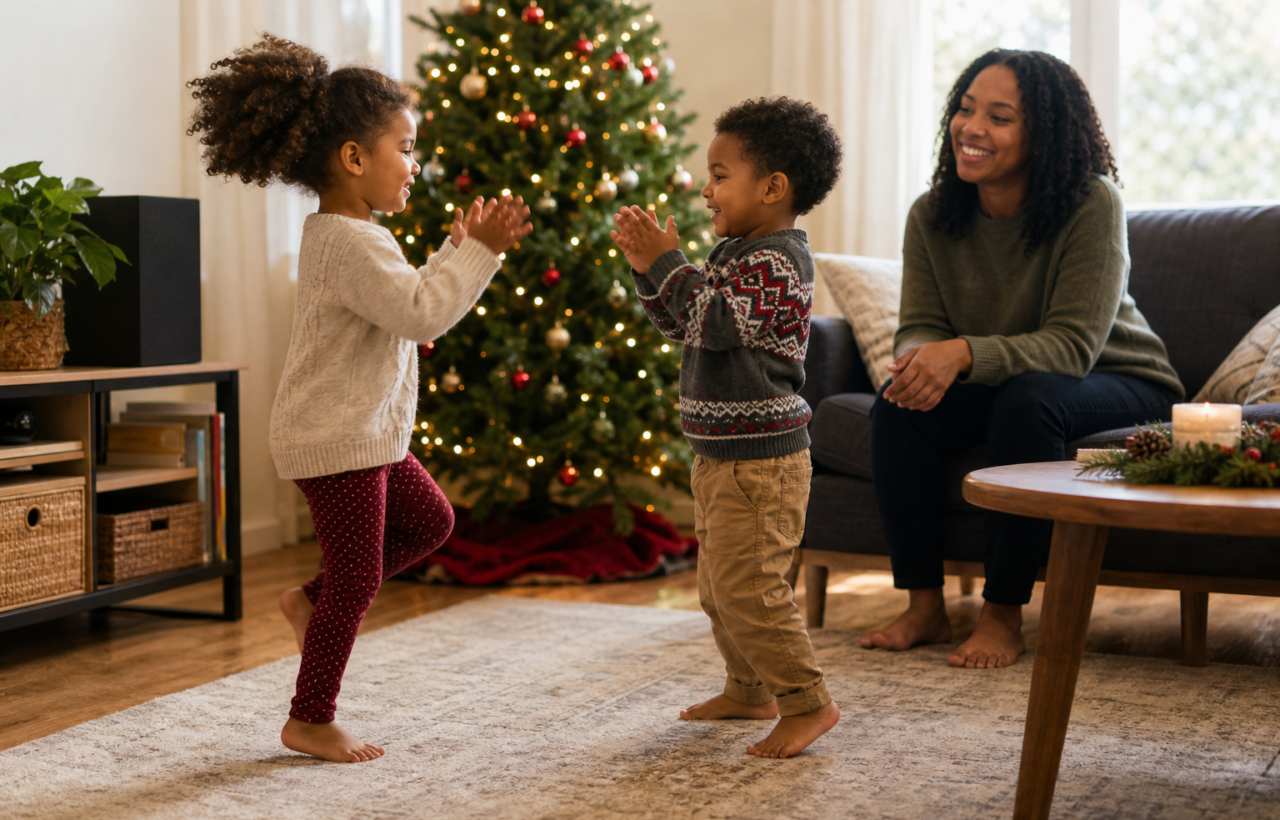
A holiday playlist can do more than fill the room with background noise. Used thoughtfully, Christmas songs can give kids a way to move, sing, participate, and burn off seasonal excitement without turning the day into a performance.
Parents describes its source article as a collection of 50 fun and festive Christmas songs for children to dance and sing along to. Because the available source material does not name the tracks, the useful takeaway here is how families can use a kid-focused Christmas song list well: as a flexible tool for movement, connection, and easier holiday moments.
What Parents Reports About The Song List
The article from Parents is presented as a roundup of Christmas songs intended for kids, with an emphasis on singing, dancing, and whole-family enjoyment. That framing matters because it points to a specific kind of holiday music use: not quiet background ambience, but songs children can actively respond to.
The source summary is brief, so it should not be treated as a complete playlist guide, a ranked list, or a music-review piece based on the material available here. What can be said fairly is that Parents positions the songs as family-friendly options for festive participation.
Why Music Works Well During Busy Holiday Days
For many families, the holidays include long indoor stretches, extra visitors, disrupted routines, and children who are excited long before any official celebration begins. A short music break can create a shared activity without requiring setup, cleanup, or special supplies.
Christmas songs are especially useful because they are easy to pair with simple actions. Kids can clap, march, freeze-dance, act out lyrics in broad gestures, or take turns choosing the next song. The point is not to curate a perfect soundtrack; it is to give children a clear, joyful thing to do with their energy.
How To Use A Kids’ Christmas Playlist At Home
A long song list is most helpful when parents treat it as a menu rather than a program. Instead of playing everything in order, choose a few songs for the moment in front of you.
- For high-energy moments, pick songs that invite dancing, marching, or big movements.
- For transitions, use one or two familiar songs before leaving the house, starting dinner, or winding down an activity.
- For family gatherings, choose songs that let toddlers, older kids, and adults participate without needing to know every word.
- For quiet time, lower the volume and shift from dancing to humming, swaying, or listening together.
This approach also keeps the playlist from becoming overwhelming. Children often enjoy repetition, while adults may prefer variety. Rotating a small set of songs can satisfy both needs better than running through a full list every time.
Key Takeaways
- Parents frames its article as a 50-song Christmas roundup for kids to sing and dance to.
- The available source material supports the idea of a family-friendly holiday music list, but it does not provide individual song names here.
- A kids’ Christmas playlist works best when matched to the moment: movement, transition, gathering, or calm time.
- Families do not need a perfect playlist to make music useful; a few well-timed songs can change the mood of a busy day.
Keep The Activity Simple
The most practical way to use a Christmas song roundup is to remove pressure from it. Kids do not need choreography, matching outfits, or a planned performance to enjoy holiday music. A living-room dance break, a singalong while tidying, or a short playlist before bed can be enough.
Parents’ brief framing points toward an easy family goal: get children moving, singing, and sharing in the season. Used that way, a Christmas playlist becomes less about finding the definitive songs and more about creating small, repeatable moments that make the holidays feel manageable and fun.
Inspired by this post on Parents.