The first weeks after birth often involve a lot of small comfort decisions: what to wear, what to keep in the bathroom, how to manage bleeding, and when soreness needs attention. This guide reorganizes advice reported by Welcome Baby Co. Blog into a practical plan for postpartum recovery supplies.
The information below is general and should not replace care from a physician, midwife, nurse, or other qualified health provider, especially if bleeding, pain, or bowel symptoms feel unusual.
Start with the bleeding, not the product aisle
Postpartum bleeding, also called lochia, is part of the body’s healing after birth. Welcome Baby Co. Blog explains that bleeding begins where the placenta was attached to the uterus. As the uterus contracts after delivery, those contractions help close blood vessels, shed remaining uterine lining, and support the uterus as it returns toward its pre-pregnancy state.
According to the source, many people bleed for about 4 to 6 weeks, with the first week usually being the heaviest. Bleeding that had been slowing down and then increases may be a sign that the body needs more rest. The source also notes that bleeding after a cesarean may be lighter and shorter than after a vaginal birth.
The most important safety threshold from the source is clear: contact a care provider or go to the hospital to be checked if a pad is filling in under an hour, or if a clot is the size of a golf ball or larger.
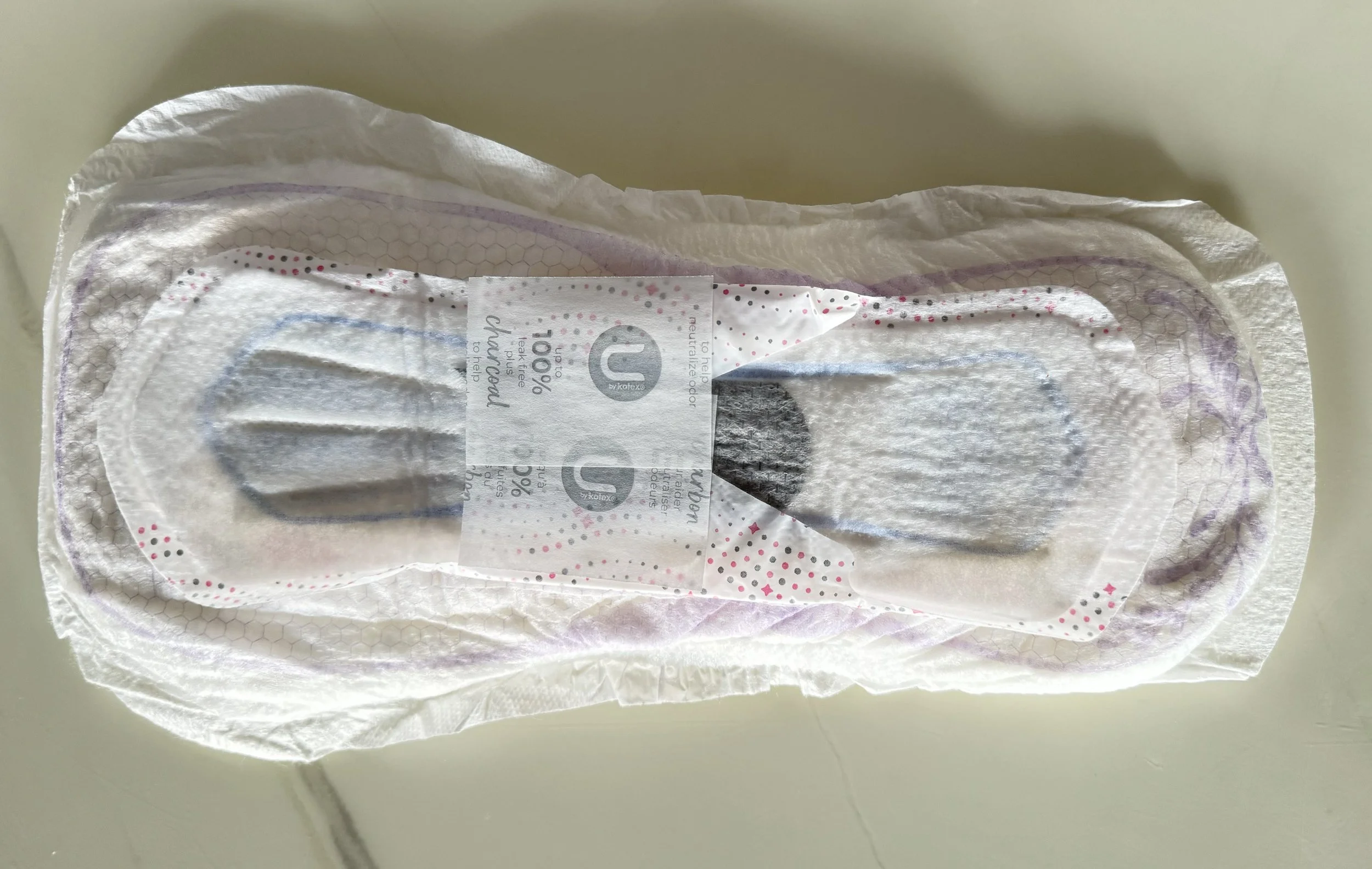
Choose absorbency by stage of recovery
The most useful postpartum pad is not one single product for the entire recovery. The source frames pad choice as something that changes as bleeding decreases.
- Days 1 to 7: Welcome Baby Co. Blog suggests long, thick, highly absorbent maternity pads for the heaviest bleeding. Adult diapers may also feel more comfortable during this stage, while washable pads or period underwear may be more prone to leaks when bleeding is heavy.
- Days 8 to 21: As bleeding slows, regular disposable or washable pads may feel more suitable. The source also mentions leak-proof period underwear as a possible alternative for some people.
- Day 22 and beyond: When bleeding is light, panty liners, washable pads, or period underwear may be enough.
The source also emphasizes that nothing should go inside the vagina for a full 6 weeks after birth because of infection risk from the healing wound where the placenta was attached. That means no tampons or menstrual cups during that period; external options such as pads, washable pads, period underwear, or adult diapers are the safer category of choices described.
For comfort around either a vaginal birth or a cesarean incision, the source recommends disposable mesh underwear, especially high-waisted options that can hold larger pads and avoid rubbing an incision.
Build a bathroom kit before you need it
A peri bottle is a simple rinse bottle used after urination or bowel movements. The point is comfort and cleanliness when the perineal area is tender. Welcome Baby Co. Blog notes that upside-down bottle designs may be easier for many people, though different versions serve the same purpose.
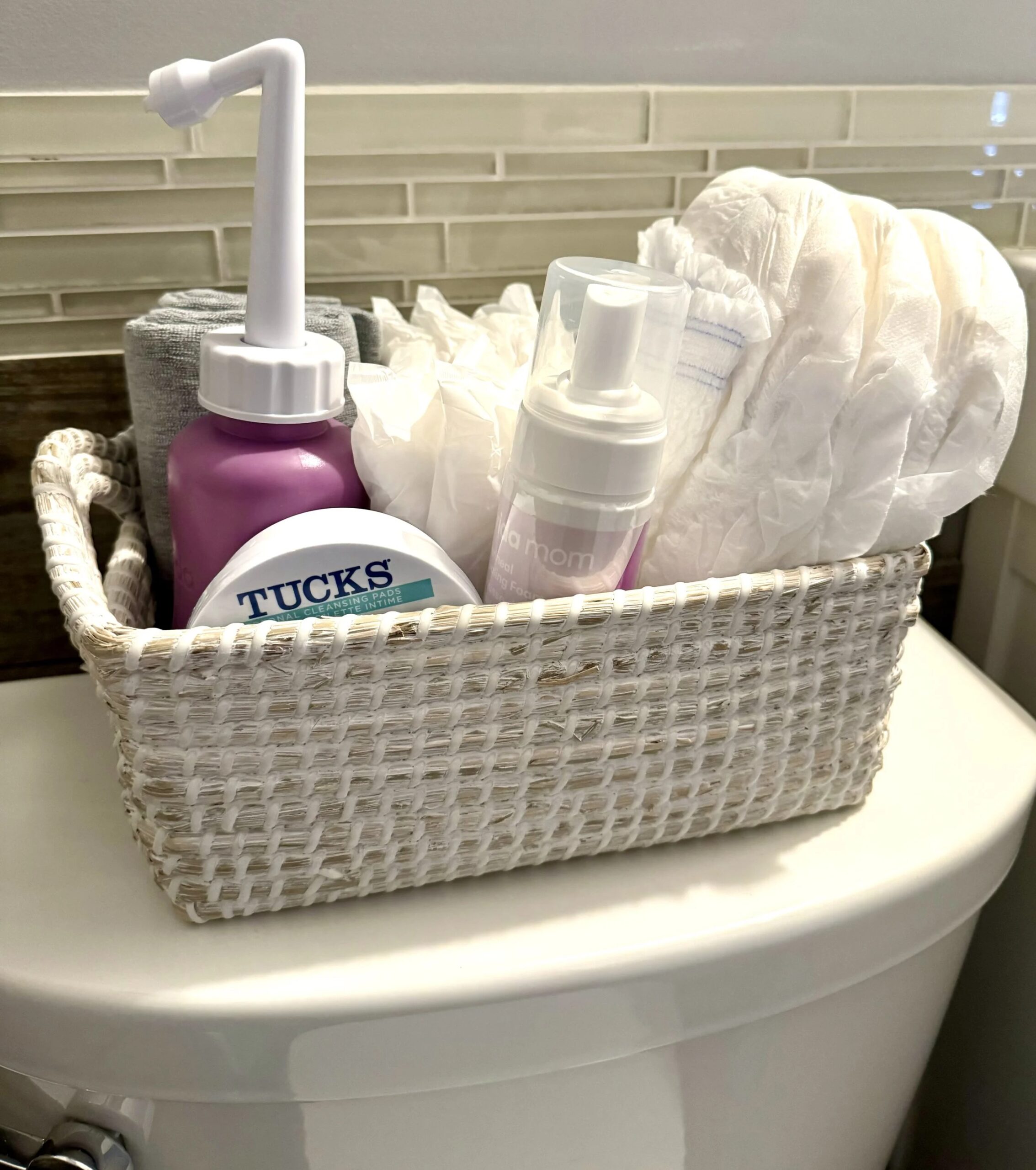
The source’s peri bottle routine is straightforward: fill the bottle with warm, not hot, water; sit securely on the toilet; spray from front to back; gently pat dry; then empty and wash the bottle with warm soapy water. Leaving the lid off between uses helps it dry.
A practical way to make that routine easier is to keep supplies where they will actually be used. The source suggests a postpartum kit in each bathroom, stocked with the peri bottle, pads, sprays, and any other recovery items. This is also an easy job for a support person: check the basket daily and refill what is running low.
Use cold comfort carefully
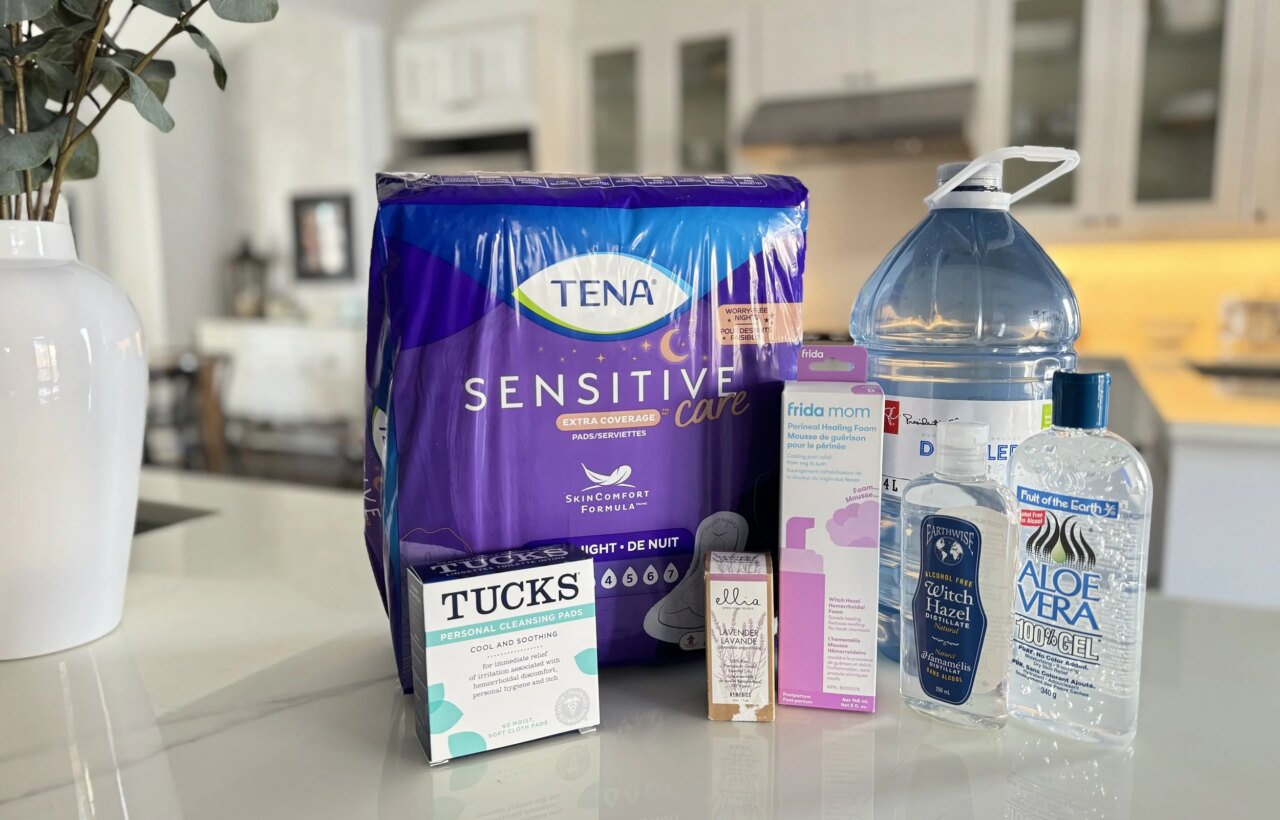
Padsicles are frozen pads used for postpartum comfort. As reported by Welcome Baby Co. Blog, they can be made simply with filtered water or with optional soothing ingredients such as alcohol-free witch hazel and clear 100% aloe vera gel. The source also mentions lavender essential oil as optional, with the caveat that any added ingredient should be checked for sensitivity and appropriate topical use.
The simplest version is usually the least complicated: open an extra-long, absorbent maxi pad while keeping it attached to its wrapper, add a few tablespoons of filtered water along the pad, refold and reseal it, then store the prepared pads in a freezer bag. The source suggests starting with 6 to 10 padsicles because more can be made quickly if needed.
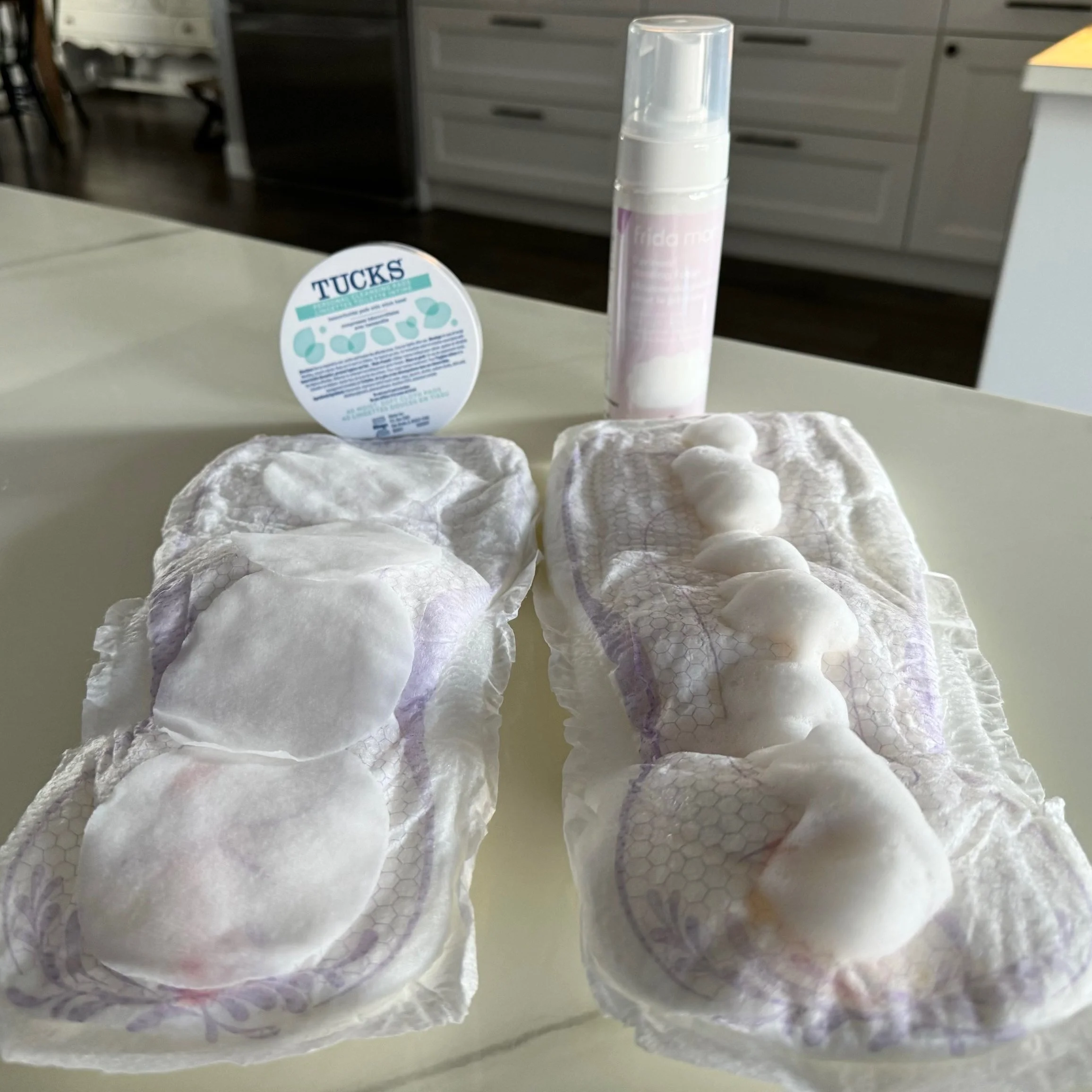
When using one, the source advises letting the frozen pad thaw briefly, then placing it in underwear. If bleeding is heavy, it may need to sit on top of another pad or inside an adult diaper, since a frozen damp pad will not absorb as well as a dry one. The cold sensation may last about 30 minutes, after which the pad should be removed and thrown away.
Watch bowel comfort and hemorrhoid symptoms
Hemorrhoids can be part of pregnancy or postpartum recovery. Welcome Baby Co. Blog reports that pregnancy raises the risk because of hormonal changes, increased blood volume, pressure from the growing uterus and baby, and constipation. The source gives a range of approximately 30% to 40% of pregnant individuals experiencing hemorrhoids.
Symptoms to watch for include itchiness around the anus, pain with bowel movements, and blood with bowel movements. The source says health care providers can help develop a treatment plan, which may include topical medication, and also suggests comfort measures such as hydration, higher-fiber foods, asking about stool softeners, avoiding prolonged sitting or straining on the toilet, limiting long periods of pressure on the perineum, using a peri bottle, and using witch hazel products such as pads or healing foam.
Key takeaways
- Postpartum bleeding often lasts 4 to 6 weeks, according to Welcome Baby Co. Blog, and is usually heaviest in the first week.
- Seek care if bleeding fills a pad in under an hour or if a clot is golf-ball sized or larger.
- Pad needs change over time: heavy absorbency early, then regular pads, liners, washable pads, or period underwear as bleeding lightens.
- A peri bottle, stocked bathroom kit, and a small batch of padsicles can make daily recovery care easier.
- Added padsicle ingredients are optional; avoid anything that could irritate sensitive healing skin.
Postpartum comfort is less about buying every recovery product and more about matching simple supplies to the stage of healing. Planning the basics before birth can make the early days feel more manageable, while leaving room to ask for help and medical guidance when symptoms change.
Inspired by this post on Welcome Baby Co. Blog.