A lower price tag can make a clothing purchase feel responsible in the moment. But when the same item stretches, pills, fades, or loses its shape quickly, the savings may not last.
Wealthy single moms raises a simple wardrobe-money question: whether buying fewer, better basics can help shoppers avoid the cycle of repeatedly replacing cheap fast-fashion pieces. With only a limited source excerpt available, the most useful takeaway is not a shopping list, but a decision framework for judging when quality is worth paying for.
The Real Cost Is Not Just the Checkout Price
According to Wealthy single moms, the problem starts when shoppers keep replenishing inexpensive clothes that wear out after only a short period of use. That is a familiar budget trap: the first purchase looks cheap, but repeated replacements can make the item more expensive over time.
A practical way to think about this is cost per wear. Instead of asking only what something costs today, the shopper asks how often it is likely to be worn before it no longer looks or functions well. A low-cost item that barely survives regular use may be less economical than a more durable piece worn again and again.
This does not mean every basic needs to be expensive. It means the price should be weighed against expected use, fit, care needs, and whether the item actually fills a repeat role in the wardrobe.
Basics Work Best When They Are Truly Repeat Items
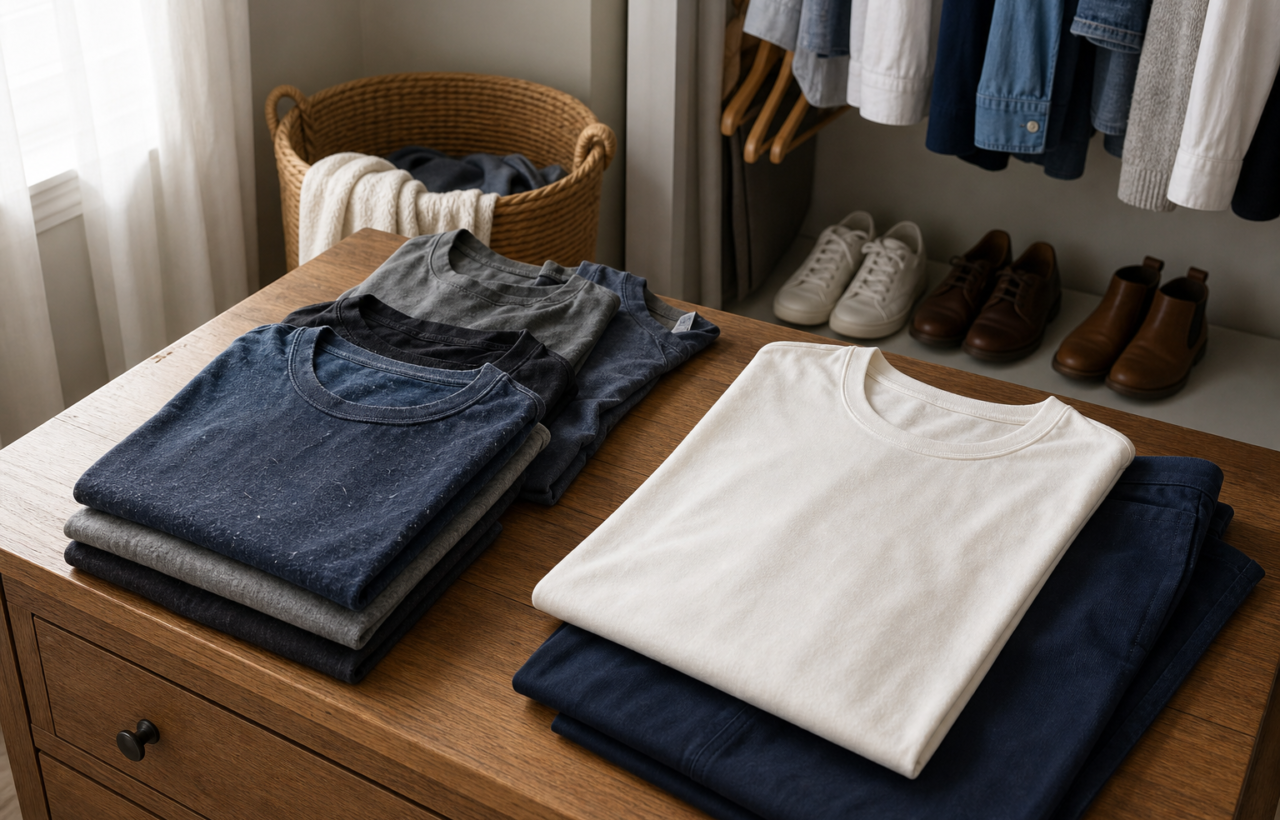
The source points readers away from trend-chasing and toward basics. That distinction matters because basics earn their value through repetition. A plain top, everyday pair of pants, reliable sweater, simple dress, or neutral layering piece can support many outfits without feeling tied to one short-lived look.
For parents and busy households, repeatability is especially important. Clothing that works for school drop-off, errands, casual workdays, travel, or weekend plans reduces the need for constant decision-making. A wardrobe staple is not just something plain; it is something that solves the same dressing problem many times.
Before buying, it helps to ask whether the item will be worn with clothes already owned. If the answer depends on buying several more things, it may not be a basic at all.
What Quality Usually Means in Everyday Clothing
Quality is not a logo, a luxury label, or a promise that a piece will last forever. In everyday wardrobe terms, it usually means the garment is made well enough to keep its shape, feel comfortable, and withstand normal washing and wearing for a reasonable amount of time.
Shoppers can look for practical signals before committing:
- Fabric that feels substantial enough for the intended use.
- Seams that look even and secure rather than strained.
- A fit that works without constant adjusting.
- Care instructions that match real life, not an ideal laundry routine.
- Colors and cuts that pair easily with existing wardrobe staples.
None of these checks requires fashion expertise. They simply slow the purchase down long enough to separate a genuine wardrobe workhorse from an item bought because it is inexpensive or currently popular.
Key Takeaways
- Wealthy single moms frames cheap fast fashion as costly when pieces wear out quickly and need frequent replacement.
- Better basics may save money when they are worn often, cared for realistically, and not tied to a short trend cycle.
- Cost per wear is a useful general lens for comparing a cheap impulse buy with a more durable wardrobe staple.
- Quality should be judged by fit, construction, fabric, care needs, and how well the item works with clothes already owned.
When Spending More Still Does Not Make Sense
The higher-quality route has limits. Spending more is not automatically the smarter choice if the item will rarely be worn, requires high-maintenance care, does not fit current needs, or is being bought as a substitute for a clearer wardrobe plan.
It can also make sense to stay budget-conscious for clothing that will be used briefly, exposed to heavy wear, or needed for a temporary life stage. The point is not to reject affordable clothing. The point is to avoid buying the same weak item over and over while hoping it will behave like a staple.
A more careful approach is to upgrade selectively. Start with the pieces that are worn most often, replaced most frequently, or most responsible for making daily outfits easier. That keeps the focus on value rather than aspiration.
A Smaller Closet Can Be the More Flexible One
The source’s broader argument is that breaking the trend-chasing cycle can shift attention back to quality. In practice, that can mean fewer purchases, more repeat outfits, and less frustration with clothes that fail too soon.
A useful basic does not have to be exciting on the hanger. Its job is to be dependable, wearable, and easy to combine with the rest of the closet. When a piece does that well, it can make getting dressed simpler while helping the clothing budget stretch further.
Inspired by this post on Wealthy single moms.