

You spit after brushing and notice pink foam or a streak of blood. If this started during pregnancy, you may wonder whether your toothbrush caused it, whether it is simply another pregnancy symptom, or whether you should call someone.
Pregnancy can make your gums more likely to bleed, especially while you brush or clean between your teeth. A small amount is not automatically an emergency, but recurring bleeding deserves attention. Keep cleaning gently, notice the pattern, and know which changes mean it is time to contact your dentist or prenatal care team.
Why pregnancy can make your gums bleed
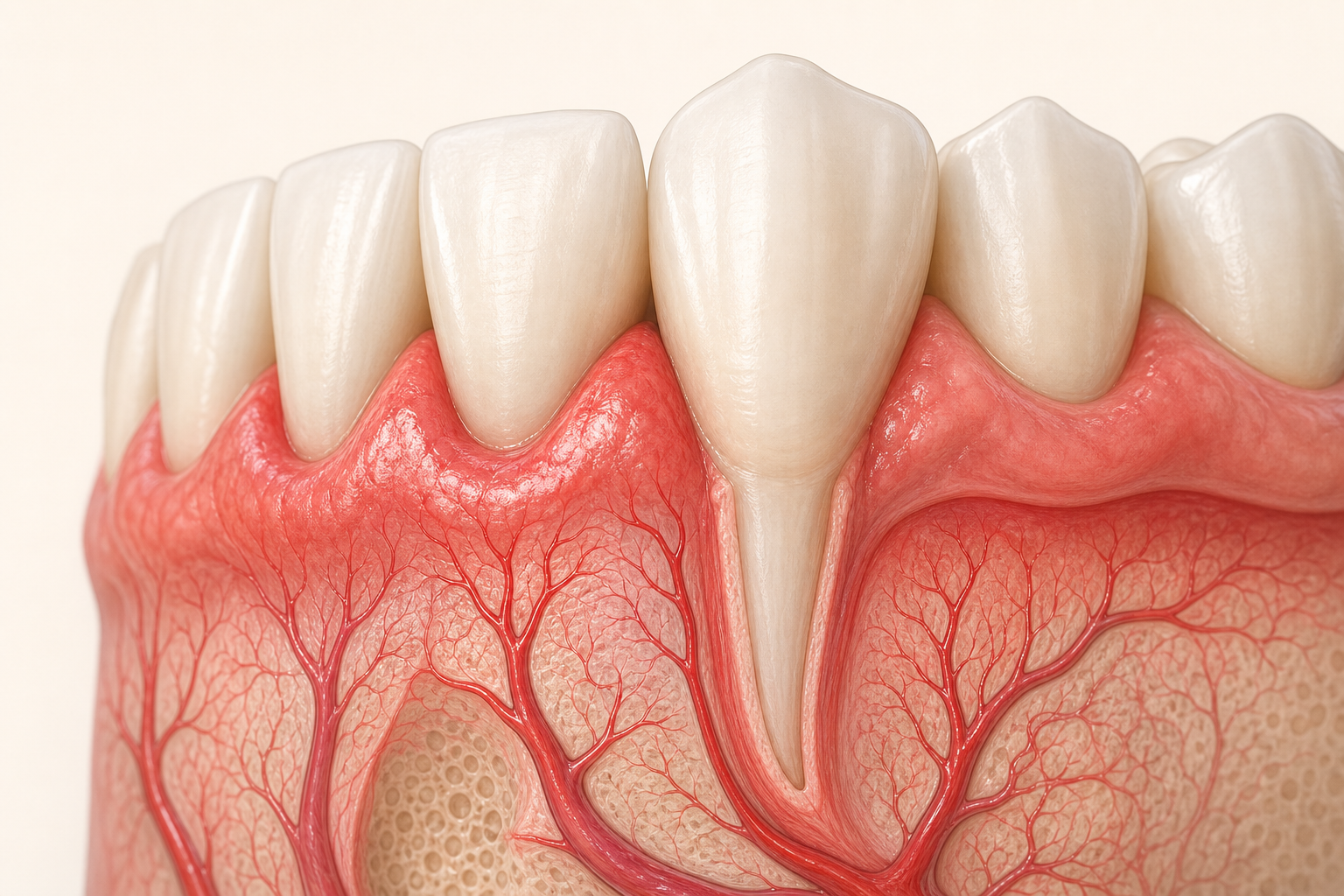
Your gums are living tissue, and they respond to both plaque and changes inside your body. During pregnancy, hormonal changes and increased blood flow can make gum tissue more prone to bleeding. This helps explain why a routine that never caused visible blood before pregnancy may suddenly produce it.
Plaque along the gumline can also irritate the tissue. Pregnancy-related changes may make that irritation more noticeable, so gums can become red, tender, swollen, or easier to bleed. This inflammation is often called gingivitis.
Bleeding does not tell you the cause by itself. It may reflect pregnancy-sensitive gums, brushing with too much pressure, or inflammation that needs professional cleaning and assessment. What matters most is the pattern: whether the blood appears only during cleaning or starts on its own, whether it comes from one spot or many, and whether you also have pain, swelling, discharge, or other bleeding.
What to do without making the irritation worse
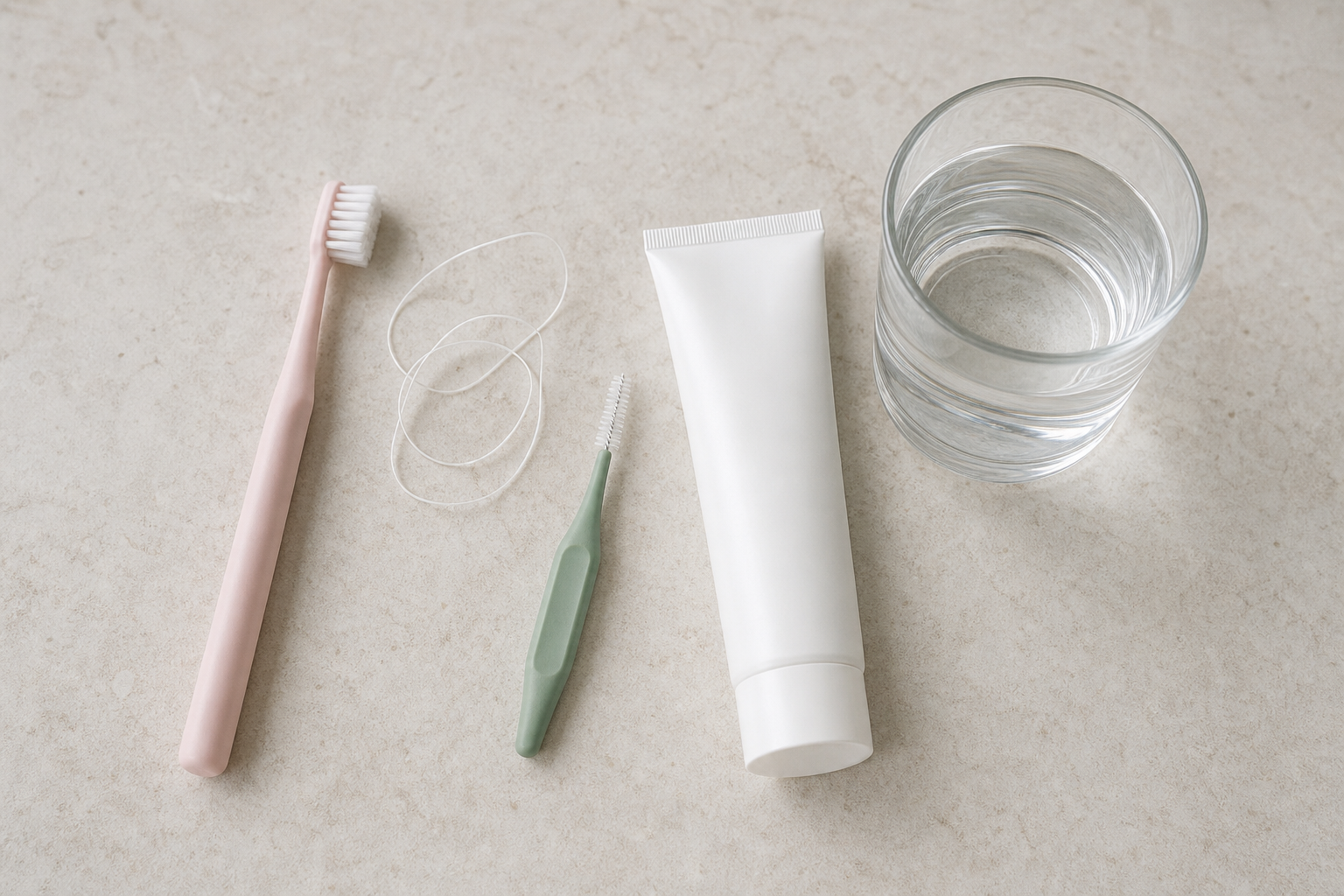
Seeing blood often makes people avoid the area. That reaction is understandable, but leaving plaque undisturbed can allow irritation to continue. The better response is to make your cleaning gentler and more deliberate.
- Let active bleeding settle. If a small area is bleeding, apply gentle, steady pressure with clean gauze. Avoid repeatedly touching the spot to check it, since that can disturb it again.
- Continue brushing gently. Use a soft-bristled toothbrush and light pressure around the gumline. Scrubbing harder will not clean inflamed tissue faster and may add mechanical irritation.
- Clean between your teeth carefully. Guide floss or another interdental cleaner slowly rather than snapping it into the gums. If the same space bleeds repeatedly, make a note of the location for your dentist.
- Watch the pattern, not just the colour. Record whether bleeding happens only after brushing, how often it returns, whether it is increasing, and whether the gums look swollen or feel sore.
- Call your dentist if it keeps returning. Mention that you are pregnant, your stage of pregnancy, when the bleeding began, where it occurs, and any pain or swelling. If your prenatal clinician has given you instructions that affect dental treatment, share those as well.
Avoid trying to treat persistent bleeding with an unfamiliar medicated rinse, supplement, or concentrated home remedy. Pregnancy can affect which products are appropriate, and bleeding can have more than one cause. Ask your dentist or prenatal clinician before starting something intended to treat it.
When bleeding gums need professional help

A trace of blood that appears only during cleaning and settles quickly is less urgent than bleeding that begins without contact, is difficult to stop, or comes with signs of infection. Use the whole symptom pattern to decide your next step.
| What you notice | What to do next | Who to contact |
|---|---|---|
| A small amount only during brushing or interdental cleaning, with no pain or swelling | Continue gentle cleaning and monitor it. Arrange an assessment if it keeps returning. | Your dentist if the pattern repeats |
| Recurring bleeding, tender or swollen gums, a persistent unpleasant taste or odour, or one area that repeatedly bleeds | Arrange a dental assessment rather than waiting for it to become painful. | Your dentist |
| Bleeding that starts without brushing or eating, seems heavy, is difficult to stop with gentle pressure, or occurs along with unusual bruising or bleeding elsewhere | Seek prompt professional advice because the problem may not be limited to local gum irritation. | Your dentist and prenatal care team |
| Pus, fever, severe dental pain, or swelling that is spreading | Seek prompt care. These can accompany an infection that should not be managed only at home. | Your dentist; involve your prenatal care team when advised |
| Swelling of the face or neck, difficulty breathing or swallowing, or bleeding you cannot control | Get emergency help now. | Emergency services or an emergency department |
If you take a medication that can affect bleeding, do not stop it on your own. Tell the prescribing clinician and your dentist what is happening so they can decide whether the medication, your gums, or another issue needs review.
Key takeaways
- Hormonal changes and increased blood flow during pregnancy can make gum tissue bleed more easily.
- Blood during brushing does not automatically mean you should stop cleaning the area.
- Use a soft toothbrush, light pressure, and careful interdental cleaning instead of aggressive scrubbing.
- Recurring bleeding, swelling, pain, discharge, or a persistent problem in one spot warrants a dental assessment.
- Spontaneous or hard-to-control bleeding, bleeding elsewhere, spreading swelling, or breathing and swallowing difficulty needs faster medical attention.
Your next step
At your next brushing, notice exactly where the blood appears, what triggered it, and whether it settles. Keep the area clean with a gentle technique. If the bleeding returns, contact your dentist and give them that pattern instead of waiting until after pregnancy. If you have any of the warning signs above, use the more urgent route now.