When backpacks show up beside summer supplies, every low price can feel like a deadline. If you are buying for daycare, preschool, an older sibling, or the household routine around them, ask a more useful question: will this purchase remove a task you already know is coming?
For July 22-28, Aldi’s middle aisle puts many of its stronger buys below $15, particularly in kitchen storage, children’s gear, and small household fixes. That can make this a sensible stock-up week, but only when a product matches a defined need. A cart full of inexpensive may still become an expensive pile of clutter.
Write down the jobs before you look at the deals
Start with what your family needs to do, not with what Aldi has put on the shelf. A job-first list makes it harder for a sale label to turn a hypothetical need into a purchase.
- Replace: Name anything that is worn out, leaking, too small, difficult to clean, or no longer working.
- Meet a requirement: Copy the relevant item from the childcare, preschool, camp, or school list. Do not rely on memory.
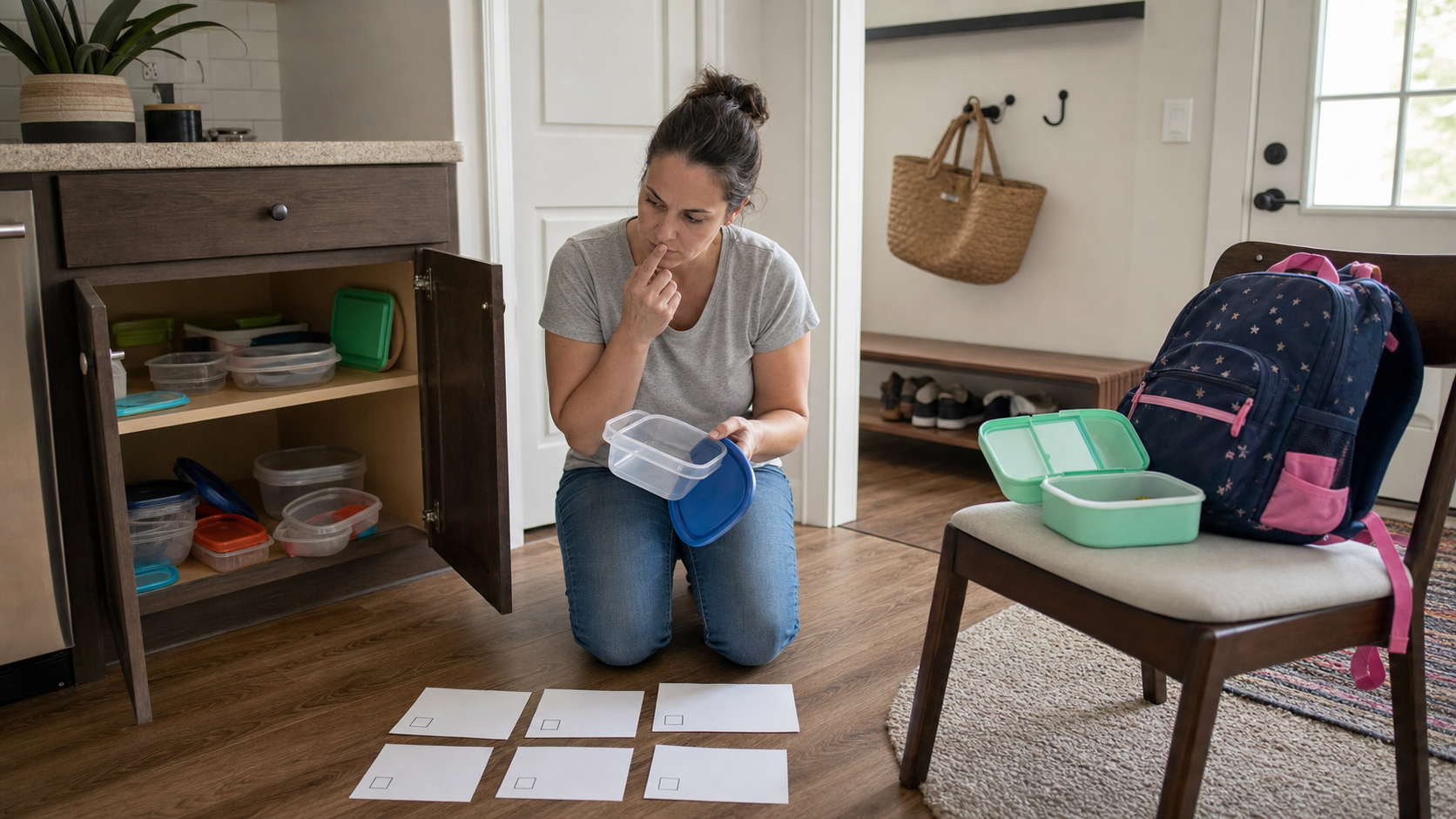
- Remove routine friction: Note the recurring problem, such as lunch containers without matching lids or a drop-zone that cannot hold the bags your family actually uses.
- Leave speculative needs off the list: A baby or toddler’s size, preferences, and care routine can change before a future purchase becomes useful.
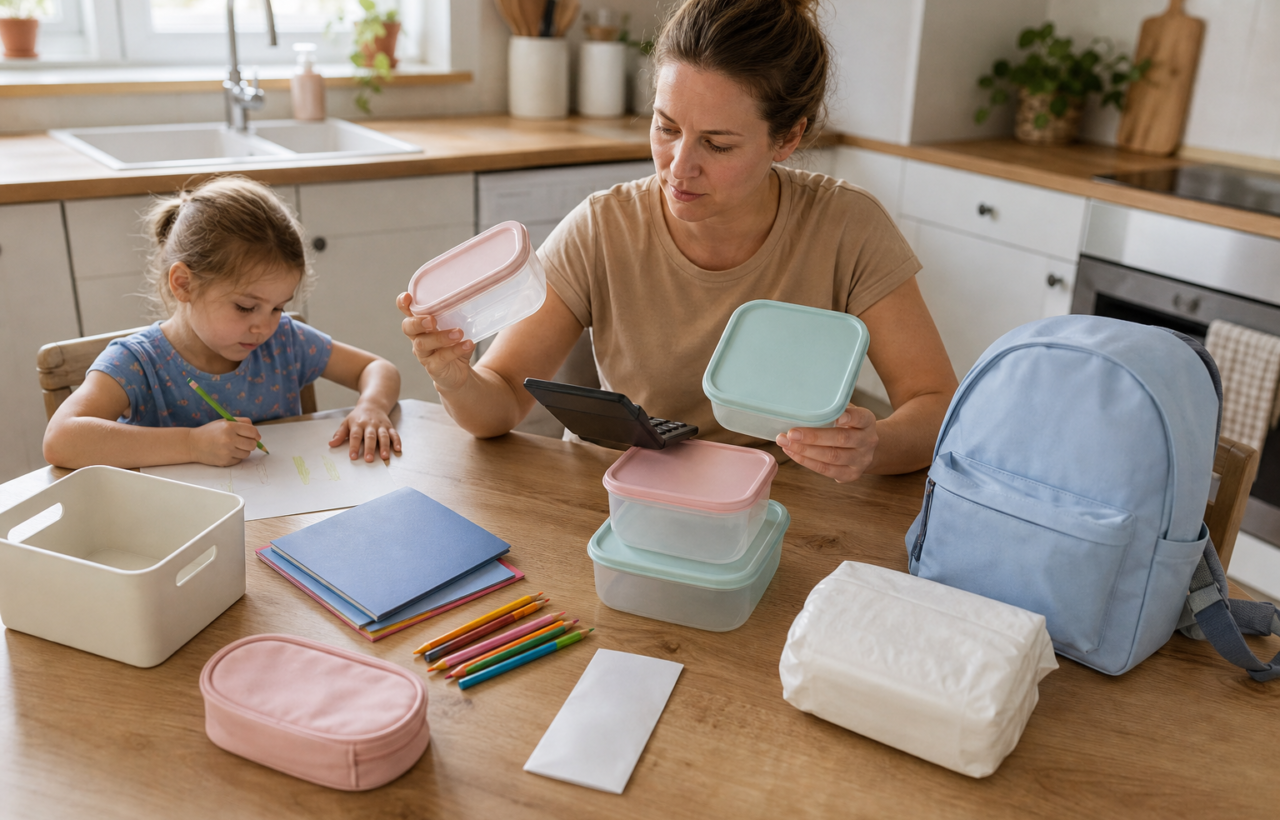
Set a total spending limit before the trip, then divide the list by child and by household job. This matters when you are shopping for an older child’s school needs while also managing baby or toddler supplies. Separate lists prevent a generally useful children’s item from being mistaken for something your youngest child needs now.
Sort this week’s bargains into three practical lanes
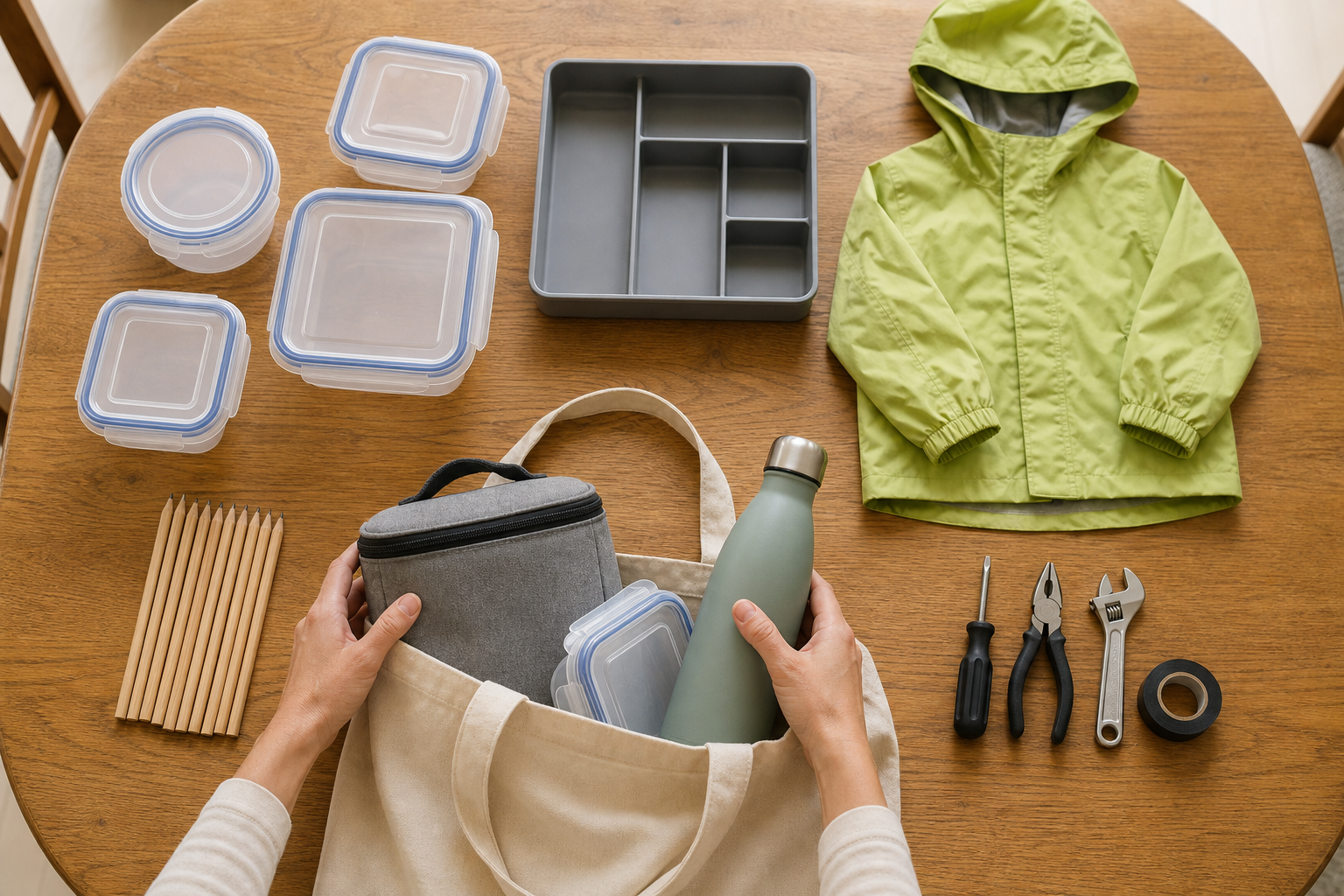
The week’s family-facing selection includes backpacks, lunch bottles, school socks, kitchen storage, and household fixes. Each category needs a different buying test.
Back-to-school and childcare gear
Backpacks, bottles, and socks look universal until they meet a real routine. Check the written requirements and the supplies already at home before choosing a duplicate.
- For a backpack: Picture the actual daily load. It should accommodate the items on the child’s list and fit the cubby, hook, stroller basket, or entryway space where it will live. Check whether the intended user can manage the closures.
- For a lunch bottle: Confirm that its size and lid suit the bag and routine. Read the package’s cleaning and care instructions, and consider whether a lost or damaged component would make the whole bottle unusable.
- For socks: Check the child’s current size and footwear rather than buying for an undefined future growth stage. A low package price is not useful if the fit is wrong when the socks are needed.
For anything a baby or toddler may handle, read the age guidance and warnings on the exact package. A household or school product is not automatically suitable for mouthing, a sleep space, or unsupervised play simply because it appears near children’s merchandise.
Kitchen storage
Do not buy a storage product until you can finish this sentence: “This will hold ___ and live ___.” The first blank defines the job; the second protects your cabinet, fridge, or counter from becoming more crowded.
Measure the intended space and compare that measurement with the package. Check whether the pieces stack, whether every container has a usable lid, and whether the care instructions match how you plan to use it. If you need storage for packed meals, test the dimensions against the lunch bag rather than assuming “food storage” means “portable.”
Small household fixes
Give every fix a room and a scheduled job: “organize the entryway before the childcare routine changes,” for example. Then check dimensions, mounting needs, compatibility, and any extra supplies required to finish the work. An inexpensive fix that needs more hardware, the right tool, or a different-sized space may not be inexpensive by the time it is usable.
Use a five-question test before anything enters the cart
A small price lowers the resistance to buying, but it does not change the standard a product should meet. Ask these questions while you can still leave it on the shelf:
- Was the need named before you saw the product? If not, describe the exact problem it would solve.
- Do you already own a workable substitute? Check the relevant drawer or cupboard before the trip, or use a photo of the space while shopping.
- Does it fit the person and the space now? Use current measurements and current routines, not a vague plan for later.
- What is the complete cost? Include any required accessories, replacement parts, mounting supplies, or extra trip needed to make it functional.
- When will it first be used? Connect it to a named day, routine change, or household task. “Someday” is not a schedule.
A “no” involving fit, safety, compatibility, or required add-ons is a reason to stop. A “no” involving the original need is usually a reason to skip the product entirely. You are not losing a bargain when you avoid buying the wrong thing.
Key takeaways
- Shop for a named family or household job, not for a product category that happens to be on sale.
- Verify school and childcare requirements before buying backpacks, bottles, socks, or other children’s gear.
- Measure the child, bag, shelf, cubby, or cabinet that the purchase must fit.
- Compare the complete cost of making an item usable, not only the price printed on the shelf.
- Skip products intended for a future stage unless you know exactly when and how they will be used.
Make each bargain earn its space this week
The holding pile by the door is where useful purchases become clutter. Give each item a short setup path as soon as you get home.
- Confirm the size, fit, parts, and basic function before discarding packaging or removing anything you still need for a possible return.
- Prepare the item according to its care instructions. Pair containers with their lids, check a bottle with water, and make sure a bag can hold its planned contents.
- Put it where the routine happens. School gear belongs at the departure point; food storage belongs where meals are packed; a household fix belongs beside the scheduled task.
- Remove or relocate the item it replaces. Keeping the broken, undersized, or lidless version beside the new one preserves the clutter you paid to solve.
Before shopping July 22-28, make three headings on your list: child routine, kitchen storage, and household fix. Add only active needs. If a bargain cannot be assigned to one of those jobs and prepared for use, let it stay in the aisle.