You can walk into Aldi for ordinary groceries and end up deciding whether a portable breakfast, a box of snack packs, or a freezer shortcut will genuinely make next week easier. With a baby or toddler in the household, convenience matters. So do wasted food, crowded cupboards, and a grocery total that grows one appealing extra at a time.
The useful question isn’t simply, “Is this a good deal?” Ask which rushed, expensive, or inconvenient moment the food will replace. That one change turns weekly finds from impulse purchases into a practical part of your family plan.
Start with the gap that costs you money
A carefully planned dinner isn’t always where the family food budget slips. The leak may be a drink bought while you’re out, a snack grabbed between activities, or breakfast ordered because the morning got away from you. Portable breakfasts, freezer shortcuts, and individually packed snacks can cover these last-minute food and drink purchases.
Before looking at the weekly selection, write down the gaps you actually expect. Keep the list tied to situations, not product categories:
- A breakfast that can leave the house with the adult who regularly misses it.
- A shelf-stable outing snack for the family member who will actually eat it.
- A freezer backup for the evening when the planned meal won’t happen.
- A quick food option for a caregiver who has little time to eat during feeds, naps, or bedtime.
This distinction matters because “easy breakfast” is too vague. You may already have several easy breakfasts at home, none of which work in the car or stroller. Name the friction precisely: no preparation time, no free hand, no refrigeration, or no willingness to eat that food. Then look for an item that solves that particular problem.
If a find doesn’t fill a known gap, it is an extra. That doesn’t automatically make it a poor purchase, but it means you should judge it as a treat or experiment rather than count it as grocery savings.
Run every find through a five-question test
A low shelf price can still buy clutter or food waste. Use these questions while the item is still in your hand:
- What exact moment will this cover? “Busy days” isn’t specific enough. “Breakfast before an early appointment” or “the backup dinner after a late pickup” gives the item a real job.
- Who will eat it? Name the person. A food that appeals to you, your partner, and your toddler may be used differently from one only a single adult likes.
- What will it replace? It might replace an ordered breakfast, a convenience-store stop, part of a planned meal, or nothing. If the honest answer is nothing, it is additional spending.
- Can you store it properly today? Check the package instructions and your actual pantry, refrigerator, and freezer space. A freezer shortcut is not convenient if it displaces food already in the meal plan.
- Will the package realistically be finished? Consider appetite, preferences, feeding stage, and how many suitable occasions remain. Package size only creates value when the food gets eaten.
For a quick comparison, divide the price by the number of realistic uses in your household. Use the amount you expect to consume, not an optimistic plan built around finishing every last portion. A larger pack may have a lower price per listed serving while costing more per useful family moment if half of it goes untouched.
Also separate novelty from convenience. A familiar food in a more portable format may solve a recurring problem immediately. An unfamiliar flavour or texture needs someone willing to try it. If you’re buying an experiment, start only with an amount your household can use without rearranging the rest of the week’s meals.
Separate parent convenience from child suitability
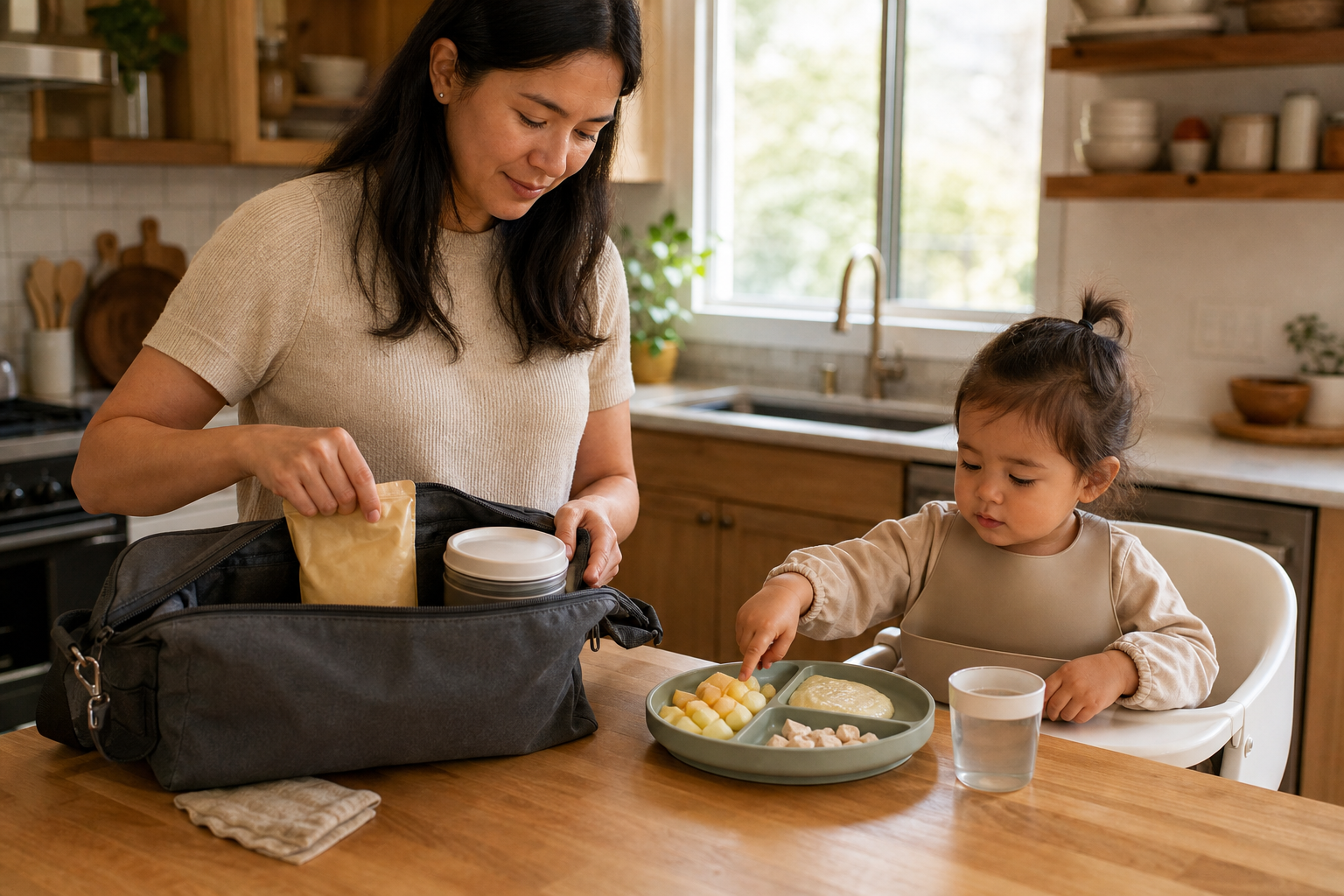
A useful family purchase does not have to be food for the baby. A one-handed breakfast for a parent can be just as valuable during a rushed morning. Problems begin when convenient packaging is treated as proof that a food is suitable for every child.
A baby beginning solids and a child approaching 36 months may need the same food prepared in very different ways. Before assigning a weekly find to your young child:
- Read the ingredient list and allergen information on the package you are buying. Don’t rely on the appearance or name of a similar product.
- Follow the package’s preparation, refrigeration, and storage directions. An item only works as an outing snack if you can store it as directed.
- Compare the food’s shape, texture, and required chewing skills with the feeding guidance you already follow for your child’s stage.
- Plan any cutting, softening, mixing, or other preparation before the rushed moment arrives. If you are uncertain about a safe form, keep the item for adults and ask your child’s clinician or a registered dietitian for individualized guidance.
- Keep the original label available so every caregiver can check ingredients, allergens, preparation directions, and storage information.
- Treat an individual package as portion control for your shopping plan, not as evidence that its contents are automatically appropriate for a baby or toddler.
This screen can change an item’s job without making it a bad buy. A snack that isn’t right for your child may still belong in the stroller basket for a parent. A freezer item may work as one component of an adult meal while the child eats an already-planned option. Decide that role before checkout so convenience doesn’t depend on an unsafe or unrealistic assumption later.
Buy for the calendar, then give every item a home
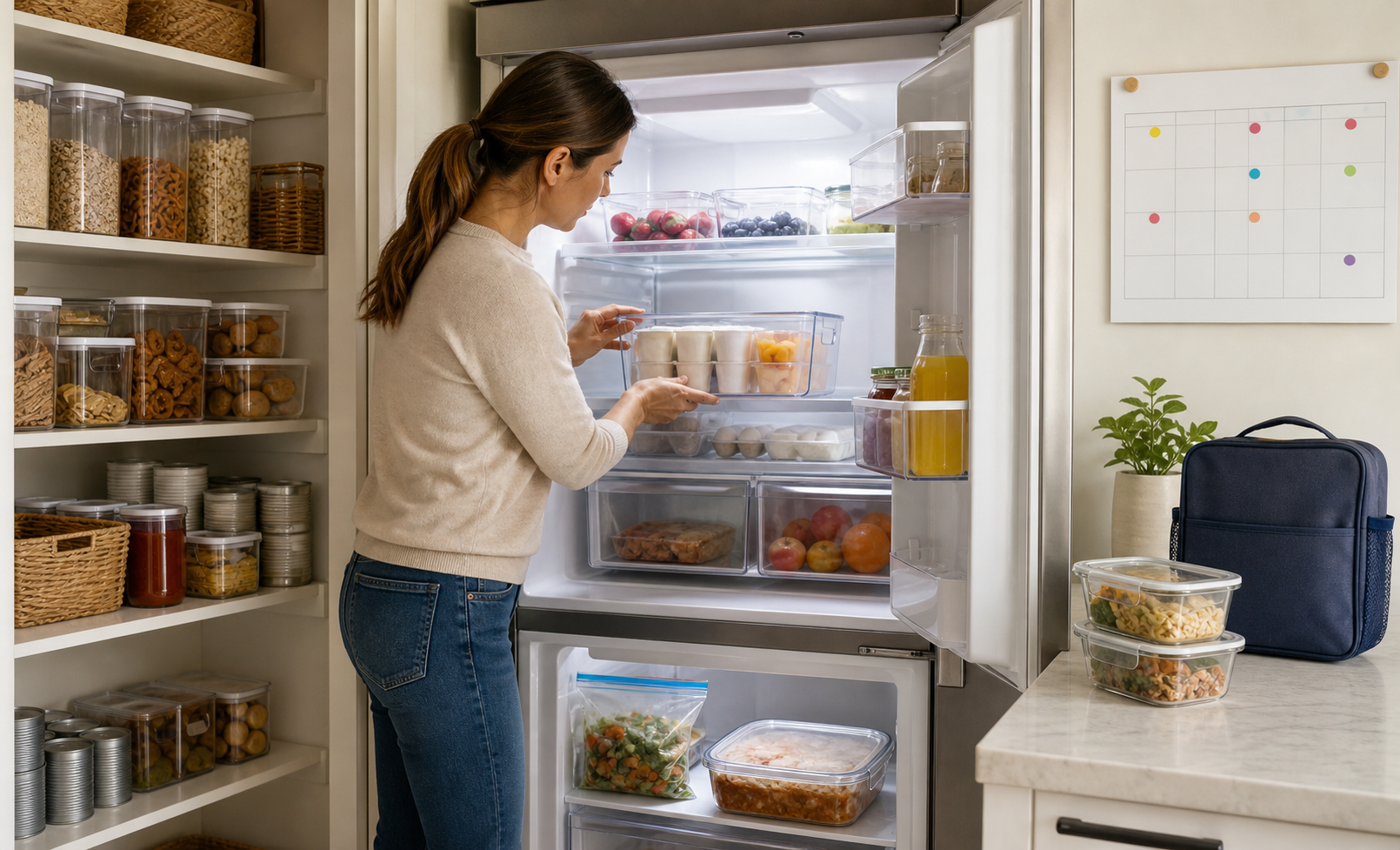
Your calendar is a better shopping tool than a long list of promising products. Scan the coming week for early departures, appointments, longer outings, nights when one adult is unavailable, and meals already likely to be disrupted. Those are the moments a convenience item can earn its place.
Then check what you already own. Look through the freezer, pantry snack area, breakfast shelf, and any food normally packed for outings. If an existing item can fill the gap, use that first. A weekly find should solve a remaining problem rather than create a duplicate category.
Once you’re home, use a simple one-job, one-home routine:
- Write down the job. Add the food to the relevant breakfast, outing, or backup-meal slot in your plan.
- Store it where the decision happens. Put breakfast options with breakfast supplies, freezer meals in a visible area, and shelf-stable outing food in a designated pantry basket until it is time to pack.
- Protect the label. Keep preparation and allergen information with the food, especially when another caregiver may serve it.
- Use nearer-dated food first. Check package dates and place the item that should be used sooner where it will be seen first.
- Reassess before buying it again. Notice whether it replaced the purchase or stressful moment you had named. If it remained in the cupboard, the format, flavour, package size, or planned occasion was wrong for your household.
The final step is what makes the system improve. “We liked it” is useful, but “it prevented an ordered breakfast” or “nobody wanted it during outings” tells you whether the item deserves space in a future grocery plan.
Key takeaways
- Define the missed breakfast, outing snack, or disrupted dinner before shopping for a solution.
- A weekly find saves money only when it replaces another purchase and gets used.
- Name who will eat each item; parent convenience and child suitability are separate questions.
- Check the current package, storage directions, allergens, and physical form before offering a food to a baby or toddler.
- Connect every purchase to a calendar moment and a storage location as soon as you get home.
- Use what happened, not what you hoped would happen, to decide whether to buy the item again.
Before your next Aldi trip, make a three-line note: the family moment that tends to fall apart, the food already available for it, and the one gap that remains. If a weekly find fills that gap safely and realistically, put it in the cart. If it can’t name its job, leave it for another week.