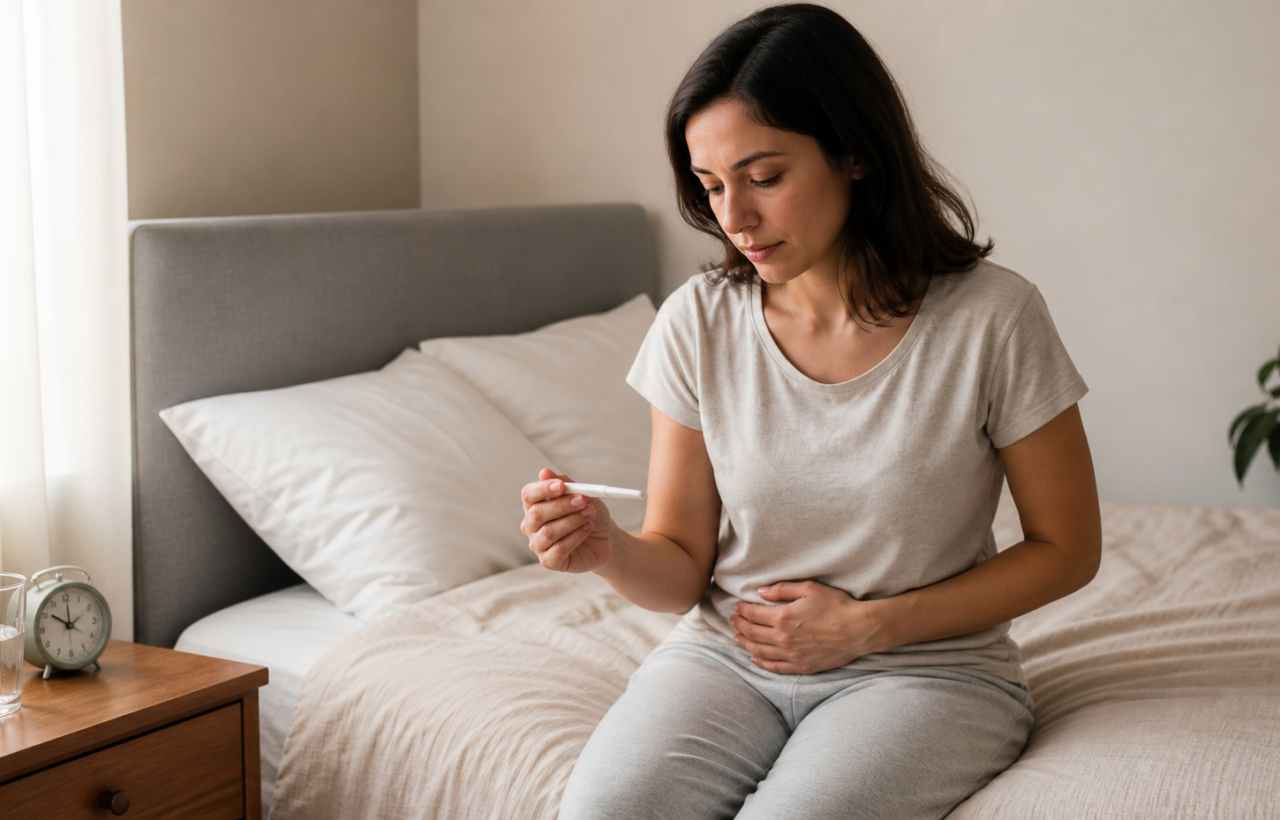
If you are checking every cramp, wave of tiredness, or change in your breasts a few days after sex, your body probably cannot give you a dependable answer yet. Early pregnancy can feel exactly like the days before a period, and many pregnant people feel no different at all.
The more reliable approach is to use timing rather than symptoms. Work out when your period is expected, choose the right day to test, and know which symptoms should send you to a health care provider instead of another pregnancy test.
Key takeaways
- Pregnancy symptoms are unlikely during the first 72 hours after conception. Sensations during those first few days cannot confirm that you are pregnant.
- A missed period is usually the first dependable sign. Cramping, bloating, breast tenderness, fatigue, nausea, and frequent urination can also occur, but none can confirm pregnancy by itself.
- For a clearer home-test result, wait until after your missed period when possible. If you test early and get a negative result, repeat the test in 72 hours if your period still has not arrived.
- Heavy bleeding or severe abdominal pain needs prompt medical attention. Do not wait for another home test before seeking help.
Why the first 72 hours cannot answer the question
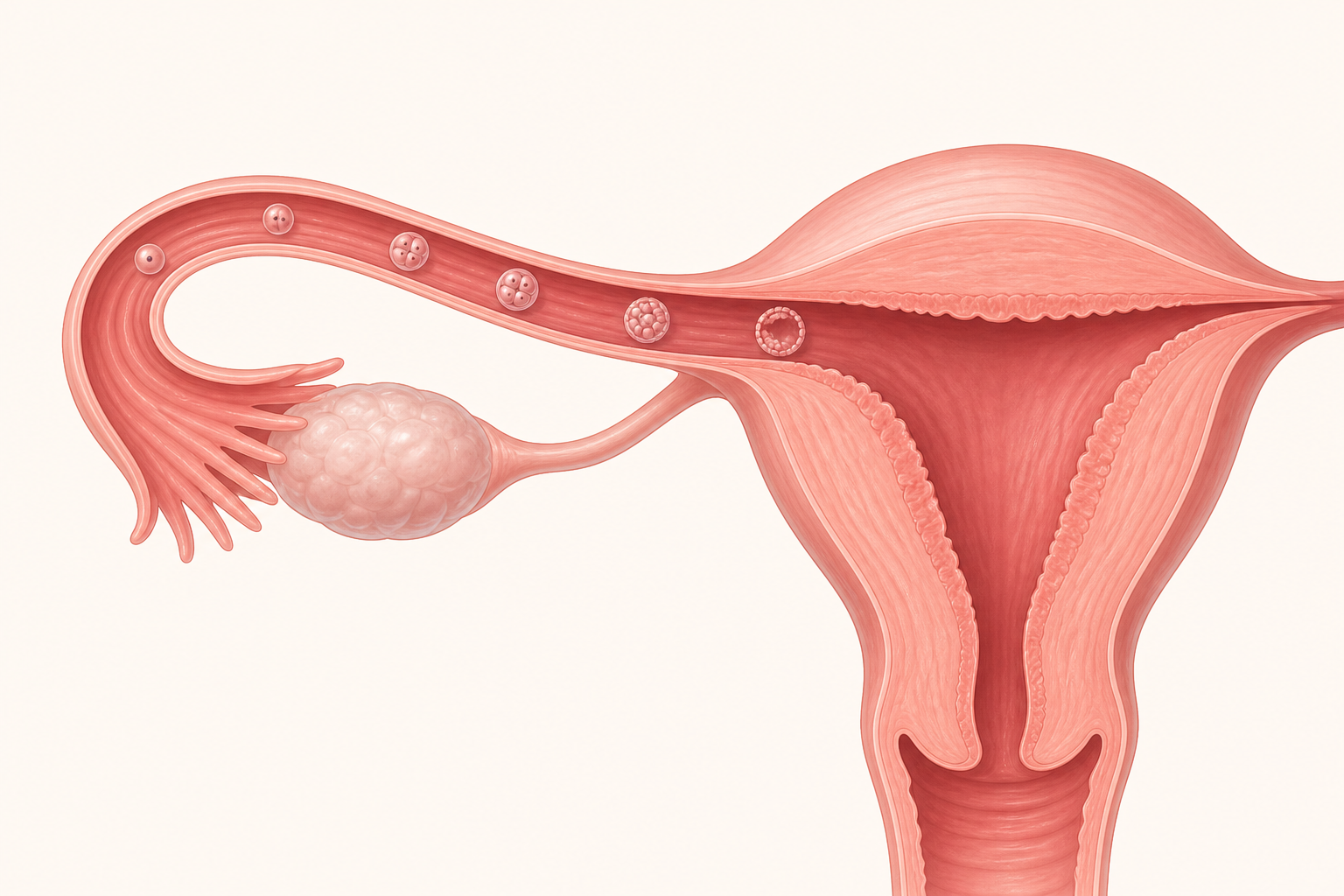
Even when fertilization has occurred, pregnancy is not instantly detectable. The fertilized egg first divides and develops as it travels toward the uterus. It then has to attach to the uterine lining. Implantation generally takes place about six to 12 days after conception.
Only after implantation does production of human chorionic gonadotropin, or hCG, begin to rise. This is the hormone home pregnancy tests are designed to detect. It also contributes to the hormonal changes associated with early symptoms. Before that process is underway, there usually is not enough of a pregnancy-related hormonal change for you to feel or measure.
That means a twinge, headache, appetite change, or tired afternoon two or three days after sex is not useful evidence of pregnancy. The sensation may be real, but its timing makes it a poor pregnancy signal. Try not to turn each symptom into a vote for or against pregnancy; mark the date your period is due and base your next step on that.
If you do not want to become pregnant, do not wait for symptoms
A reliable pregnancy result may not be available until after the window for emergency contraception has started to close. Emergency contraception options have short, method-specific windows measured in days; some are intended for use within three days and others within five days after unprotected sex.
If contraception failed or was not used and pregnancy is not your desired outcome, contact a pharmacist, sexual health clinic, or health care provider as soon as possible. Ask which options are available and appropriate where you live. Waiting to see whether you feel pregnant is not a safe way to make this decision.
What early symptoms can look like, and when

A missed period is usually the first reliable clue. Other early symptoms are possible, but the same sensations can happen before a period or for reasons unrelated to pregnancy. Their value comes from noticing a change and deciding when to test, not from trying to diagnose yourself from a checklist.
| Time after conception | What may be happening | What you can do |
|---|---|---|
| First 72 hours | Cell division has begun, but noticeable pregnancy symptoms and a positive home test are unlikely. | Do not use symptoms or a test from this window to rule pregnancy in or out. |
| About 6 to 12 days | Implantation generally occurs during this range, after which hCG starts to rise. | Keep track of when your period is expected rather than testing repeatedly. |
| About 10 to 14 days | Some people notice light bleeding or mild cramping, while many notice nothing. | Do not assume spotting confirms pregnancy. Test at the appropriate time and watch for heavy bleeding or severe pain. |
| About 3 to 4 weeks | Symptoms are more likely to become noticeable. In pregnancy dating, this is often called week 5 or 6 because pregnancy is dated from the last menstrual period. | If your period is late, take a home pregnancy test rather than judging by symptoms alone. |
Possible early symptoms include mild cramping, bloating, tender or swollen breasts, unusual fatigue, more frequent urination, and nausea. Nausea may begin around the sixth week of pregnancy, but symptom timing varies widely.
The absence of symptoms does not mean you are not pregnant. It is entirely possible to have no cramping, nausea, breast changes, or spotting in the early weeks. It is also possible to have several of those symptoms and not be pregnant. A home or clinical pregnancy test is what separates a possible symptom from an answer.
How to time and interpret a home pregnancy test
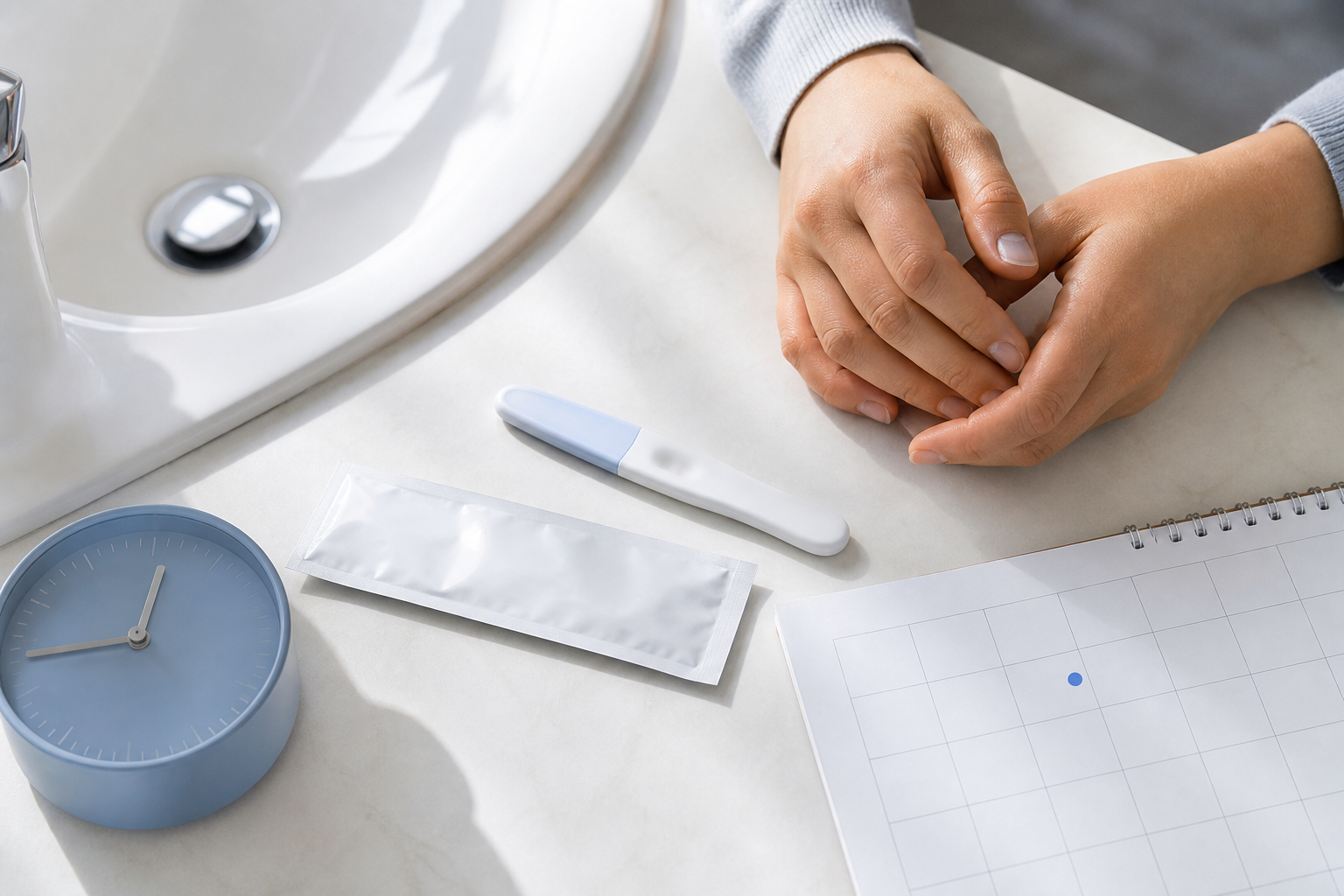
Some highly sensitive home tests may show a faint positive around 10 days after conception, but testing that early can produce a negative result simply because hCG has not risen enough yet. Because you usually cannot identify the exact day conception occurred, the expected date of your period is a more practical reference point.
- Find the date your period is expected. If your cycles are reasonably predictable, wait until that date has passed before testing when you can.
- Follow the test’s instructions exactly, including the specified time window for reading the result. A result viewed outside that window may be difficult to interpret.
- If the result is negative but you tested before or around the expected start of your period, wait. Repeat the test in 72 hours if your period still has not started.
- If the result is positive, contact a health care provider to discuss confirmation, medications or supplements you use, and the next steps for your situation.
An early positive followed by a negative result can happen with a very early pregnancy loss, sometimes called a chemical pregnancy. It can also leave you unsure about what the lines mean. A health care provider can help interpret changing results, especially if bleeding or pain is present. Do not try to diagnose the cause from a sequence of home tests alone.
When symptoms need medical attention

Mild cramping or light spotting can occur in early pregnancy, but the word “mild” matters. Heavy bleeding or severe abdominal pain warrants prompt medical attention. Do not wait for your period, a stronger test line, or a second test before contacting a health care provider or urgent medical service.
You should also contact a health care provider after a positive home test and whenever your symptoms or test results leave you uncertain about what to do. Online symptom lists can explain typical timing, but they cannot assess bleeding, pain, your medical history, or an individual pregnancy.
For your next step, write down the date your period is expected, the date you tested, and the result. If an early test was negative, choose one retest date 72 hours later instead of checking symptoms hour by hour. If the test is positive, arrange care; if bleeding is heavy or pain is severe, seek medical help promptly.
References