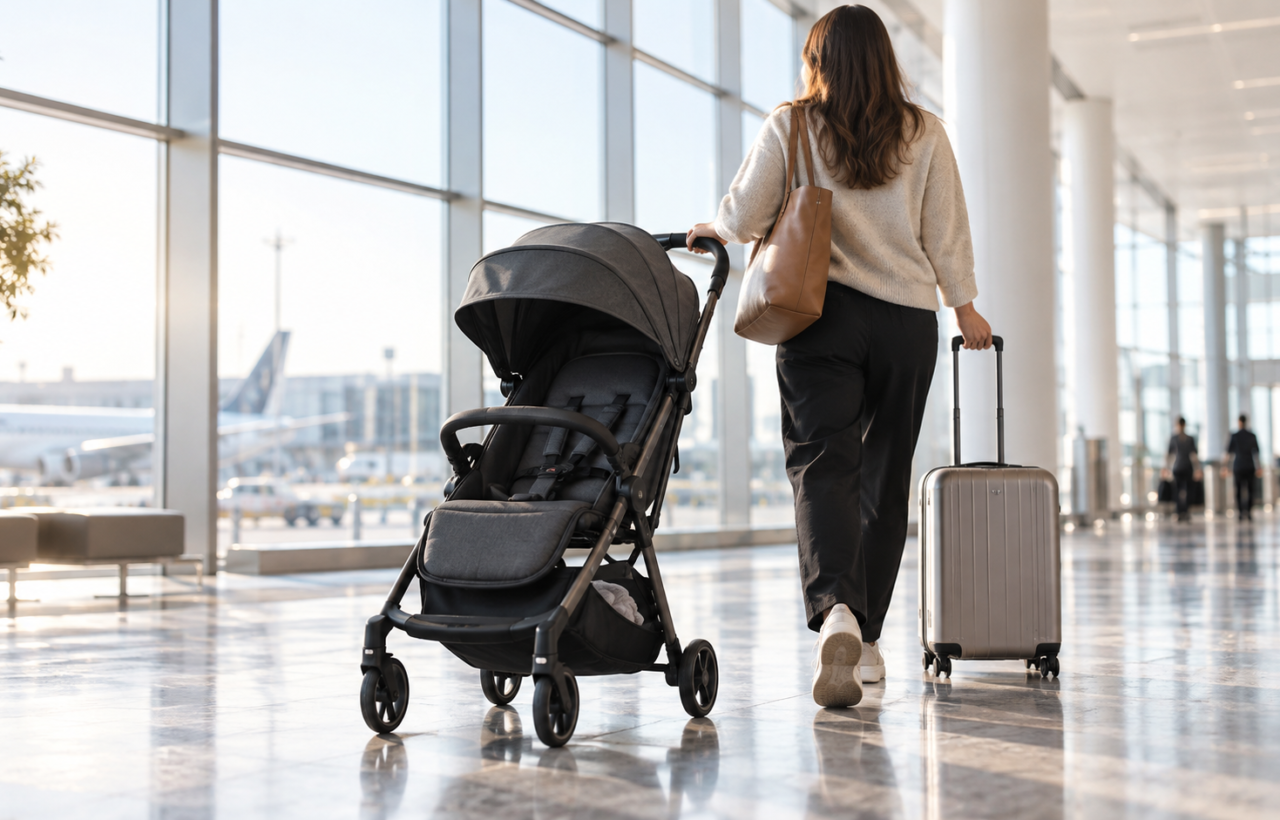
If you’re wondering whether the newly launched Stokke YOYO5 is worth buying, start with the part of travel that is hardest for your family. A compact fold is valuable when it solves a specific problem: carrying a stroller up stairs, fitting it into a small car, moving through an airport or managing public transit with a baby.
The Stokke YOYO5 is the newest iteration of a compact, lightweight travel stroller. That makes it relevant to parents shopping for portability, but a launch alone doesn’t make it the right stroller for your child, route or luggage. Here is how to make that decision without getting distracted by the model name.
A new model matters only if it fixes your actual friction

Before comparing features, write down the moment when your current setup becomes difficult. Be precise. “Travel is hard” doesn’t identify a useful requirement. “Our stroller takes up the entire trunk,” “I can’t carry it up the station stairs” or “the fold needs two free hands” does.
Use that problem as your buying test. If trunk space is the issue, compare the YOYO5’s official folded measurements with the usable opening and floor space in your vehicle. Measure the narrowest point of the trunk opening, not just the larger space inside it. A stroller can technically fit in the cargo area and still be awkward to load.
If stairs are the problem, test the complete stroller at the weight you will actually carry. The frame’s weight is only part of the experience. A seat fabric, canopy, bumper bar, rain cover and travel bag can change how easy the package is to lift and hold. Check whether the folded stroller has a secure latch and a comfortable carrying point, then walk with it long enough to notice whether it bumps your leg or strains one side of your body.
If folding is the problem, ask for a demonstration and then do it yourself several times. Try it while wearing your usual coat and with one hand deliberately unavailable. Put your child somewhere safe before practising; a one-handed fold should not become an invitation to balance a baby while learning an unfamiliar mechanism. Notice whether you must remove any accessory before folding and whether the fold stays locked when you lift the stroller.
Parents who already own a working YOYO should be especially disciplined. List the daily frustration you expect the YOYO5 to remove, then ask a retailer to demonstrate that exact improvement. If you cannot finish the sentence “This upgrade changes our day because…” with something observable, keeping your current stroller may be the better decision.
The cabin-stroller question needs its own check
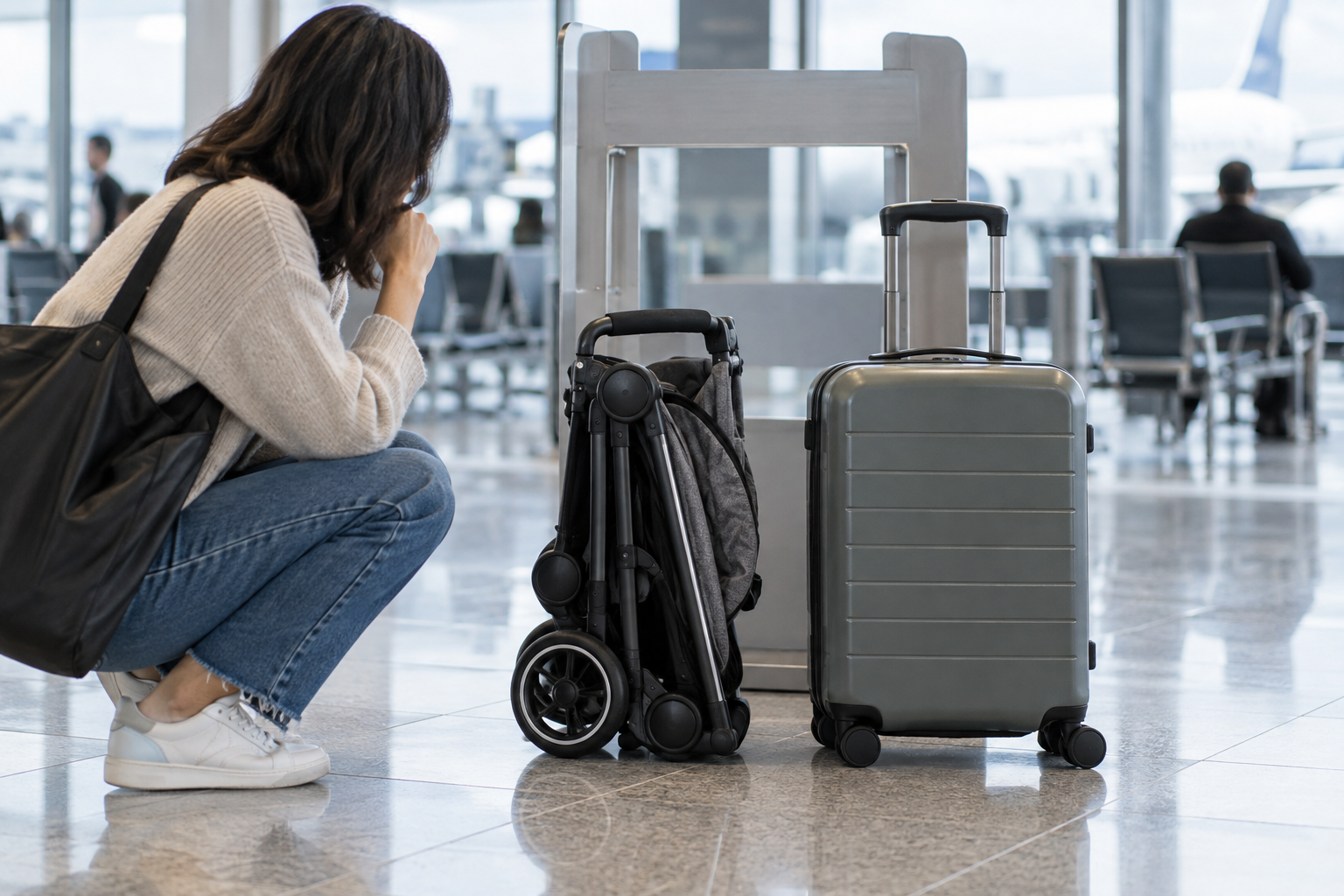
“Cabin stroller” describes an intended use; it is not a guarantee that every airline will let you place the stroller in an overhead bin. Cabin-baggage limits vary, and the decision can also depend on the aircraft and available storage. A stroller that fits published limits may still need to be checked at the gate.
Check the operating airline’s current rules for your specific trip. If another airline operates one leg under a codeshare, check that carrier too. Compare the airline’s permitted dimensions with the entire folded package you plan to board with, including any cover or bag. Save the relevant baggage page or take a screenshot before leaving home, but still prepare for gate checking.
That backup plan should protect both the stroller and the items you need during the flight. Use an appropriate travel cover if the stroller may enter the hold. Remove loose accessories, label the stroller and keep medication, feeding supplies, documents and a change of clothes in your personal bag. Do not leave anything essential in a stroller basket that could disappear at the aircraft door.
Also think past the overhead bin. The more revealing test is the full route from home to destination: front steps, transit barriers, security trays, jet bridges, rental cars and hotel entrances. A few minutes saved at boarding may not compensate for a stroller that is uncomfortable to push during the rest of the trip.
Match the exact configuration to your child’s stage
Do not assume that a stroller seat is suitable from birth because the wider product family offers a newborn option. Newborn use may depend on a particular approved configuration, such as a dedicated newborn pack, carrycot or compatible infant car seat. The regular seat does not automatically become newborn-ready because another component can attach to the frame.
Check the YOYO5 manual or official product information for the age, developmental and weight limits of the exact configuration you intend to buy. If you plan to attach a car seat, verify the precise car-seat model and adapter rather than relying on brand compatibility. Product lines change, and an adapter that works with one seat from a brand may not work with another.
For a child who already sits in the regular stroller seat, assess fit in person if possible. Buckle the harness according to the instructions and look at shoulder room, seat depth, leg position and access to the footrest. Recline the seat through the positions you expect to use. Check how easily you can reach the buckle and adjustments when your child is wearing seasonal clothing.
Bring the child who will ride in it rather than judging an empty display model. A beautifully compact frame can still be the wrong shape for a particular toddler. Stay within every manufacturer limit, use the harness as directed and do not add unapproved cushions or attachments to correct a poor fit.
If naps are part of your travel plan, check the available recline and canopy coverage, but keep the stroller’s role in perspective. Follow the manufacturer’s supervision and sleep instructions; a travel stroller should not be treated as an overnight sleep space unless its documentation explicitly approves a particular configuration for that purpose.
Price the stroller you will actually travel with
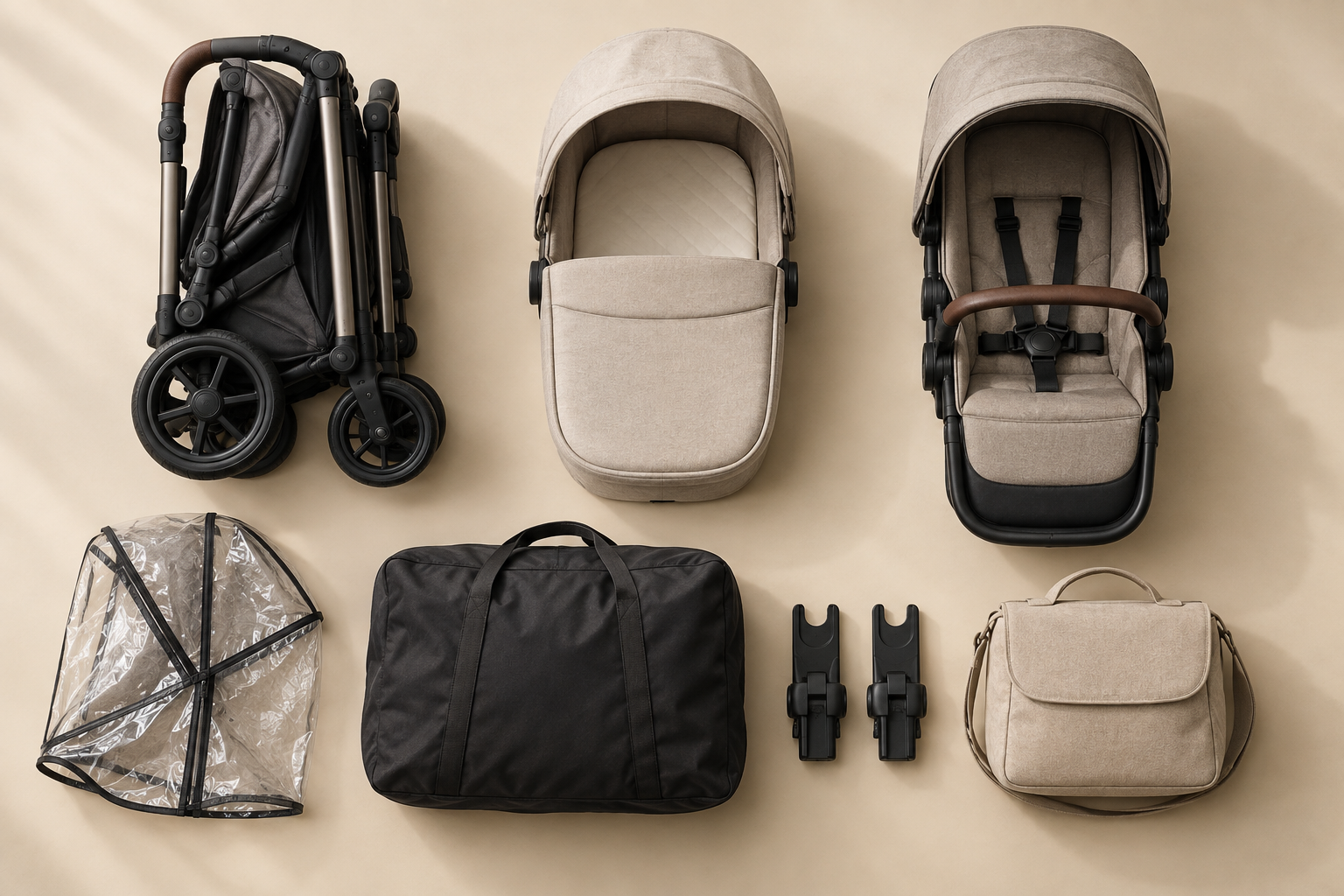
The chassis price rarely tells you the full cost of a travel setup. Ask what is included in the box for your market and retailer. Then account for only the extras your route requires: the correct newborn component, a compatible car-seat adapter, rain protection, a travel cover or other approved accessories.
Accessories can also change portability. A cup holder, organizer or bumper bar may have to come off before folding. A travel bag adds bulk. Items hanging from the handle can affect stability, so use only approved accessories and observe the stated loading limits for the handle and basket. Test the fold with your intended setup rather than assuming the display stroller represents the package you will carry.
Before buying, confirm the return conditions after assembly and outdoor use. Keep the packaging until you have completed an indoor test. Fold and unfold the stroller, adjust the harness, load your normal diaper bag, roll it over the thresholds in your home and place the folded package where it must be stored. If possible, check it against your trunk or building entrance before the return window closes.
Parents planning to use the stroller for several years should also ask about replacement wheels, textiles and other wear parts in their region. Confirm how fabrics are meant to be cleaned and how warranty service works where you live. Easy access to the parts you are likely to wear out can matter more than an accessory you use once.
Key takeaways
- Buy against one clearly defined problem, such as stair carrying, trunk space or an awkward fold.
- Treat cabin acceptance as an airline decision, not a promise made by the stroller category.
- Verify the exact configuration approved for your child’s stage; newborn compatibility may require separate components.
- Test the stroller with your child, normal diaper bag and intended accessories before judging its fit.
- Compare the complete cost and folded package, not just the chassis price, weight or display model.
- If you already own a compact stroller that handles your route well, upgrade only for a change you can demonstrate.
Your next step is simple: map one ordinary outing from your front door to your destination and mark every place where a stroller becomes work. If the YOYO5 clears those points with the configuration your child needs, it belongs on your shortlist. If it solves only an imagined airport problem, keep looking or keep the stroller you already have.
References