
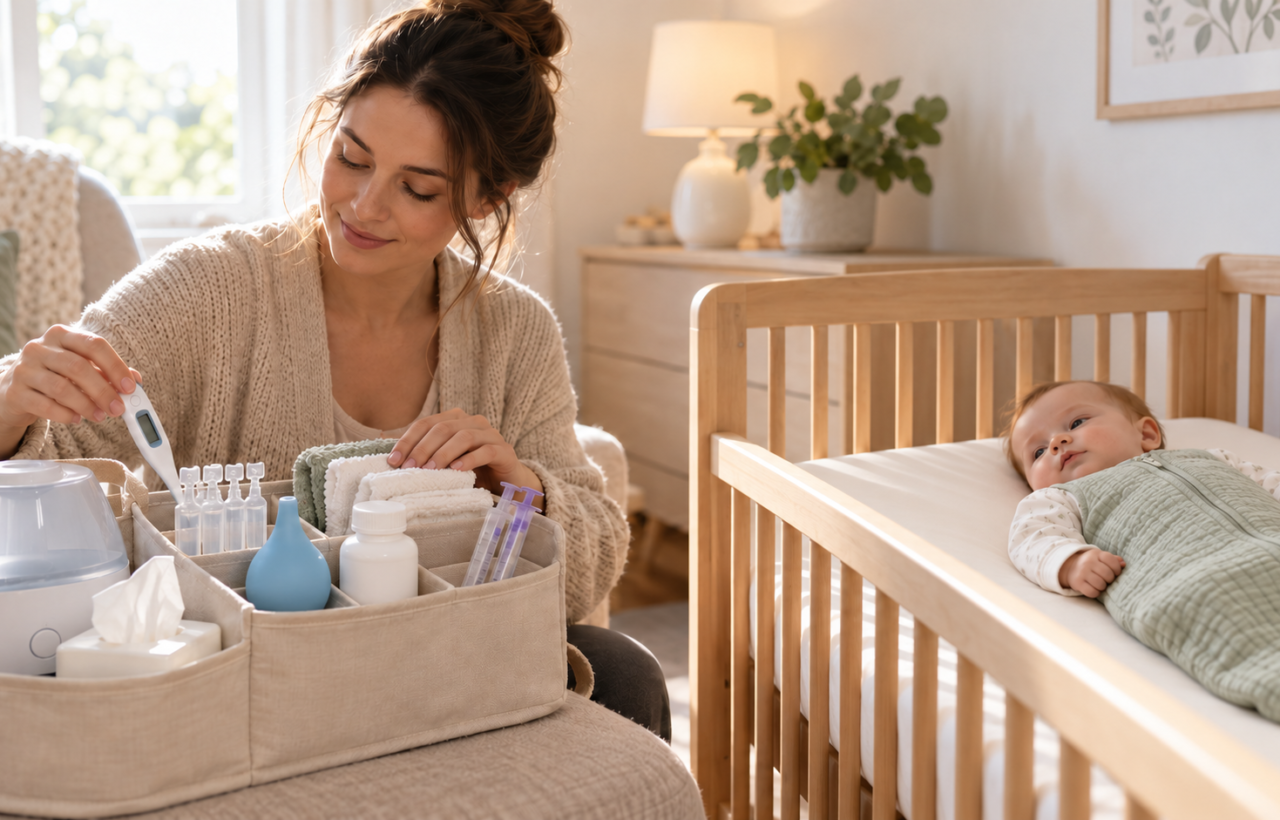
When your baby wakes congested, hot, or too uncomfortable to feed normally, you do not want to search three cupboards for a thermometer and then discover its battery is dead. A useful sick-day kit puts the right supplies, instructions, and phone numbers in one place before you are tired and worried.
The goal is not to treat every illness at home. It is to make basic comfort care easier, prevent avoidable medication mistakes, and help you notice when your baby needs professional care.
Build the kit around nine practical essentials
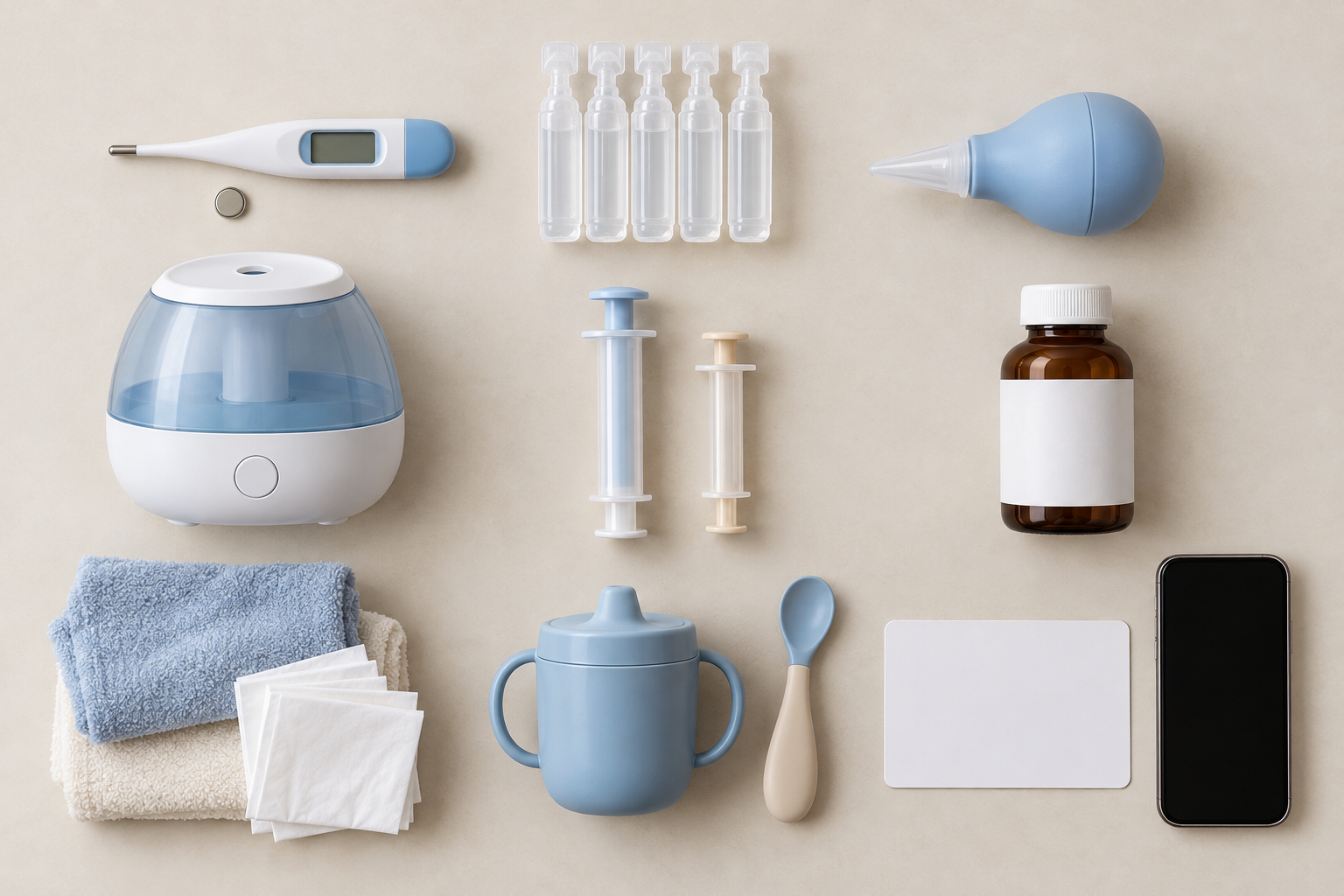
A nine-part baby sick-day kit works best when each item has a clear job. Store everything together in a lidded container or portable caddy, but keep all medicines locked or otherwise secured out of reach.
- 1. An age-appropriate digital thermometer. Choose a model whose instructions clearly explain how to use it with your child’s age group. Read those instructions now, not during a fever. Add a spare battery if the model uses a replaceable one. When you take a temperature, record the result, the time, and how it was measured because the measurement method matters.
- 2. Saline nose drops or spray labelled for babies. Saline can help loosen mucus before feeding, sleep, or gentle suction. Check the seal and expiry date. Do not substitute a medicated nasal product unless your child’s clinician has specifically recommended it.
- 3. A nasal aspirator. Pick one you can take apart, wash, and dry completely. Test how it works while your baby is well. Use it gently after saline and stop if the nostrils become irritated or bleed; more suction is not necessarily more helpful.
- 4. A cool-mist humidifier. Look for a model with a tank and base you can easily reach for cleaning. Cool mist adds moisture without the burn risk created by hot water or steam. Empty, clean, and dry the unit according to its manual so standing water and residue do not build up.
- 5. Clinician-approved fever or pain medicine. Keep only products that a doctor, nurse practitioner, or pharmacist has confirmed are suitable for your child’s current age and weight. Leave each medicine in its original child-resistant package so its name, concentration, expiry date, and instructions stay with it.
- 6. The correct measuring device. Keep the supplied oral syringe, dosing cup, or other marked device with its matching medicine. A kitchen spoon is not a measuring tool. If you have more than one liquid medicine, label the syringes so they do not get mixed up.
- 7. Familiar feeding and hydration supplies. Set aside clean items used for your child’s usual milk, meals, or drinks, such as bottle parts, nursing cloths, or an age-appropriate cup. Illness is not the time to improvise a special drink, dilute formula, or introduce a rehydration product without professional guidance.
- 8. Simple comfort and clean-up supplies. Include soft cloths, tissues, extra bibs, diapers, a change of sleepwear, a washable changing pad, and the diaper cream your child already tolerates. These are ordinary items, but keeping them within reach reduces unnecessary movement when you are holding an uncomfortable baby.
- 9. A written care sheet and symptom log. List your child’s clinic, pharmacy, after-hours health service, and local emergency number. Add known allergies, current medicines, and the date of the most recent weight used for dosing advice. Leave space to record temperatures, medicine doses, feeds, wet diapers, symptoms, and calls with health professionals.
Check the kit whenever your child moves into a new age or weight range, after you use it, and when a product expires. A dosing plan that once applied to your child or to a sibling should not be assumed to apply now.
Make the medication step difficult to get wrong
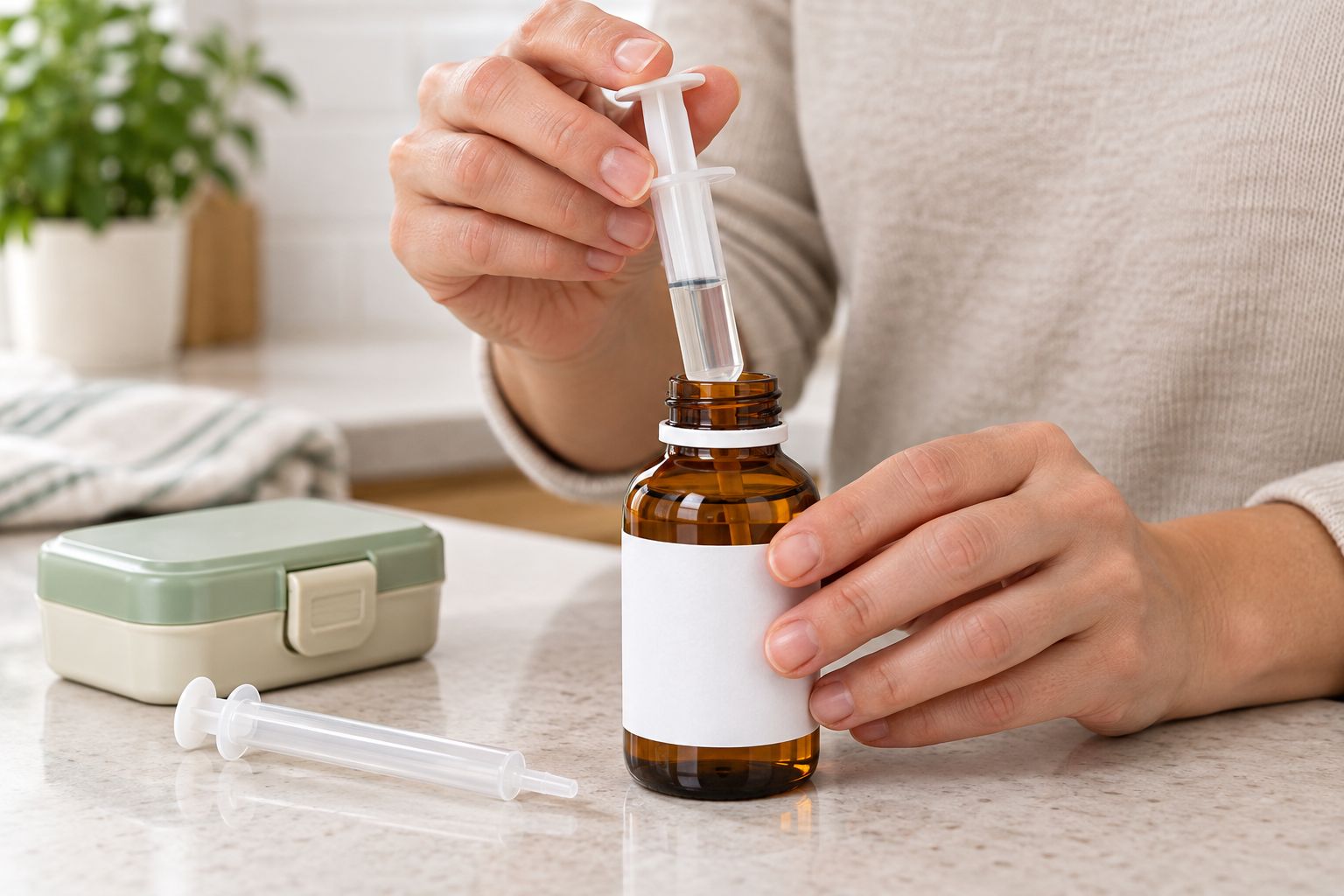
Medication errors are more likely when several adults are sharing care, the packaging looks similar, or everyone is working from memory. Before your child is sick, ask a clinician or pharmacist what product is appropriate, which concentration to buy, how the dose will be determined, how often it may be given, and which symptoms should prompt a call instead.
- Check the exact bottle every time. Product names and liquid concentrations can differ. Use the instructions for the container in your hand, not an old note for another formulation.
- Measure with the supplied device. Draw liquid medicine to the prescribed marking while the syringe is at eye level. Do not estimate between unclear markings; ask a pharmacist for a suitable syringe.
- Record a dose immediately. Write down the medicine, amount, and time before putting the bottle away. Anyone taking over care should read the log before giving anything.
- Do not combine or alternate products on your own. Different brands can contain the same active ingredient. Combining them can result in an accidental extra dose, even when the labels look unrelated.
- Keep cough, cold, and medicated nasal products out of the routine kit unless specifically approved. A familiar brand name does not make a product appropriate for a baby or young toddler.
- Secure everything after use. A sick-day caddy may be portable, but medicine should never remain on a bedside table, changing surface, or floor where a mobile child can reach it.
If the label, concentration, dose, or timing is unclear, pause and call a pharmacist or your child’s health professional. Guessing is not worth the risk.
Use the kit in the same order each time
A simple sequence helps you focus on the child rather than the supplies. It also creates a clearer record if you need to call for care.
- Look at breathing and responsiveness first. Before taking a temperature, notice whether your child can wake and interact, whether their colour looks normal, and whether breathing appears comfortable. Serious trouble with breathing or responsiveness takes priority over home care.
- Take and record the temperature. Use the method recommended for your child’s age and note how you measured it. Do not rely on touch alone when a fever may affect what you do next.
- Make nasal breathing easier. Use infant saline and gentle suction when congestion interferes with feeding or settling. Clean the aspirator after use. For sleep in a crib or bassinet, keep the sleep surface flat and free of loose comfort items rather than improvising an incline.
- Offer familiar fluids and feeds. Follow your child’s usual feeding method and offer manageable opportunities to drink or feed. Do not force a child who is struggling to breathe, repeatedly vomiting, or unable to swallow; those problems need medical advice.
- Give medicine only when the plan is clear. Confirm the product, concentration, amount, and last-dose time. Measure it with the matching device and enter it in the log immediately.
- Track changes, not just isolated readings. Note breathing, alertness, feeds, wet diapers, vomiting, new rashes, and whether symptoms are improving or worsening. The pattern can be more informative than a single moment.
- Reset the kit after the illness. Wash and dry reusable equipment, discard single-use items appropriately, replenish supplies, check expiry dates, and return medicines to secure storage.
Know when the kit is not enough

A thermometer, humidifier, or aspirator can support comfort and observation, but none can rule out a serious illness. Call emergency services if your child is struggling for each breath, has pauses in breathing, develops blue or grey lips or facial colour, cannot be awakened or respond normally, or has a seizure. Do not delay emergency help while trying another item from the kit.
Contact a health professional promptly when breathing becomes faster, noisier, or harder than usual; the skin pulls in around the ribs; your child cannot keep fluids down; feeding drops sharply; wet diapers become noticeably less frequent; the mouth looks unusually dry; a fever appears with a concerning rash; or the child is getting worse rather than gradually settling.
Age changes the urgency of a fever, especially for the youngest infants. Ask your child’s clinician in advance which temperature, measurement method, symptoms, and age-related circumstances require an immediate call. If a fever occurs before you have that plan, call rather than guessing from advice written for an older child.
You also do not need to wait for a dramatic sign if something looks distinctly wrong. Tell the clinician exactly what changed, when it changed, how your child is breathing and responding, what they have taken in, and what you have already given. Your written log makes that conversation faster and more precise.
Key takeaways
- Keep nine essentials together: a thermometer, infant saline, an aspirator, a cool-mist humidifier, approved medicine, its measuring device, familiar feeding supplies, clean-up items, and a written care sheet.
- Confirm medication choices and dosing with a qualified health professional for your child’s current age and weight.
- Record every temperature, dose, feed, and meaningful symptom change as it happens.
- Check breathing and responsiveness before focusing on comfort measures.
- Use the kit for basic care and observation, not as a reason to delay medical help when warning signs appear.
Set up the caddy while your child is well, save the important numbers in your phone, and ask for an age-specific fever and medication plan at the next routine appointment. Those few preparations turn a stressful sick night into a series of clearer decisions.
References



