
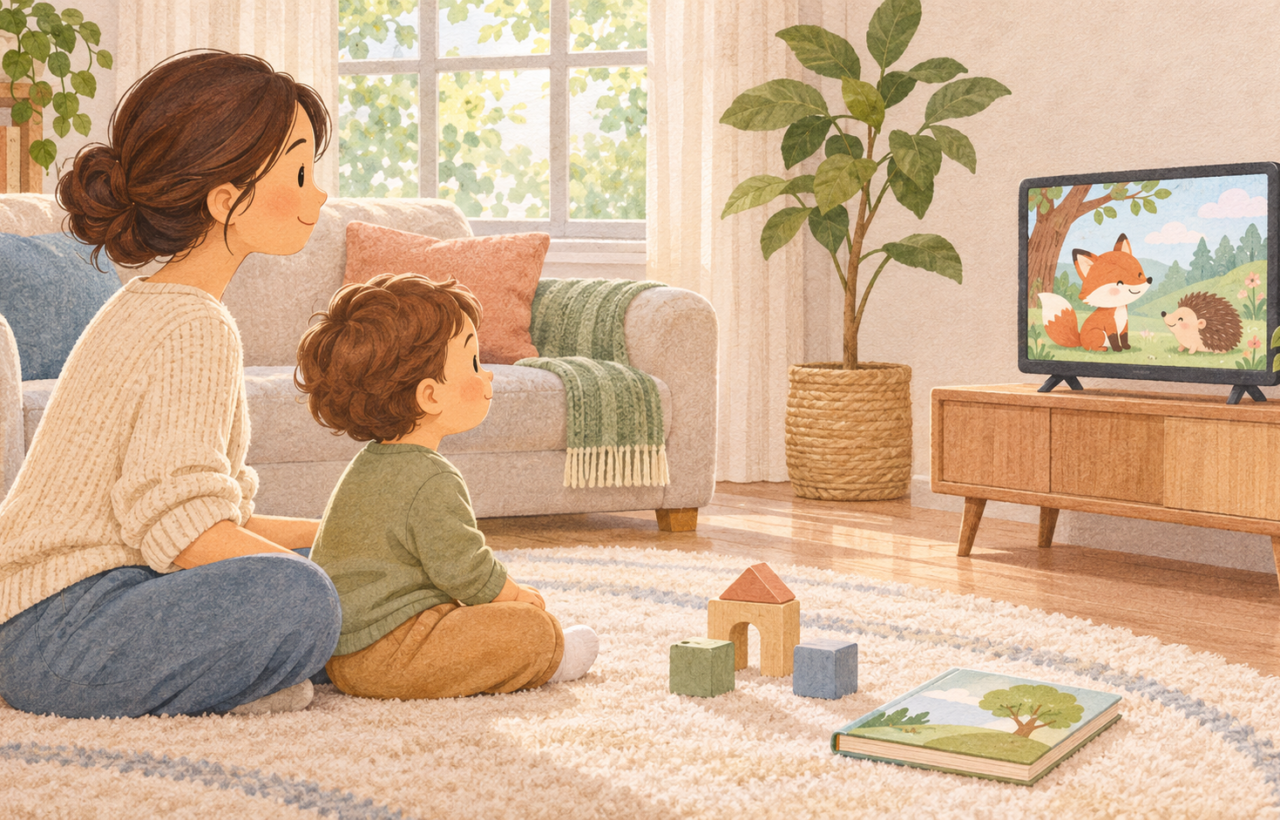
You want a screen-time option that gives everyone a quieter pause, not a session that leaves your toddler demanding more and struggling to move on. Miffy and Friends is a promising choice for that job, provided you treat the program and the viewing routine as two separate decisions.
The series offers gentle adventures and small lessons about friendship, kindness and growing up. But even gentle content cannot make every child calm or remove the difficulty of turning a screen off. The useful question is not simply, “Is Miffy calm?” It is, “Does this program, at this time and with this stopping routine, work calmly for my child?”
What Miffy and Friends can – and cannot – do
Miffy and Friends is built around gentle adventures, familiar friendships and everyday lessons. You may find it on Sky Kids and NOW, depending on the services and catalogue available where you live.
That makes it a sensible candidate when you want a softer viewing experience. The stories give you something concrete to talk about afterward: a kind choice, a friendship moment or a small part of growing up. You do not have to manufacture a lesson or turn the episode into homework.
Still, “gentle” describes the content, not a guaranteed reaction. A toddler may love the characters so much that stopping is difficult. Another may lose interest quickly. A scene that seems harmless to you may worry your child for reasons they cannot yet explain. The title cannot tell you whether the timing, setting or transition will suit your family.
Use calm as an observation rather than a label. Notice what your toddler does while watching, what happens when the story ends and how easily they return to the rest of the day. Those signs are more useful than deciding in advance that a particular program must be calming.
Set the boundary before you press play
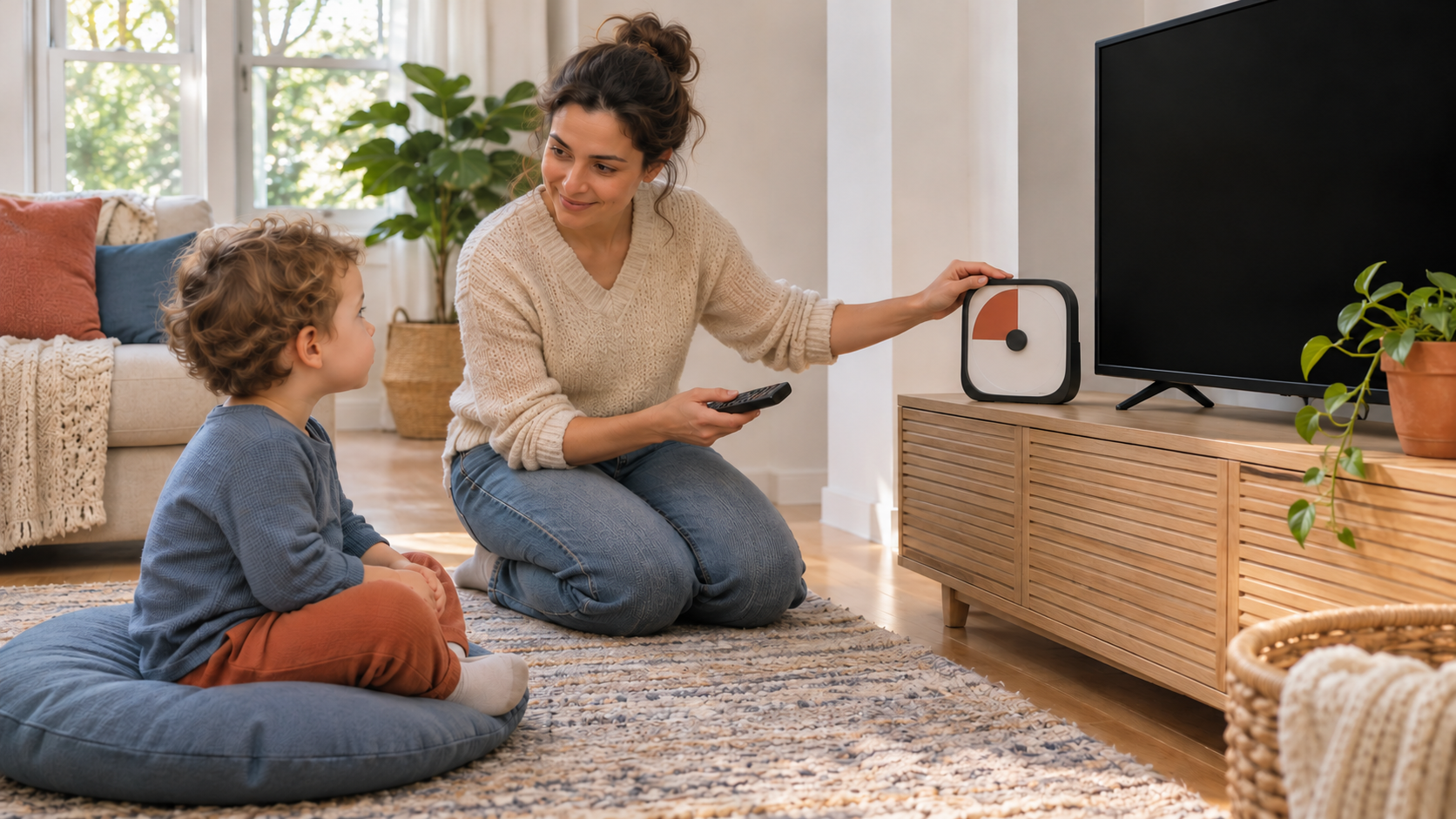
Many screen-time struggles begin at the end because the ending was never made clear at the start. “You can watch Miffy” sounds open-ended to a toddler. A visible endpoint and a named next activity make the sequence easier to understand.
- Name what is happening. Try, “We are watching one Miffy story while I finish getting dinner ready.” This tells your child that viewing has a place in the routine rather than continuing indefinitely.
- Choose the stopping point yourself. An episode ending is easier to recognize than an abstract amount of time. If you need to stop earlier, say what the endpoint will be before the program starts.
- Say what comes next. Use something specific: “When Miffy is finished, the screen goes away and we wash hands for dinner.” “Something else” is too vague to help a toddler picture the transition.
- Keep the next episode from deciding for you. If another story begins automatically, be ready to stop it. A new opening can feel like a fresh promise just as you are asking your child to leave.
Keep the wording short. A long explanation can sound like negotiation, especially when your toddler is already focused on the screen. The important information is the program, the endpoint and what comes next.
Timing matters too. A gentle program may still be a poor fit when your child is hungry, overtired or waiting for something they strongly dislike. If the same episode ends smoothly at one point in the day and badly at another, look at the surrounding routine before blaming the content.
Judge the program by your child’s response
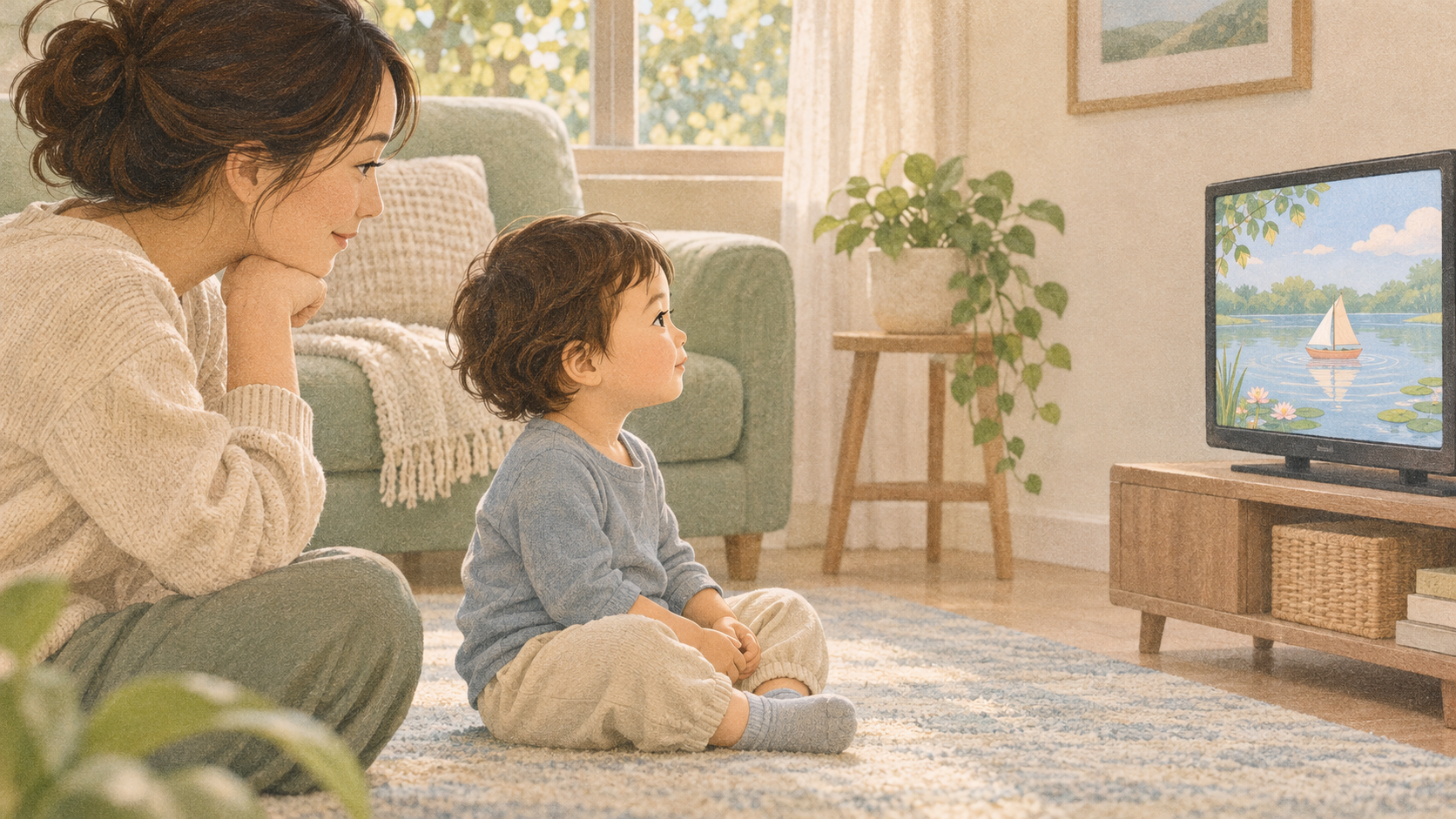
Watch the first viewing with your child when you can. You are not trying to quiz them or provide constant commentary. You are learning what catches their attention, whether anything unsettles them and how they react when the story closes.
Do not use perfect stillness as the test. Toddlers move, talk and repeat actions as part of watching. Instead, look for a pattern across the whole session:
- Your child can stay with the story without repeatedly asking to switch to something else.
- They do not seem persistently worried by a character, sound or situation.
- They can reach the planned ending without needing a constant stream of new clips or choices.
- Afterward, they can return to food, play, getting dressed or another ordinary activity with the support they normally need.
- References to the story show up in play or conversation without crowding out everything else.
A protest when the screen turns off does not automatically mean Miffy and Friends is the wrong choice. Toddlers often object when an enjoyable activity ends. Compare the reaction with your child’s usual transitions. The more telling question is whether the upset settles with a clear boundary and your presence, or whether viewing repeatedly makes the rest of the routine much harder.
If a particular part seems upsetting, pause and name what you noticed: “That made you worried.” You can watch alongside your child another time, skip that story or choose a different activity. A program does not need to be objectively frightening to be a poor fit for your toddler.
Make the ending as predictable as the beginning
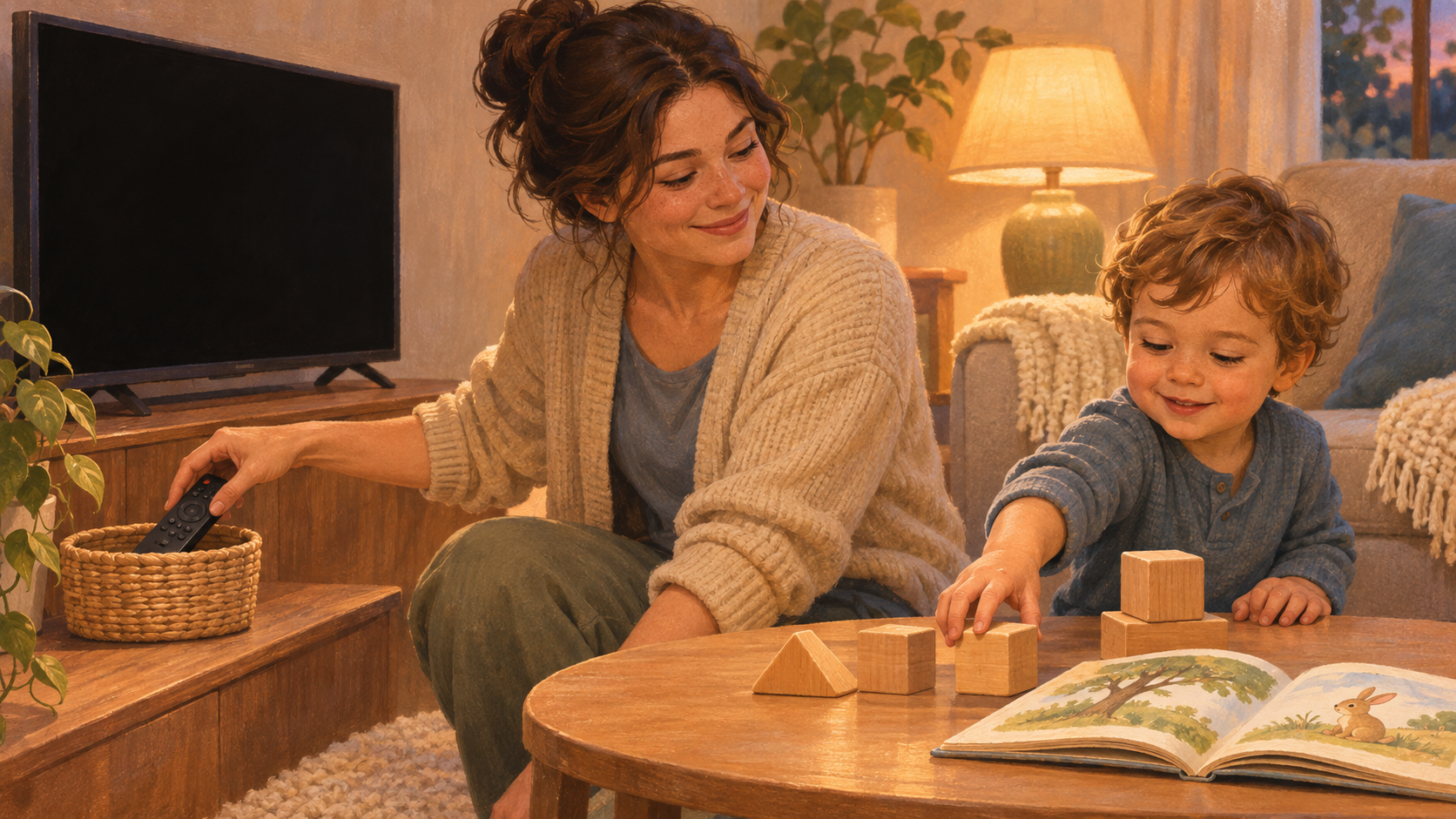
The final scene is your cue to begin the transition, not the moment to decide whether there will be more. Use the same simple language each time:
- Before viewing: “When the Miffy story ends, the screen goes off and we get the blocks.”
- Near the end: “Miffy is nearly finished. Then it is block time.”
- Afterward: “Miffy is finished. You can choose the blue blocks or the wooden blocks.”
The choice comes after the boundary. Your toddler can choose between two next activities, but not whether the agreed ending still counts. If you restart the program immediately after a protest, the original stopping cue no longer means what you said it meant.
If your child is upset, you can acknowledge that without opening a debate: “You wanted more Miffy. It is hard to stop. The screen is finished.” Put the device out of sight, stay close and start the next concrete action. Handing over the blocks, carrying a cup to the table or choosing a book gives your child something to do rather than merely something to stop doing.
The themes can also bridge screen time and play. Ask one simple question such as, “Who was kind?” A younger toddler does not need to answer. You can demonstrate with toys by having one character help another. A more verbal toddler may want to retell a moment or act it out. This keeps the useful part of the story while making it clear that the screen itself is finished.
If endings remain difficult, change one part of the routine at a time. Try a different time of day, a clearer endpoint or a more inviting next activity. If the reaction stays intense every time, Miffy and Friends may still be gentle television, but it may not be the calm choice your child needs right now.
Key takeaways
- Miffy and Friends is a plausible calmer viewing choice because its adventures and lessons focus on friendship, kindness and growing up.
- A gentle program does not guarantee a calm child. Judge the fit by what happens during viewing, at the stopping point and afterward.
- Before the screen turns on, name the endpoint and the activity that will follow.
- Use the end of the story as the transition cue, and prevent an automatically starting episode from changing the plan.
- If your toddler protests, keep the boundary brief, acknowledge the feeling and begin the next concrete activity.
- Carry a friendship or kindness moment into play instead of extending screen time to keep the experience going.
Start with one planned Miffy story at a time when your toddler is usually comfortable. Watch what happens after the credits as closely as what happens on the screen. That response will tell you whether you have found a genuinely calmer routine or simply a gentler-looking program.
References



