

If your toddler asks for CoComelon as soon as the screen turns on, you do not need a magical replacement or a sudden ban. You need a few acceptable alternatives, a clear way to choose among them, and a predictable routine for introducing something new.
For ready-made candidates, begin with this shortlist of nine toddler shows that mix entertainment and education. Then use the plan below to find the options that fit your child, your household, and the moment in which you actually use screen time.
Key takeaways
- Work out whether your toddler is seeking songs, familiar characters, participation, a simple story, or the comfort of a routine.
- Introduce one alternative alongside familiar choices instead of replacing the entire viewing routine at once.
- Decide what is available before the screen turns on. An endless home screen is not a useful toddler menu.
- Judge a show by both its content and the friction around it, including autoplay, interruptions, stopping points, and availability.
- A successful rotation does not have to exclude CoComelon. The goal is to make it one intentional option rather than the automatic answer.
Find the request hiding behind “CoComelon again”
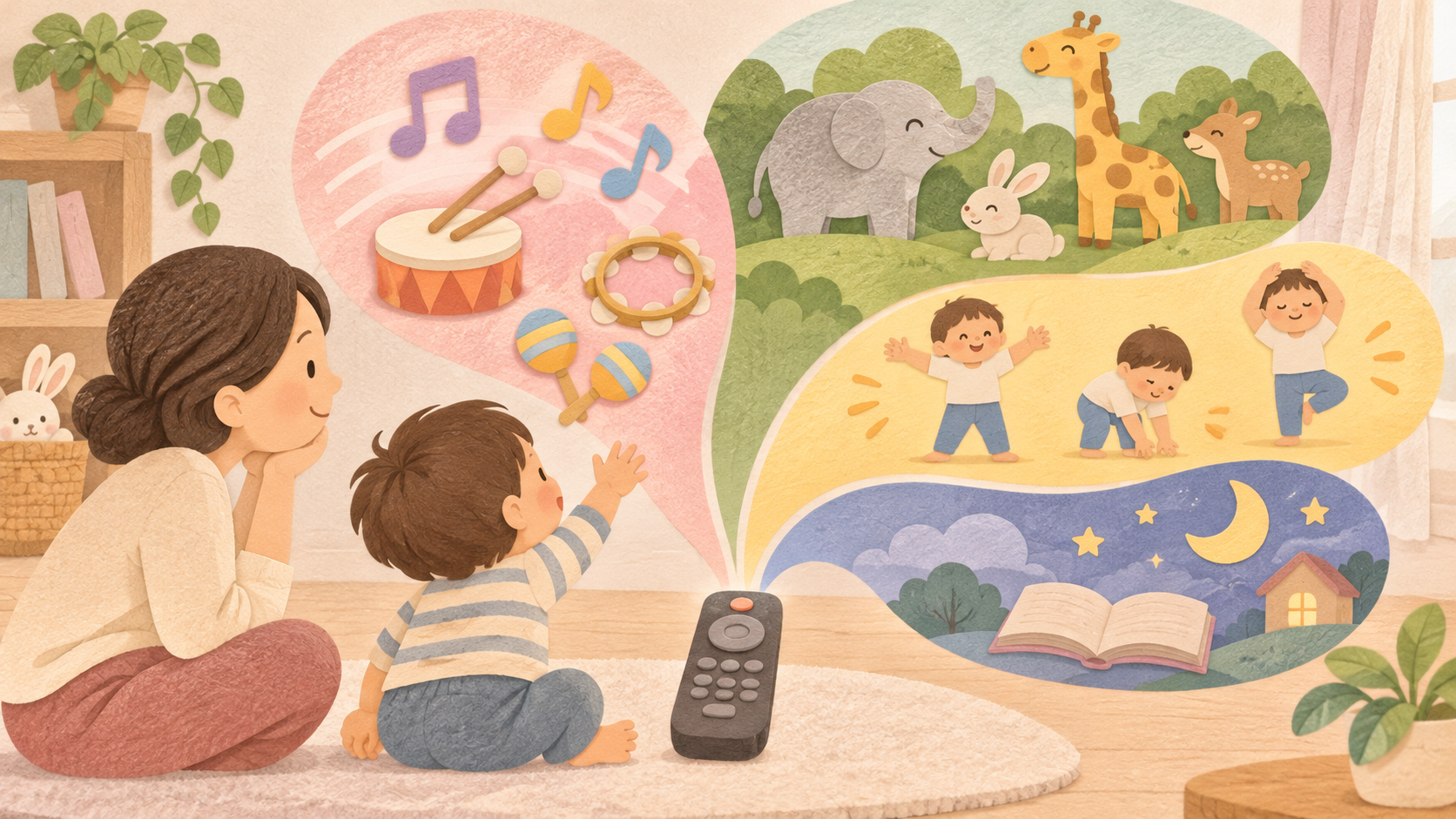
A toddler may use the name of a familiar show to ask for several different things. They may want music, a known sequence, recognizable characters, or simply the routine that normally follows when you press play. Choosing a useful alternative starts with noticing which part matters.
- Listen for a song request. If your child sings, hums, or performs a gesture before the show begins, start with another music-led or sing-along option.
- Watch for character attachment. If they talk about particular characters rather than songs, try a show with a small recurring cast and easy-to-follow situations.
- Notice participation. A child who copies movements or answers the screen may prefer a show that invites singing, dancing, pointing, or responding.
- Look at the timing. If the request appears during the same transition every day, the show may be functioning as a routine cue. Keep the surrounding routine familiar while you change the program.
- Pay attention to wandering away. If your toddler requests the show but stops watching after the opening, the starting ritual may matter more than the full episode.
If your child is not yet able to explain a preference, use observable clues: pointing, singing, copying, moving closer, losing interest, or asking to leave. Before the next viewing, complete this sentence for yourself: “They seem to want a show that lets them ____.” That answer gives you a better search criterion than “similar to CoComelon.”
Choose the next show by the job it needs to do
Do not expect every alternative to work in every situation. A lively sing-along may suit an active part of the day but feel wrong when your family needs a quiet transition. A simple story may hold attention at one time and fall flat when your toddler wants to move.
Give each candidate a job before you offer it:
- The singing choice: for a child who wants recognizable music, repetition, and actions they can copy.
- The story choice: for a child who is beginning to follow characters through a simple problem and resolution.
- The movement choice: for moments when sitting still is not realistic and participation is welcome.
- The quiet choice: for a calmer transition, with a pace and sound level that suit that part of your routine.
- The learning choice: for introducing words, concepts, or everyday situations in an entertaining format.
These labels are for you, not a promise about what every toddler will enjoy. They help you avoid comparing unlike options. If you need a quiet show and choose the most energetic candidate, rejection or overstimulation does not tell you whether that show could work at another time.
Check practical fit as well. Confirm that the show is available through a service you already intend to use, that you can reach the correct episode without scrolling past unsuitable recommendations, and that the platform settings match your household’s boundaries. A good program trapped inside a frustrating viewing setup is not a good addition to your rotation.
Introduce a new show before a conflict begins

The hardest moment to propose something unfamiliar is after your toddler sees the CoComelon thumbnail or hears its opening sound. Make the decision earlier, while you can still present it as the plan rather than as a last-second refusal.
- Choose the category first. Decide whether this is a singing, story, movement, quiet, or learning-show moment.
- Offer only choices you accept. Instead of opening a streaming home screen, show your toddler the prepared options and let them point or answer.
- Say what is happening in plain language. Try, “Today we are watching the new singing show,” rather than asking an open-ended question when CoComelon is not actually available.
- Keep the rest of the routine steady. Use the usual place, device, and ending cue so the program is the only major change.
- Respond briefly to disappointment. “You wanted CoComelon. Today is the story show” acknowledges the request without reopening the decision.
- Try again in a different context if the fit is unclear. A tired, hungry, or distracted viewing does not give you much information about whether the show belongs in the rotation.
Avoid making the new show a hurdle your toddler must endure before receiving CoComelon. That arrangement can make the familiar program feel like the prize and the alternative feel like a delay. If CoComelon is part of the plan, present it as its own choice on another occasion rather than as the guaranteed reward for rejecting everything else.
Use a parent check as well as a toddler check
Your toddler’s immediate reaction matters, but it is not the only test. A show can hold attention while making every start and stop difficult. Another can look educational yet have a format your child does not follow. Watch the first trial closely enough to assess the whole experience.
- Engagement: Does your child sing, respond, follow the action, or return their attention naturally? Quiet attention and active participation can both count; you are looking for a fit with the show’s intended experience.
- Comprehension: Can your toddler recognize what is happening at their level, or does the program seem to function only as disconnected sound and motion?
- After-effects: What happens when it ends? Notice whether the stopping point is understandable or whether autoplay and abrupt transitions turn the ending into a negotiation.
- Household tolerance: Can the adults in the room comfortably hear the dialogue or music repeatedly? Irritation is practical information because toddler favourites tend to be requested again.
- Platform friction: Can you find the show directly, control what plays next, and avoid unwanted previews or recommendations?
- Family fit: Are you comfortable with the language, behaviour, themes, and way characters handle problems?
Sort the result into three simple buckets. Keep a show when the content and viewing setup both work. Retry it when the reaction is neutral or the timing was poor. Remove it when the content conflicts with your boundaries, the platform creates unwanted exposure, or every viewing creates more friction than the show is worth. You do not need to persuade your toddler to like every well-regarded option.
Build a rotation your toddler can understand
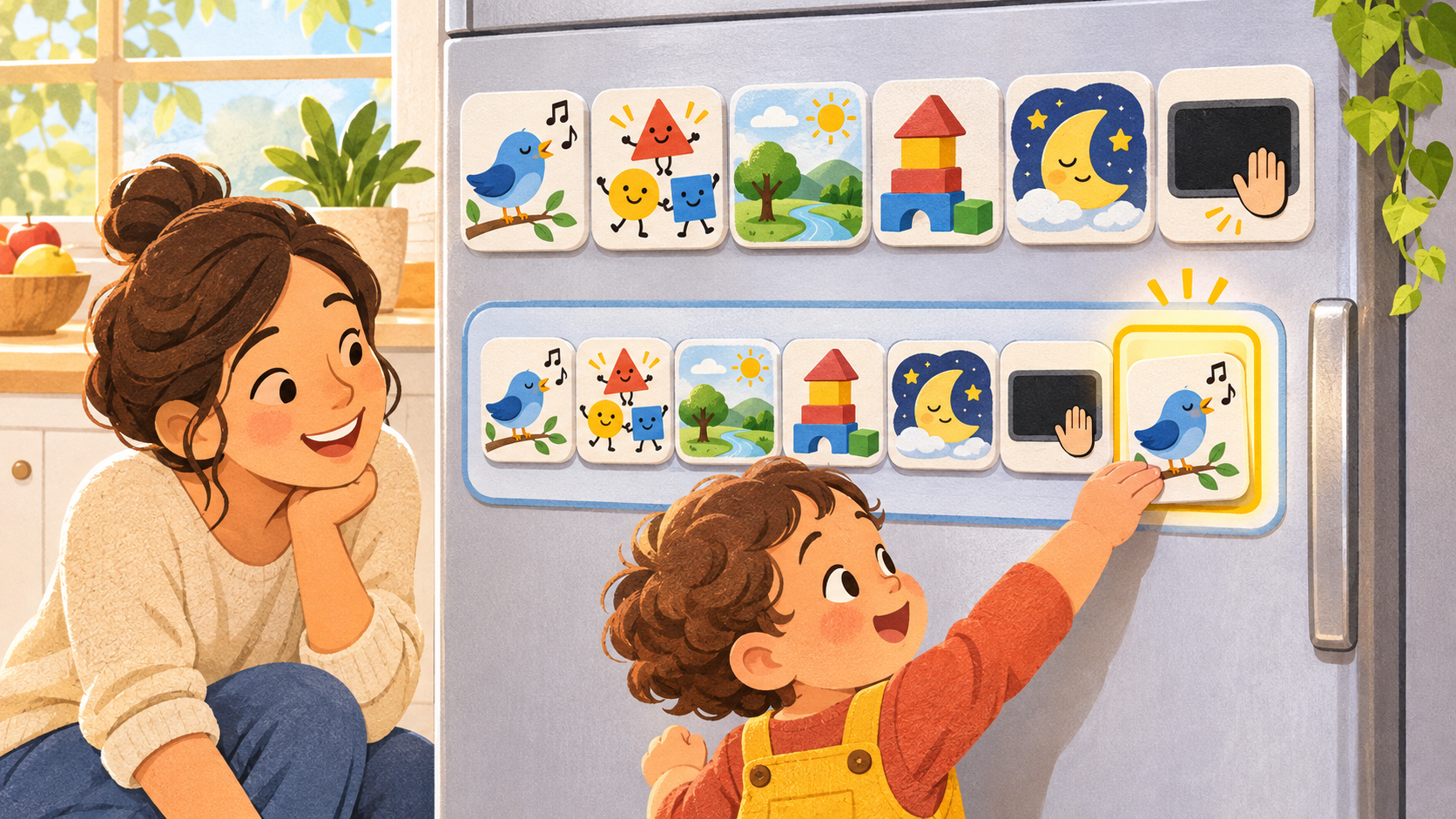
A rotation works best when it feels like a small, recognizable menu. Create a card or note with a few categories your child can understand. A music note can represent singing shows, a book can represent stories, and a dancing figure can represent movement. Add a picture for each approved program beneath the appropriate symbol.
You still decide whether it is screen time and which choices are available. Your toddler chooses among those options. This separates the adult boundary from the child’s preference: the boundary is not up for negotiation, but the child still has a meaningful role.
Use the same short language each time: “It is a singing-show day,” “Choose a story,” or “The episode is finished, so the screen is going off.” Predictable wording makes the routine easier to recognize and prevents every viewing from becoming a new set of rules.
At your next viewing, make just three decisions before the screen turns on: what need the show should meet, which candidate you will offer, and how the session will end. That is enough to begin turning CoComelon from the automatic default into one deliberate part of a more varied rotation.
References



