
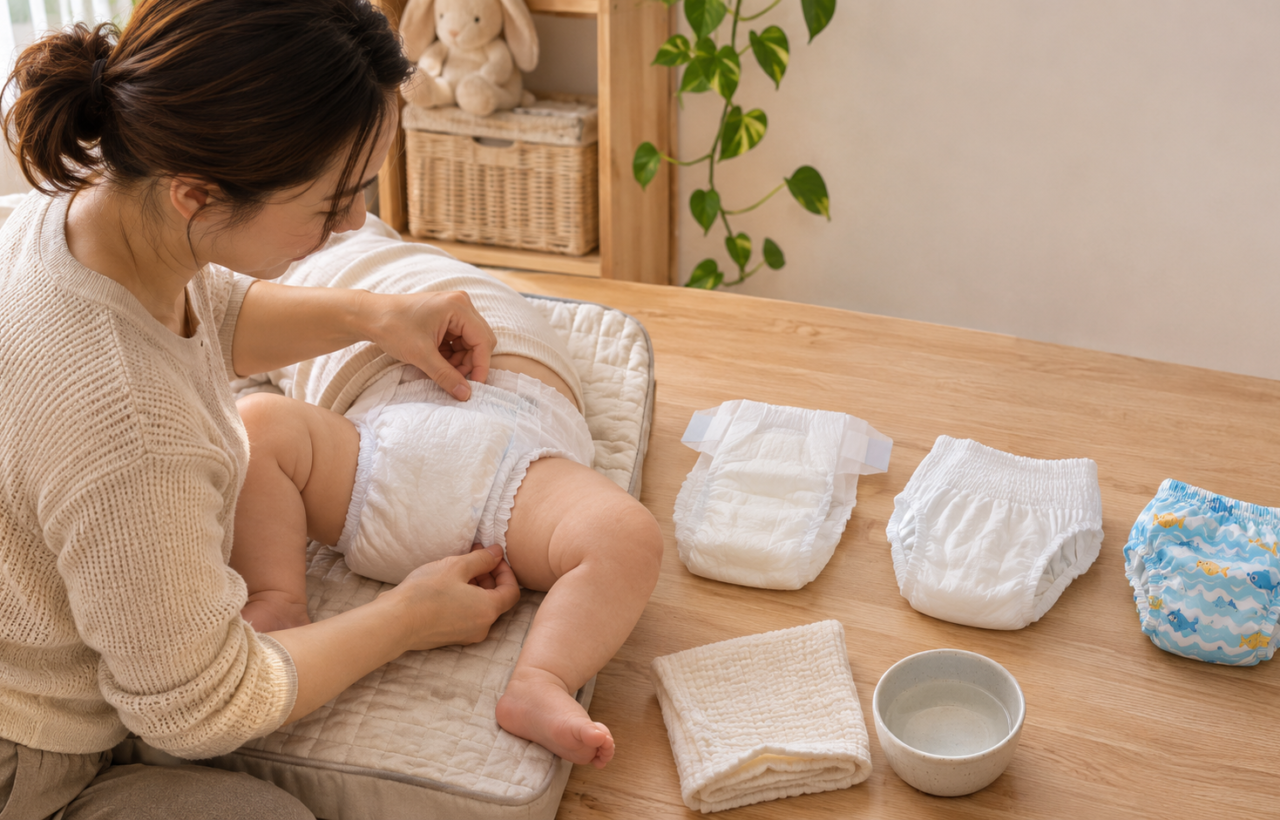
If you are standing between two sizes, dealing with another back blowout, or wondering whether a red patch means you need a sensitive-skin diaper, do not start with a search for the single best brand. Start with the failure you can actually see: where the diaper leaks, how it sits on your baby, when it fails, and what touches the skin.
The right diaper is usually a match between three things: your baby’s body shape, the job the diaper has to do, and any skin sensitivities you need to accommodate. Treat those as separate decisions and the diaper aisle becomes much easier to navigate.
Read the fit before changing the size
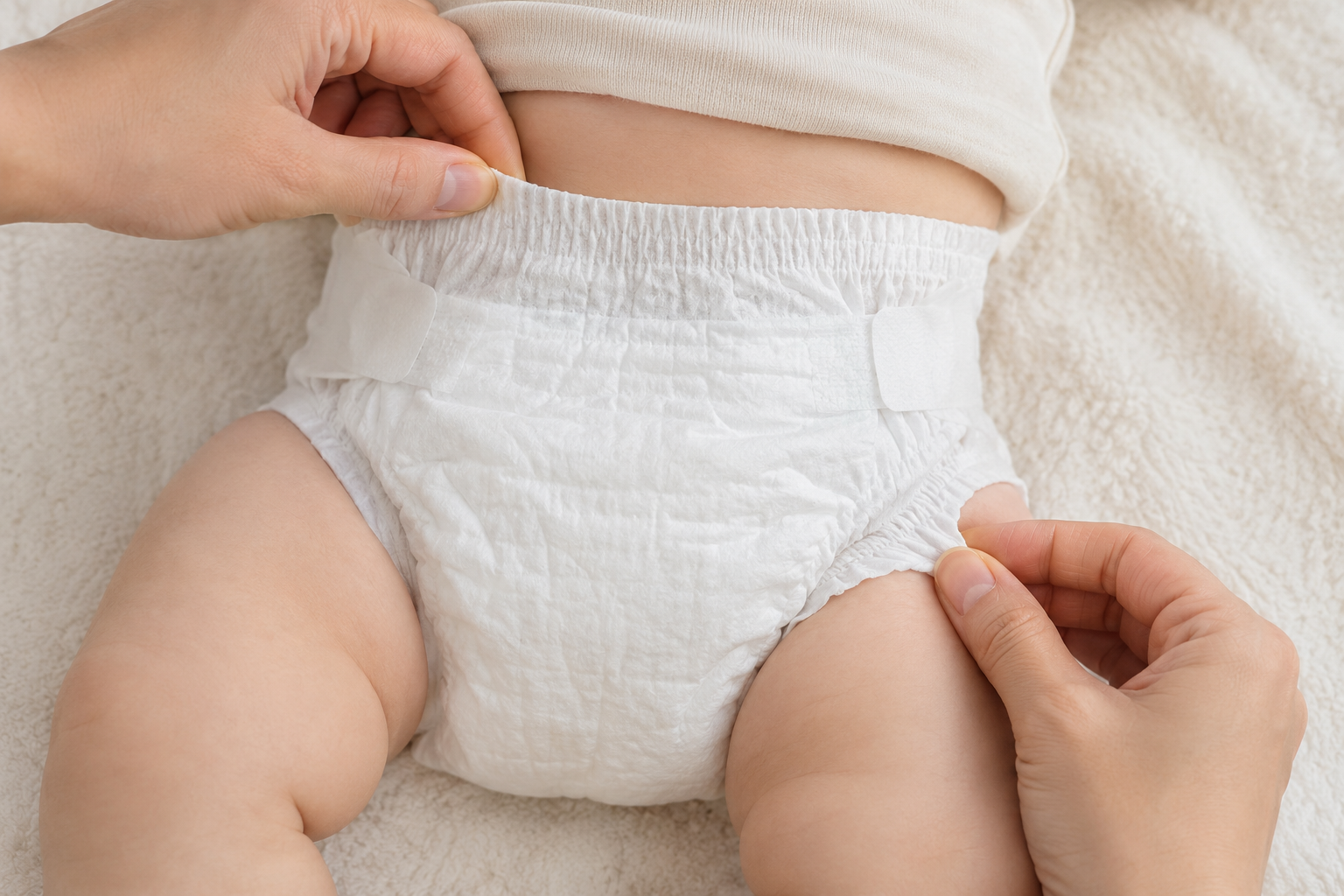
The weight range on the package is a starting point, not proof that a particular cut will fit. Two diapers labelled with the same size can have different leg openings, waistband stretch and back coverage. This is why moving up a size sometimes fixes a leak and sometimes creates a new gap.
At the next change, fasten the diaper evenly, make sure the leg cuffs are fully unfolded rather than tucked inward, and check that no skin is pinched under the waistband. Then pay attention to what the diaper looks like after your baby has worn it. Red marks, persistent leg gaps, back blowouts and sagging while dry each point to a different fit problem.
| What you notice | What it may mean | What to try next |
|---|---|---|
| Red marks around the waist or thighs | The size may be too small, or that line may be too narrow for your baby’s shape. | Try the next size. If sizing up creates gaps, try a roomier cut in the original size. |
| Open space around one or both legs | The diaper is not sealing around the thighs. It may be too large, fastened unevenly or simply the wrong cut. | Refasten it and check the cuffs. If the gap remains, try another line rather than automatically moving up. |
| Frequent poop escapes up the back | The back seal is opening during movement, or the diaper no longer has enough coverage. | Look for a pocketed back waistband, a dedicated back barrier or a 360-degree waistband. Size up if tightness or other outgrown-size signs are present. |
| A drooping or baggy diaper before it is wet | The diaper is too large or its proportions do not suit your baby. | Try the smaller size or a different cut. |
| Leaks despite a smooth waist and sealed legs | Capacity may be the problem, especially if failures happen only during long sleep. | Try a more absorbent overnight line before using a larger daytime diaper that leaves gaps. |
Babies with fuller thighs or bodies that sit between two sizes often benefit from more adjustable tape placement. Kirkland Signature diapers have cross-over tabs for waist adjustment, a pocketed waistband and a next-size indicator. Those features can be more useful than choosing a line solely because its weight range looks wider.
A leak in the correct labelled size does not automatically mean you need the next size. If the diaper is not tight, loose or sagging, its shape may simply be wrong for your baby. Changing the cut can preserve a good leg seal without adding pressure at the waist.
Match the diaper style to the job
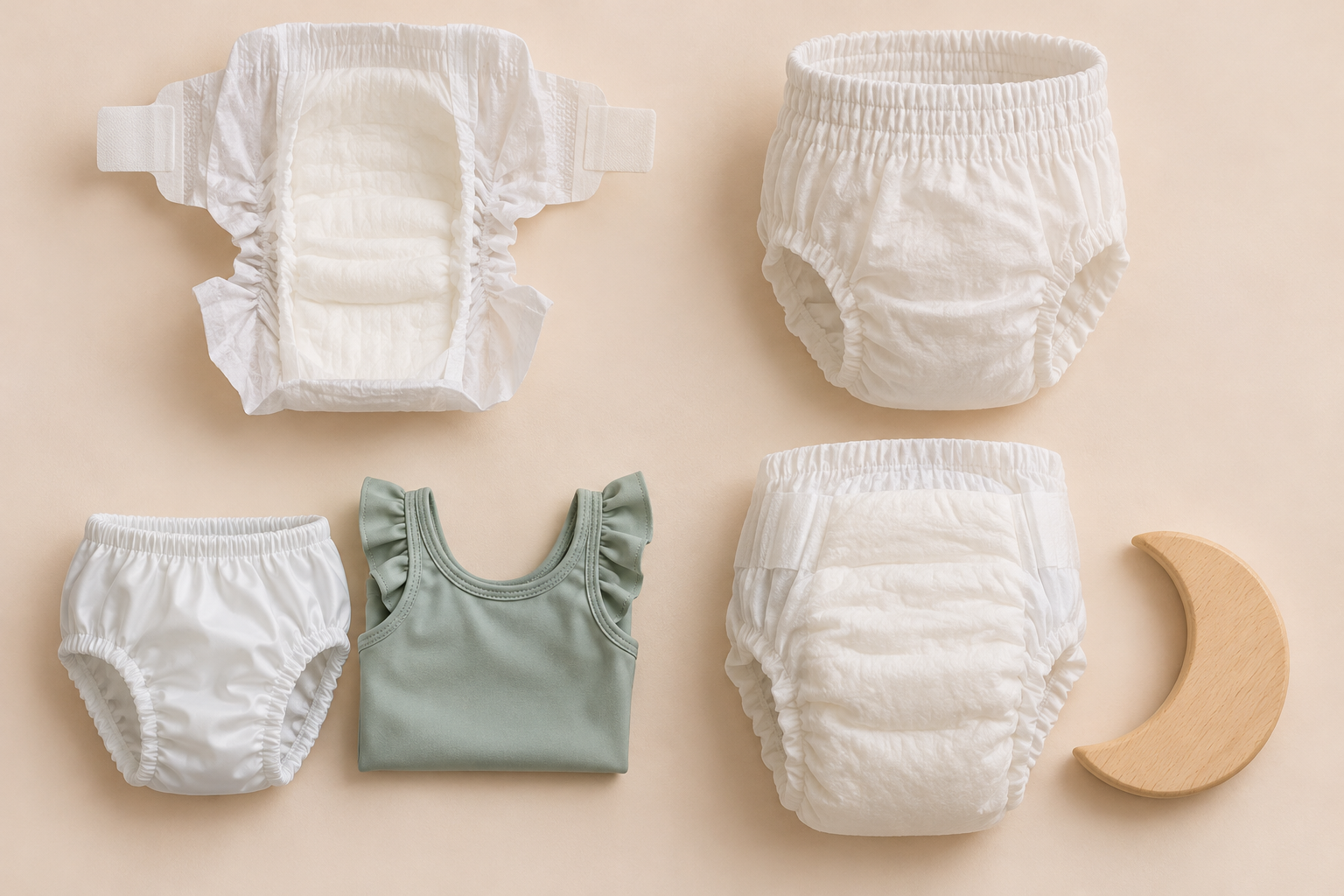
A newborn lying still for changes, a crawling baby twisting away and a heavy wetter sleeping through the night do not need the same design. You can use one diaper for everything if it works, but there is no prize for forcing an everyday diaper to handle a job it repeatedly fails.
For newborn changes
Prioritize gentle skin contact, a secure but adjustable fit and features that reduce guesswork. Pampers Swaddlers include an umbilical-cord notch in Newborn through size 2, a wetness indicator and, beginning with size 1, a back barrier intended to help contain blowouts. Every size has been fragrance-free since June 2026.
For a premature baby, use the diaper size and care routine recommended by the NICU team. Pampers Swaddlers Preemie comes in P3 through P1 for babies under roughly six pounds and was designed with NICU input, but a product description cannot replace guidance based on your baby’s medical needs.
For rolling, crawling and standing babies
Tape diapers remain useful when you need to fine-tune the waist and leg fit. Pull-on diapers become practical when your baby rolls away, stands during changes or repeatedly opens a gap at the back. Their continuous waistband removes the two-tab alignment problem, and tear-away sides allow removal without pulling a messy diaper down the legs.
Pampers Cruisers 360 Fit combines a tape-free waistband with tear-away sides and a back blowout barrier. Huggies Little Movers HuggFit 360 uses a similar slip-on format, with a waistband that Huggies says has twice the stretch of its regular Little Movers and reinforced leg guards. These are useful starting points for an active baby, but claims such as “up to 100% leakproof” are brand performance language, not a guarantee that a particular waistband will seal on your baby.
You can also split the day by task: use a pull-on for standing daytime changes and an adjustable tape diaper for naps or overnight. There is no need to make one closure style handle every situation.
For overnight leaks
If the daytime fit is good but the diaper is saturated by morning, look at absorbency before size. Huggies Overnites is made in sizes 3 through 7, covering listed weights from 16 to 41-plus pounds. Huggies describes it as its most absorbent style and advertises up to 12 hours of protection. That is a capacity claim, not a reason to leave a soiled diaper on your baby.
A separate nighttime diaper is most useful when leaks are confined to long sleep. If leaks also happen during short daytime stretches, return to the fit check first. A larger diaper may hold more in theory, but it will perform worse if it opens a channel at the legs.
For daycare and budget-heavy daytime use
Daycare can turn a small price difference into a meaningful monthly cost, but premium pricing is not proof of better daytime performance. In Consumer Reports’ 2026 testing, Target up&up diapers scored 97 out of 100 and received strong marks for absorption speed and dryness. Target also describes the line as hypoallergenic, dermatologist-tested and made without synthetic fragrance, lotions or parabens.
One sensible setup is an affordable diaper that fits well for routine daytime changes and a more absorbent product only for overnight. If daycare requires a regular supply, set up automatic delivery only after you know the diaper works. A subscription to an untested line can leave you with a large supply of the wrong cut.
Use a stricter filter for sensitive or eczema-prone skin
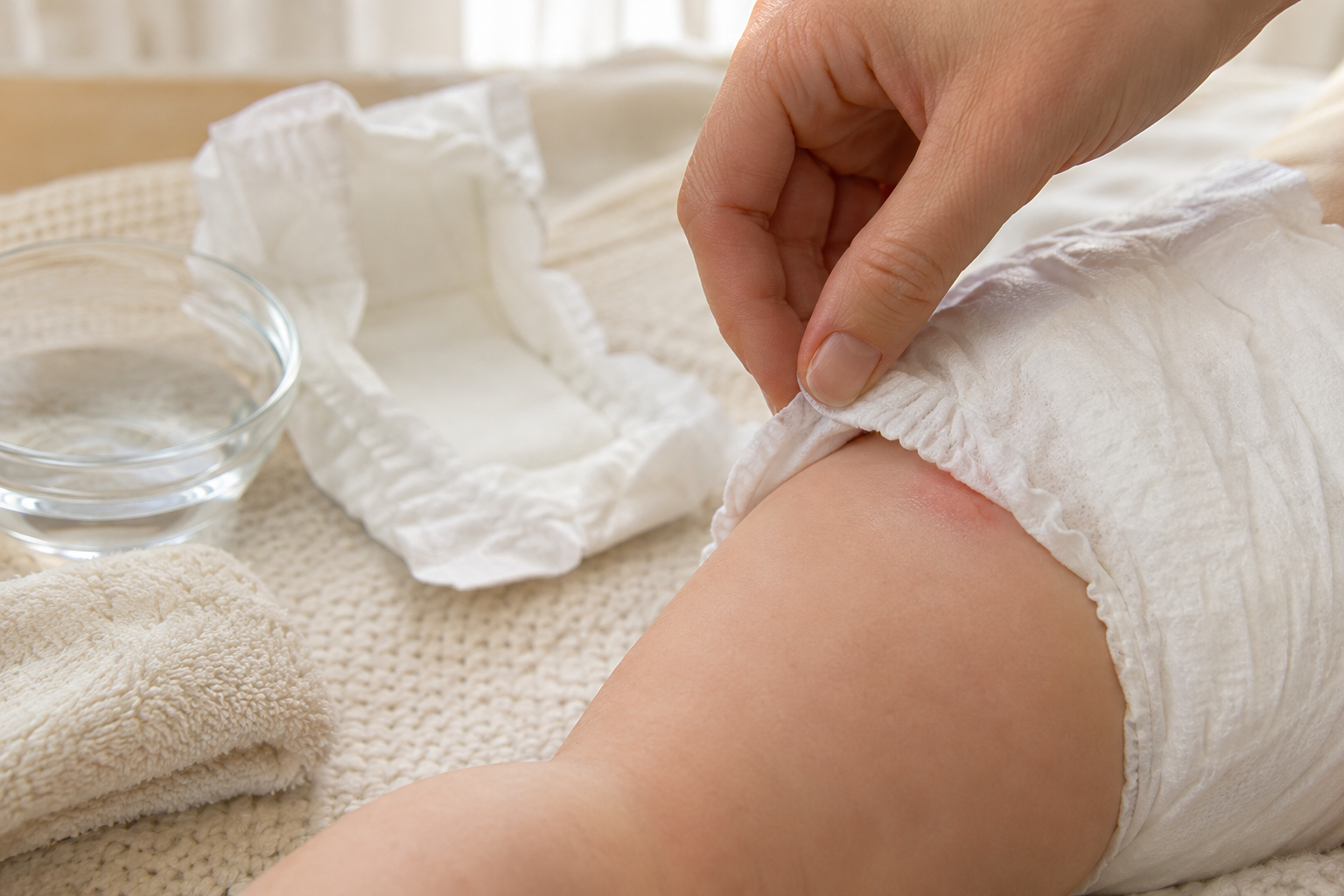
Start with “fragrance-free,” not “unscented.” Unscented products can contain fragrance added to mask another smell. Fragrance-free is the more useful first screen for eczema-prone or easily irritated skin.
Next, look beyond the word “hypoallergenic.” The FDA does not set a federal standard that determines which cosmetics may use that term, so the label alone does not tell you what was excluded or how the product was assessed. Check the ingredient or “made without” list and look for outside accreditation or clearly described testing.
Absorbency belongs in the skin decision too. A soft liner cannot compensate for moisture sitting against the skin. Look for a diaper that pulls wetness away efficiently, fits without rubbing and remains breathable enough for the intended use.
- If you want a sensitive-skin option that can also handle long sleep: Pampers positions AMORE as its highest-absorbency diaper. The company says it is fragrance-free, clinically proven hypoallergenic, accredited by the Skin Health Alliance and tested against more than 1,000 chemicals. It is available from Newborn through size 7. These remain manufacturer claims, so fit and your baby’s actual skin response still matter.
- If you want a shorter everyday exclusion list: Pampers Pure Protection is described as made without chlorine bleaching, fragrance, lotion, parabens, latex or the EU 26 allergens. Its liner includes plant-based fibres and shea butter.
- If eczema-prone skin is the main concern: Huggies Skin Essentials is fragrance-free and has a liner enriched with zinc oxide. Huggies describes it as clinically tested hypoallergenic, dermatologist-approved and free of parabens and elemental chlorine.
- If you want to avoid a broader set of common additives: Coterie says its diapers contain no fragrance, lotion, latex, dyes, parabens, phthalates or chlorine bleaching. Its range runs from Newborn through size 7 and uses a totally chlorine-free pulp core.
- If plant-based skin contact matters to you: DYPER says the materials touching the baby’s skin are entirely plant-based and that its diapers contain no fragrance, dyes, parabens or chlorine bleaching. Remember that “plant-based” and “natural” do not automatically mean non-irritating.
- If softness is the deciding feature after fragrance: Honest Clean Conscious diapers are fragrance-free and described as hypoallergenic, with third-party testing for 350 chemicals. Softness is useful, but it should come after fit, dryness and fragrance-free formulation.
If your baby has reacted to a particular ingredient before, read the full product information rather than relying on the front of the package. For eczema-prone skin, lanolin can be an allergen, and botanical or essential oils are not automatically gentle just because they are described as natural.
Do not use baby, talcum or cornstarch powder in the diaper area. Inhaled powder can cause breathing problems. A fragrance-free barrier ointment containing zinc oxide or petrolatum is a more appropriate way to protect irritated skin.
A rash does not always mean an allergy to the diaper. Moisture, friction, stool contact and a tight fit can all contribute. Checking and changing a newborn about every two to three hours, with earlier changes when wet or soiled, reduces prolonged skin contact. Diaper-free time can also let irritated skin dry.
Call your pediatrician or a dermatologist if the rash has blisters or pus-filled sores, occurs with a fever, bleeds, appears to be an allergic reaction, or is not improving after two to three days of care. Switching products is not a substitute for medical assessment when those signs are present.
Test a diaper without overbuying
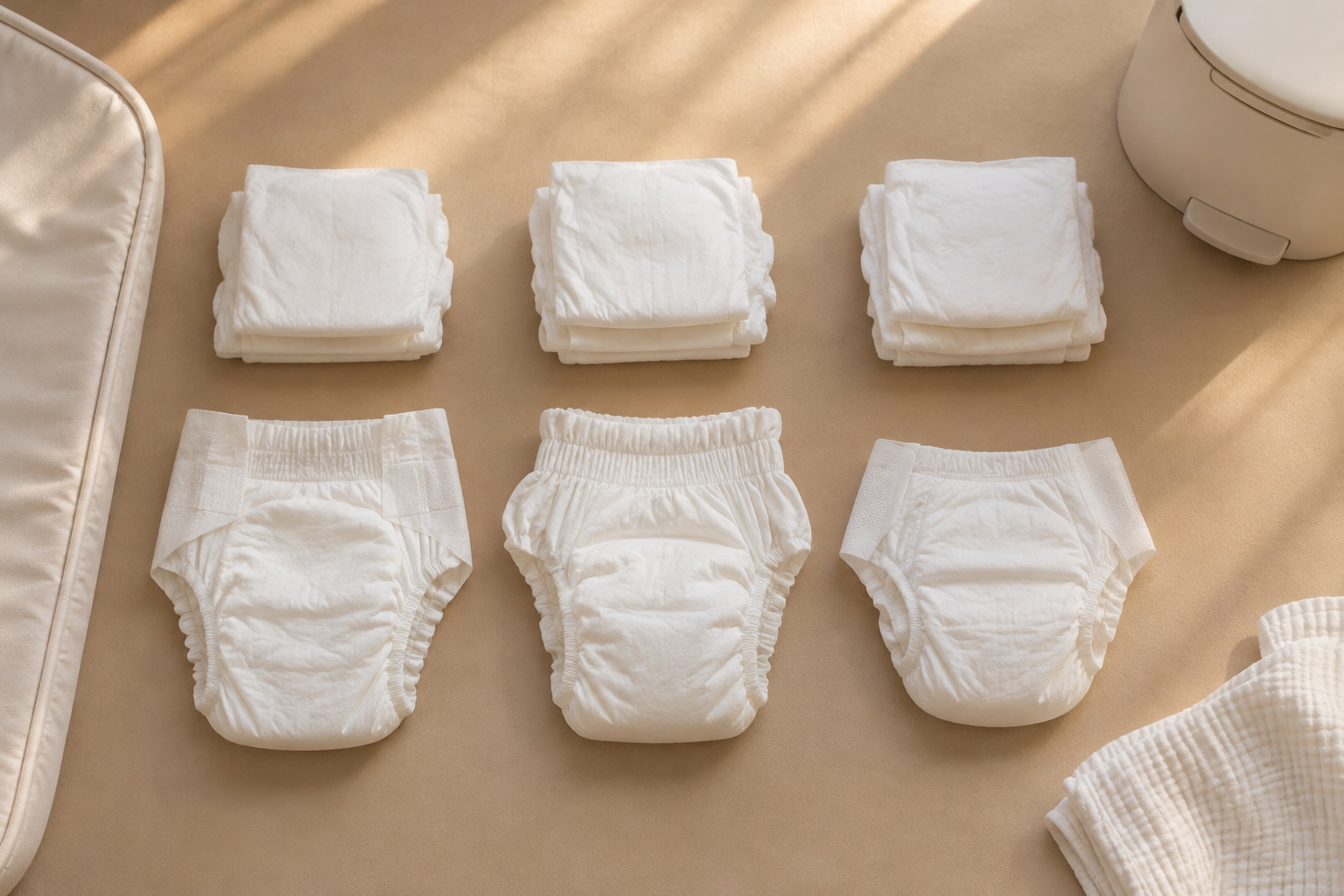
Packaging can narrow the choices, but it cannot tell you whether a waistband will sit smoothly on your baby’s body. Test the smallest practical quantity before committing to a bulk box or subscription.
- Name the exact problem. Write down whether you are solving thigh gaps, back blowouts, overnight saturation, difficult changes or skin irritation. “Find a better diaper” is too broad to guide a useful choice.
- Change one variable. If you are investigating a possible skin reaction, avoid changing the diaper, wipes and barrier cream at the same time. One change makes it easier to notice what helped or worsened the problem.
- Use the diaper through ordinary wet and bowel-movement changes. Watch the waist, legs and back separately. A diaper that contains urine but repeatedly fails at the back is a fit problem, not a complete success.
- Test the intended job. An overnight product should be assessed during your baby’s usual longest sleep; a pull-on should be tried during the standing or wriggly changes it is meant to simplify.
- Buy in bulk only after the fit is repeatable. Then compare the box price divided by the diaper count to find the cost per change. Recheck the calculation when package counts or promotions change.
Do not stockpile several large boxes merely because the current size works. Babies can outgrow a size or change proportions before the supply is used, and an unopened smaller quantity gives you more flexibility.
Quick answers for common diaper decisions
Should you size up for every overnight leak?
No. Size up when you also see tightness, red marks, inadequate coverage or another sign that the current size has been outgrown. If the diaper fits smoothly and only fails after long sleep, try an overnight line with greater absorbency instead.
Are pull-ons better once a baby starts crawling?
They can make moving or standing changes easier and may close the back gap that causes some blowouts. Tape diapers remain better when you need precise waist adjustment. Many families can use pull-ons during active daytime changes and tapes for sleep.
Does sensitive skin require the most expensive diaper?
No. Fragrance-free materials, a dry interior and a non-rubbing fit matter more than the price tier. A budget diaper that stays dry and fits well can be a sound daytime choice. Spend more only when a specific feature, such as overnight capacity or a narrower ingredient profile, solves a problem you actually have.
What should you do if the labelled size fits but leaks continue?
Try another cut in the same size. Brands distribute stretch, width and absorbent material differently. A different line can close a thigh or back gap without creating the looseness that may come from sizing up.
At your next change, note three things: where the failure appears, whether your baby needs tape or pull-on changes, and whether fragrance-free materials are a requirement. Use those answers to buy one small pack for one defined job. A diaper that solves that job reliably is a better choice than a highly rated diaper that does not fit your baby.
References
- Scary Mommy – Best Baby Diapers 2026: 7 Picks, Ranked by Situation
- Scary Mommy – The Best Diapers for Sensitive Skin, Ranked (2026)



