

Black Friday is awkward timing for parents: you may know that your needs are about to change, but not exactly which size, feeding setup, sleep arrangement, or piece of gear will work when they do. That uncertainty can turn a promising sale into a pile of unopened boxes.
Advertised savings can reach up to 75% across maternity, nursery, feeding, and baby gear. The percentage is only useful, though, when the product solves a real problem, fits your home and routine, and can be returned if your plans change. Here is how to build a short, defensible shopping list before the countdown timers start making decisions for you.
Key takeaways
- Start with the problem you need to solve, not the products being promoted.
- Set a maximum all-in cost that includes required accessories, shipping, and ongoing supplies.
- Be cautious with products you cannot properly evaluate until your baby arrives or reaches a later stage.
- Check the exact model, seller, condition, return rules, warranty, and included parts before paying.
- For safety-critical gear, uncertainty about a product’s history or completeness is a reason to walk away, regardless of the markdown.
Build a need list before you look at the deals
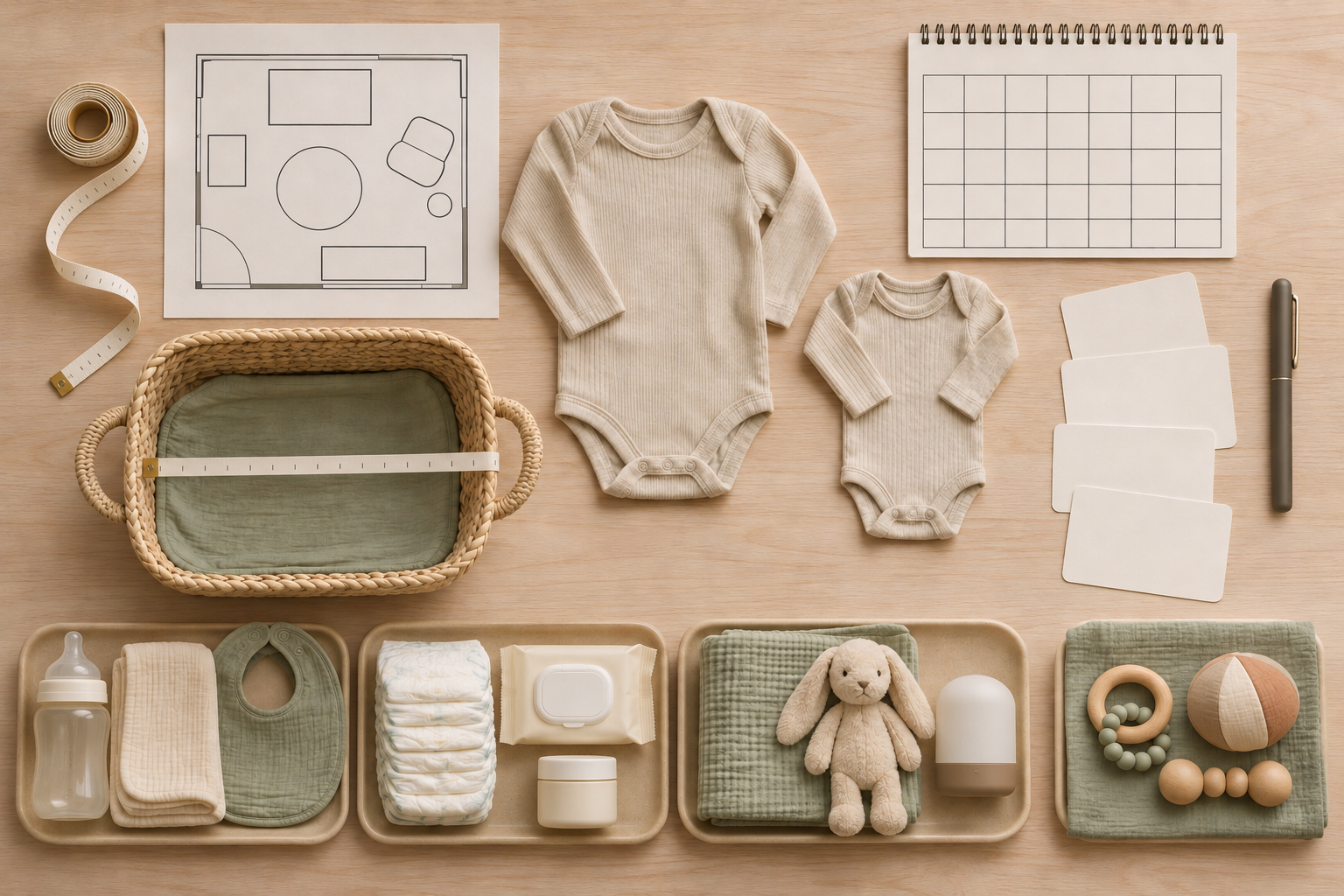
A sale page encourages you to compare products with other products. Your first comparison should be between the product and your actual life.
Write one sentence describing the job each possible purchase must do. A useful sentence is concrete: “I need a stroller I can fold while managing the baby and carry up my stairs.” A weak sentence is simply, “We need a stroller.” The stronger version gives you criteria that a discount cannot erase.
For every item, record five things before shopping:
- The problem: What frustration, missing function, or upcoming transition will this solve?
- The start point: Will you use it immediately, shortly after the birth, or only at a later stage?
- The constraints: What size, storage space, compatibility, portability, or care requirements matter?
- The acceptable alternative: Could you borrow, reuse, rent, buy later, or choose a simpler version?
- The all-in ceiling: What is the most you are willing to spend after required extras and delivery are counted?
Then place each item in one of three groups: buy during the sale, buy only if the exact product reaches your ceiling, or defer until you know more. The defer group matters. Waiting is often the better choice for products whose usefulness depends on your baby’s preferences, your recovery, your postpartum body, your feeding experience, or the layout of a routine you have not lived yet.
Pregnancy and early parenthood also attract duplicate purchases. Check what you already own, what you have been promised, and what remains on a registry before adding anything to a cart. A discounted duplicate still consumes money, storage, and attention.
Decide whether the deal is real for you
The displayed percentage is not your savings. Your savings are the difference between what you would reasonably have paid for a suitable product and what this transaction will actually cost.
Start by confirming the exact model. Similar names can hide differences in size, included components, materials, compatibility, or features. Match the model identifier where one is shown, then check the colour and size as well. Do not assume that the version pictured is the version discounted.
Next, calculate the all-in cost:
Item price + tax + delivery + required accessories + expected consumables – discounts you will actually use.
The word “required” is doing important work. A low-priced item can become expensive when it needs a separate base, adapter, cover, refill, cartridge, liner, or mounting component to perform the job you bought it for. Optional accessories should remain optional; do not let a bundle create needs that were absent from your original list.
Treat store credit and future coupons differently from an immediate price reduction. They have full value only if you would have spent that money with the same retailer anyway, within the allowed period, without buying something unnecessary to redeem them.
Use the good-deal test before checkout
- Would you still want this item if the discount badge disappeared?
- Does it satisfy the need sentence you wrote?
- Is the all-in cost below your pre-set ceiling?
- Can you inspect or test it before the return period ends?
- Do you know who is selling it, what condition it is in, and what is included?
- Would buying it now prevent you from paying for a more urgent need later?
If the answer to any of these is unclear, leave the product in the cart while you verify it. A timer creates urgency for the retailer, not necessarily for your family.
Shop maternity, nursery, feeding, and gear differently
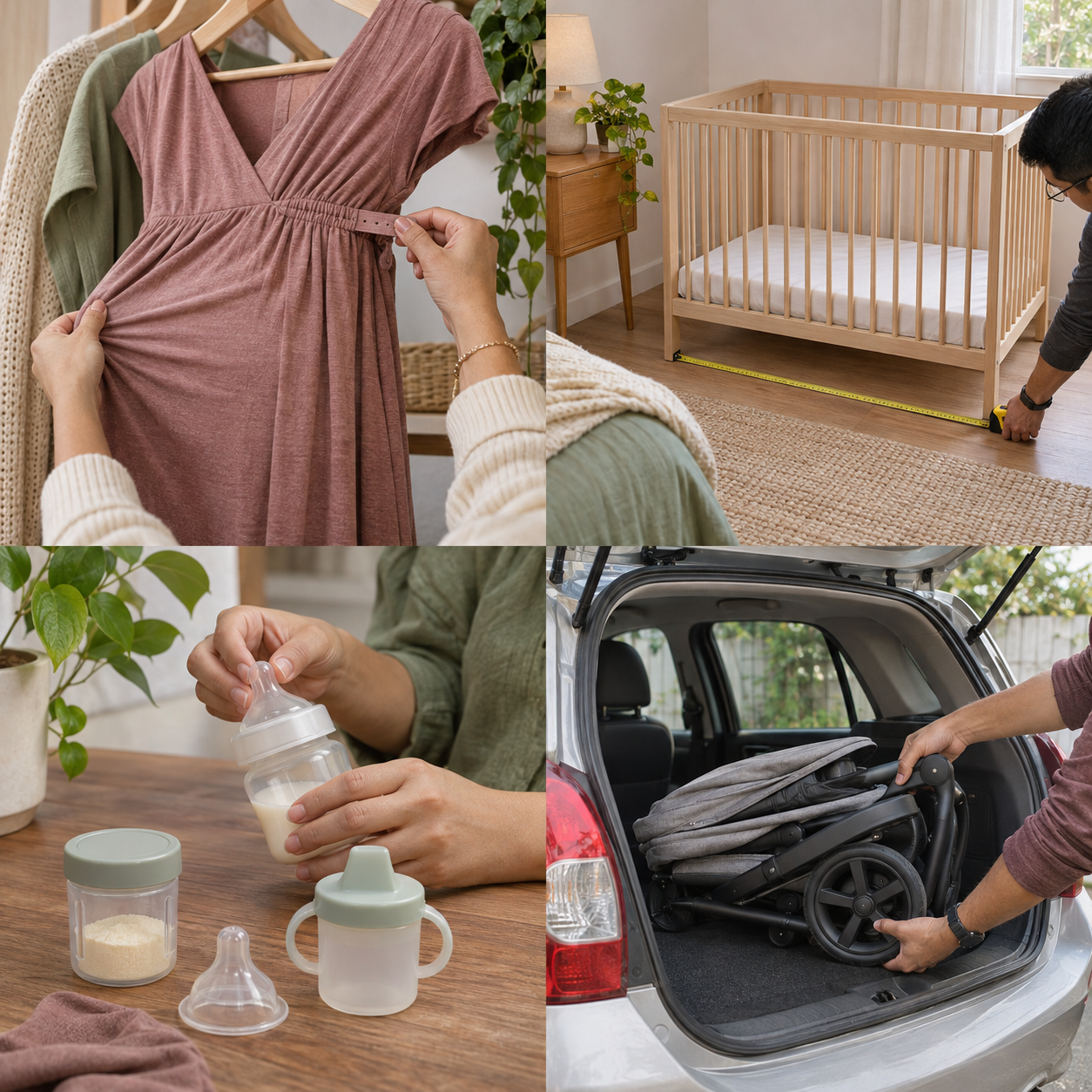
One rule cannot cover every baby and maternity category. Some purchases can be evaluated before use; others depend heavily on fit, preference, timing, or your baby’s development.
Maternity and postpartum clothing
Buy for a specific discomfort or dressing problem you have now, or for a clearly anticipated use. Check the retailer’s size chart rather than relying on your usual label, and look closely at fabric care, closures, adjustability, and return conditions.
A full future wardrobe is a riskier purchase because fit, comfort, feeding choices, recovery, weather, and daily routines may differ from what you expect. A smaller group of adaptable pieces gives you room to learn what you actually reach for.
Nursery products
Measure the intended location before shopping. Record the usable width, depth, and height, but also consider the space needed to open doors or drawers, reach controls, change sheets, and walk around the item. A product that technically fits the wall can still make the room difficult to use.
Confirm what is included in the box and what must be purchased separately. Check assembly requirements, delivery access, and the return process for a large package. If the item arrives damaged or does not fit, a difficult return can erase much of the value of the sale.
Feeding products and consumables
Feeding purchases carry preference risk. A bottle, nipple, pump accessory, nursing garment, or feeding tool can look ideal before you know how it works for your body, your baby, and your routine. Start with enough to try the setup rather than buying a deep supply of an untested system solely because the unit price is lower.
For products with proprietary replacements or refills, price the ongoing supplies as well as the starter item. The cheaper device is not the cheaper choice if it commits you to costly consumables you would not otherwise choose.
Strollers, carriers, monitors, and other gear
Translate features into a real sequence of actions. Imagine getting through your doorway, moving down the stairs, loading the car, boarding transit, folding the product, storing it, charging it, or cleaning it. A feature list may sound impressive while missing the task that will matter every day.
Compatibility deserves its own check. Confirm that accessories, bases, adapters, apps, devices, and replacement parts work with the exact model being sold. A bundle is not useful if part of it cannot work with the equipment you already own.
Apply a stricter standard to safety-critical products. Verify the model, condition, included parts, manufacturer instructions, and recall status. If a listing leaves you uncertain about a product’s history, damage, completeness, or suitability, do not let the discount settle the question. Choose a clearly documented option from a seller you can identify.
Avoid the sale traps that create expensive clutter

The costliest Black Friday mistakes are often reasonable ideas carried too far. Stocking up feels efficient. Buying for a future stage feels prepared. A large bundle appears to reduce the cost per item. Each can fail for a predictable reason.
- Buying too far ahead: The return period may end before your baby is ready for the product. You then discover a fit, preference, compatibility, or quality problem when the purchase can no longer be returned.
- Stockpiling an untested consumable: Your baby may not tolerate or prefer it, or you may need a different size or format sooner than expected. Test before committing to volume.
- Choosing the bundle instead of the need: Extra pieces can make the discount look larger while giving you more to store, sort, and eventually discard.
- Crossing a delivery threshold: Adding an unnecessary item to qualify for free shipping can cost more than paying for delivery.
- Ignoring the return route: A marketplace seller, final-sale rule, opened-product restriction, or return-shipping charge may matter more than the advertised markdown.
- Buying an imagined routine: Products for elaborate meal preparation, perfect nursery organization, frequent travel, or a particular feeding plan are poor bargains if that routine never becomes yours.
- Entering a proprietary system casually: A discounted starter product may tie later purchases to one brand’s refills, accessories, or replacement parts.
Storage is also part of the cost. Before buying a larger pack or future-stage item, decide where it will live and how you will know when to use it. If there is no sensible place for it, the purchase is borrowing space from your current life.
Turn your shortlist into a controlled checkout

A simple checkout routine keeps urgency from undoing your preparation:
- Inventory what you own, what is arriving from a registry or family member, and what is genuinely missing.
- Write the need sentence and constraints for every item on your shortlist.
- Choose the exact product or acceptable alternatives before looking at promotional pages.
- Set an all-in spending ceiling for each need and a total ceiling for the sale.
- Verify the model, size, seller, condition, included parts, required extras, return rules, and warranty.
- For safety-critical gear, confirm manufacturer information and recall status before paying.
- Remove anything that does not have an immediate or clearly foreseeable job.
- Save the order confirmation and product listing, then record the return deadline where you will see it.
- Keep packaging until you have inspected the item and confirmed that it works for its intended use, as long as doing so is consistent with the retailer’s terms.
If your cart is over budget, do not trim a little from every category. Protect the items that solve immediate, well-defined problems and remove the speculative purchases first. Certainty deserves the budget before possibility does.
Before the sale begins, open a note and write your three columns: buy, buy only below my ceiling, and defer. When a deal appears, it has to earn its way onto that page. That small boundary lets you use Black Friday without letting Black Friday design your home, routine, or budget.
References



