Why I Believe School Dress Codes Hurt Kids and Learning
I believe school dress codes should be left behind because they are often enforced unfairly against LGBTQ+ kids and students of color, while also making it harder for students to focus on learning.
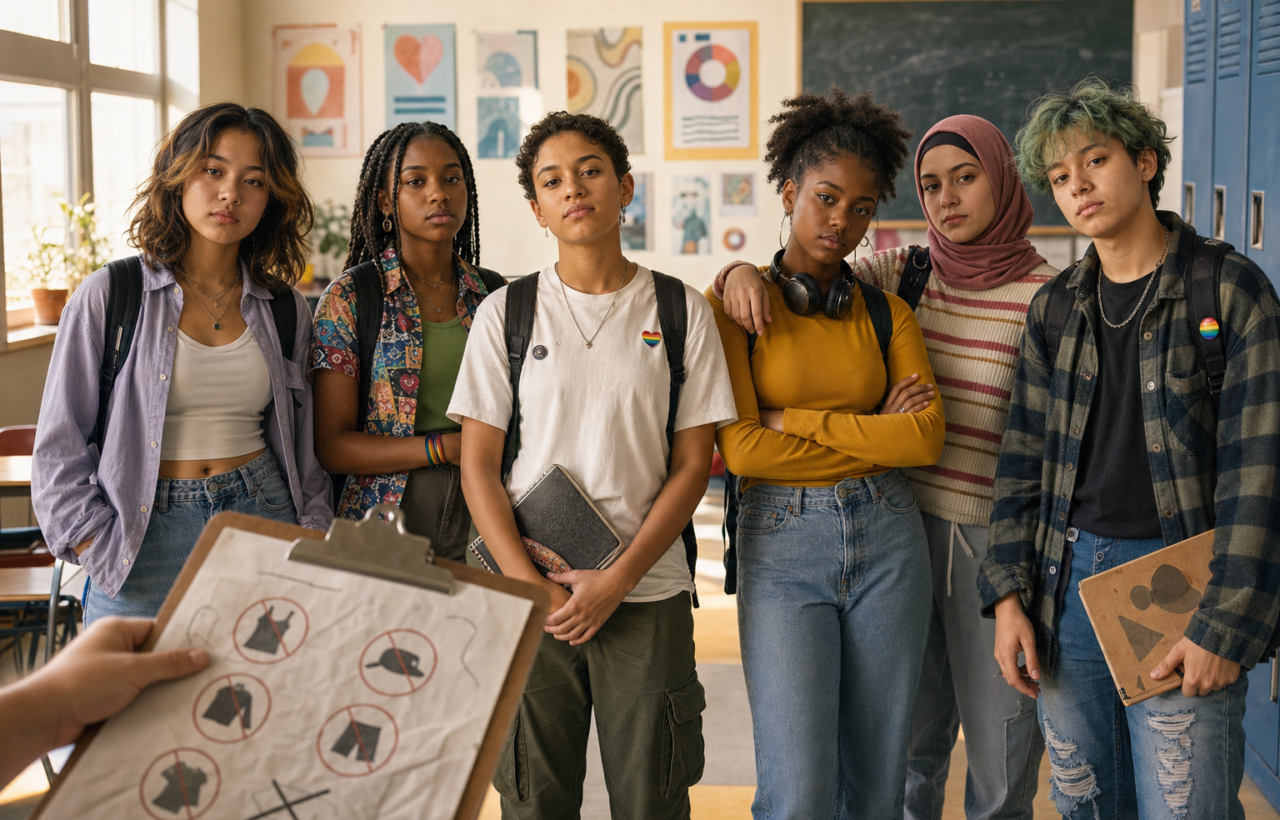
Students stand united in a classroom, highlighting how unfair dress codes can affect belonging, identity, and learning.
I believe school dress codes should be a thing of the past because they too often do more harm than good. Rules about what students can wear may seem simple on the surface, but in practice, they are disproportionately enforced against LGBTQ+ kids and students of color.
When students are singled out for their clothing, hair, gender expression, or cultural identity, the message they receive is that they are the problem. I do not think any child should have to spend the school day worrying about whether their appearance will be judged instead of focusing on learning, friendships, and feeling safe in the classroom.
I also believe these rules can get in the way of education. Every time a student is removed from class, shamed, or disciplined over attire, learning is interrupted. Schools should be places where kids are supported, respected, and given room to grow, not places where outdated dress codes make them feel targeted or unwelcome.
Why does the author believe school dress codes should be left behind?
The author believes school dress codes too often do more harm than good. Their enforcement can make students feel targeted or unwelcome instead of supported at school.
Which students can be disproportionately affected by school dress codes?
The post says dress codes are disproportionately enforced against LGBTQ+ kids and students of color. Students may be singled out over clothing, hair, gender expression, or cultural identity.
How can school dress codes interfere with learning?
Learning is interrupted whenever a student is removed from class, shamed, or disciplined over attire. Worrying about appearance judgments can also distract students from schoolwork, friendships, and classroom safety.
What parts of a student's appearance may be targeted by dress-code enforcement?
The post identifies clothing, hair, gender expression, and cultural identity as reasons students may be singled out. This can send students the message that they, rather than the policy, are the problem.
How can dress-code enforcement affect a student's sense of belonging?
Being judged or disciplined over appearance can make a student feel targeted, unsafe, or unwelcome. The author argues that children should be able to focus on learning and friendships without that worry.
What should schools prioritize instead of outdated dress codes?
Schools should support and respect students while giving them room to grow. The classroom should prioritize learning, friendships, safety, and a sense of belonging.