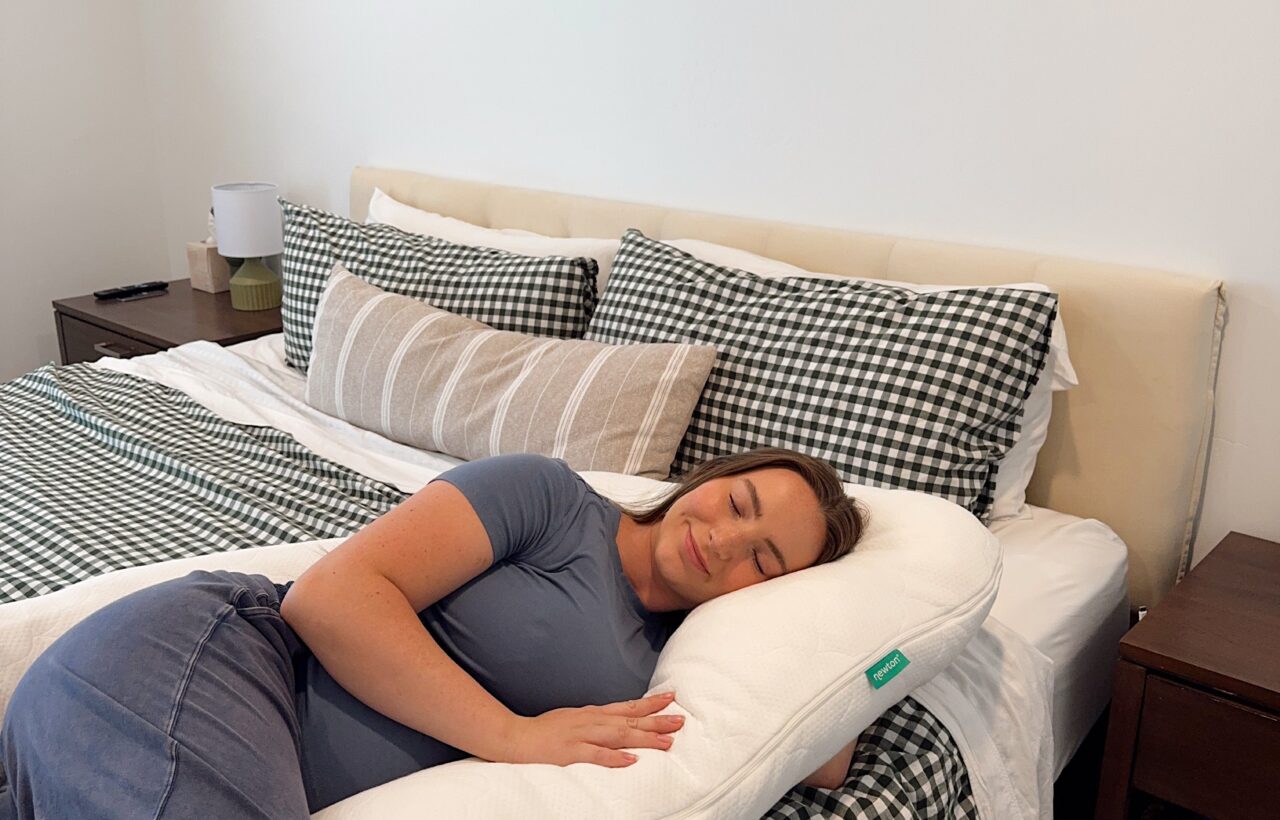
Pregnancy pillows are not just oversized cushions. They are tools for solving a very specific sleep problem: how to support a changing body when stomach sleeping is no longer practical, back sleeping becomes discouraged, and side sleeping has to do most of the work.
Drawing on guidance reported by Newton Hush, this guide focuses on the real buying decision: which shape fits the way you sleep, how much support you need, and what details matter before a pillow takes over half the bed.
Why Pillow Shape Matters More Than Brand
The source notes that sleep disruptions can affect up to 78% of pregnant people and often become more pronounced in the third trimester. The reasons are practical: a growing belly changes weight distribution, hips and lower back may need more support, and frequent waking can make every uncomfortable position feel worse.
A pregnancy pillow is meant to reduce the physical strain of staying supported on the side. It will not stop every bathroom trip, cramp, bout of heartburn, or midnight baby movement, but it can help align the belly, back, knees, and hips so the body is not working as hard to stay comfortable.
Match the Pillow to the Problem You Need Solved
Different pillow shapes solve different problems. The best choice depends less on what is most popular and more on where support is missing.
- Wedge pillow: A compact option for targeted support under the belly, behind the back, or between the knees. Newton Hush describes it as a useful choice for smaller beds or earlier pregnancy, but it will not support the whole body at once.
- C-shaped pillow: A curved pillow that can run from head to knees while supporting either the front or back. It offers more coverage than a wedge without fully surrounding the sleeper, though it may need repositioning after turning over.
- U-shaped pillow: A wraparound option that supports both sides of the body. According to the source, this is especially useful for people who switch sides frequently, but it is also the largest and can claim substantial bed space.
- Full-body pillow: A long, simpler pillow that can be hugged in front and tucked between the knees. It may suit people who sleep hot or want less bulk, but it does not hold the back and belly at the same time.
Positioning Is Part of the Benefit
Newton Hush reports that side sleeping becomes the main recommended position from around 20 weeks, with left-side sleeping often preferred for circulation-related reasons. The practical goal is not to stay frozen in one posture all night, but to make side sleeping easier to return to after natural movement.
For a C-shaped pillow, the curve can be arranged so one section supports the belly while the lower end sits between the knees. If back rolling is the issue, the pillow can be turned so the curve sits behind the body instead.
For a U-shaped pillow, the sleeper rests between the two long sides, with one side supporting the belly and the other helping prevent the body from rolling flat. This is the main advantage of the U shape: turning from one side to the other does not require rebuilding the pillow setup.
For heartburn or discomfort when lying flat, the source notes that some people use a semi-reclined position with support behind the back and shoulders. A wedge under the upper back may be more predictable for that purpose than a loose pile of pillows.
Buying Details That Change Daily Use
Once the shape is chosen, the smaller details determine whether the pillow is pleasant to use night after night.
- Fill: Memory foam tends to feel firmer and more contouring, while polyester fiberfill is lighter and common but may flatten faster. Microbeads are moldable, and natural fills such as cotton or wool may appeal to people who prioritize breathability.
- Cover: A removable, machine-washable cover is important. The source highlights breathable materials such as jersey knit, bamboo-derived fabric, and organic cotton as options to consider.
- Size: A U-shaped pillow can be a major presence in a bed. Measuring before buying is especially important for full beds or shared beds.
- Firmness: More firmness can help with back and hip support, while a softer feel may be more comfortable under the belly. Adjustable-fill designs give more room to fine-tune.
- Return window: Comfort is hard to judge in a few minutes. A return policy long enough to test the pillow for several nights is worth considering.
Key Takeaways
- A wedge is best for small, targeted support, not full-body alignment.
- A C-shaped pillow balances support and bed space, but may need repositioning after rolling over.
- A U-shaped pillow offers the most wraparound support and is easier for frequent side switching, but it is bulky.
- A full-body pillow is simpler and cooler for some sleepers, though it provides less back support.
- Choose a washable, breathable cover and check dimensions before buying.
Postpartum Use Requires Extra Caution
Pregnancy pillows can remain useful after birth, especially for nursing support or general recovery comfort. Newton Hush notes that C-shaped and U-shaped pillows can help support the arms and baby during feeds when positioned correctly.
The safety caveat matters: the source says a baby should be awake and supervised during feeding and should never be left resting on the pillow unattended. A pregnancy pillow can support the adult during feeding, but it is not a sleep surface for an infant.
The most useful pregnancy pillow is the one that solves the sleeper’s actual pain point without making the room, the bed, or nightly movement harder. Start with the support problem, then choose the shape, fill, and size around that.
Inspired by this post on Newton Hush.