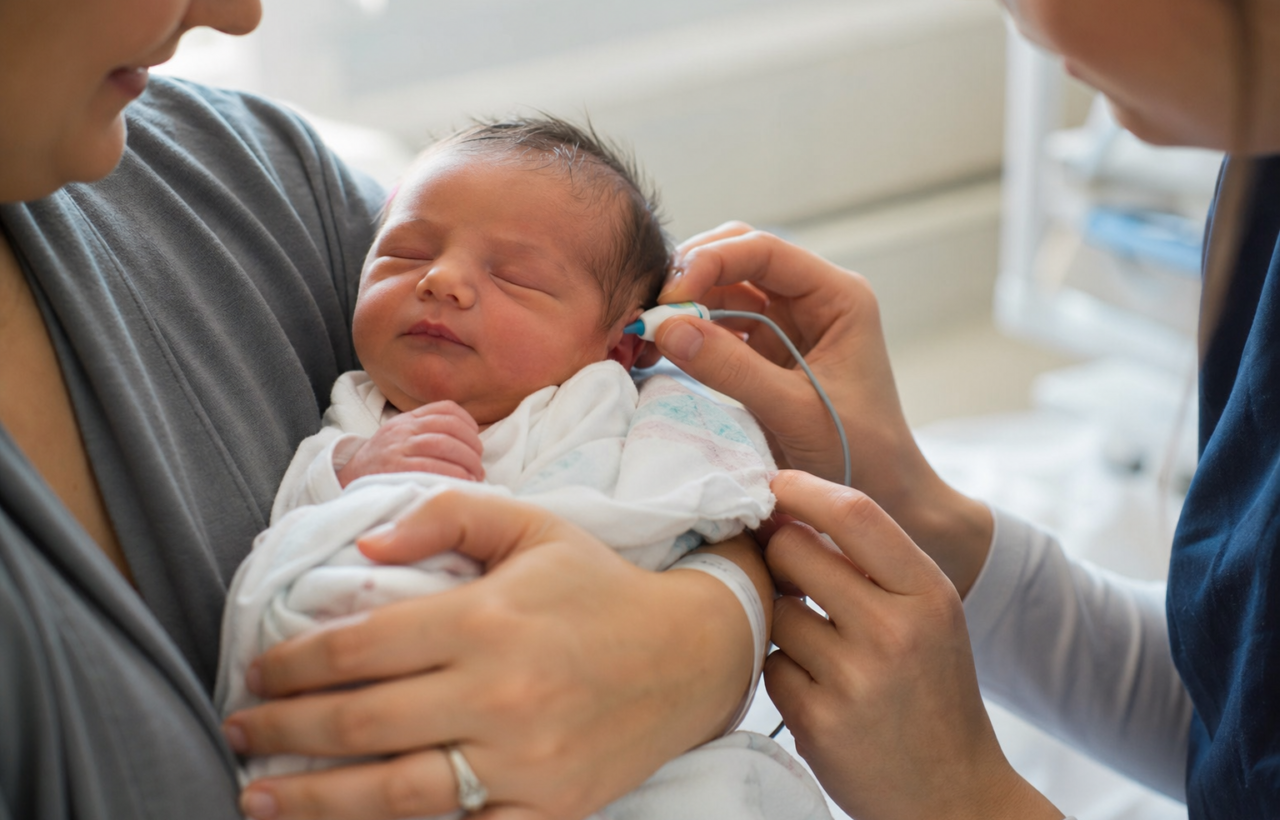
Newborn hearing screening sits at the beginning of a much longer developmental story. The three diapr.ai posts on this topic connect the hospital test, everyday sound exposure, and early parent-baby interaction into one practical message: hearing matters because communication begins before words.
Taken together, the posts do not treat screening as a cause for panic or as a box to check. They frame it as an early signal that can help families notice, respond, and support a baby’s connection with voices, sounds, and language over time.
Why the newborn hearing test matters early
The diapr.ai post Why My Baby’s Newborn Hearing Test Matters So Much reported that a baby’s hearing is one of the first ways they begin connecting with a parent and the surrounding world. That framing matters because it places the screening in the context of development, not just medical procedure.
The same post linked early listening with communication, bonding, and the beginning of a baby’s language journey. A separate diapr.ai post, How I Support My Baby’s Hearing and Early Development, widened that point by describing hearing as part of brain development, early communication, and later language skills. Where the first article emphasized why the test matters, the second emphasized what families can continue doing after the test.
A screening result is a starting point, not a diagnosis

The clearest note of caution came from My Newborn Failed Her Hearing Test: The First Step I Took. That post, written from the perspective of a pediatric ENT surgeon and new parent, reported that a failed newborn hearing screening does not automatically mean something is wrong.
It also reported that newborn screening results can be affected by fluid, timing, or other temporary factors. The first step described in that article was asking for another hearing test before leaving the hospital, so the family could get more information quickly and understand what, if anything, should happen next.
This is the key distinction across the sources: the hearing test matters because it can flag a need for follow-up, but one result alone is not presented as the whole story.
Everyday sound supports the same developmental pathway

The screening articles focus on early detection, while the development article focuses on daily connection. How I Support My Baby’s Hearing and Early Development reported that talking, singing, reading, and responding to a baby’s sounds are simple ways to make hearing part of everyday bonding.
That point complements the screening message. The hospital test can help identify whether a baby may need more hearing support, while everyday interaction gives babies repeated exposure to voices, rhythm, response, and emotional connection. The sources do not present these as separate concerns; they present them as connected parts of early development.
Key takeaways for parents

- Newborn hearing screening is described across the diapr.ai posts as an important early step in understanding a baby’s hearing.
- A failed screening is not reported as a diagnosis; one source specifically notes that temporary factors such as fluid or timing can affect results.
- Follow-up testing can provide clearer information and guide what happens next.
- Talking, singing, reading, and responding to baby sounds are presented as everyday ways to support listening, bonding, and early communication.
- The larger goal is not only hearing sound, but supporting connection, learning, and the early language journey.
How the sources fit together
Each source covers a different part of the same developmental arc. Why My Baby’s Newborn Hearing Test Matters So Much explains why screening feels meaningful. My Newborn Failed Her Hearing Test: The First Step I Took adds a practical response when the result is not a pass. How I Support My Baby’s Hearing and Early Development shifts attention to the home environment, where listening and connection continue in small daily moments.
The synthesis is straightforward: screening helps families notice a possible issue early, follow-up helps clarify what the result means, and everyday interaction helps nurture the communication skills that hearing supports. For parents, the most useful approach is both attentive and steady: take the test seriously, seek clarification when needed, and keep building a sound-rich relationship through ordinary care.
References
- diapr.ai Blog — Why My Baby’s Newborn Hearing Test Matters So Much
- diapr.ai Blog — How I Support My Baby’s Hearing and Early Development
- diapr.ai Blog — My Newborn Failed Her Hearing Test: The First Step I Took