
Postpartum mental health rarely fits into a single label. The diapr.ai sources describe depression, anxiety, morning dread, return-to-work strain, and temperament as overlapping pieces of the same larger question: what happens when motherhood changes a person’s body, routines, identity, and support needs at once?
The useful distinction is not whether a mother is simply worried or sad. It is whether symptoms are persistent, disruptive, and hard to carry alone, and whether the support being offered matches what she is actually experiencing.
Postpartum distress can look different from the outside

In its article on postpartum depression and postpartum anxiety, diapr.ai reported that about one in five to seven mothers may experience a perinatal mood disorder during pregnancy or within the first year after giving birth. The same article emphasized that postpartum depression, often shortened to PPD, is discussed more often than postpartum anxiety, or PPA, even though both can seriously affect daily life.
That matters because anxiety can be easier to dismiss. The article quoted reproductive mental health psychologist Dr. Shelly Orlowsky as saying that postpartum anxiety is often normalized because people expect new mothers to worry. But the source distinguished ordinary adjustment from symptoms that last more days than not for two weeks or more and interfere with functioning.
According to the same source, PPD may include sadness, crying, anger, rage, irritability, fatigue, low motivation, and difficulty completing daily tasks. PPA, by contrast, may center more on excessive worry, rumination, racing thoughts, self-doubt, and physical symptoms such as nausea, dizziness, diarrhea, or a racing heart.
The distinction is practical, not merely diagnostic. A mother who is not crying all day may still be clinically struggling if she is constantly scanning for danger, unable to sleep because she is checking on the baby, or trapped in repeated thoughts about feeding, breathing, safety, or whether she is doing motherhood correctly.
Overlap is common, and labels may change over time
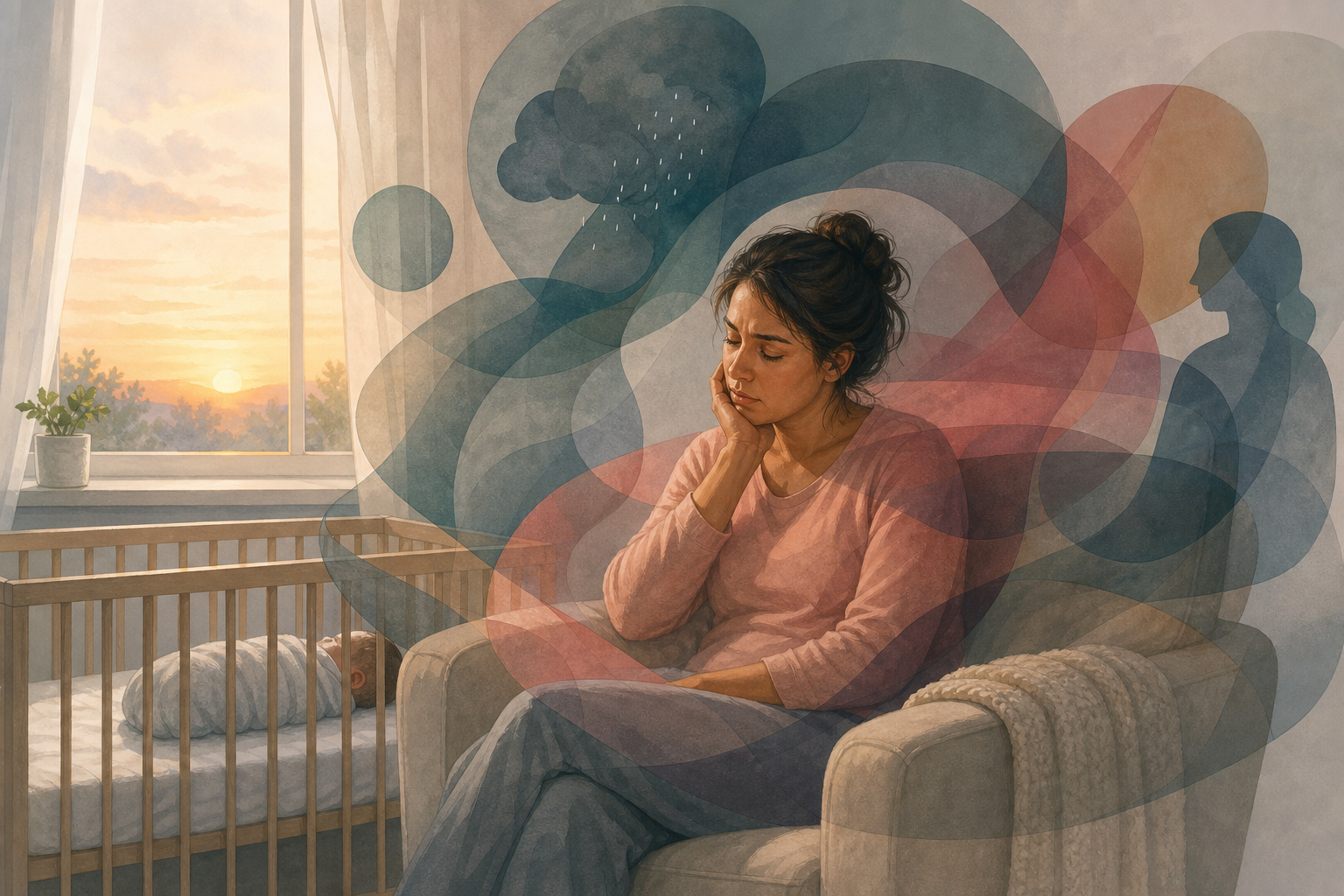
The same diapr.ai piece reported that postpartum depression and postpartum anxiety can share symptoms, including sleep problems, appetite changes, guilt, shame, hopelessness, and negative feelings about identity as a mother. It also cited a 2025 BMC Pregnancy and Childbirth study in which nearly 10% of new mothers self-reported both PPD and PPA at the same time.
This overlap helps explain why a mother may not recognize what is happening. Anxiety can exhaust the body and mind until depression follows; depression can make ordinary decisions feel impossible, which then fuels anxiety. The reported example in the source was a mother who repeatedly checks whether the baby is breathing, becomes sleep deprived, and eventually feels irritable, agitated, rageful, or depressed.
The return-to-work source adds another layer: symptoms do not happen in isolation from daily life. That article described how remote work could appear convenient after maternity leave, especially when breastfeeding was possible at home, while still making boundaries harder. It cited therapist Allison Yura, LCSW, who noted that working from home can make it difficult for parents to focus when they hear the baby nearby.
Together, the sources point to a pattern: postpartum symptoms may be intensified by the very arrangements that are supposed to make life easier. Being physically close to the baby can reduce some logistical pressure while increasing role confusion, guilt, and the sense that a mother must be available to everyone at once.
Morning anxiety shows how body cues become mental pressure
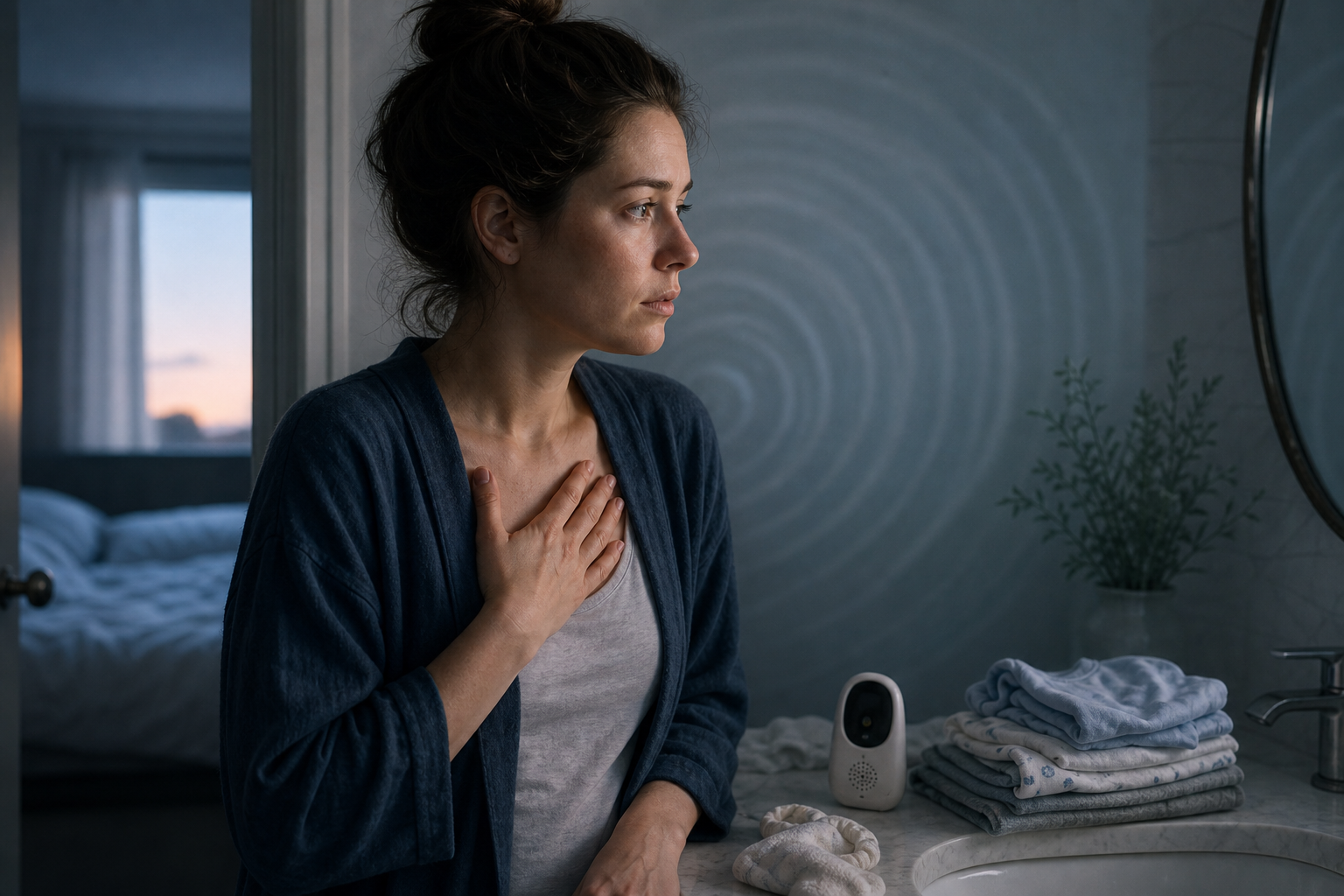
The diapr.ai source on morning anxiety broadens the postpartum conversation beyond formal diagnoses. It reported that waking with dread, nausea, racing thoughts, or a tight stomach can be connected to stress, parenting pressure, work demands, sleep disruption, hormonal shifts, or an anxiety disorder.
That article also described a biological pathway. It reported psychologist Bryant Williams, Ph.D., explaining that cortisol helps the body wake up and is naturally higher in the morning. Physical arousal such as a racing heart, tense muscles, or shallow breathing can then be interpreted as danger or dread, especially when the day ahead already feels overloaded.
For mothers, that interpretation can be powerful. The source connected morning anxiety with parenting, work, household responsibilities, financial pressure, relationship strain, and the mental load. It also reported that postpartum, perimenopausal, and menopausal hormonal and physiological changes may make morning anxiety feel stronger.
The takeaway is not that anxiety is only hormonal or only psychological. The sources collectively suggest a more accurate frame: postpartum distress can involve body chemistry, interrupted sleep, identity change, caregiving demands, and a nervous system that has had too little recovery time.
Work, personality and perfectionism can hide the problem
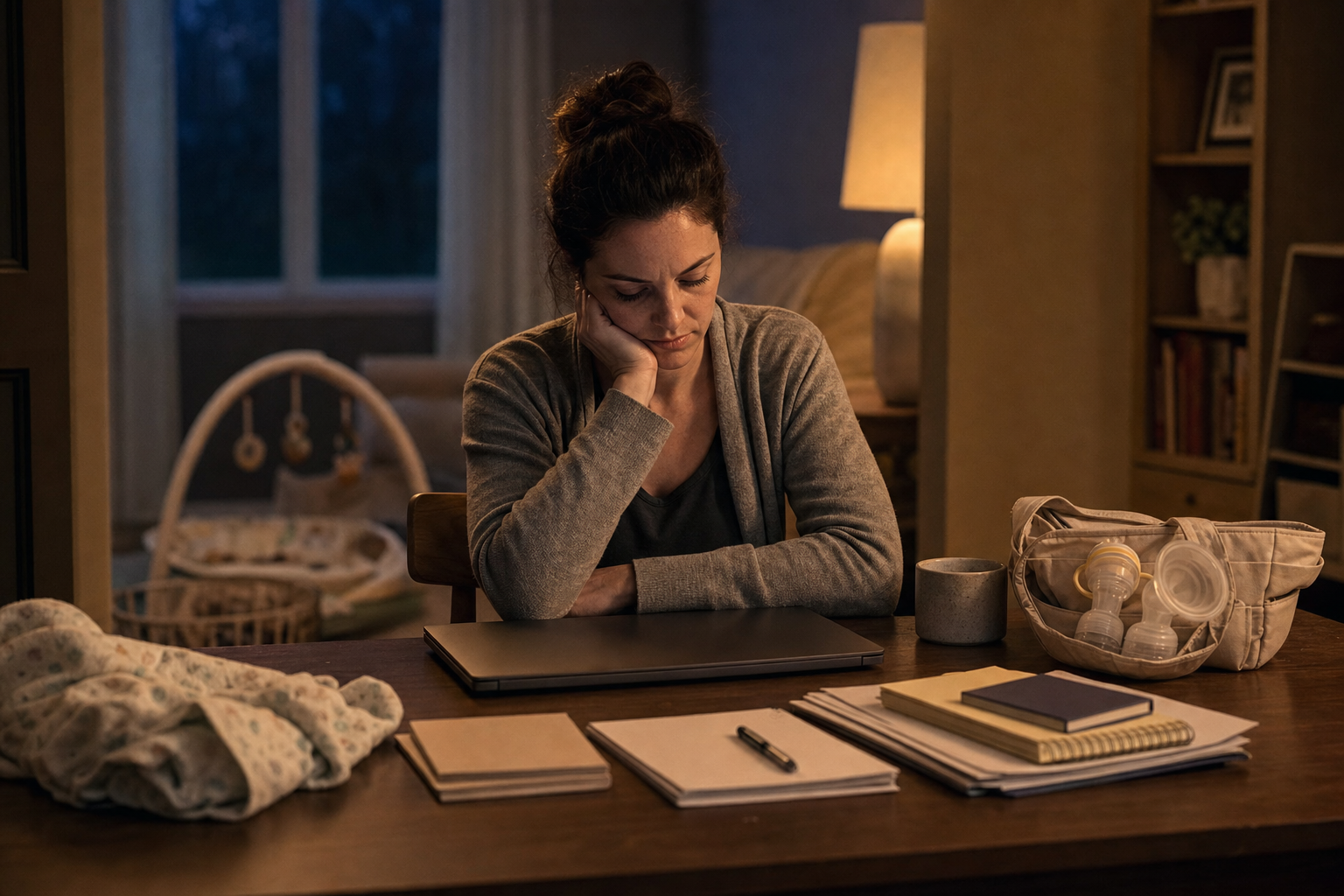
The return-to-work article described masking as a major feature of postpartum depression in professional life. It reported that work could offer structure and a temporary break from postpartum intensity, while also requiring a parent to act cheerful, competent, and steady for long stretches. Yura cautioned in that source that extended masking can become exhausting and may lead to collapse afterward.
The type C personality source helps explain why some mothers may be especially prone to internalizing distress. That article, drawing on interviews with Sean O’Neill, a licensed marriage and family therapist, and Reena B. Patel, a parenting expert and licensed educational psychologist, described type C traits as detail-focused, rule-oriented, controlled, conflict-averse, cooperative, introverted, and perfectionistic.
Used carefully, that framework can be helpful without turning personality into pathology. A conscientious parent may be calm, thoughtful, consistent, and attentive. But the same source reported that type C parents may struggle when plans change, may suppress emotions, and may hold high expectations for themselves and their children.
In postpartum life, those traits can make distress harder to see. A mother may keep routines running, answer work messages, track feeds, follow rules, and avoid conflict while privately feeling overwhelmed. Competence, in other words, should not be mistaken for wellness.
Key takeaways
- PPD and PPA can both occur during pregnancy or within the first postpartum year, according to diapr.ai’s article on the difference between them.
- Postpartum anxiety may be underrecognized because worry is often treated as normal new-mother behavior, but persistent anxiety can still disrupt daily life.
- Depression and anxiety can overlap; the same source cited a 2025 study in which nearly 10% of new mothers self-reported both.
- Morning anxiety may involve cortisol, stress, sleep disruption, hormones, or an anxiety disorder, according to diapr.ai’s morning anxiety source.
- Remote work, masking, perfectionism, and conflict avoidance can make symptoms less visible while increasing the pressure a mother carries.
Support should match the symptom pattern
The sources repeatedly point toward the same practical need: more precise recognition. If a mother is mainly experiencing rumination, physical panic symptoms, and constant checking, anxiety-focused support may be more useful than a vague assumption that she has postpartum depression. If she is exhausted, hopeless, rageful, unable to complete daily tasks, or losing motivation, depression needs to be taken seriously. If both are present, care should address both.
The PPD and PPA source reported that treatment can include individual therapy, group therapy, social support, and separate support groups for PPD or PPA. It also named Postpartum Support International as a place to find local or online support groups and noted that a 24/7 help line is available for new mothers and family members, including dads and partners.
The morning anxiety source similarly encouraged reaching out when anxiety interferes with sleep, appetite, mood, work, responsibilities, or the ability to care for oneself or family. It reported that therapy, medical support, support groups, and honest conversations with trusted people can all be part of getting better.
A stronger postpartum mental health conversation makes room for more than one story. It can recognize the mother who cannot stop crying, the mother who wakes up panicked, the mother who performs competence at work, and the mother whose perfectionism keeps her quiet. The next step is not a perfect label; it is support specific enough that she no longer has to translate her distress alone.
References
- diapr.ai Blog — PPD vs. Postpartum Anxiety: Why the Difference Matters
- diapr.ai Blog — Returning to Work With PPD Changed Everything for Me
- diapr.ai Blog — Why I Wake Up Anxious and What Morning Anxiety Means
- diapr.ai Blog — Type C Personality Signs: Strengths, Struggles & Parenting