
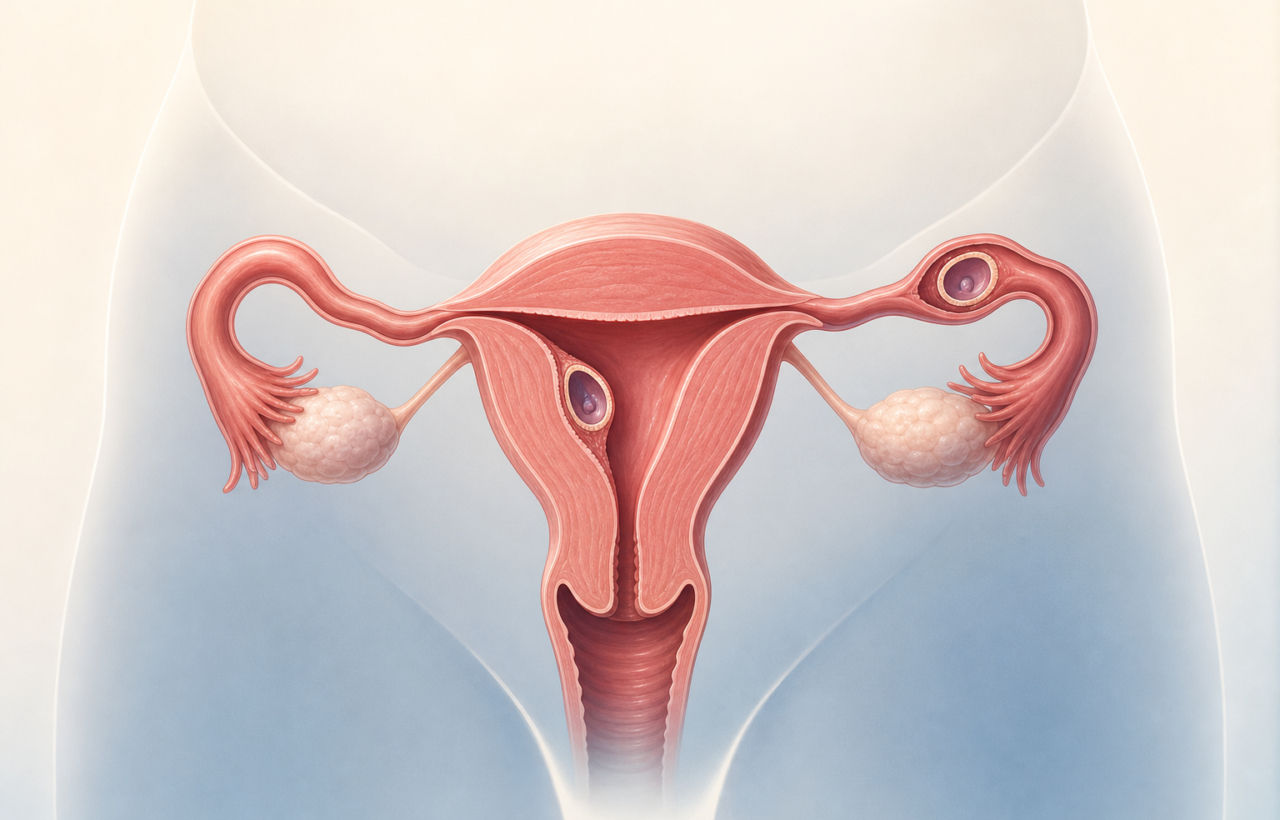
You may already have seen a pregnancy inside your uterus on an ultrasound and been told that it looks healthy. If you later develop persistent one-sided pain, dizziness, fainting, or abnormal bleeding, that reassuring scan does not fully close the case.
A heterotopic pregnancy can place your health at immediate risk if the pregnancy outside the uterus ruptures and causes internal bleeding. If your pain is severe or rapidly worsening, you feel faint, or you are too dizzy to travel safely, seek emergency care now. Do not drive yourself.
Key takeaways
- A heterotopic pregnancy means there is one pregnancy inside the uterus and another pregnancy outside it at the same time.
- Seeing a healthy intrauterine pregnancy on an ultrasound does not completely rule out a simultaneous ectopic pregnancy.
- Severe or worsening abdominal pain, fainting, or significant dizziness during pregnancy requires emergency assessment, particularly when symptoms occur together.
- Persistent one-sided pain, abnormal bleeding, nausea, or vomiting should be discussed urgently with your pregnancy care team rather than dismissed solely because an earlier scan looked reassuring.
- Heterotopic pregnancy can occur without fertility treatment, but fertility treatment makes it more likely and is important information for the clinician assessing you.
Why a reassuring ultrasound can miss the second pregnancy
In a heterotopic pregnancy, one pregnancy implants in the uterus while another implants elsewhere. The second pregnancy is most often in a fallopian tube, although it can occur in the cervix, an ovary, or the abdomen. An ectopic location cannot safely support a developing pregnancy and may rupture.
The diagnostic trap is straightforward: an ultrasound finds the pregnancy everyone expected to see inside the uterus. That finding can make an ectopic pregnancy seem ruled out, even though a second implantation may still be present. Symptoms such as spotting, abdominal pain, nausea, and vomiting can also overlap with less dangerous pregnancy experiences.
A scan can therefore be accurate about the pregnancy it identifies without explaining the pain you are experiencing. A documented heartbeat inside the uterus answers an important question about that pregnancy at that moment; it does not automatically explain severe symptoms or exclude another pregnancy elsewhere.
Delayed recognition is a known problem. Reported cases have often been identified only during surgery, with one estimate placing the proportion undetected until emergency surgery at more than half. This does not mean that every pain after a normal scan is heterotopic pregnancy. It means that new or worsening symptoms still deserve their own assessment.
Symptoms that change how urgently you should act

The seriousness of a symptom depends on its intensity, persistence, progression, and what occurs with it. You do not need to have every symptom on a checklist before seeking care.
Seek emergency care now
Go to an emergency department or call local emergency services if you are pregnant and have severe or rapidly worsening abdominal pain, fainting, or pronounced dizziness, especially when pain and dizziness occur together. These can be signs of internal bleeding. Do not wait for a routine appointment, and do not drive if you feel faint or unsafe behind the wheel.
Contact your pregnancy care team urgently
If your symptoms are not severe but you have persistent one-sided abdominal pain, abnormal bleeding, dizziness, nausea, or vomiting, contact your obstetrician, midwife, fertility clinic, or other pregnancy care provider promptly. If you cannot reach them and the symptoms continue or worsen, seek an in-person urgent assessment.
Nausea or an occasional cramp can have many explanations during pregnancy. The pattern matters: pain that stays on one side, keeps returning, becomes sharper, or appears with dizziness or bleeding should not be written off based only on an earlier reassuring scan.
Be particularly direct about symptoms during the first trimester after fertility treatment. Heterotopic pregnancy remains uncommon, but it is more common after assisted reproduction than after conception without treatment. A pregnancy conceived without treatment can still be affected, so the absence of fertility treatment does not make severe symptoms safe to ignore.
What to tell the clinician assessing you
Lead with the symptom and how it is changing, not only with the fact that a previous ultrasound looked normal. A concise opening can prevent the reassuring scan from becoming the end of the conversation:
I am pregnant and have persistent pain on my right or left side. It began at [time], is getting [better or worse], and I also have [bleeding, dizziness, fainting, nausea, or vomiting]. An intrauterine pregnancy was seen on ultrasound, but could heterotopic pregnancy or internal bleeding still explain these symptoms?
Give the medical team the details that affect its assessment:
- How far along you believe the pregnancy is, if known.
- Where the pain is located and whether it stays on one side.
- When it began, whether it comes and goes, and whether its intensity is changing.
- Whether you have bleeding, dizziness, fainting, nausea, or vomiting.
- When the intrauterine pregnancy was seen and whether you can access the ultrasound report.
- Whether you used fertility treatment, including intrauterine insemination or another assisted reproductive method.
If you have the scan report readily available, bring it or make it accessible on your phone. Do not delay emergency care while trying to obtain records. The current symptoms and your safety come first.
What an evaluation needs to answer
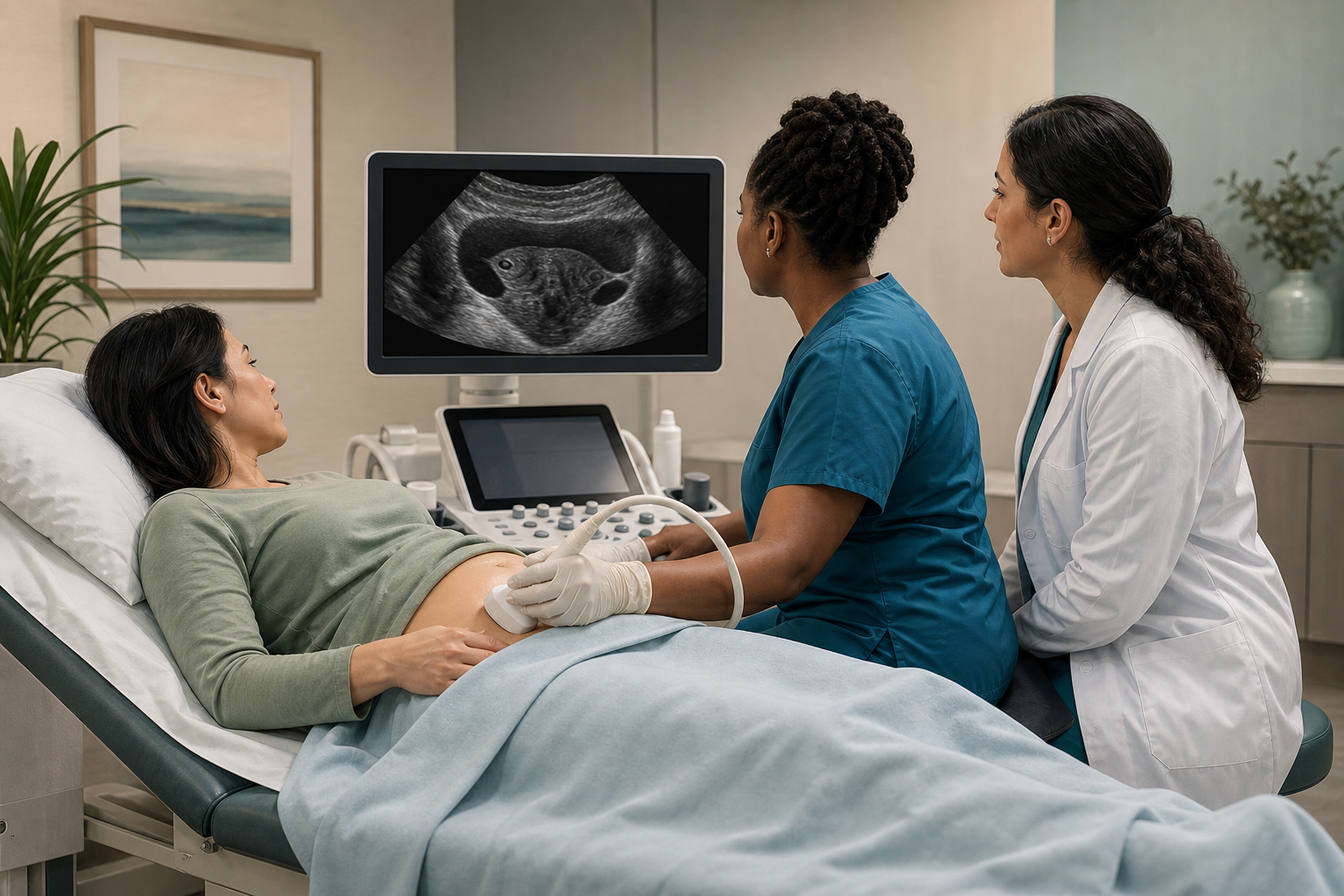
The assessment needs to address two separate questions: how the pregnancy inside the uterus appears and what is causing your symptoms. Depending on your condition, clinicians may reassess your symptoms and stability, repeat an internal ultrasound, examine areas outside the uterus, and look for signs of internal bleeding. The appropriate tests and treatment depend on what they find.
If an ectopic pregnancy has ruptured and is causing internal bleeding, emergency surgery may be necessary to control the bleeding and remove the ectopic pregnancy. The immediate priority is the pregnant person’s safety. When circumstances allow, treatment is also planned with the intrauterine pregnancy in mind, and that pregnancy can sometimes continue. No individual outcome can be promised because the implantation site, extent of bleeding, and timing of treatment all matter.
Before leaving an assessment, ask questions that give you a usable plan:
- Has a cause for the pain or bleeding been identified?
- Was heterotopic pregnancy considered despite the intrauterine pregnancy?
- Which specific changes mean I should return immediately?
- Who should I contact if the symptoms persist but do not become severe?
If you were already reassured but the symptoms changed

A common explanation such as digestive discomfort or an ovarian cyst may turn out to be correct. But an earlier explanation should be reconsidered when pain persists, becomes more intense, changes character, or is joined by dizziness, fainting, or bleeding. Returning for care is not repeating the same visit; you are presenting new clinical information.
Use one sentence to make the change clear: “The pain was mild and intermittent when I was assessed, but it is now constant and stronger,” or “I was assessed for pain, and now I am also dizzy.” That comparison is more useful than simply saying that you still feel unwell.
If you have severe pain, fainting, or significant dizziness now, stop trying to decide whether the earlier scan should reassure you. Seek emergency care and tell the team that an intrauterine pregnancy was confirmed but your symptoms are continuing or worsening.