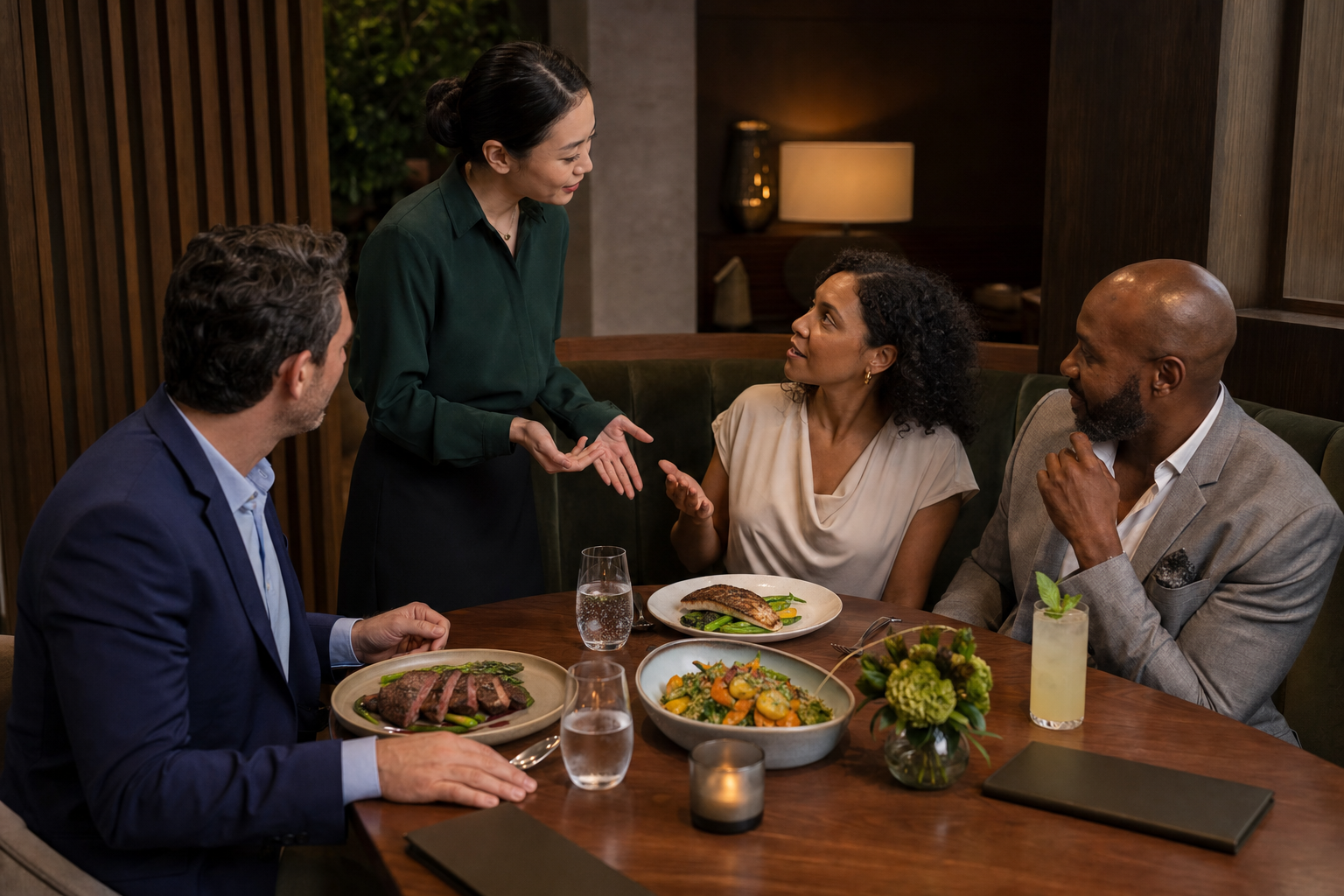
You need a restaurant where a useful conversation can happen, not a dining room that becomes the main event. The food should feel considered, the service should remove small interruptions, and everyone at the table should be able to hear one another without leaning in all evening.
If you are also arranging daycare pickup, a bedtime handoff, or evening childcare, predictability matters even more. A prime steakhouse can be a strong business-dinner choice, but the name on the door is not enough. The right decision depends on the guest, the room, and how you plan to run the meal.
Start with the job the room must do
Before searching for restaurants, write down the result you want from the dinner. You may be building trust with a new client, resolving a difficult issue, introducing two people, or reaching a decision that has stalled over email. That result tells you what to prioritize.
A well-chosen prime steakhouse supports conversation because the experience is usually familiar, orderly, and polished. Guests can understand the format quickly, service follows a recognizable rhythm, and the meal feels intentional without requiring everyone to decode an unusual concept. That reduces the number of distractions competing with the actual purpose of the evening.
That advantage disappears if the dining room is loud, the table is cramped, or your guest cannot find an appealing meal. Treat “prime steakhouse” as a useful format, not a guarantee. The restaurant still has to pass three tests: it suits the guests, it supports clear conversation, and it fits the tone of the relationship.
A steakhouse is especially sensible when the conversation needs a composed setting and your guests are comfortable with the menu. It is a weaker choice when someone would have to assemble dinner from side dishes, when the formality would feel out of step with the relationship, or when the location creates an unnecessary trip. A prestigious reservation does not compensate for making a guest feel like an afterthought.
Make sure the steakhouse works for every guest
Ask about needs before you reserve. A neutral message is enough: “Do you have any dietary preferences or accessibility needs I should keep in mind when I choose the restaurant?” You do not need an explanation, and you should not make the guest repeatedly justify the answer.
Then inspect the restaurant’s current menu rather than relying on its reputation. Look for a complete, appealing main course for each guest, not merely a collection of sides that could technically become a meal. If allergies or strict dietary requirements are involved, contact the restaurant directly and ask what it can reliably accommodate. If the answer is vague, choose another venue.
Keep alcohol optional in both language and behaviour. Offer the drinks menu without assuming anyone wants wine or asking why they do not. A business dinner should not require a guest to disclose a pregnancy, medication, religious practice, recovery, or personal preference simply to order comfortably.
Accessibility also extends beyond the front entrance. Ask about step-free access, washrooms, seating, lighting, and the route through the dining room when any of those details matter. A technically accessible building can still be an awkward setting if the assigned table is in a crowded passage or uses seating that does not work for the guest.
Location belongs in the same calculation. When you are the host, minimize the guest’s travel burden where practical. For a working parent, also confirm pickup and bedtime coverage before accepting the reservation time. Do not place the booking at the exact edge of a childcare handoff and assume dinner will end precisely on schedule.
Reserve for conversation, not just dinner
An online reservation confirms seats. It does not confirm that those seats will support the meeting. Call the restaurant and explain that you are hosting a business dinner where quiet conversation is the priority.
Ask which part of the dining room is calmest at the time of your reservation. Request a table away from the entrance, bar, kitchen doors, service stations, speakers, and large-party areas. If the discussion may involve papers or a laptop, ask whether the table has enough usable space. If confidentiality matters, remember that a quiet table is not necessarily a private one; discuss only what can safely be heard by nearby diners.
Give the restaurant one concise booking brief: the number of guests, the need for easy conversation, any confirmed accessibility or dietary requirements, and your preferred billing arrangement. Ask rather than assume that a card can be held or payment handled away from the table. Record the name under which the reservation was made and share the exact address with everyone attending.
Check the cancellation terms and your organization’s meal, expense, and hospitality rules before committing. This matters particularly when a guest is involved in procurement, contract approval, or another decision where an expensive meal could create discomfort. If the policy or appearance is questionable, reduce the spend or choose a more neutral setting.
Arrive before your guests so you can resolve table or payment problems without making them part of the evening. If the assigned location is beside a busy service path or loud group, ask about alternatives before everyone sits down. It is much harder to move once drinks and menus have arrived.
Host the meal without letting it run the meeting
The host sets the pace. Start with enough ordinary conversation for everyone to settle, then let guests look at the menu and place their orders before introducing the central business issue. Asking someone to compare cuts, answer a server, and discuss a sensitive proposal at the same time creates avoidable friction.
If a guest seems uncertain about price or format, offer a few representative options without steering them toward either the cheapest or most elaborate dish. Shared starters and sides can work for a comfortable group, but they should not force anyone to reveal a restriction or negotiate every bite. Individual orders are often simpler when the guests do not know one another well.
Keep the business agenda narrow. Choose one outcome for the dinner and no more than a small number of supporting topics. A restaurant is well suited to discussion and relationship-building, but it is a poor place for marching through a long presentation. Bring documents only when the conversation genuinely depends on them, and keep phones off the table unless they are needed for the meeting.
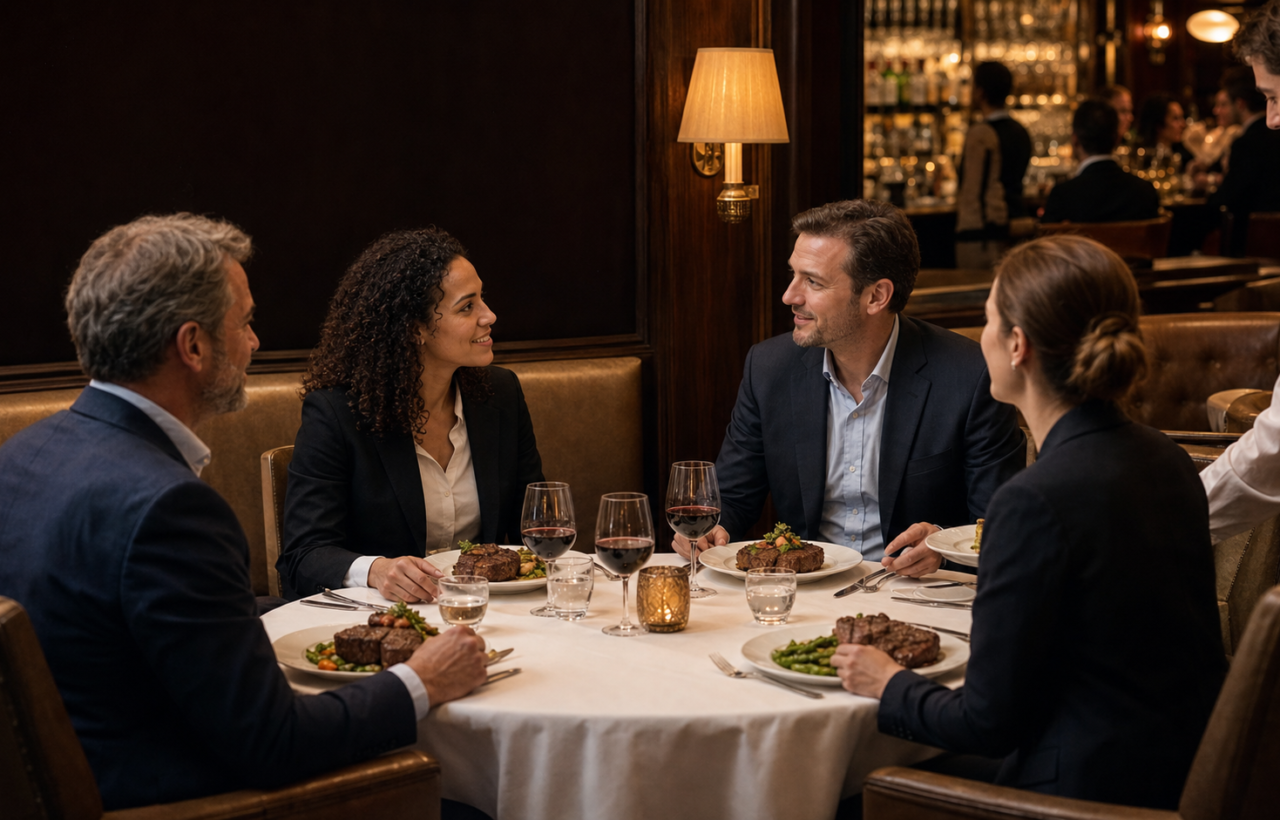
Watch the service rhythm rather than fighting it. Pause when orders arrive, let everyone begin eating, and return to the discussion once the interruption has passed. If a decision is reached, state the next action, the person responsible, and when the follow-up will happen. Send the written confirmation after dinner instead of asking the table to conduct a miniature administrative meeting over dessert.
If you issued the invitation as host, plan to handle the bill unless company policy or an agreed arrangement requires something else. Clarify any split-payment plan before the dinner. A debate over the check is precisely the kind of friction the restaurant choice was meant to prevent.
Key takeaways
- Choose the restaurant for the conversation you need to have, not for prestige alone.
- Ask guests about dietary preferences and accessibility before reserving, then verify suitable options directly with the restaurant.
- Call for a quiet table away from traffic, speakers, service stations, and large groups; an online note may not be enough.
- Check expense and hospitality rules before booking, especially when procurement or contract decisions are involved.
- Let everyone order before moving to the central issue, keep the agenda narrow, and end with one clear follow-up action.
- If you are coordinating childcare, build the reservation around a confirmed handoff rather than an optimistic end time.
Your next move is simple: send the preference question to your guests, then call the restaurant with a conversation-first booking brief. Those two checks will tell you more than the steakhouse’s reputation about whether it is right for the dinner.