
You are not just choosing a Christmas show. With a baby or toddler, you are choosing a venue, performance time and level of stimulation that must fit the day your family can realistically manage. A well-loved title will not rescue an outing that collides with a nap, prohibits re-entry or leaves your stroller at the bottom of a staircase.
The right first festive show is the one your child can experience without the adults spending the entire performance managing avoidable problems. Before you buy tickets, match the format to your child, ask the venue a short list of practical questions and give yourself permission to leave early.
Match the show to your child, not the biggest title
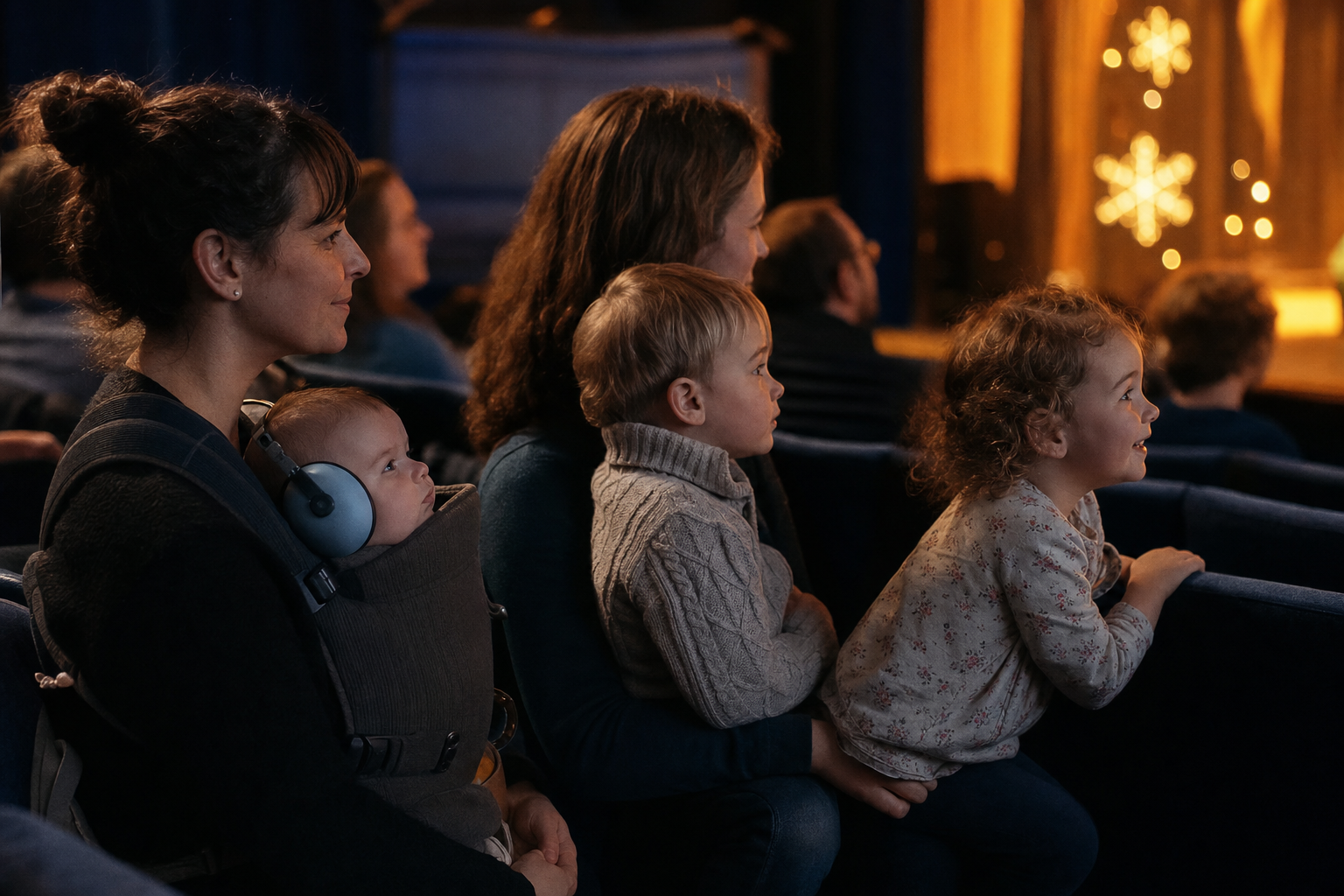
Your baby does not need to understand the story to enjoy music, movement, costumes and being with you. Your toddler may be captivated by those same things but find a dark auditorium, a sudden sound or a large character approaching the seats unsettling. Age guidance helps, but your child’s usual response to noise, crowds, waiting and unfamiliar places is the better test.
Start by deciding which kind of experience is most likely to work:
- A traditional pantomime can suit a toddler who enjoys songs, bold characters and joining in with an audience. Check the full running time, the interval and any loud or startling effects before committing.
- A shorter festive show may be an easier first theatre visit when your child has limited patience for sitting or has never been in an auditorium.
- A relaxed performance may help a child who needs more freedom to move or finds conventional theatre conditions difficult. Do not rely on the label alone. Ask whether the lights remain partly raised, sound or effects are adjusted, movement is permitted and a quiet space is available.
- An age-specific baby or toddler performance is worth considering when a venue offers one. Confirm the stated age range and whether the experience is seated, interactive or designed for families to move around.
Think in terms of your child’s current capacity rather than the tradition you hope to create. A mobile toddler who dislikes staying in one place needs a different setup from a baby who is content on your lap. Siblings complicate the decision further: choose for the child who will have the hardest time with the format, because that child’s needs are most likely to determine whether the family can stay.
Ask the box office these questions before you book

The phrase “family show” does not tell you whether your baby needs a ticket, where the stroller goes or what happens if you step outside. A quick box-office call can answer the questions that rarely fit neatly on a booking page.
- What is the exact running time, and is there an interval? Consider whether an interval gives your child a useful break or simply extends the outing beyond the part of the day that usually works.
- What are the minimum-age and ticket rules? Ask whether babies are admitted, whether a child sitting on an adult’s lap still needs a ticket and whether you must reserve a babes-in-arms ticket in advance.
- Which effects should parents know about? Ask about prolonged darkness, sudden bangs, flashing lights, smoke or haze, loud audience participation and performers entering the aisles. You do not need every plot detail; you need enough information to judge your child’s likely response.
- Can you leave and return during the performance? Some venues restrict re-entry or hold returning audience members until a suitable break. Find out where you would wait and whether you could still see or hear the show from there.
- Where can the stroller go? Confirm whether it can enter the building, whether storage is supervised and whether stairs or narrow routes make a baby carrier more practical. Never assume the stroller can remain beside your seat.
- What care facilities are available? Ask where the nearest changing station and family restroom are, and whether the venue has a suitable place to feed your child. Check its policy on children’s drinks and snacks rather than discovering a restriction at the door.
- What does a relaxed performance change? If you are considering one, ask for the actual adjustments and whether the venue provides a visual story, quiet area or flexible seating. The useful information is in the details, not the performance label.
If the person answering cannot confirm something important, ask whether the production team or access staff can clarify it. A vague answer about re-entry or accessibility is a reason to pause before buying a non-refundable ticket.
Book around your real routine, including the journey
Popular festive performances can begin booking quickly, but speed should come after the practical checks. It is better to miss one date than to spend money on a performance time that predictably conflicts with your child’s day.
A matinee is not automatically the best choice. For one child it falls into an alert, cheerful part of the day; for another it lands directly across a nap. Work backward from the curtain time and include the whole outing: getting dressed, travelling, parking or leaving the stroller, collecting tickets, using the changing area, finding your seats and travelling home.
- Choose the routine anchor first. Decide which nap, meal or bedtime you are least willing to disrupt. Eliminate performances that conflict with it.
- Check the ticket terms. Look for refund, exchange and transfer rules, especially if the booking is far in advance. Young children can make fixed plans fragile, so flexibility has real value.
- Choose the exit plan with the seats. An aisle or end seat may be more useful than a central view if you expect to step out. Check the seating map and ask which area has the simplest route to the lobby without crossing the stage sightline.
- Assign adult roles before buying. If two adults are attending, decide who will take the child out and who will remain with siblings or belongings. Seat the likely exiting adult nearest the aisle.
Do not choose a front seat simply because your toddler loves characters on a screen or in a book. Costumes and voices can feel much larger at close range. If you are unsure, a little distance may give your child more time to observe before deciding whether to join in.
Plan a theatre day that is easy to shorten
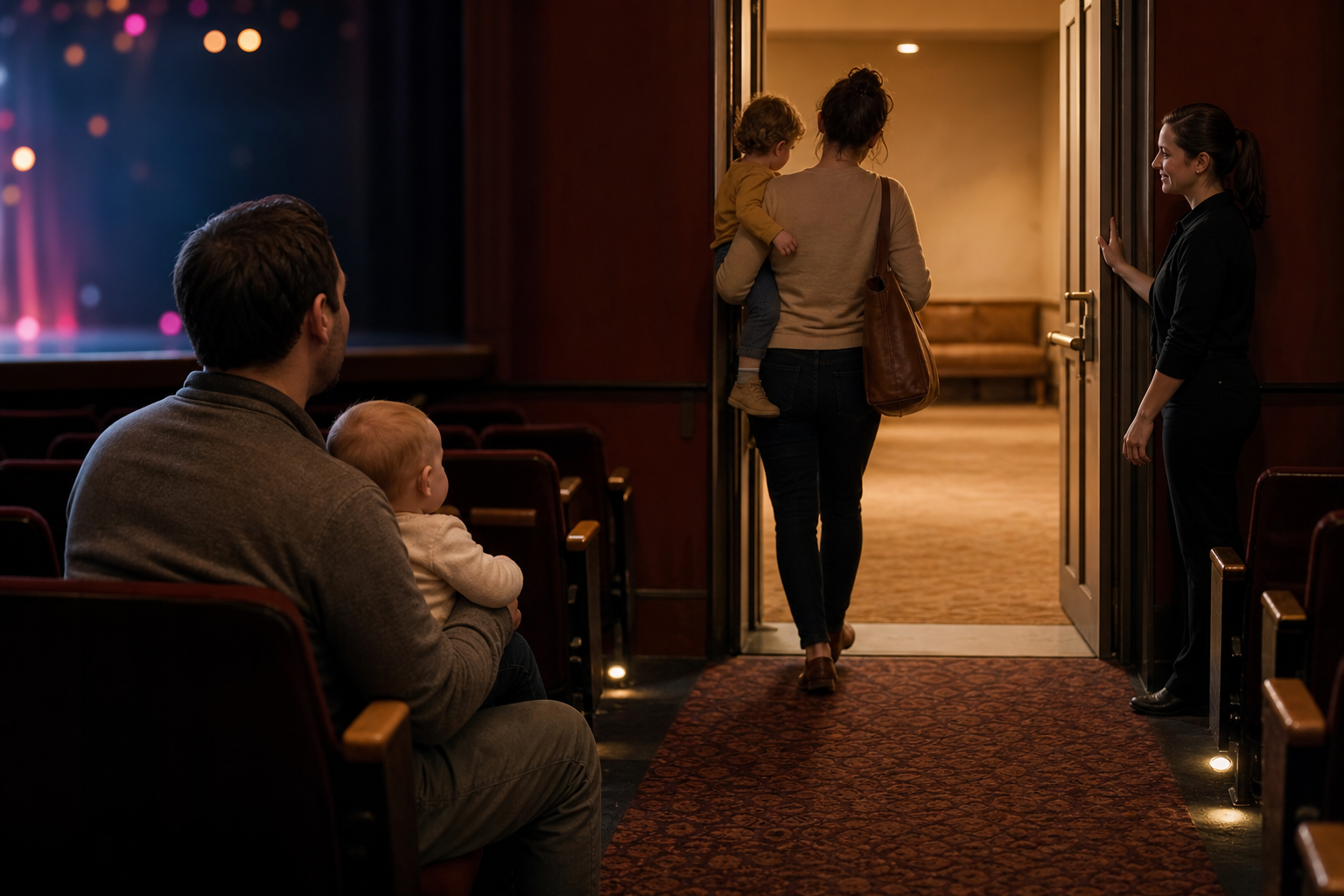
A successful first visit does not have to end with the final bow. Your practical goal is to let your child experience the show while keeping the exit calm and available. That changes how you pack, arrive and respond when their attention runs out.
Before you leave home
- Check the venue’s latest entry information and have the tickets ready on the device or in the format it accepts.
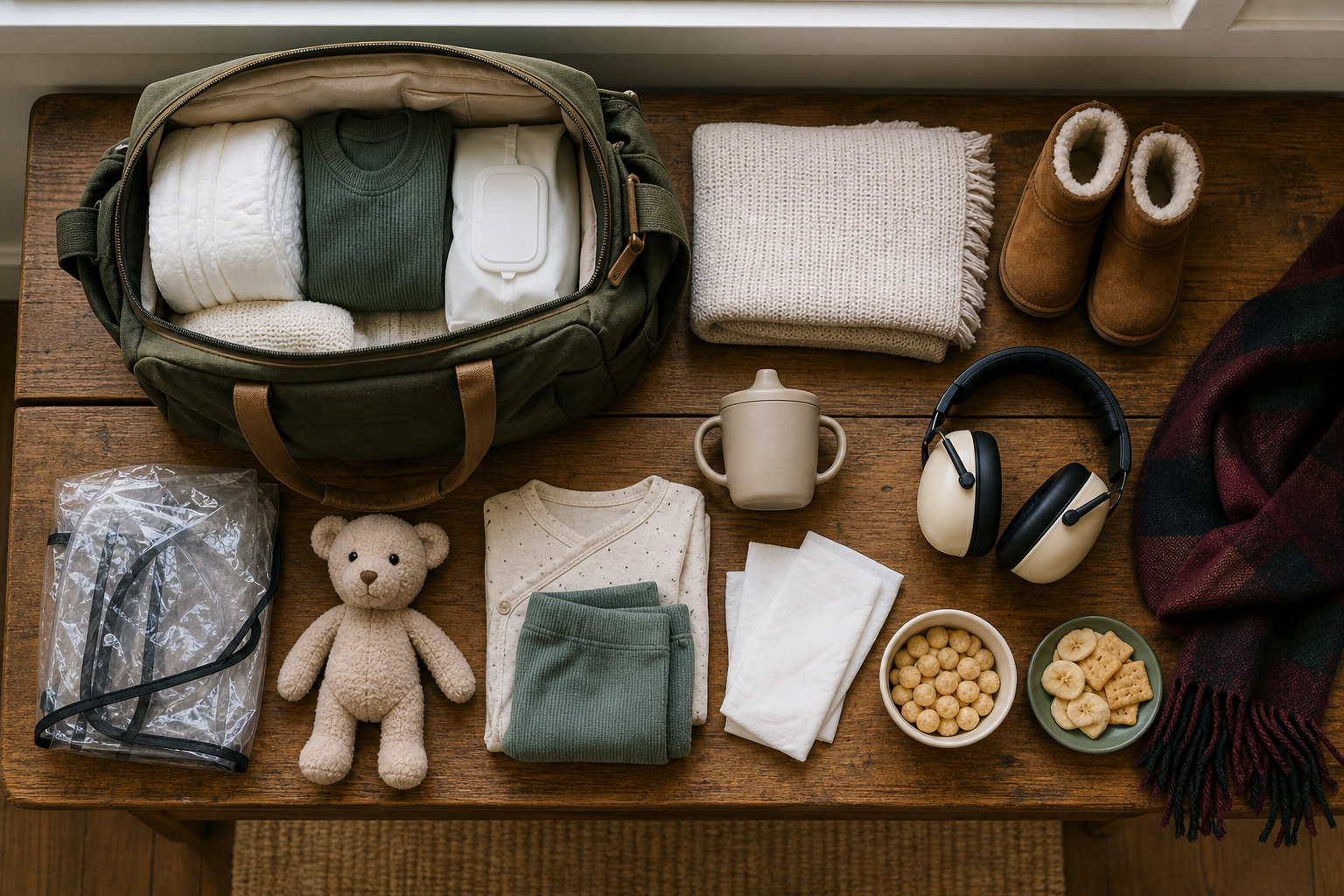
- Pack only what you can carry easily if the stroller must be stored elsewhere: changing supplies, spare clothes and one familiar comfort item are more useful than a large bag of entertainment.
- Bring a drink or snack only if it is appropriate for your child and the venue permits it. The box office should be able to tell you what can enter the auditorium.
- Dress in removable layers. A crowded lobby and a seated auditorium can feel different, and a child who is too warm has one more reason to become uncomfortable.
- Explain the outing to a verbal toddler in one concrete sequence: travel, find the seats, watch the show and go home. Avoid promising that they will love it or meet a character unless you know that will happen.
Once you reach the venue
- Allow enough time for the restroom or a change and an unhurried walk to the seats, but avoid creating a long wait in the auditorium before anything happens.
- Show your toddler where you are sitting and where you would go for a break. A simple explanation makes a sudden exit less confusing.
- Keep the aisle and exit route clear. Put the items you might need during the performance where you can reach them without emptying the whole bag.
- Let your child watch before participating. Do not force waving, shouting, clapping or contact with a performer because other children are doing it.
- Step out when distress is building rather than waiting for it to become a crisis. In the lobby, reduce demands and decide whether returning would genuinely help. Re-entry is an option, not an obligation.
If your child settles outside, you can return when the venue permits. If they do not, leaving is a sensible use of the exit plan you made. Staying to protect the value of the tickets rarely makes the remaining time more enjoyable for the child or the adults.
Key takeaways
- Choose by your child’s response to noise, darkness, waiting and sitting, not by the fame of the show.
- Confirm the running time, interval, age policy, child-ticket rule, effects, re-entry policy, stroller storage and care facilities before paying.
- Fit the entire journey around the most important nap, meal or bedtime rather than looking only at the curtain time.
- Treat a relaxed performance as a set of specific adjustments and ask the venue exactly what it provides.
- Select seats and adult roles with a calm exit in mind, and count a partial performance as a valid first visit.
Your next step is simple: shortlist one suitable show, then contact the venue with the practical questions above. If its answers fit your child’s routine and your exit plan, book it. If they do not, choose a shorter or more flexible performance, or wait for another year. The tradition should serve your family, not the other way around.