If your baby is too young for routine measles vaccination, or you have heard about a possible exposure, you need more than a general reminder to be careful. You need to know what to check, who to call, and which decisions should not wait.
Start with three facts: your baby’s exact age, their vaccination record, and whether there is an upcoming trip or a possible exposure. Those details determine the next step far more reliably than your baby’s age alone.
Put your baby’s vaccination status at the centre of the plan
Measles is an airborne viral infection, and it is extremely contagious. Brief contact can matter because the virus spreads through shared air, not only through direct touch. Cleaning toys and washing hands are sensible everyday habits, but neither replaces vaccination or an exposure plan.
The measles, mumps, and rubella vaccine, usually called MMR, is the main protection against measles. The right timing for your baby depends on age and circumstances. Routine schedules apply in ordinary conditions, while travel, a local outbreak, or a known exposure may change what a clinician or public-health team recommends.
Do not guess from memory or assume that an appointment booked months ago still answers today’s risk. Find the written vaccination record and ask your baby’s clinician these questions:
- Is my baby currently eligible for an MMR dose?
- Does an upcoming trip or a nearby outbreak change the recommended timing?
- If my baby received an early dose because of elevated risk, will they still need later routine doses?
- When is the next dose due, and should we book it now?
- Does any medical condition or treatment affect the plan?
An early dose given in special circumstances may not complete the routine series. If your baby has already received one, ask the clinician to write down what comes next. A date in the calendar is more useful than a vague instruction to follow up later.
Build protection around a baby who is not fully vaccinated
A baby who cannot yet rely on their own vaccination needs fewer opportunities for the virus to reach them. That does not require sealing your household off from ordinary life. It means strengthening the points where exposure is most likely to enter.
Ask parents, siblings, caregivers, and other regular close contacts to check their own vaccination status with an appropriate healthcare professional. Do not rely on someone saying they are probably covered. A record or professional confirmation is better than a childhood memory.
Make postponing visits normal when someone has a fever, a new rash, or respiratory symptoms. This boundary matters because measles can spread before the rash makes the illness obvious. A visitor who feels only mildly unwell should not be the person deciding that contact with your baby is harmless.
If your baby attends child care, ask practical questions before there is a case:
- How quickly are families notified about a suspected or confirmed exposure?
- Where does a child with fever or a new rash wait for pickup?
- Who should you contact after hours if public health sends new instructions?
- What information will the centre need before your baby returns?
During an identified outbreak, follow instructions from your local public-health authority. General internet advice cannot tell you whether a particular waiting room, flight, child-care room, or family gathering qualifies as an exposure.
Treat travel and possible exposure as time-sensitive
Do not save the measles question for a routine visit if you are travelling soon. Contact your baby’s clinician before departure and give them the destination, departure date, baby’s age, vaccine dates, and any health condition that could affect vaccination. This lets the clinician assess the actual trip instead of giving advice for an average day at home.
A possible exposure deserves the same urgency. Because measles spreads readily through shared indoor air, do not dismiss an encounter merely because nobody held or touched your baby.
If you are told that your baby may have been exposed:
- Write down where the contact happened and the best available time and date.
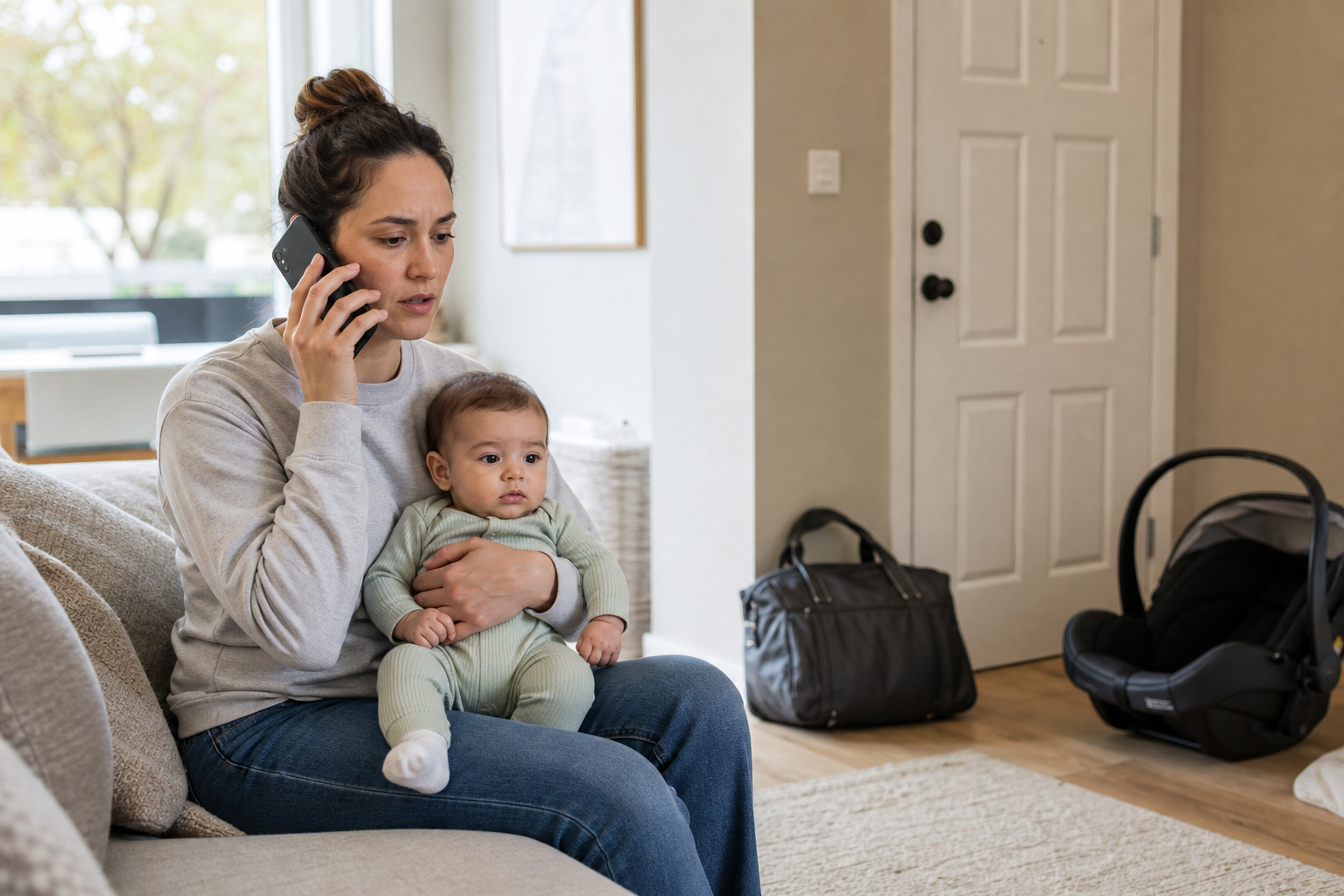
- Call your baby’s clinician or the public-health contact named in the exposure notice promptly. Post-exposure decisions can be time-sensitive and depend on age and medical history.
- Tell the caller your baby’s exact age, vaccine history, symptoms, and any condition or medicine that affects the immune system.
- Keep your baby away from child care, gatherings, and vulnerable visitors until you receive specific instructions.
- Call before entering a clinic or hospital. Staff may need to arrange a separate entrance or waiting area so other babies and patients are not exposed.
Do not try to choose or obtain a post-exposure treatment on your own. A clinician or public-health professional must decide what is appropriate for your baby’s age, vaccination status, health, and exposure timing.
Know the symptom pattern, then act on the context
Measles often begins like a respiratory illness. Fever, cough, a runny nose, and red or watery eyes can appear before a spreading rash. Those symptoms also occur with many more common childhood illnesses, so a rash or cough by itself does not establish that your baby has measles.
Context is what changes the response. Call promptly if your baby develops compatible symptoms after a known exposure, during an outbreak, or after travel where measles risk was a concern. State the measles concern at the beginning of the call. Do not take your baby into a shared waiting room without warning the facility first.
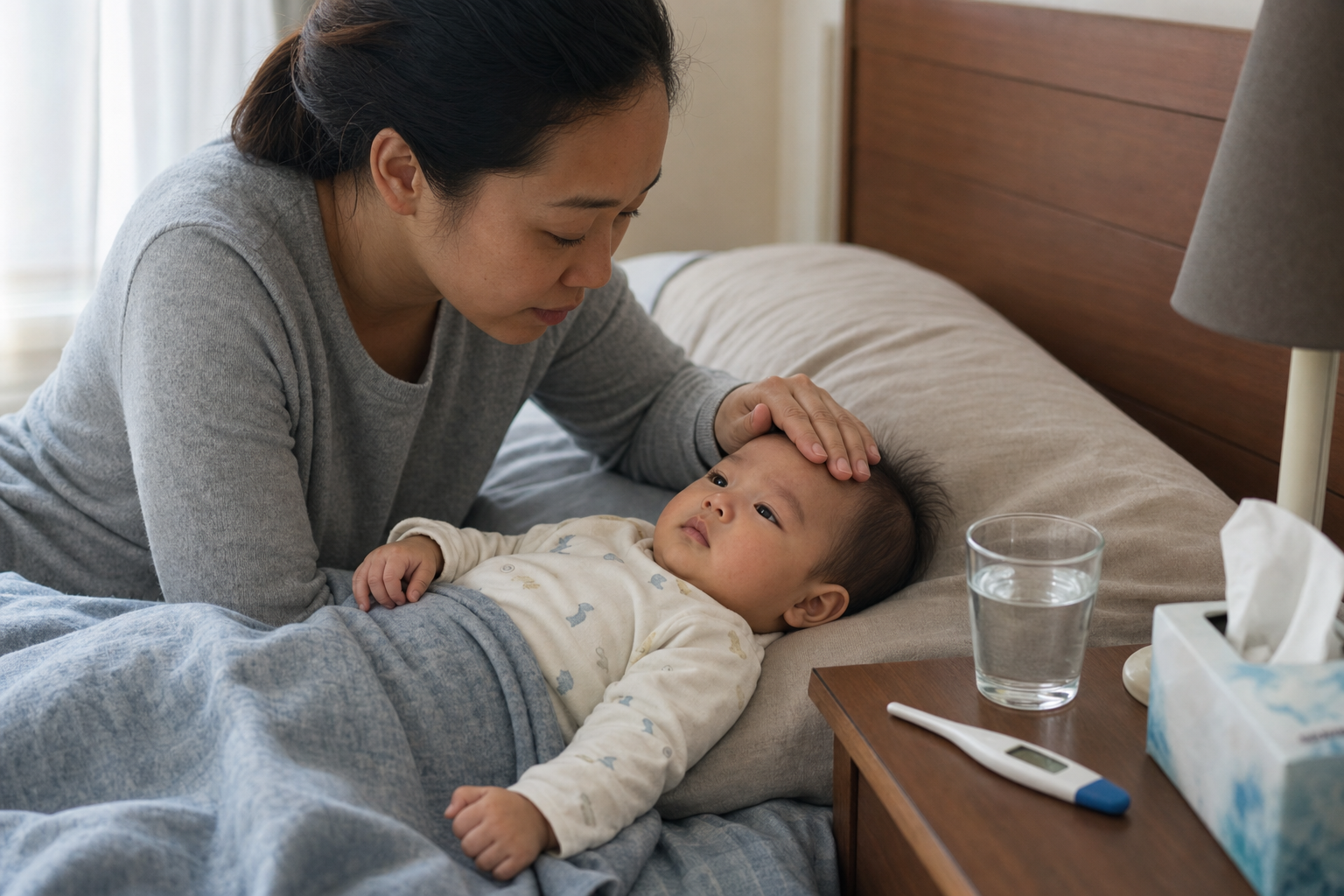
While waiting for medical instructions, keep your baby at home and away from visitors. Note when each symptom started, measure temperature with an age-appropriate thermometer, and track feeding and wet diapers. These observations help the clinician assess whether your baby is staying hydrated and how quickly the illness is changing.
Seek emergency help if your baby has trouble breathing, develops blue or grey lips or skin, has a seizure, is extremely difficult to wake, or shows signs of severe dehydration such as markedly fewer wet diapers. Tell emergency dispatch or the receiving team that measles is possible so they can protect other patients while treating your baby. For medicine or dosing questions, speak with a clinician or pharmacist who knows your baby’s age and weight.
Key takeaways
- MMR vaccination is the central protection against measles; confirm your baby’s eligibility and next dose from the written record.
- Travel, an outbreak, or a possible exposure can change the timing and urgency of the vaccination conversation.
- Before your baby is fully protected, check the vaccination status of regular caregivers and postpone contact with anyone who is unwell.
- After a possible exposure, call promptly and provide the location, timing, vaccine history, symptoms, and relevant medical conditions.
- Always call before bringing a potentially infectious baby into a clinic or hospital unless emergency services direct you otherwise.
Your most useful next step is small: find your baby’s vaccination record and save the numbers for their clinician and local public-health service. If travel is approaching, a case has been reported nearby, or exposure may already have happened, make the call now rather than waiting for a rash.