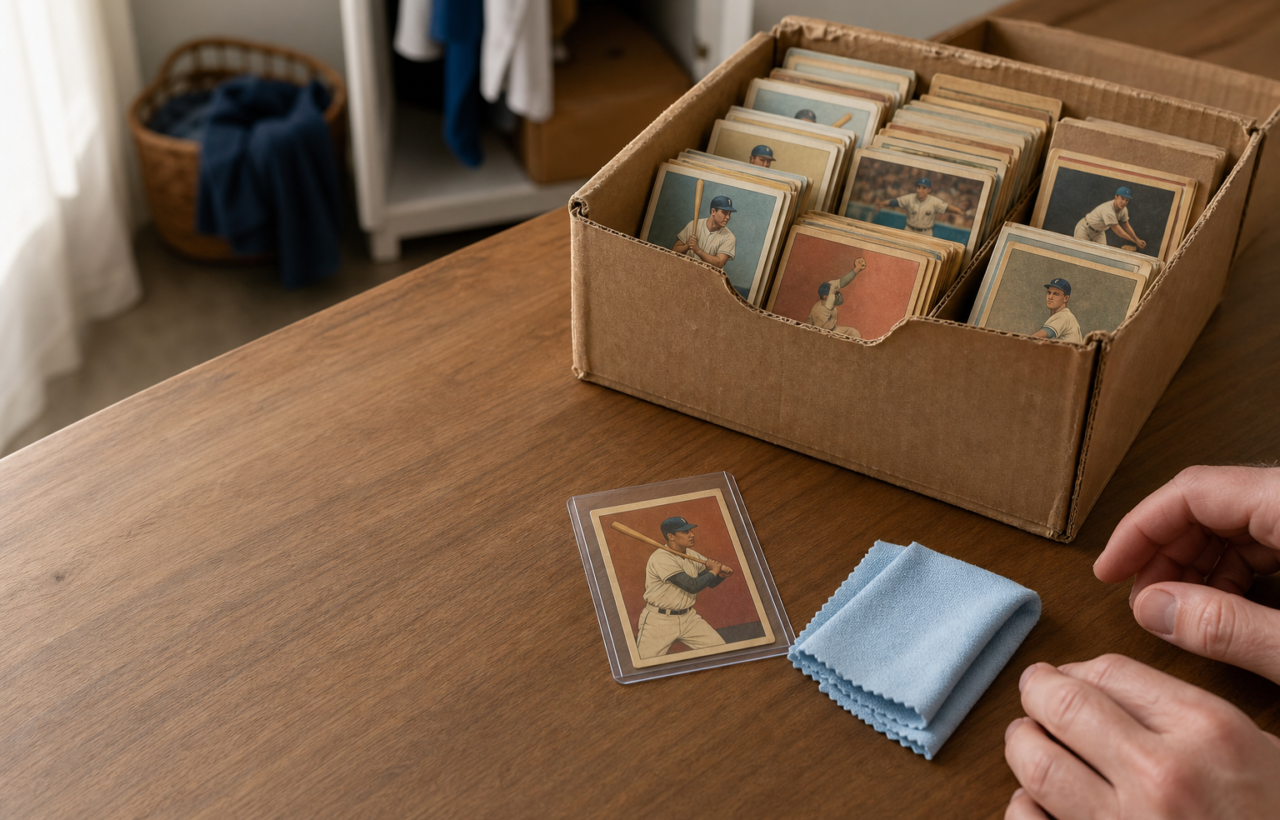
You found baseball cards while clearing a closet, making room for baby gear, or sorting a relative’s belongings. Before you let a toddler handle them, give them away, or assume the whole box will pay for next month’s expenses, pause.
The realistic starting point is that most forgotten collections contain plenty of ordinary cards, while a few may deserve much closer attention. Your job isn’t to price every card immediately. It is to protect the collection, identify exact versions, and narrow the box to the cards worth researching.
Make a no-damage first pass through the collection
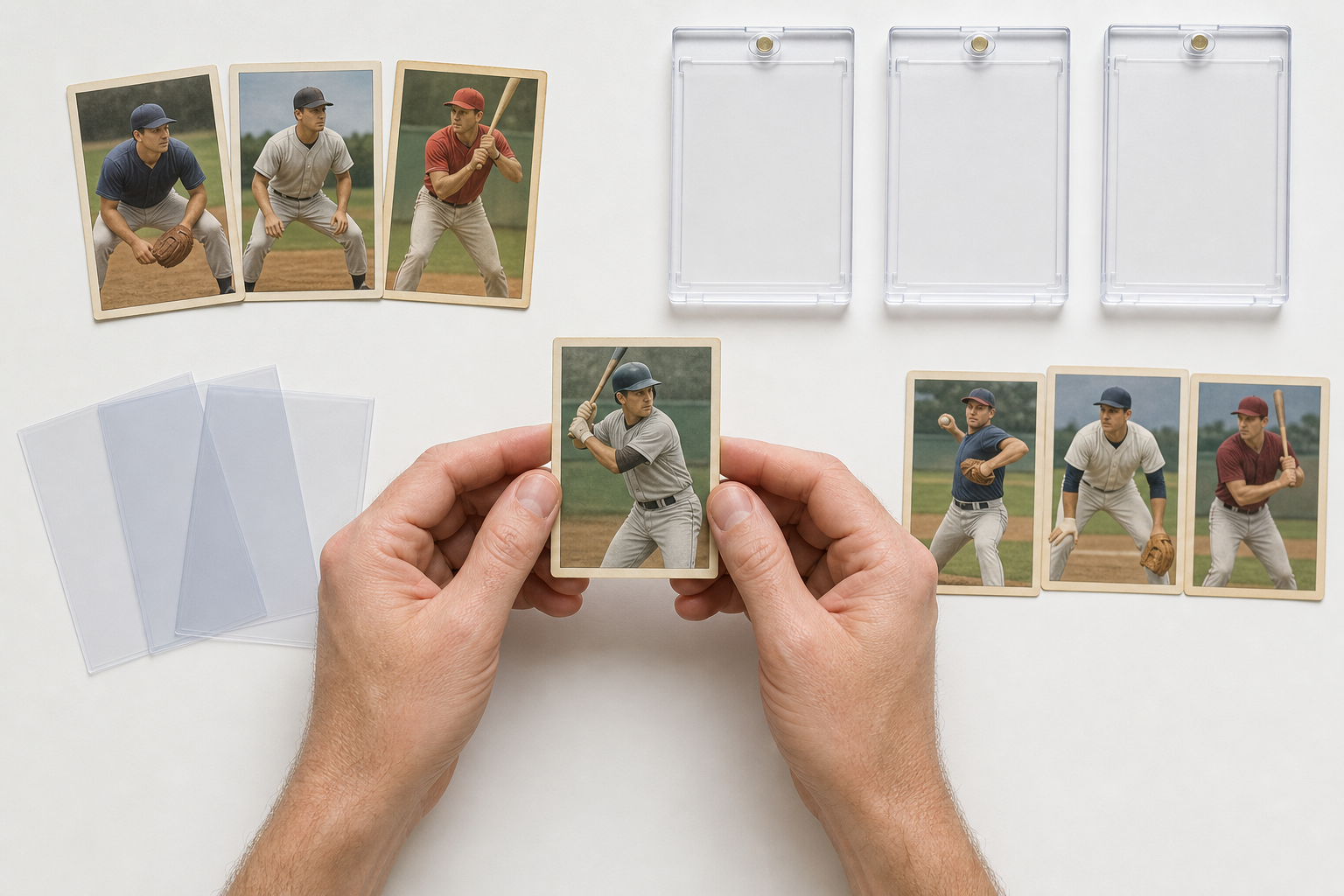
Set up on a clean, dry table above your child’s reach. Loose sleeves, cracked plastic holders, staples, and torn packaging don’t belong on the floor around a baby or toddler. Wash and dry your hands, keep food and drinks away, and hold cards by their edges.
Resist the urge to improve anything. Don’t erase writing, wipe a surface with cleaner, press out a crease, trim an uneven edge, or attach tape. A repair attempt can cause permanent damage, and an alteration may matter to a future buyer or authenticator. Dust around the workspace, not across the card.
Keep unopened packs, sealed boxes, complete factory sets, and cards already in holders separate from loose cards. Opening a sealed item or breaking up a set is irreversible. Identify it first, then decide whether opening or separating it makes sense.
For loose cards, make broad working piles rather than an instant keep-or-discard decision:
- Cards featuring prominent players or cards that already look different from the rest.
- Older-looking cards and cards whose age you cannot determine.
- Foil, unusual border colours, serial numbering, autographs, memorabilia pieces, or other distinctive features.
- Duplicates, because small differences between apparently identical cards can identify a separate version.
- Clearly damaged cards, which should be isolated so rough edges or debris don’t affect better cards.
- Unopened material, complete sets, albums, and original packaging.
Place promising cards in card-safe soft sleeves. If you use a rigid holder, sleeve the card first and make sure the fit doesn’t pinch it. Don’t force a thick card into a holder made for a standard card.
Identify the exact card before searching for a price
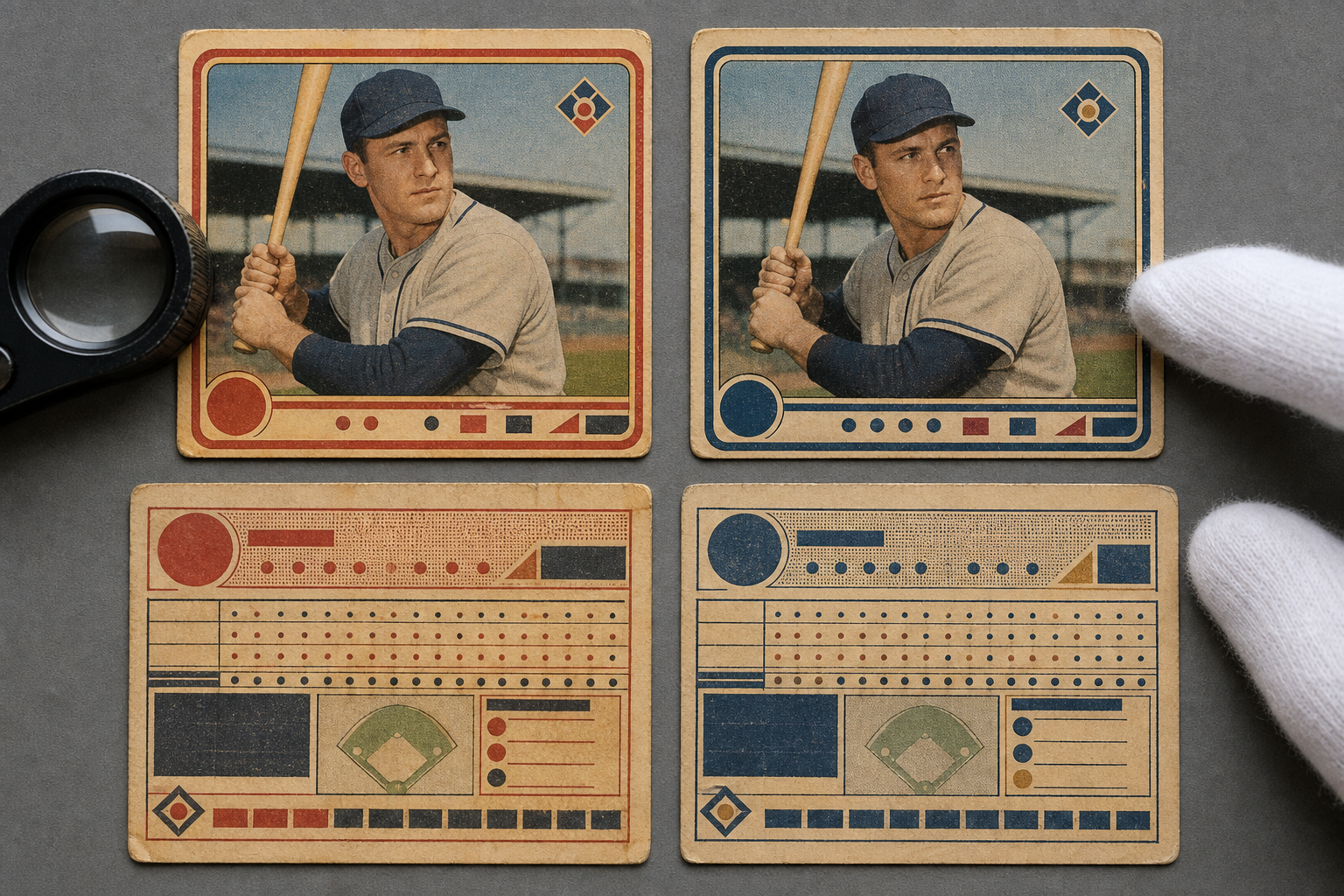
A player’s name is only the beginning. One player can appear on many cards in the same season, and visually similar cards may be base issues, inserts, parallels, reprints, or later reproductions. Searching only the player often produces prices for a different card.
Record the following details for every card in your promising pile:
- Player name and team shown on the card.
- Brand or manufacturer.
- Set or product line, if it is printed.
- Card number, commonly found on the back.
- Likely issue year. A copyright line can help, but don’t assume the final season in the statistics is the release year.
- Words such as rookie, insert, refractor, parallel, proof, autograph, or memorabilia, while treating them as clues rather than proof of authenticity.
- Border colour, foil pattern, serial numbering, image differences, or other features that distinguish it from an ordinary version.
- Whether it is loose, sealed, authenticated, or held in a professionally graded case.
Photograph the front and back in clear, even light. Also photograph the label if the card is already in a graded holder and the packaging if it came from a sealed product. These images let you compare small details without repeatedly handling the card.
Be especially careful with supposed errors and autographs. A printing oddity isn’t automatically scarce, and a signature that looks convincing isn’t automatically authenticated. Match the exact variation and look for actual transactions involving that same version. Don’t remove writing simply because you think it was added later; it may be relevant to the card’s identity or history.
Use condition and real sales to estimate value
Check condition without assigning your own grade
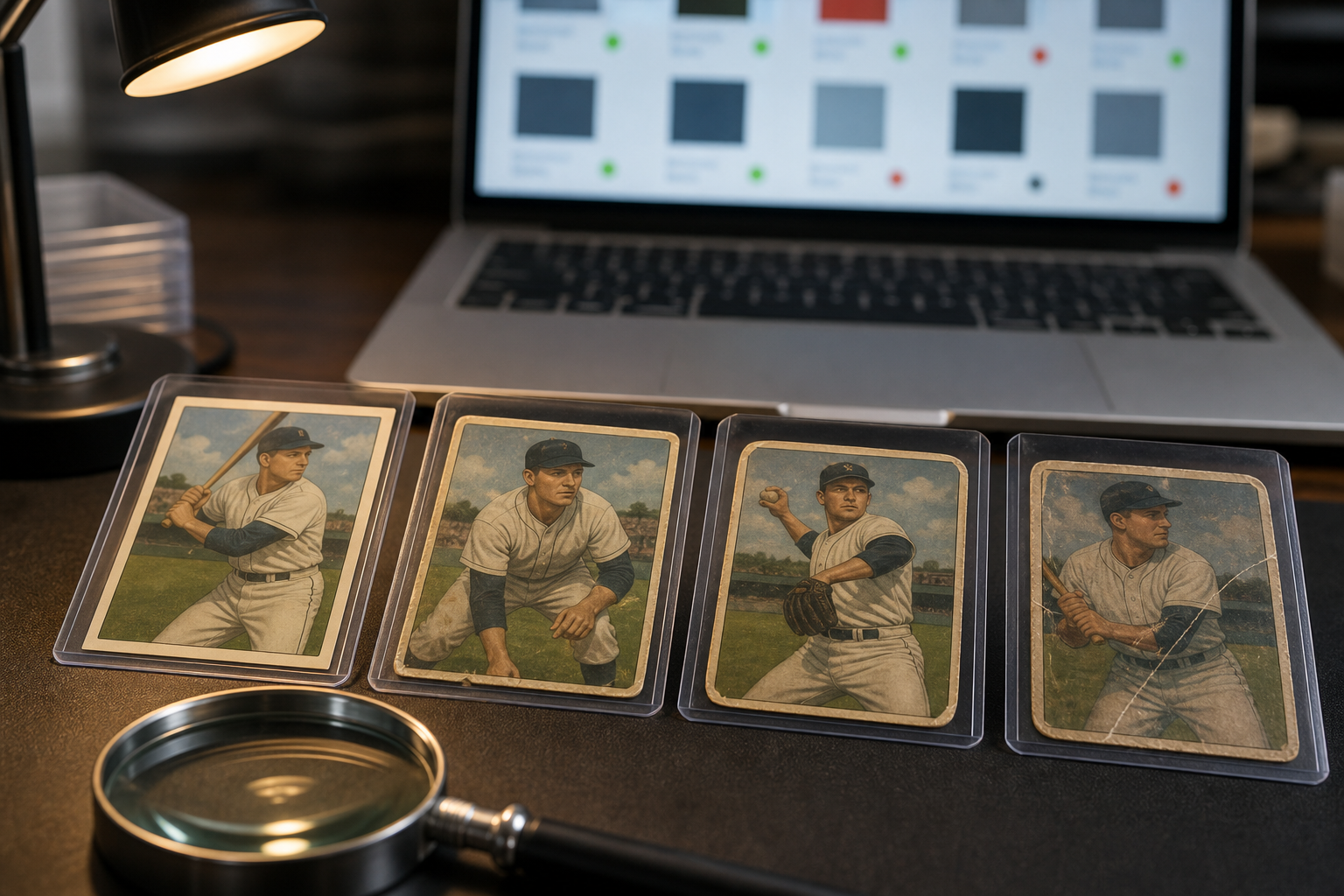
Condition can create a large price difference between two copies of the same card. Examine each candidate under bright, indirect light and note what you can actually see:
- Corners: sharp, softened, bent, or missing material.
- Edges: clean, chipped, rough, or discoloured.
- Surface: scratches, stains, dents, print lines, loss of gloss, writing, or residue.
- Creases: visible from the front, back, or only when the card is tilted.
- Centering: whether the printed design sits noticeably closer to one edge, when the design provides a useful border.
- Alteration concerns: trimming, recolouring, cleaning, pressing, or repairs.
Describe condition conservatively. A card that looks excellent through plastic may reveal surface or edge problems outside the holder, but unnecessary removal creates its own risk. If it is sealed or professionally graded, leave it in place unless a qualified reason justifies opening it.
Compare sales, not ambitious asking prices
An asking price tells you what a seller hopes to receive. It does not show what a buyer paid. Search completed or sold listings wherever the marketplace provides them, using the card’s exact year, brand, set, player, card number, and variation.
Before treating a result as a comparable sale, confirm that it matches:
- The same card rather than a reprint or another release with a similar image.
- The same base card, parallel, insert, autograph, or memorabilia version.
- A similar condition level.
- Raw with raw, or the same professional grade with the same grade.
- A single card with a single card, rather than a card buried in a larger lot.
- A completed purchase rather than a listing that ended without a buyer.
Look for a group of reasonably comparable sales. One unusually high transaction may reflect a better condition, a rarer version, an incomplete description, or a buyer who simply paid more than others. One low sale can be equally misleading. If you cannot find an exact match, mark the value as unresolved rather than borrowing the price of a vaguely similar card.
Your working estimate should be a range, not a promise. Keep separate notes for the card’s apparent identity, observed condition, comparable sales, and unresolved questions. That prevents a hopeful price from quietly turning into a supposed fact.
Decide whether to grade, sell, or keep each card
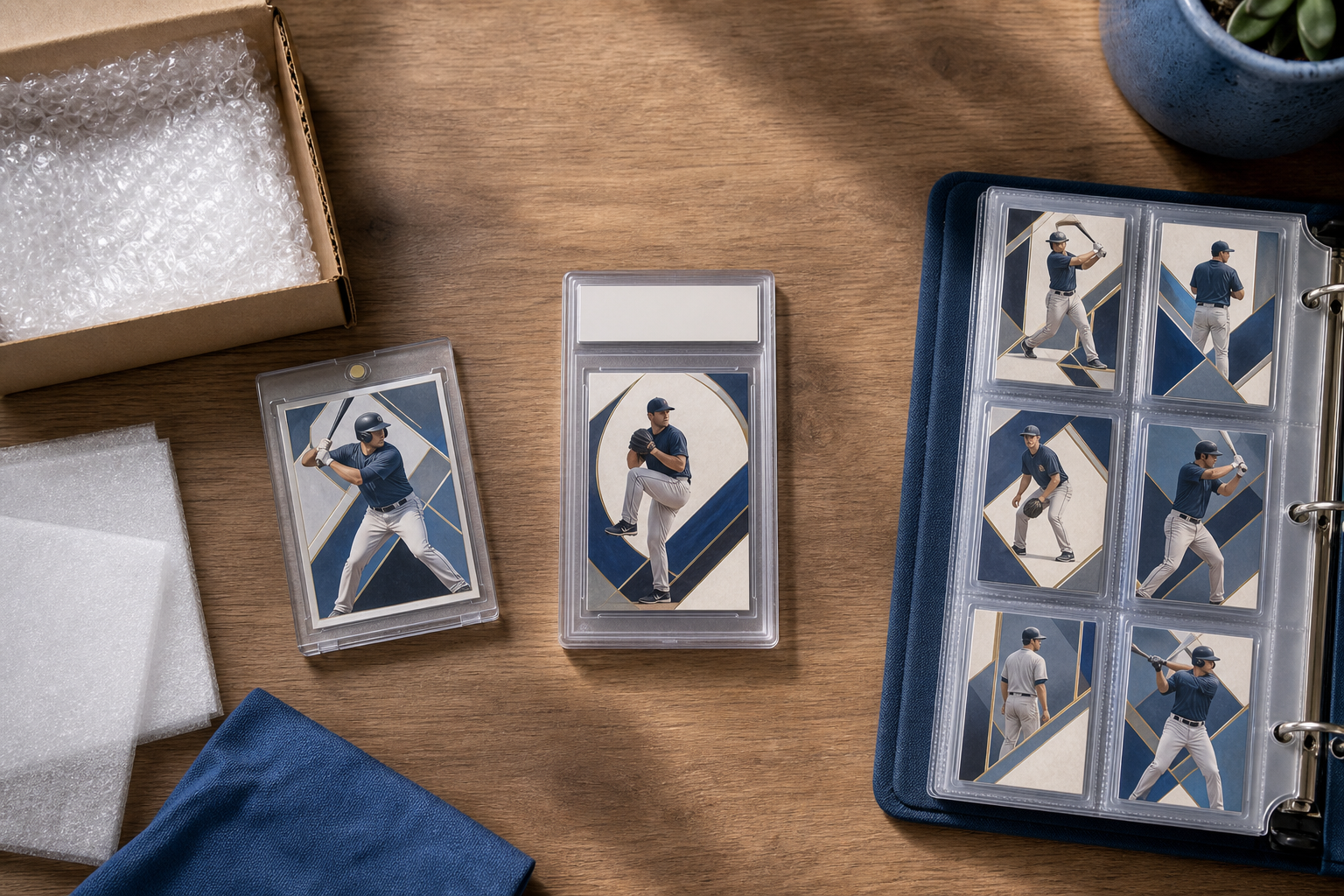
Professional grading can provide authentication, a condition grade, and protective encapsulation. It doesn’t make an ordinary card rare, guarantee a high grade, or ensure that the eventual sale will cover the grading expense.
Consider grading only after identifying the exact card and comparing raw sales with sales in plausible grades. Use a conservative condition assumption. Then account for the grading fee, shipping in both directions, insurance, waiting time, and the possibility of a lower grade than you expect. If the likely difference in net value doesn’t comfortably exceed those costs and risks, keeping the card raw may be the more sensible decision.
If a card appears unusually valuable, possibly altered, or difficult to authenticate, don’t accept a quick private offer based on a photograph alone. A reputable card dealer, auction specialist, or established authentication and grading service can provide the next level of scrutiny. Ask what the service will cost, whether the card will be insured while in its possession, and what happens if it cannot authenticate the item.
Your selling route changes the trade-off between money, time, and certainty:
- A local card shop can inspect cards in person and make the process fast, but its offer will generally leave room for the shop’s resale costs and profit.
- A specialist auction or consignment service can handle presentation and access to collectors, but you need to understand fees, payment timing, insurance, and unsold-item terms.
- A self-managed online listing gives you control over the description and price, while making you responsible for photographs, buyer questions, packing, shipping, returns, and disputes.
- A private sale can reduce platform involvement, but it requires careful payment and personal-safety decisions. Don’t hand over a card merely because a payment screenshot appears convincing.
Compare the amount you would actually keep after commissions, payment fees, packing, shipping, insurance, and any grading costs. A higher headline sale can produce a lower net result. For a shipped card, photograph its condition and packing process, use rigid protection that doesn’t press against the card, and choose tracking and insurance appropriate to the amount at risk.
Keeping a card is also a valid outcome. If its family connection matters more than its market price, store it in a card-safe holder in a dry, stable place away from sunlight and children’s reach. Put names, dates, and family history on a separate note or digital record, never directly on the card.
Key takeaways for your first sorting session
- Protect first: clean hands, edge handling, no cleaners, no tape, and no home repairs.
- Preserve sealed products and complete sets until you know what they are.
- Identify the exact year, set, card number, and variation before searching for value.
- Use completed sales of genuinely comparable cards, not the highest active listing you can find.
- Treat your condition opinion as provisional and your value estimate as a range.
- Grade only when the likely benefit exceeds all costs and the risk of a disappointing result.
- Choose a selling method by expected net proceeds, workload, and risk rather than headline price alone.
Start with the small pile that has the clearest value signals. Photograph both sides, write down the identifying details, and research exact matches before you spend money or accept an offer. By the time that pile is resolved, you will have a repeatable system for the rest of the box without damaging a card that deserved better.