Your toddler’s daycare has reported hand, foot, and mouth disease, and now every shared cup, diaper change, and cuddle feels like a possible exposure. The first question is usually whether the infection could harm your pregnancy.
In most cases, it does not. Hand, foot, and mouth disease is usually an unpleasant but short-lived viral illness, and there is no clear evidence that it causes miscarriage or congenital disorders. You should still contact your prenatal care provider if you develop symptoms, have a confirmed close exposure near your due date, or cannot drink enough because of mouth sores.
Key takeaways
- Hand, foot, and mouth disease is not known to cause adverse pregnancy outcomes such as miscarriage or congenital disorders.
- An infection close to delivery can pass to the baby. These infections are often mild, but your maternity team should know about your symptoms or exposure.
- Call your prenatal care provider promptly if you develop fever, flu-like symptoms, mouth sores, or a blister-like rash on your hands or feet.
- Most cases improve without specific treatment in seven to 10 days. The immediate practical concern is getting enough fluid when mouth sores make drinking painful.
- Seek urgent medical assessment for severe dehydration, a severe headache with a stiff neck and high fever, confusion, unusual weakness, or trouble breathing.
The pregnancy risk is low, but timing matters
Hand, foot, and mouth disease is a viral infection seen most often in young children. Typical symptoms include fever, painful sores inside the mouth, and a red or blister-like rash, especially on the palms and soles. Adults are infected less often because many already have antibodies from an earlier exposure, but pregnancy does not make exposure impossible.
The Centers for Disease Control and Prevention has found no clear evidence connecting the illness with miscarriage or congenital disorders. That is reassuring, but it is not a reason to ignore symptoms. Pregnancy changes how dehydration, fever, medication choices, and the timing of an infection need to be handled.
The timing deserves particular attention if you are approaching delivery. The virus can be passed to a baby when the pregnant parent becomes infected close to birth. Report a confirmed exposure or symptoms to your obstetrician, midwife, or maternity unit and tell them if labour begins. Newborns younger than 1 month can be more vulnerable to severe symptoms from uncommon complications, so the care team may want to plan appropriate observation after birth.
A clinician will often diagnose hand, foot, and mouth disease from the appearance of the rash and the pattern of symptoms. A throat or stool sample may occasionally be used for confirmation. Do not assume that every rash during pregnancy is hand, foot, and mouth disease based on a daycare notice or an online photo. A prenatal care professional should assess a new rash because several infections and pregnancy-related conditions can look similar at first.
What to do after a daycare or household exposure
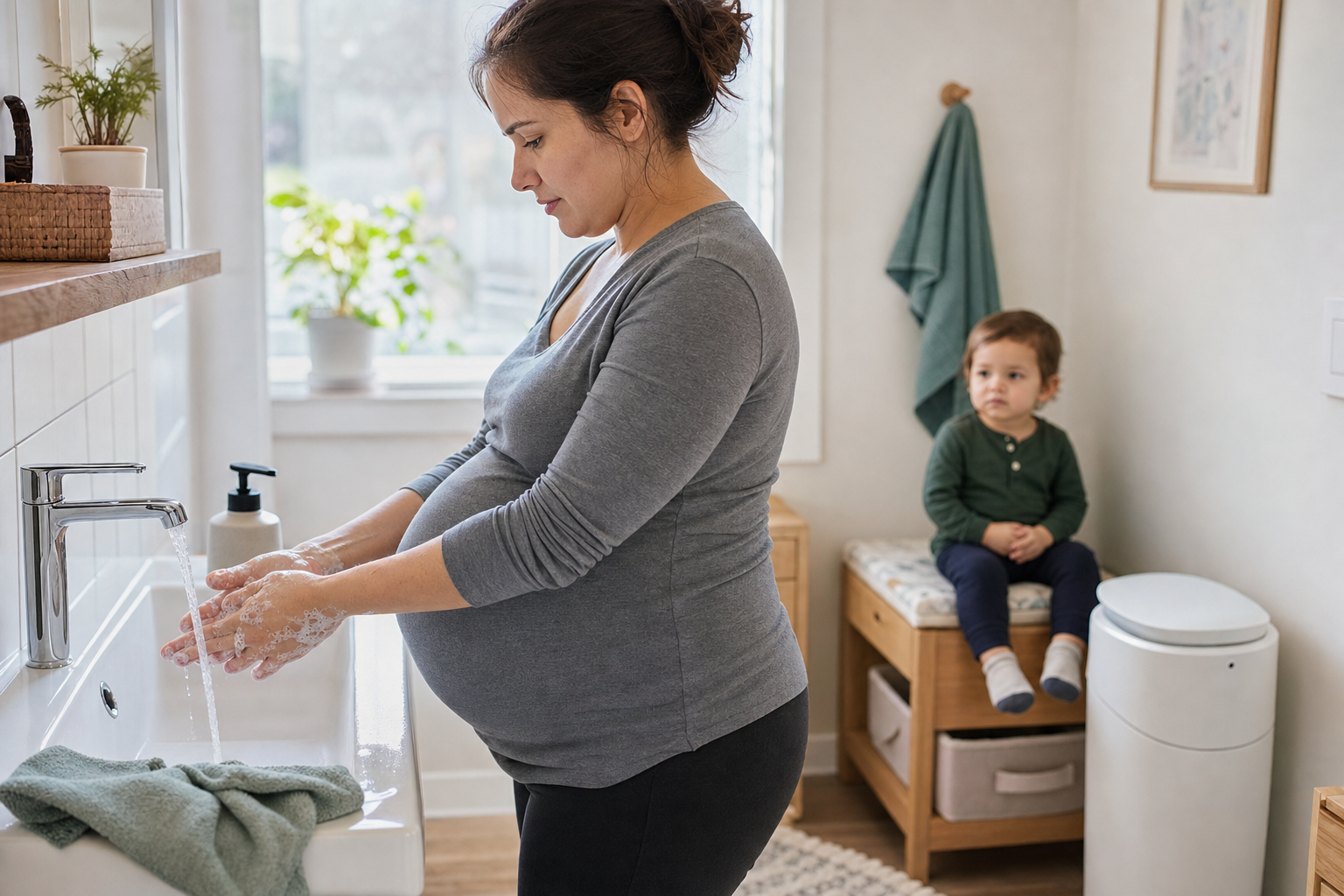
Exposure does not mean that you will become ill. It does mean that the next few handwashing and household decisions matter more than deep-cleaning the entire home.
- Wash your hands with soap and water for at least 20 seconds. Pay attention to your fingertips, under your nails, your palms, and your wrists.
- Prioritize the moments most likely to move the virus from a child to your face or food: after diaper changes, toileting help, nose wiping, contact with saliva or other bodily fluids, and before preparing or eating food.
- Avoid touching your eyes, nose, and mouth with unwashed hands. Do not share cups, utensils, food, towels, or other objects that have been in contact with the sick person’s mouth.
- Clean frequently handled objects and surfaces, including faucet and cabinet handles, doorknobs, phones, tablets, remote controls, shared toys, pacifiers, teething toys, sippy cups, and pillowcases.
- Watch for fever, flu-like symptoms, painful mouth sores, or a red or blister-like rash on the hands or feet. Call your prenatal care provider promptly if any of these appear.
- Contact your prenatal care team after a confirmed close exposure if you are near your due date, even if you currently feel well. They can advise you based on your stage of pregnancy and the circumstances of the contact.
If another adult is available, ask that person to take over diaper changes and toileting while your child is sick. If that is not practical, focus on careful handwashing immediately afterward. You do not need a perfectly sterile house; you need fewer opportunities for contaminated hands and shared objects to reach your face.
Protect hydration while the infection runs its course
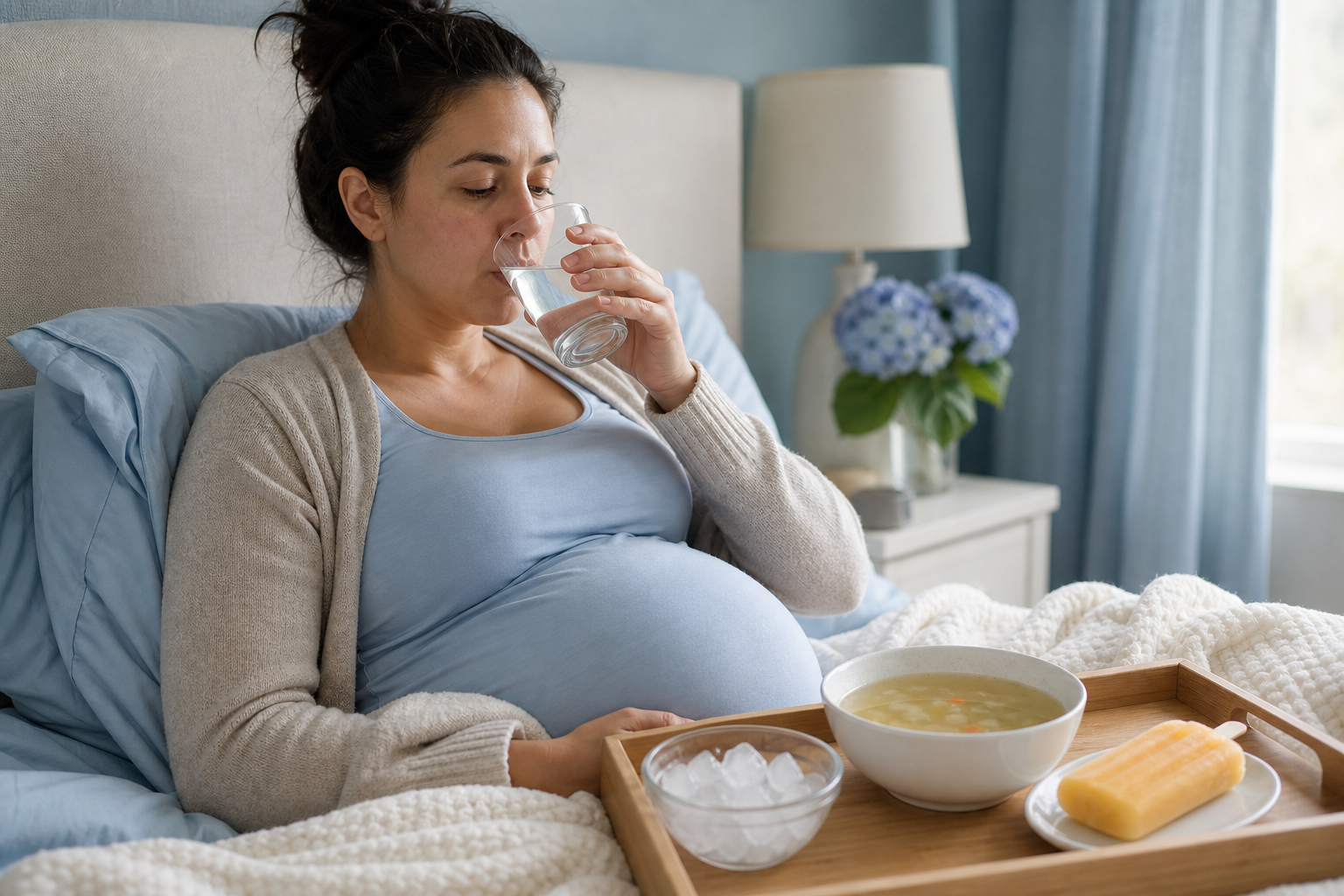
Most cases resolve on their own within seven to 10 days, and there is no standard medication that eliminates the infection. Care usually centres on fluids, fever control, pain relief, and watching for complications.
Mouth sores can turn a normal glass of water into something you keep postponing. That is the part to act on early. The American College of Obstetricians and Gynecologists recommends eight to 12 glasses of water per day during pregnancy, although your own clinician may adjust that advice for your medical needs.
- Take small, frequent sips instead of trying to finish a full glass at once.
- Try cold water, ice chips, or frozen pops made with 100% juice if cold temperatures make the sores less painful.
- Choose cool, bland foods and drinks. Skip anything acidic, salty, spicy, or rough if it makes the sores sting and causes you to drink less.
- Keep a drink within reach and pay attention to whether you are urinating much less often than usual or your urine is becoming unusually dark.
Acetaminophen may be an option for fever and pain during pregnancy, but ask your prenatal care provider before taking it or any other over-the-counter medicine. Do not use a child’s prescription, leftover antiviral medication, or someone else’s treatment plan. Evidence about some proposed treatments comes from children rather than pregnant patients, and medication decisions need to account for your pregnancy and medical history.
Contact your clinician the same day if mouth pain is stopping you from drinking, you are urinating noticeably less, you feel faint or persistently dizzy, or you cannot manage the fever and pain with the plan they gave you. Severe dehydration during pregnancy needs medical treatment rather than another attempt to push through at home.
Know which symptoms should not wait
Serious neurological complications such as viral meningitis or encephalitis are very rare, but their warning signs need urgent assessment. Seek urgent medical care for a severe headache accompanied by a stiff neck and high fever. Confusion, unusual difficulty staying awake, new weakness, paralysis, a seizure, or trouble breathing also warrants emergency care.
If you become ill close to delivery, call your maternity unit before arriving when circumstances allow. Tell them about the exposure, when your symptoms began, whether you have a fever or rash, and whether you can drink normally. Do not delay an urgent labour assessment or emergency care while waiting for a callback.
If your baby is born during or soon after your illness, make sure every clinician caring for the baby knows about it. A newborn with a fever, poor feeding, unusual sleepiness, breathing difficulty, or a new rash needs prompt medical assessment. This is especially important during the baby’s first month.
Contain the illness without trying to sanitize everything
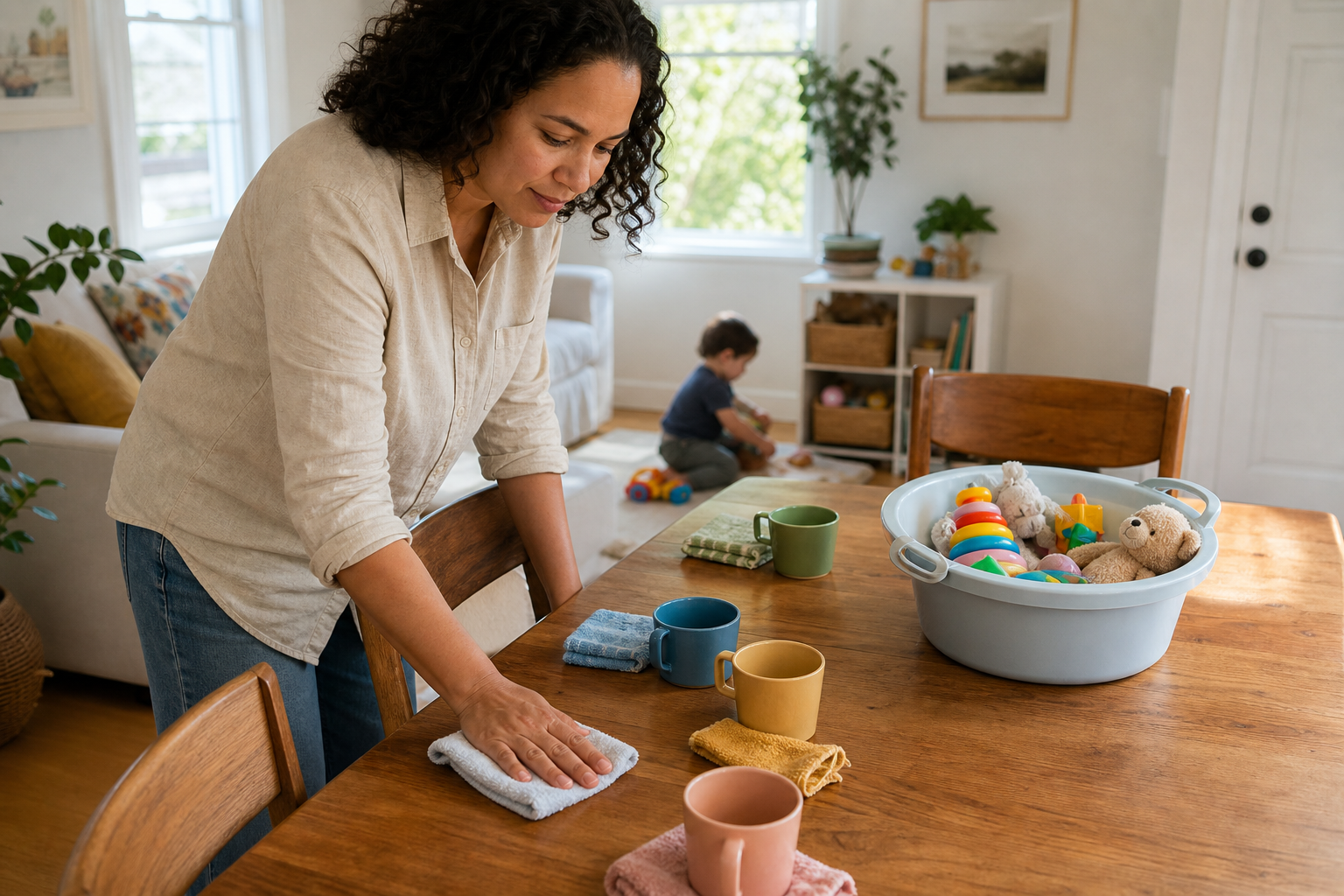
When a young child is sick, complete separation from a pregnant parent may be unrealistic. Put your effort into the contacts most likely to spread infection. Move diaper duty to another adult if possible, give the sick child a dedicated cup and utensils, discard used tissues promptly, and clean objects that repeatedly travel between hands and mouths.
Continue careful handwashing after diaper changes, bathroom visits, nose wiping, and contact with mouth sores or blisters. Ask your childcare provider or local health authority about its return rules rather than choosing an arbitrary all-clear date. Household precautions and childcare attendance policies answer different questions.
Your most useful next step is simple: save your prenatal care team’s number, set aside fluids you can tolerate, and decide who can cover the highest-contact care tasks if your child becomes ill. If you develop symptoms, make the call early enough to get pregnancy-specific advice before dehydration or delivery timing complicates the situation.
References