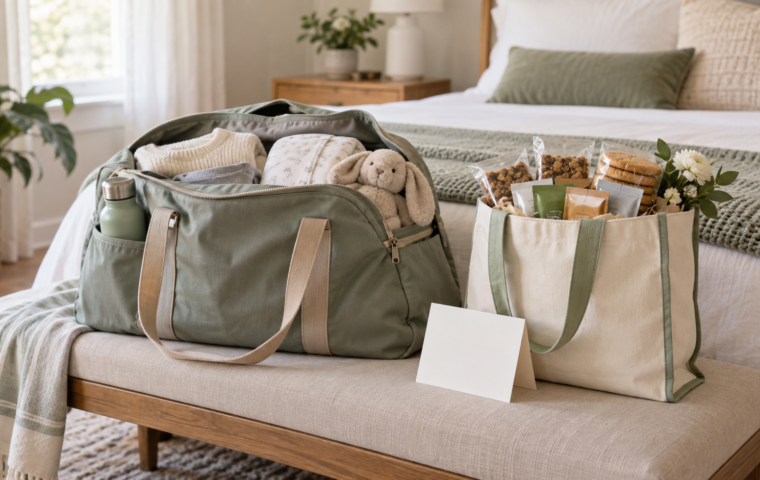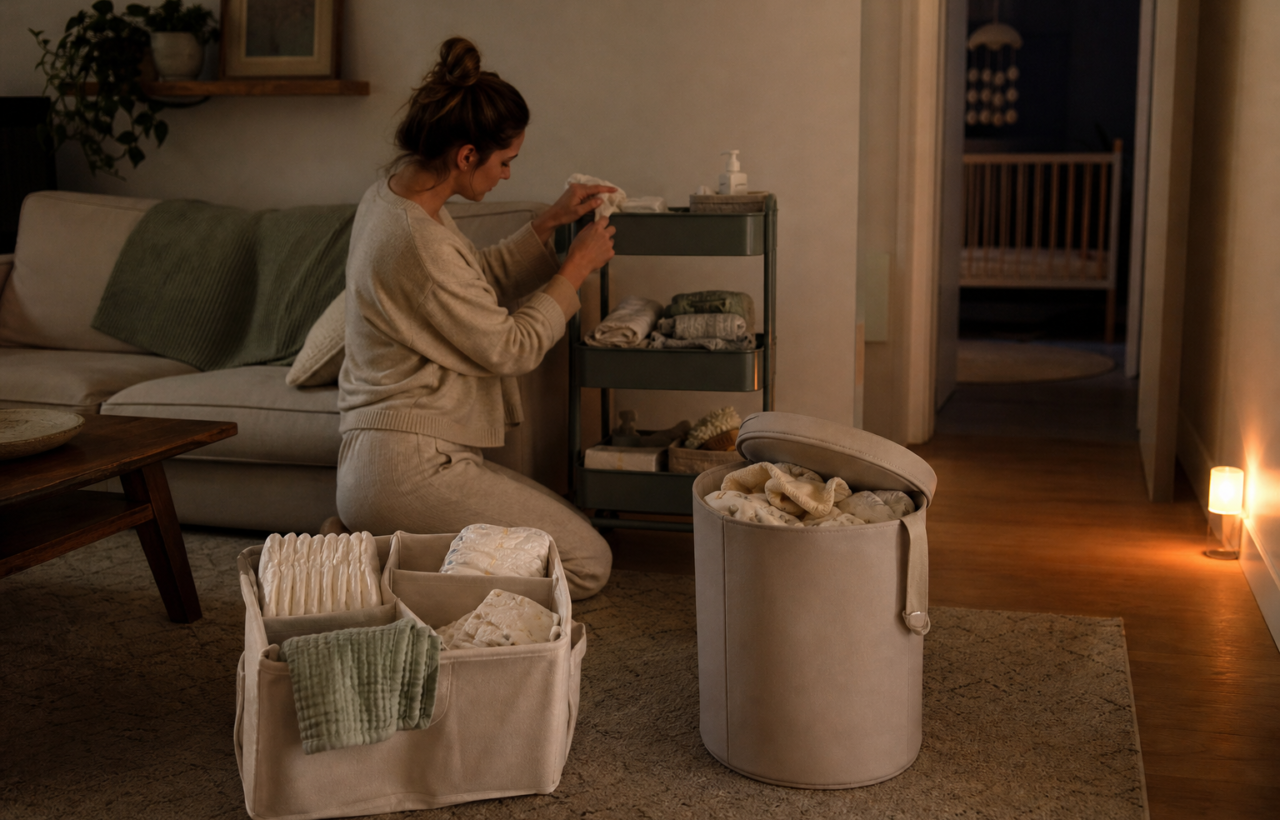
You do not need more baby clutter. You need one affordable object that removes a nuisance you meet every day: laundry with nowhere to land, supplies that migrate between rooms, or a hallway light that turns a quiet bedtime exit into a bright interruption.
The best Amazon lifestyle finds are not necessarily baby products. They are ordinary household items that fit the way your home works now. Use the filter below to identify those items, choose the right type for your problem, and leave the merely tempting ones in your cart.
Start with the nuisance, not the product category
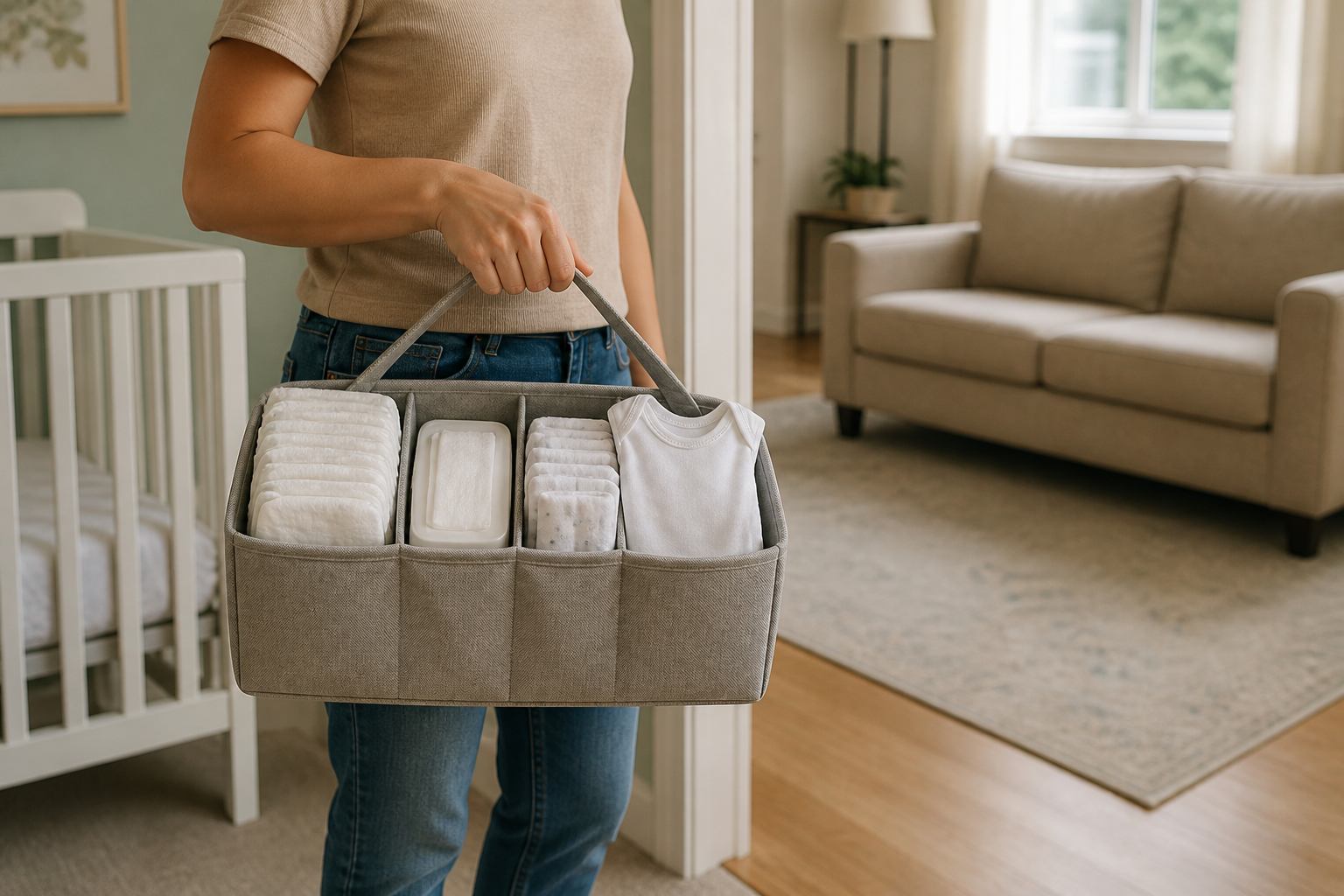
A low price is not the same as good value. If an item has no permanent home or solves a problem you rarely encounter, it becomes another thing to move, clean and eventually donate.
Before ordering, make the product pass this short test:
- Name the recurring moment it will improve. Be precise: the laundry basket blocks the bathroom door, the changing supplies never stay together, or the overhead light is too bright during an overnight wake-up.
- Decide exactly where the item will live. Measure that space before choosing a basket, cart or wall-mounted accessory.
- Notice what the product asks from you. Rechargeable lights need charging, adhesive fixtures need a compatible surface, and rolling storage must be repositioned as your child becomes more mobile.
- Check whether you already own something that could do the same job. Moving an existing basket is free; buying a nicer duplicate is still buying a duplicate.
- Audit the placement from your child’s current height and abilities. A harmless-looking household accessory can become reachable, climbable or pullable as a baby starts crawling and standing.
This approach also makes room for personal taste. A practical object can be attractive, but its appearance should help you enjoy a useful item rather than persuade you to invent a use for it.
Storage finds should recover space or contain a routine
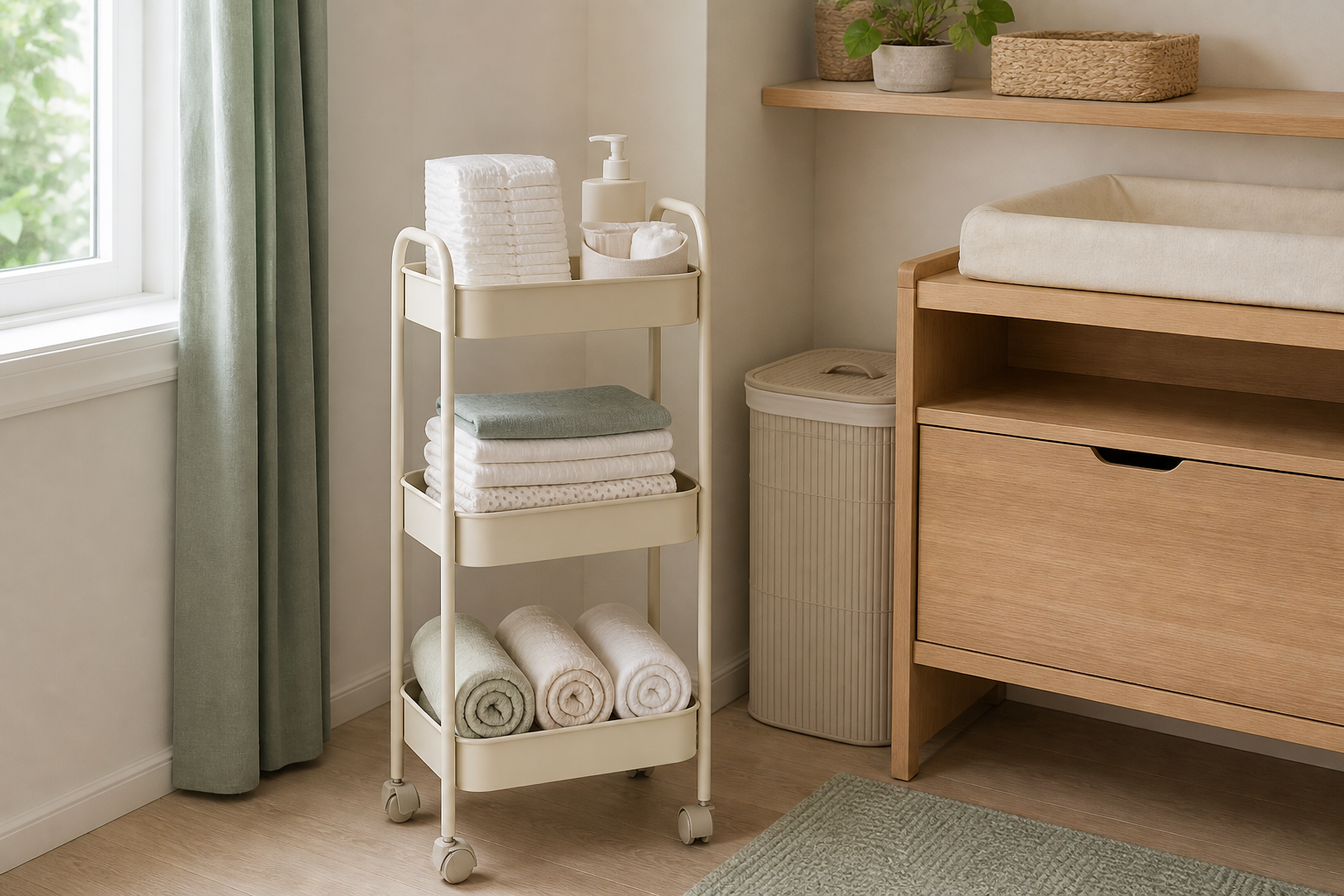
Storage is most valuable when it changes what happens between uses. For a household with a baby or toddler, that usually means folding away, moving as one unit or protecting items you want to keep.
A collapsible basket for disappearing storage
A basket that expands to hold a full laundry load and collapses to less than 4 inches addresses a specific small-home problem: the container is useful on laundry day but does not need to occupy the same floor space all week. Handles make it portable, breathable sides suit laundry, and included adhesive hooks offer a wall-mounted option.
Choose this when storage between washes is the problem. Before mounting it, verify the current load limit, the instructions for your wall finish and the clearance around the basket. Use it freestanding if you cannot confirm that an adhesive installation will remain secure.
A rolling cart for supplies that move together
A three-tier cart with fluted acrylic trays and lockable wheels can give frequently used supplies one address while still letting the whole setup move. It makes sense when burp cloths, feeding accessories or parent-care items are repeatedly carried between rooms. It is less useful if you need secure, hidden storage.
Wheel locks stabilize a cart; they do not make it childproof or tip-proof. Once your child can pull up, climb or remove objects, keep the cart inaccessible or replace it with fixed, closed storage. Do not position movable furniture beside a crib, bed, stairway or other place where it could create a climbing route.
A divided box for keepsakes, not daily supplies
A linen-covered photo box with divided compartments, a gold label holder and preprinted category labels is a better match for hospital bracelets, cards, photographs and other mementos than for items you reach for every day. Give each child or year a defined section as you begin filling it. That small decision prevents the box from becoming an unsorted archive you postpone dealing with.
Quiet, directional lighting can reduce nighttime disruption
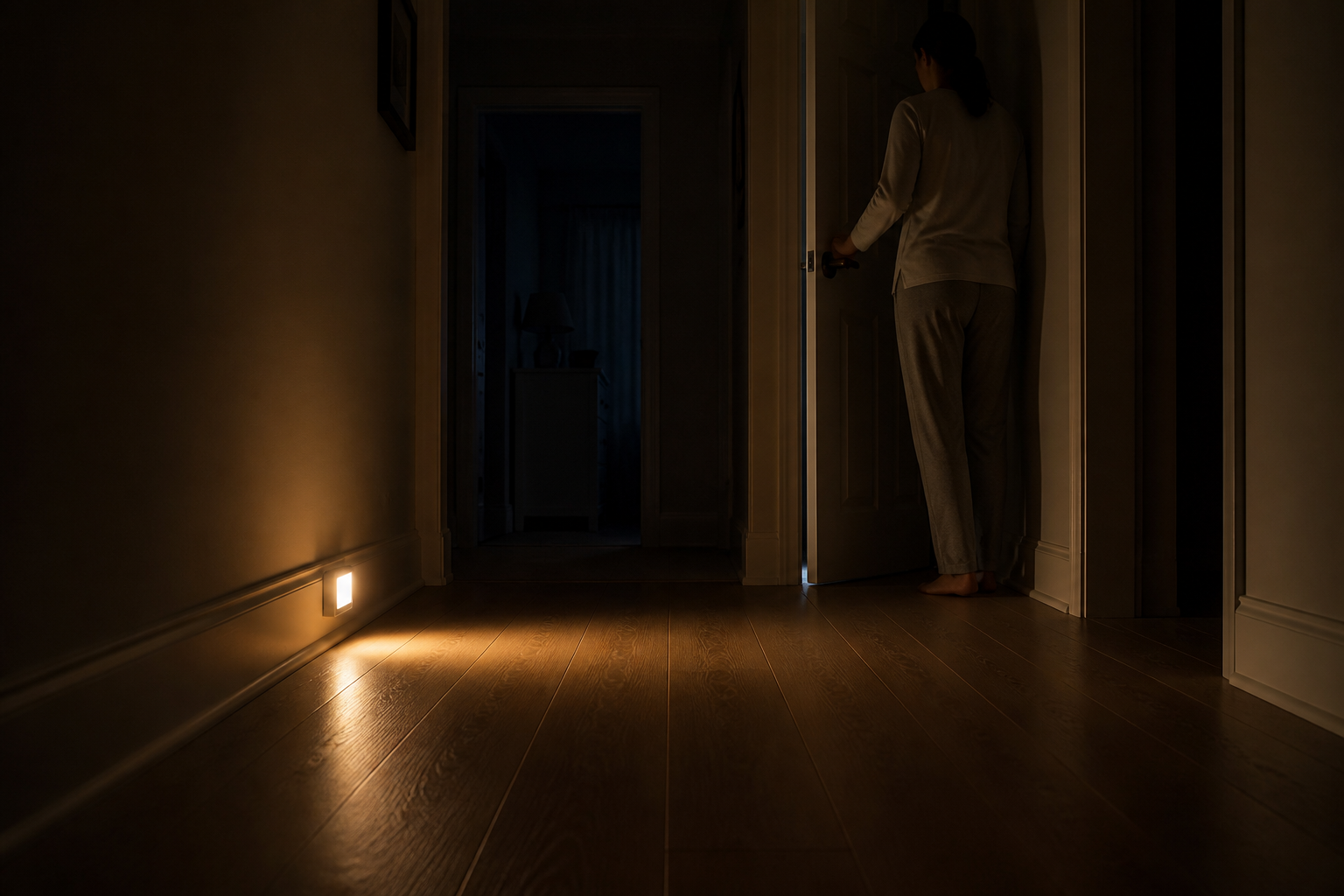
The goal after bedtime is not to make the home perfectly silent or dark. It is to remove avoidable jolts: a door slamming, a latch clicking unexpectedly or a ceiling light flooding the hallway.
Use door silencers only where latching is optional
Linen-like door silencers with elastic straps are designed to soften closing, help prevent accidental locking and let a door close. They come in sets of three or six, which can suit a nursery, bathroom and nearby room without introducing different hardware in each place.
A door appearing closed is not the same as its latch engaging. Do not add a silencer to an exterior door or any door that must latch for fire, security or child-safety reasons. After installation, test the door from both sides and confirm that the fabric cannot be pulled loose by your child.
Put motion lighting on the adult route
A two-pack of adhesive-backed motion-sensor wall lights offers automatic on-and-off operation, adjustable brightness and a choice of cool, neutral or warm light controlled by a remote. That combination is useful along the adult route to the bathroom, kitchen or changing area because it can provide targeted light without switching on the main fixture.
Install an adhesive light outside your child’s reach and never over a crib, play space or changing surface where a failed bond could let it fall onto the child. Check the attachment regularly, especially after changes in temperature or humidity.
Choose dimming over decorative brightness
If you prefer a plug-in option, a candle-style chandelier night-light with a dusk-to-dawn sensor and stepless dimming combines decorative detail with hands-free operation. The dimmer matters more than the crystals: it lets you use only the amount of light the route requires. Keep the unit in an outlet your child cannot grab or play with.
These are household convenience lights, not sleep products, and they do not guarantee better sleep. Their practical job is narrower: helping you see where you are going without relying on the brightest light in the room.
Kitchen helpers and small comforts still need a clear job
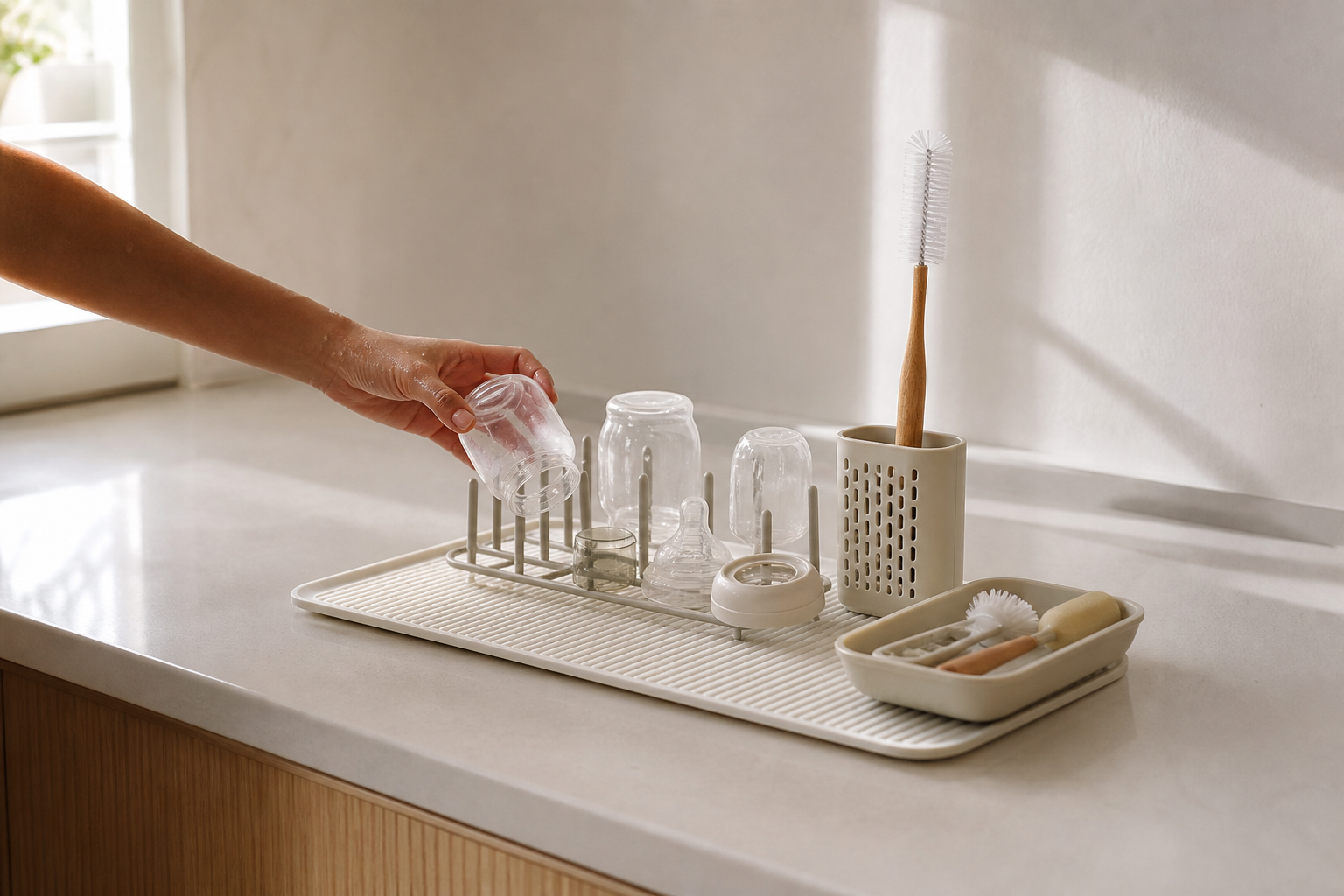
A one-handed feature can be genuinely helpful when your other hand is opening a cupboard, steadying a bowl or clearing a counter. It is not a reason to prepare food while holding a baby near knives, hot water or a cooker. Put your child in a safe place before beginning those tasks.
A rotating colander removes a transfer step
A two-in-one bowl and rotating colander lets you rinse ingredients and then tilt the outer bowl to pour water through its spout. The inner basket tilts with the bowl, helping the food remain inside while the water drains. It earns its cupboard space if you regularly wash produce, pasta or other ingredients and dislike transferring them between a bowl and separate strainer.
Skip it if your current colander already fits your sink and routine. The relevant comparison is not whether the rotating design looks clever; it is whether removing that transfer step makes meal preparation meaningfully easier in your kitchen.
Hooks can matter more than the towel design
Leaf-shaped hand towels sold with built-in loops and hooks can solve the minor but persistent problem of towels sliding from a bar or having no convenient place to hang. Buy them because the attachment works in your bathroom or kitchen; let the botanical shape be the bonus.
Treat parent comforts like adult products
A lightweight hand cream packaged in a strawberry-shaped container promises long-lasting hydration and is small enough for a handbag or car. The fruit-like packaging is also a reason to store it deliberately. Keep cosmetics out of a baby’s or toddler’s sight and reach rather than leaving an appealing container on a low table or in an accessible bag.
Give a decorative purchase a planned home
Purely decorative finds are allowed to make you happy; they simply need boundaries. A 71-inch rechargeable willow-vine light with flexible wires can shape an indoor display, while a 20-piece set of battery-operated LED calla lilies with a timer offers a contained arrangement. Choose the format that already has a surface or wall location waiting for it. Do not attach either above a crib, changing table or play area.
Key takeaways for a cleaner Amazon cart
- Begin with a repeated household nuisance and buy the smallest item that directly changes it.
- Use a collapsible basket when empty-container storage is the problem, a cart when supplies need to move together, and a divided box when keepsakes need long-term order.
- Choose nighttime accessories for quiet operation, directional light and adjustable brightness, then install them beyond your child’s reach.
- Treat wheel locks, adhesive hooks and elastic straps as convenience features, not proof that a product is childproof.
- Check current dimensions, mounting instructions, charging needs, price and return terms on the live listing before ordering.
- Let a decorative purchase take one planned location rather than creating a new organization problem.
Open your cart and complete two sentences for every item: this will live here, and it will fix this recurring problem. Remove anything that cannot complete both. What remains is far more likely to feel affordable after the novelty wears off.
References