

You are exhausted, you finally lie down, and then your legs seem to switch on. They may feel crawly, tingly, pulling, itchy, or almost electric. Moving helps, but only until you become still again.
That pattern can be restless legs syndrome, or RLS. Pregnancy can bring on RLS or make existing symptoms worse. The most useful response is to check whether the pattern fits, use low-risk ways to settle it, and tell your prenatal clinician when it is repeatedly costing you sleep.
First, check whether the pattern fits restless legs

RLS is more than ordinary fidgeting. It creates an urge to move that can feel difficult to resist. Some people describe the accompanying sensation as crawling, tingling, pulling, burning, aching, or buzzing rather than pain.
The name matters less than the pattern. RLS usually has these four features:
- An uncomfortable sensation comes with a strong urge to move your legs.
- It starts or becomes worse while you are resting, especially when sitting or lying down.
- Walking, stretching, flexing, or otherwise moving your legs brings at least temporary relief.
- It is worse in the evening or at night than it is earlier in the day.
A leg cramp behaves differently. A cramp is a sudden, painful tightening of a muscle, often in the calf. RLS is usually an internal discomfort that builds while you are still and pushes you to move. It does not normally cause visible redness, warmth, or swelling.
No single test confirms RLS. Your clinician will usually start with your description: when the sensation appears, what makes it better, and whether anything else could explain it. This is why it helps to describe the urge to move rather than saying only that your legs hurt.
There is no single proven explanation for pregnancy-related RLS. Pregnancy changes hormone levels, sleep, and the body’s demand for iron, and low iron stores can contribute in some people. A personal or family history of restless legs can also make the pattern more likely. Symptoms often become more noticeable later in pregnancy and commonly improve after birth, although persistent symptoms still deserve medical follow-up.
Key takeaways
- RLS is most recognizable when discomfort begins at rest, is worse at night, and eases temporarily with movement.
- Brief walking, gentle stretching, massage, and comfortably warm or cool treatments may provide short-term relief.
- Regular daytime movement and fewer long periods of sitting may make nighttime symptoms easier to manage.
- Ask your prenatal clinician about iron testing before taking extra iron, magnesium, or another supplement.
- One-sided swelling, warmth, redness, or constant calf pain does not fit the usual RLS pattern and needs prompt medical assessment.
Use movement and temperature as an in-the-moment reset
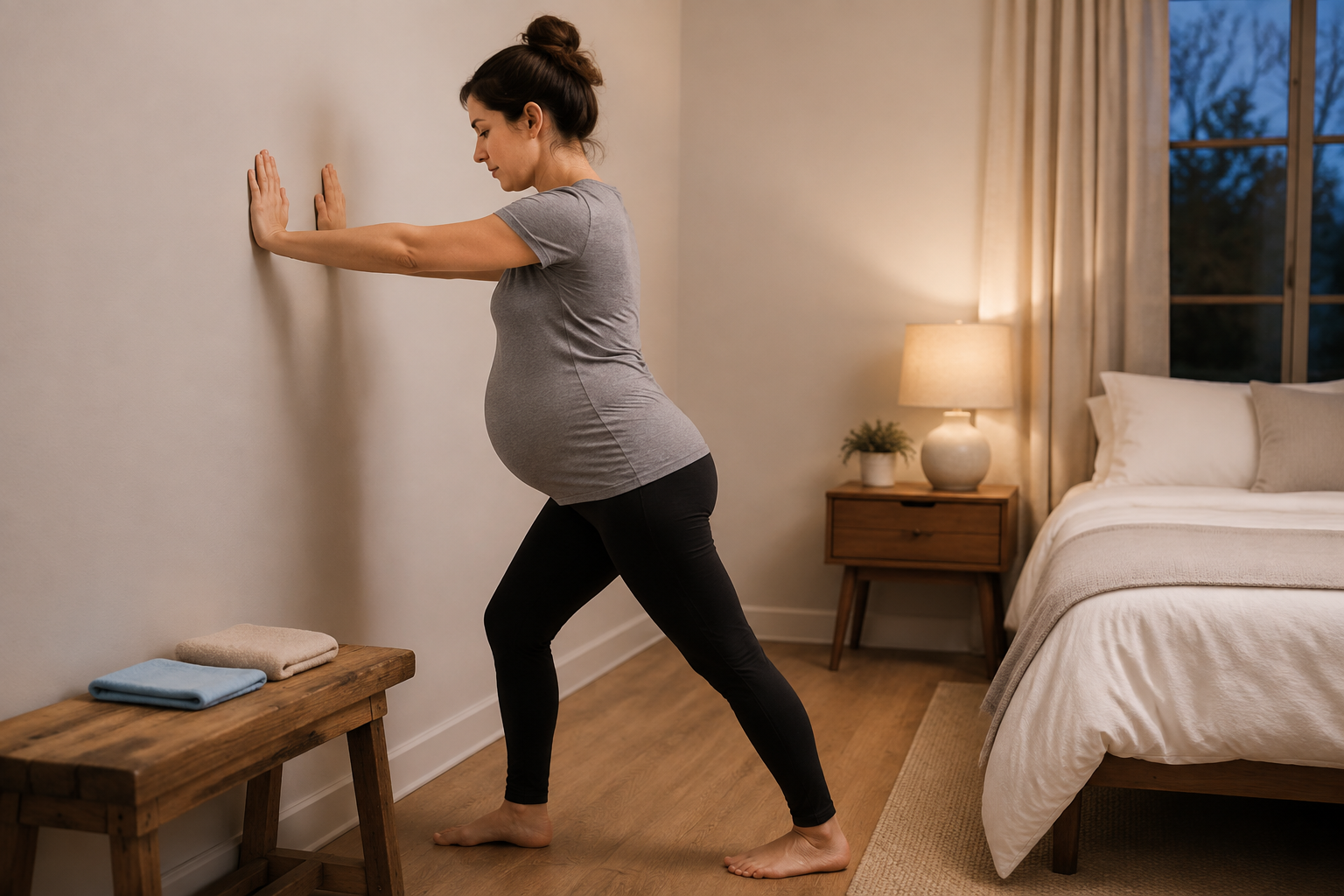
Because RLS improves with movement, forcing yourself to stay still often makes a bad night feel longer. A simple reset gives your legs what they are asking for without turning bedtime into a workout.
- Get out of bed and walk gently until the sensation starts to ease. If your prenatal care team has limited your activity, follow those instructions instead.
- Try a comfortable calf or hamstring stretch. Move slowly and stop if stretching causes pain, dizziness, tightening in your abdomen, or another concerning symptom.
- Massage the affected area, or ask your partner to use steady, comfortable pressure rather than deep or painful force.
- Experiment with a warm shower, a comfortably warm bath, or a cool pack. Avoid water hot enough to overheat you, and put fabric between your skin and a heating or cooling pack.
- Return to bed when the urge settles. If it returns, repeat a short reset instead of lying awake and fighting it.
These strategies are not a cure, and what works can vary from night to night. Their value is practical: movement, stretching, massage, and temperature changes may reduce the discomfort long enough for you to fall asleep.
Avoid turning relief into punishment. Intense squats, painful stretching, or prolonged pacing can leave you sore without addressing an underlying iron problem or medication trigger. Start with the smallest amount of movement that changes the sensation.
Reduce the triggers that build through the day

The bedtime episode is only part of the picture. Long periods of inactivity, an irregular sleep schedule, fatigue, caffeine, and exercise that is too intense or too close to bedtime can make symptoms harder to manage for some people.
Use your daytime routine to reduce the pressure that arrives at night:
- Include regular, moderate movement that your prenatal clinician has said is appropriate for your pregnancy. Earlier in the day is often more comfortable than a demanding workout near bedtime.
- Break up long stretches of sitting at a desk, on the sofa, or in a car. Stand, change position, or walk when it is safe to do so rather than waiting for the sensation to become intense.
- Keep your sleep and wake times reasonably consistent. Better sleep habits will not remove RLS, but overtiredness can make nighttime symptoms feel more difficult to tolerate.
- Notice whether caffeine tracks with worse symptoms, especially when consumed later in the day. Discuss pregnancy-safe caffeine limits with your prenatal clinician rather than relying on caffeine to compensate for repeated sleep loss.
- Use a brief symptom log. Record when the sensation started, whether it affected one or both legs, what you had been doing, what relieved it, and how much sleep it disrupted.
The log turns a vague complaint into information your clinician can use. It can also expose a pattern you can change, such as symptoms after a long evening on the sofa or on days when exercise happened shortly before bed.
Ask your prenatal clinician about iron, medicines, and red flags

Make an appointment when RLS is repeatedly disrupting sleep
Mention the symptoms to your obstetrician, midwife, or primary care clinician if they keep you from falling asleep, wake you repeatedly, occur during the day as well as at night, or continue despite the low-risk measures above. Contact them sooner if the sensation is painful, is getting rapidly worse, or does not follow the usual rest-movement pattern.
Your clinician may review your health history and order bloodwork to look for iron deficiency or another contributing problem. A blood count and ferritin measurement answer different questions: ferritin helps assess stored iron, while a blood count can help identify anemia. Testing guides whether extra iron is appropriate.
Do not assume your prenatal vitamin contains the right treatment dose, and do not start additional iron simply because your legs feel restless. Iron may help when low iron is contributing, but unnecessary supplementation can cause side effects and too much iron can be harmful. Your clinician should choose the product and dose based on your pregnancy and test results.
The same caution applies to magnesium, herbal sleep products, cannabidiol products, and over-the-counter sleep aids. A product being sold without a prescription does not make it appropriate during pregnancy, and magnesium is not a universal fix for RLS.
Bring a complete list of prescription medicines, over-the-counter products, and supplements to the appointment. Some medicines can aggravate restless legs, but stopping a necessary prescription on your own may create a more serious problem. If you were already taking medicine for RLS before pregnancy, ask the prescriber and your prenatal clinician to review it together. Medication decisions during pregnancy require individualized medical guidance, especially when symptoms are severe.
Get urgent help when the symptoms do not look like RLS
Pregnancy increases the importance of taking possible blood-clot symptoms seriously. Seek prompt medical assessment for swelling, warmth, redness, tenderness, or persistent pain in one leg, especially when movement does not relieve it. Those signs are not typical of RLS.
Call emergency services for sudden shortness of breath, chest pain, coughing up blood, fainting, or another severe and rapidly developing symptom. Do not massage a leg that is swollen, warm, red, and painful while you wait for advice, because a clot needs medical assessment rather than a home remedy.
For a familiar crawling urge that appears at rest and eases with movement, start tonight with a gentle walk, a comfortable stretch, and a short symptom note. If it keeps returning or keeps taking your sleep, send that note to your prenatal care team and ask specifically whether your iron stores and medicines should be reviewed.
References



