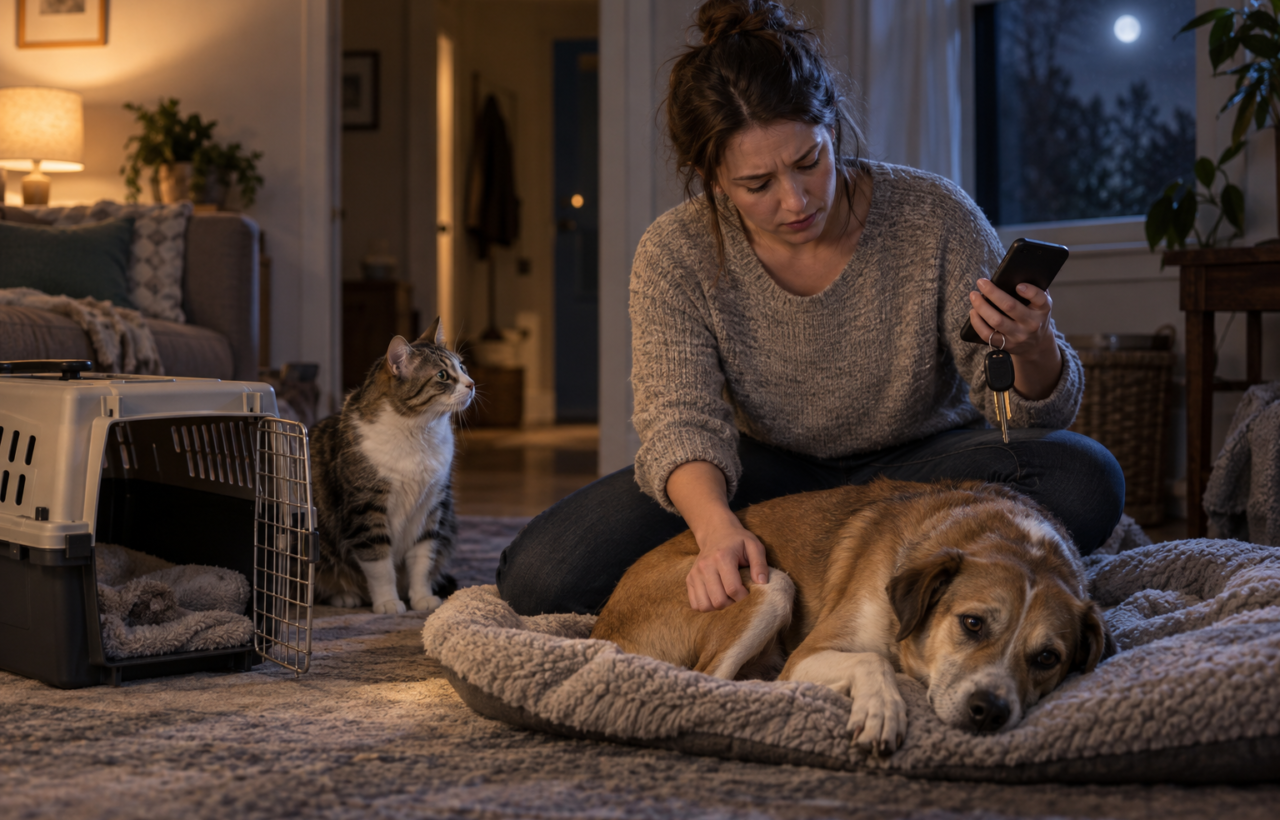
Your dog keeps vomiting after the baby is asleep, or your cat is straining in the litter box while you are trying to manage bedtime. You need to decide whether to watch, call your regular vet, find urgent care, or leave for an emergency hospital.
The safest rule is simple: if your pet has one of the emergency warning signs below, call an emergency veterinary hospital while preparing to leave. Do not wait for several symptoms to appear or for your pet to look dramatically ill.
Key takeaways
- Trouble breathing, collapse, an active seizure, severe bleeding, major trauma, pale or blue gums, a bloated abdomen, inability to urinate, or possible poisoning or foreign-body ingestion needs an emergency call now.
- Continuous vomiting or diarrhea becomes especially concerning when your pet is lethargic, passes blood, or cannot keep water down.
- Minor injuries, ear or skin problems, mild vomiting, and limping may be appropriate for animal urgent care when your pet is otherwise stable.
- A known medical condition lowers the threshold for calling. Even mild new symptoms deserve professional triage.
- If you cannot tell which level of care your pet needs, call the emergency hospital and let its team help you choose.
Go to an emergency vet now for these warning signs
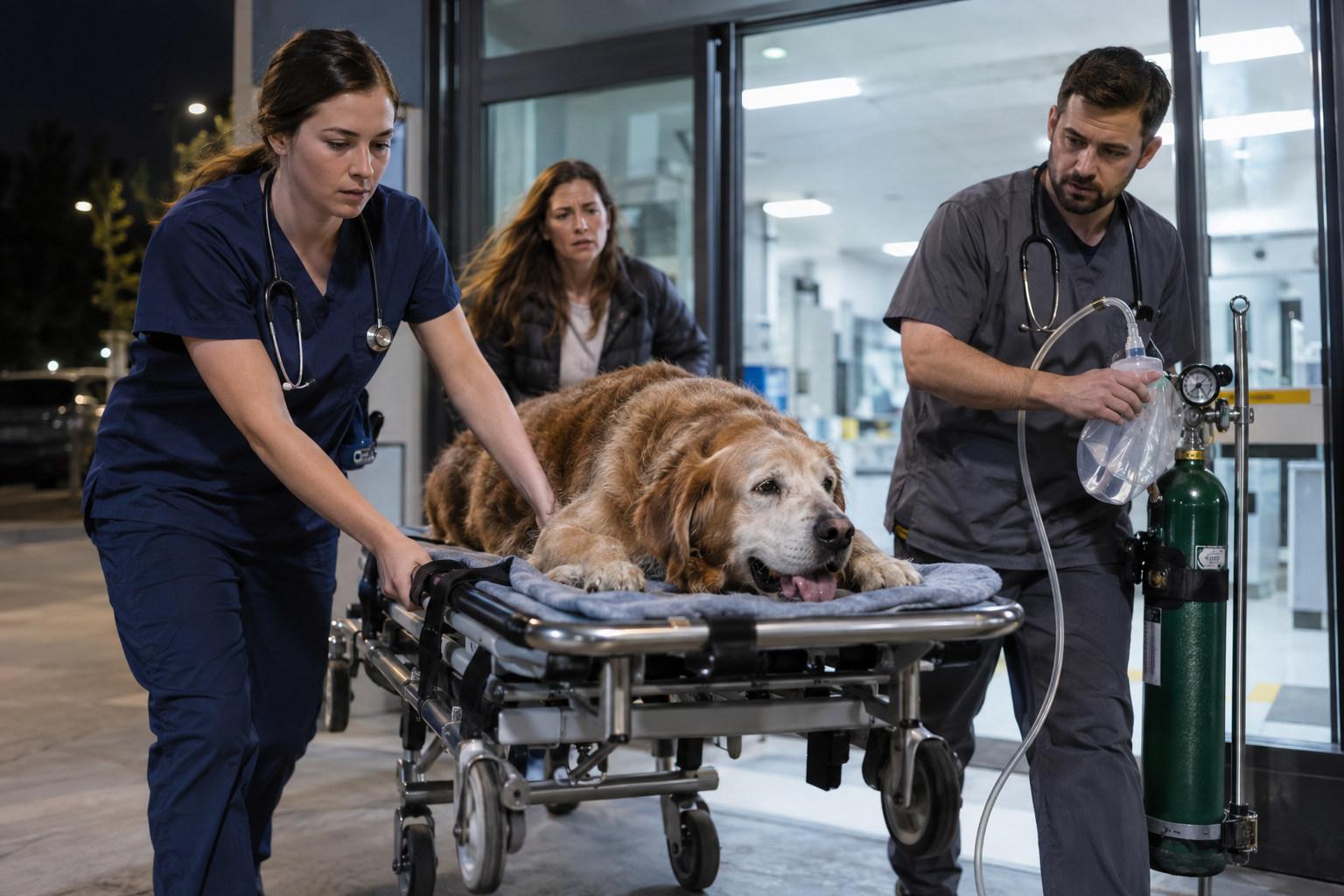
The following symptoms and situations warrant immediate veterinary attention. Any one of them is enough to call; you do not need to wait for a second sign.
- Difficulty breathing or a persistent cough. Treat visible breathing trouble as an emergency even if your pet can still walk or respond to you.
- Possible toxin or foreign-body ingestion. This includes medications, chocolate, xylitol, grapes, household chemicals, stuffed toys, socks, underwear, bedding, and other fabric items. Call on suspicion rather than waiting for vomiting, weakness, or another outward symptom.
- Major trauma. Go after a collision with a vehicle, a significant fall, a severe injury, or a bite wound. An animal that gets up after the event may still need urgent assessment.
- Continuous vomiting or diarrhea. The need is more urgent when it occurs with lethargy, blood, or an inability to keep water down.
- A seizure, collapse, sudden weakness, or inability to stand. An active seizure or collapse belongs at an emergency hospital, not a routine appointment.
- A bloated abdomen. Sudden abdominal swelling is a red flag. Do not try to determine the cause at home before calling.
- Pale or blue gums. This visible change needs immediate assessment.
- Inability to urinate. This is an emergency, particularly in a male cat. Repeated attempts without producing urine should not be treated as a litter-box behaviour problem.
- Severe bleeding. Call the emergency hospital and begin arranging transport immediately.
Do not use your pet’s ability to walk, make eye contact, or settle briefly as proof that the problem is safe to monitor. The warning sign itself should drive the decision.
Quieter changes still deserve a veterinary call

Not every important change looks like a crisis. A different appetite, unusual sleepiness, or a noticeable change in personality can be the first clue that something is wrong. Because pets can conceal pain until illness is more advanced, calling early is more reliable than waiting for an unmistakable display of distress.
Call promptly if your pet has an existing medical condition, even when the new symptom appears mild. When you speak with the clinic, give a short factual account:
- What changed, and when you first noticed it.
- Whether the problem is continuous, recurring, or getting worse.
- Whether your pet can stand, breathe normally, urinate, drink, and keep water down.
- Whether there has been blood, trauma, a seizure, collapse, or a swollen abdomen.
- Any diagnosed condition and any possible exposure to a medication, chemical, food, or swallowable object.
You do not need to diagnose the problem before calling. The purpose of the call is to identify the safest destination and avoid losing time if the condition is urgent.
Choose urgent care for stable problems, not emergencies
Animal urgent care may be appropriate
Urgent care is often suited to a minor injury, an ear or skin problem, mild vomiting, or limping that needs same-day attention but does not appear life-threatening. These problems should not necessarily wait for a distant routine appointment, but they do not automatically require a full emergency hospital.
An emergency hospital is the right destination
Use the emergency hospital for breathing trouble, major trauma, an active seizure, collapse, inability to urinate, or possible toxic ingestion. The same applies to the other major warning signs above, including severe bleeding, pale or blue gums, and a bloated abdomen.
The distinction is about your pet’s condition, not which clinic is closer or more convenient. An urgent-care clinic may still transfer a pet that needs surgery or overnight hospitalization. If the choice is unclear, call before leaving and describe the most serious symptom first.
Act quickly without making a chaotic moment harder
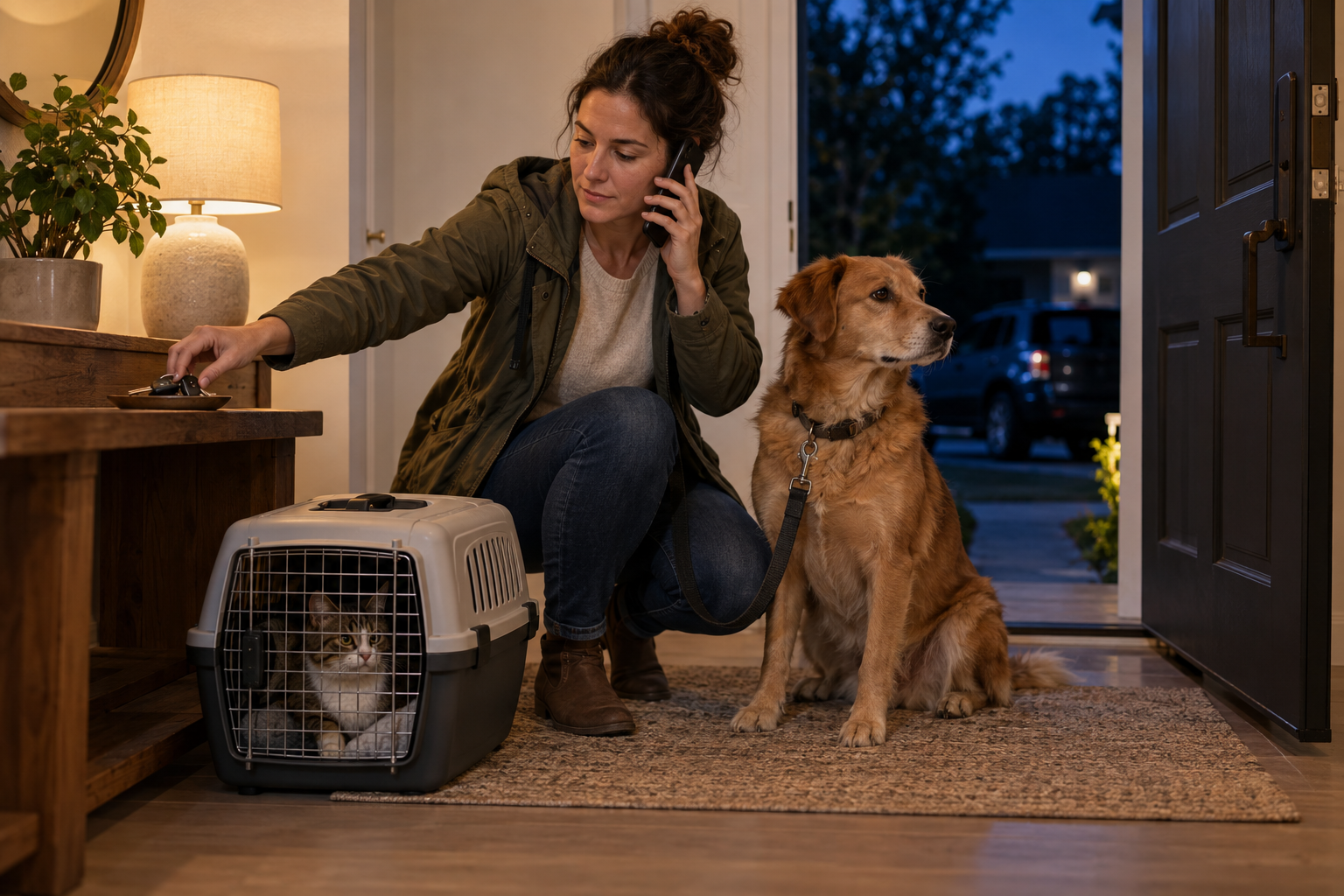
A sick pet and a baby or toddler can turn one decision into several logistical problems. Use this order so that finding a diaper bag, a carrier, or another adult does not quietly become a delay in care.
- Call the nearest emergency veterinary hospital. If an emergency sign is present, make the call while getting ready to leave. Lead with the sign itself: trouble breathing, collapse, seizure, inability to urinate, severe bleeding, trauma, or possible ingestion.
- Follow the clinic’s routing advice. It may direct you to its emergency department, an animal urgent-care clinic, or another facility equipped for the problem.
- Separate your young child from the distressed pet. Put a closed door, gate, carrier, or safe distance between them while you arrange transport. Keep your attention on both the child’s safety and the pet’s condition.
- Share what you know, not what you assume. Name the medication, food, chemical, or object involved if there may have been an ingestion. If its packaging is already available, take it with you, but do not postpone departure to search for it.
- Leave once the destination is clear. Do not turn an emergency-hospital recommendation into another period of observation to see whether the symptom passes.
You can make the next decision easier before anything happens. Save the numbers and addresses for your regular vet, the nearest emergency hospital, and a local animal urgent-care clinic. Keep your pet’s diagnosed conditions and medications in your phone. Decide which adult can drive, who can stay with your child, and where the carrier or leash is kept.
If you are reading this while a symptom is happening, check the emergency list once. When a red flag is present, or you remain unsure after looking, call the emergency veterinary hospital now and let a veterinary professional make the triage decision with you.
References