
If every feed leaves you hungry but assembling a proper meal feels impossible, you do not need a perfect breastfeeding diet. You need food that is filling, easy to reach, and varied enough to keep nourishing you through an unpredictable day.
Start with ordinary ingredients rather than expensive powders or foods promising to transform your milk supply. A few reliable meal components will do more for you than a cupboard full of products you do not enjoy eating.
Feed yourself, not the breastfeeding “superfood” myth
Making milk uses energy, and many breastfeeding parents notice persistent hunger, especially during the early weeks and months. The practical response is not to hunt for one miraculous ingredient. It is to eat regularly and choose foods that combine carbohydrates, fibre, protein, and fat so that a snack or meal actually holds you.
Several foods promoted as milk-supply boosters are genuinely nutritious. That does not mean they have been clinically proved to increase milk production. Oats, nuts, beans, leafy vegetables, seeds, and other traditional lactation foods can contribute healthy fats, fibre, protein, vitamins, and minerals. Those benefits are reason enough to eat them; they do not need a miracle claim attached.
This distinction matters when your budget and attention are already stretched. Buy an ingredient because it is nourishing, convenient, and appealing to you. Do not pay a premium simply because the packaging uses words such as “lactation,” “milk boosting,” or “superfood.”
Build meals from three dependable components
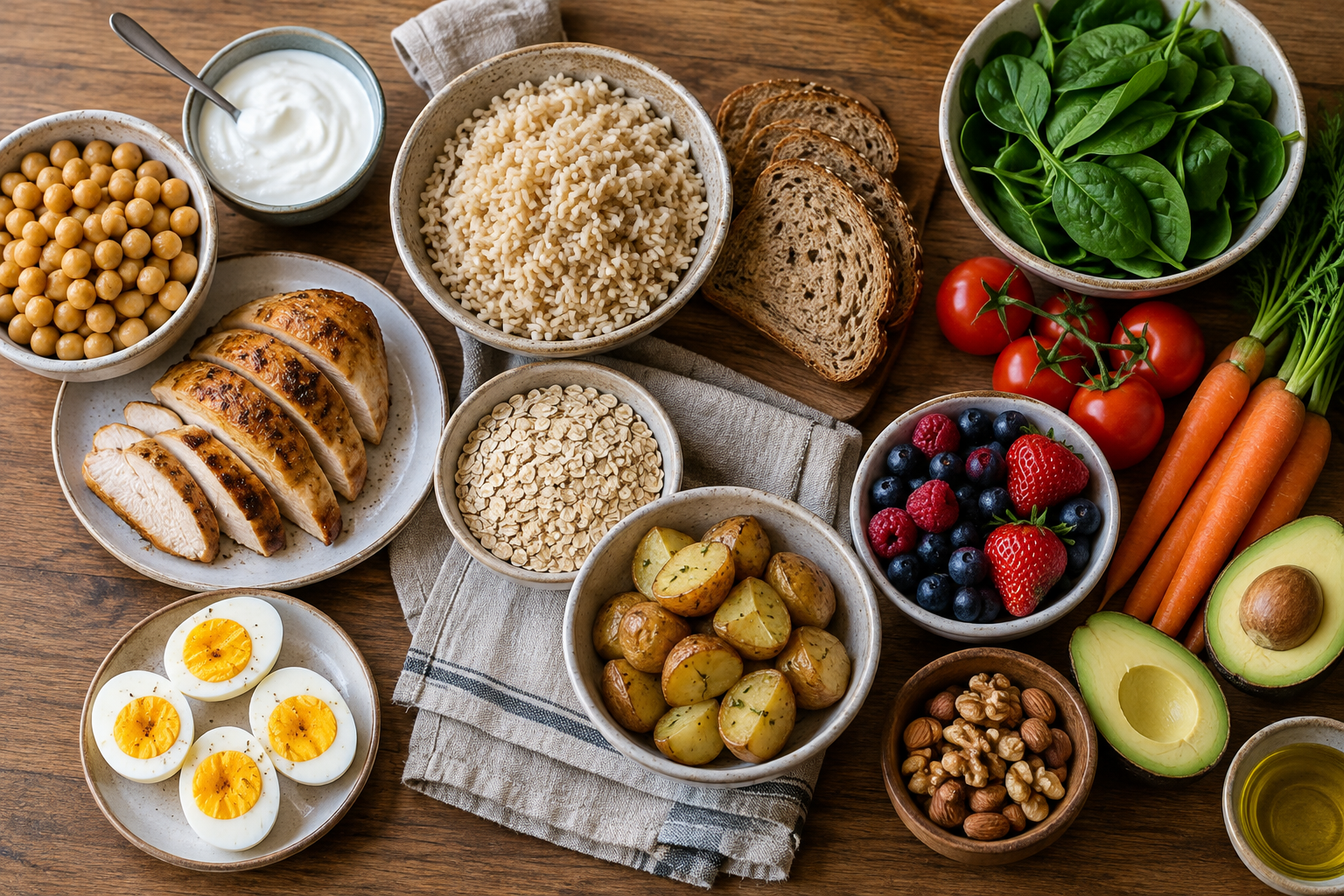
You do not need a separate menu for breastfeeding. Use a simple three-part structure to make your usual food more satisfying:
- Choose a substantial base. Oats, beans, lentils, chickpeas, or another familiar staple provide useful energy and fibre. Beans and legumes also contribute protein, vitamins, and minerals.
- Add fat or protein that helps the meal last. Avocado, nuts, chia, hemp, sesame, sunflower seeds, or pumpkin seeds can turn a light meal into one that feels complete. Nuts and seeds offer a mix of protein, healthy fats, and minerals.
- Add vegetables for variety. Leafy greens, carrots, yams, and mushrooms can be fresh, frozen, canned, or left over from another meal. The most useful form is the one you will actually prepare and eat.
These are components, not rules. They can sit beside the staple foods and proteins your household already eats. A few workable combinations include oatmeal with chia and nuts; chickpeas with roasted carrots and avocado; or a grain bowl with beans, mushrooms, greens, and sesame seeds.
Small preparation details can make these foods more useful. Eat flaxseed ground rather than whole because whole flaxseed can pass through the digestive system undigested. Rotate sunflower, pumpkin, and sesame seeds instead of expecting one variety to cover everything. If you have a food allergy, avoid that food and use a safe alternative; breastfeeding is not a reason to test a known allergy.
Make nourishment possible on broken-schedule days
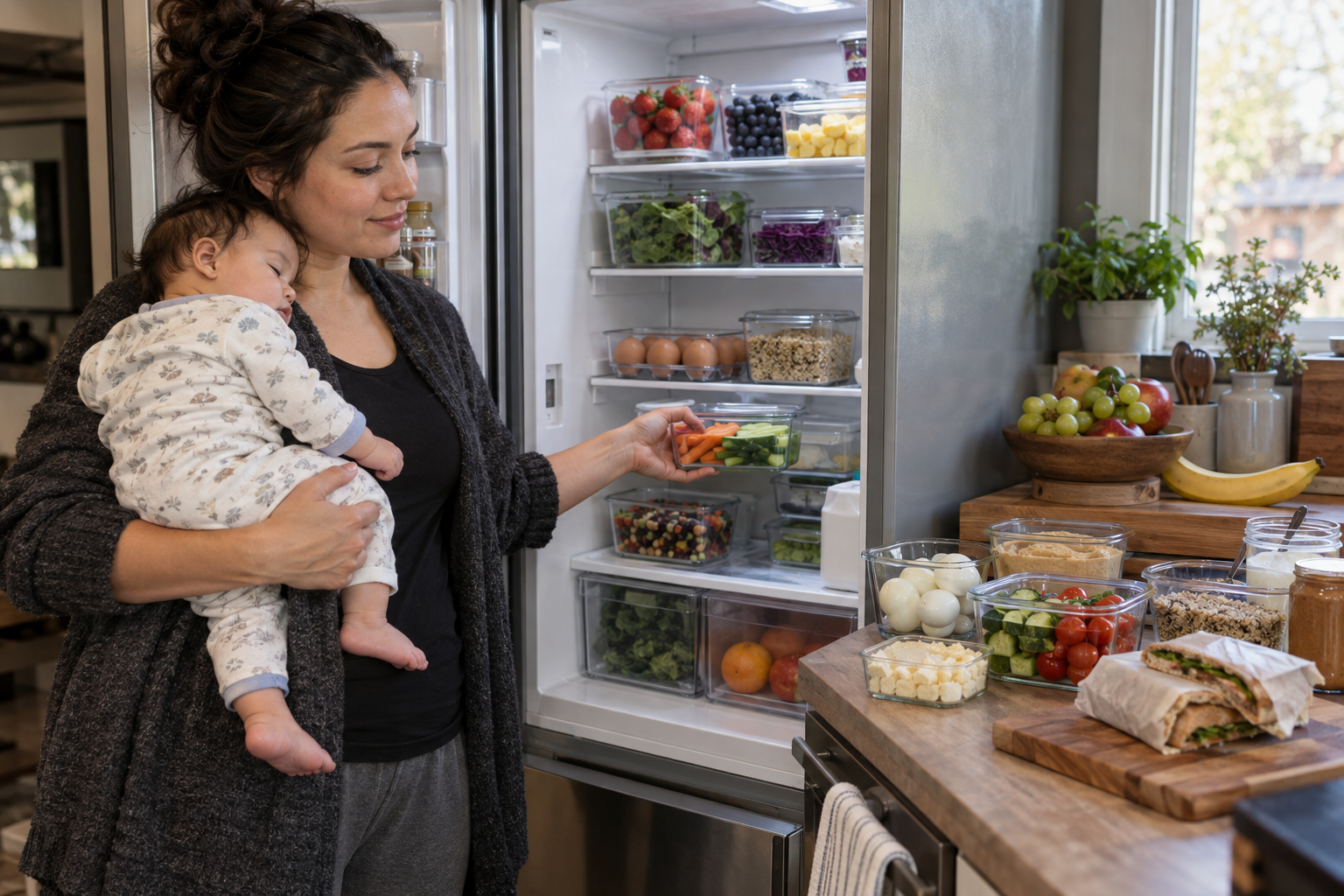
The hardest part is often access, not knowledge. A meal that requires two free hands and half an hour of uninterrupted preparation may be unrealistic when your baby wants to feed just as you sit down.
Instead of planning seven elaborate dinners, prepare two or three components that can be combined quickly:
<!– wp:list {