
You are trying to prepare for a newborn while friends and family keep asking what you need. The tempting response is to build a long list. The more useful response is to decide what will make feeding, changing, sleeping, leaving home and recovering easier.
Start small. Buy what must work from the first day, leave room to learn your baby’s preferences, and treat support for the mother as essential rather than optional.
Use the next-use test before you buy anything
Newborn shopping becomes overwhelming when every product is presented as equally urgent. It isn’t. An essential solves a task you know will happen soon. A useful gift removes work, replaces an expense or gives the mother something she actually wants. Everything else can wait.
Before adding an item to your cart or registry, ask four questions:
- What exact job will this do? “Helps with diaper changes” is clearer than “might be useful.”
- Where will it be used and stored? If it has no practical home, it may become another object to move while holding a baby.
- Who will clean, refill, charge or assemble it? A product that creates recurring work has to earn its place.
- Do we need it before meeting the baby? If size, fit, feeding preferences or the baby’s response could change the decision, buy the smallest workable amount or wait.
This test is especially important for large gear. Travel systems, bedside cribs and soothing products can all have a role, but they solve different problems. Your daily routine, available space and method of travel should determine which ones belong in your home.
Prepare one workable setup for each newborn task
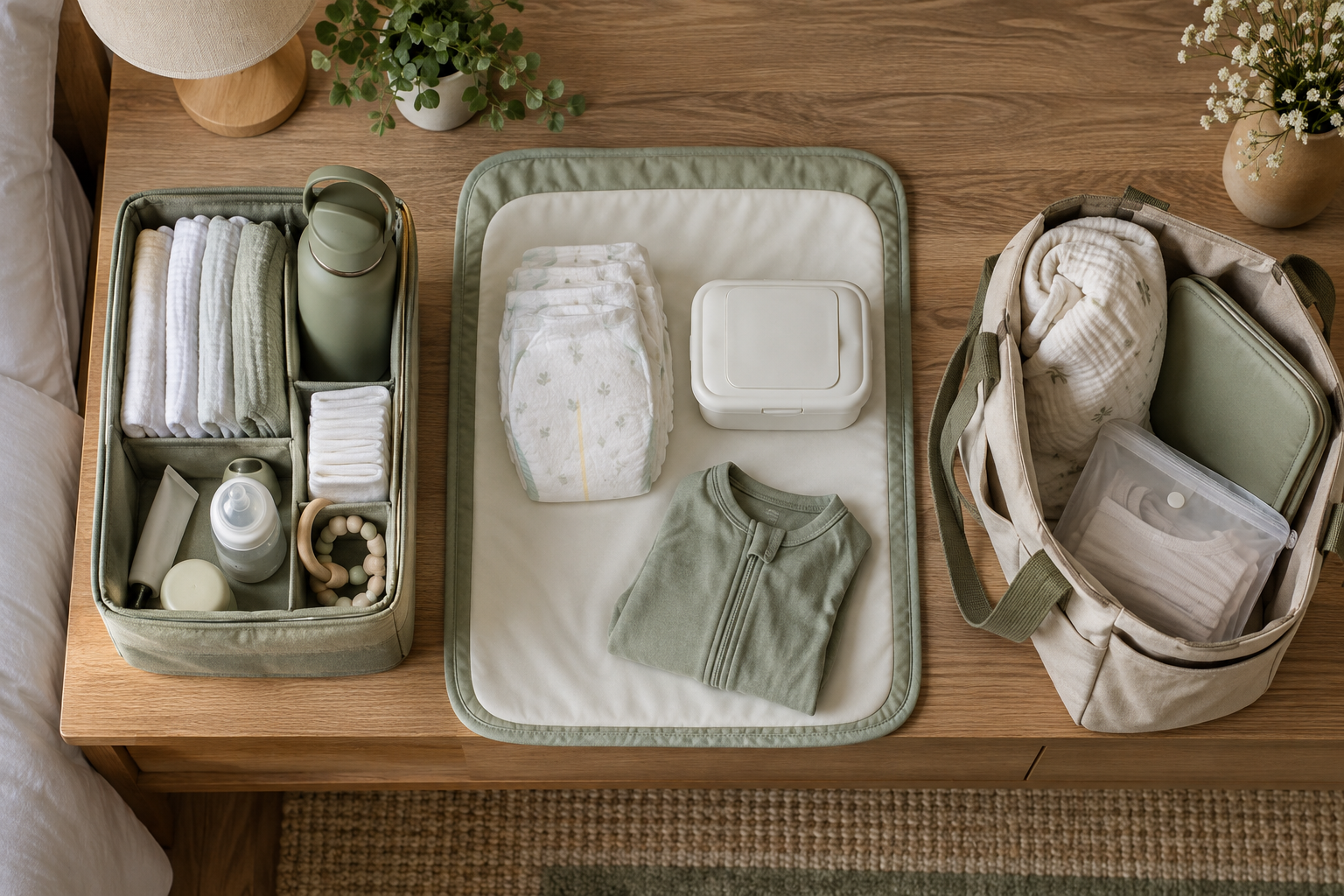
You do not need every possible product before the birth. You need a simple first version of each routine. Once you know where the friction is, you can add the item that fixes it instead of guessing in advance.
Sleep
Choose the baby’s sleep space and decide where it will go before bringing the baby home. Confirm that the product is intended for a newborn, fits the available space and can be used exactly as its instructions require. Follow current local safe-sleep guidance; decorative bedding, positioning products and improvised sleep spaces are not substitutes for an appropriate setup.
Keep the surrounding routine simple. Store the items you will actually need nearby, but keep loose objects out of the baby’s sleep space. If you are considering a bedside crib, measure the intended location and check its setup requirements before buying rather than assuming that “bedside” means it will work with every bed.
Feeding
Prepare for the feeding plan you expect to start with, while accepting that the plan may change. Set up a place for supplies to be washed, dried and reached easily. Avoid buying a large quantity of one bottle, nipple, formula-related accessory or feeding gadget before you know what suits your baby and circumstances.
If feeding becomes painful, the baby is not feeding effectively or you are worried about intake, seek help from the appropriate health-care professional. More equipment cannot resolve every feeding problem, and a gift should never be presented as a substitute for professional support.
Diaper changes and clothing
Create one reliable changing station and, if useful, one small portable caddy. Keep diapers, wipes, a change of clothing and a washable surface within reach. The goal is not a perfectly styled station. It is being able to complete a change without walking away from the baby to find something.
Choose everyday clothing for easy changes and the season in which it will be worn. A small working rotation is more useful than a crowded drawer of one size. Occasion outfits can be lovely gifts, but they should not crowd out the clothes needed for ordinary days.
Leaving home and soothing
Plan for the trips you will really make. If you expect regular car travel, the relevant restraint and vehicle fit matter. If you mostly walk or use transit, folded size, carrying effort and storage may matter more in a stroller or travel system. Check age suitability, fit and manufacturer instructions for any transport product before use.
For soothing, begin with a small number of options rather than a collection of devices. Babies respond differently, so this is an area where waiting can prevent expensive guesses. Borrowing or trying an item can be sensible when it can be done hygienically and safely, but safety-critical products should have a history and condition you can verify.
Put the mother’s needs on the essentials list

A registry can become so baby-focused that the person recovering and doing much of the care almost disappears from it. That is a planning mistake. Food, hydration, comfortable clothing, reachable chargers, basic household supplies and practical help affect how manageable the first stretch at home feels.
Set up a small care station where the mother expects to spend time. Include only items that match her preferences and likely routine: a drink container, easy snacks, charging access, tissues and any personal-care supplies she has chosen. A handled basket can make the setup portable without turning it into another elaborate project.
Help from another person can be more valuable than another object, but only when the help is specific. “Let me know if you need anything” makes the new parent identify a task, decide whether it is reasonable and ask again. A bounded offer is easier to accept:
- Deliver a meal on an agreed day, with ingredients and dietary needs confirmed first.
- Pick up a grocery order or pharmacy purchase chosen by the family.
- Wash dishes, fold laundry or take out garbage during a planned visit.
- Walk the dog or help with an older child at a time the parents select.
- Pay for a service the mother already uses and wants, rather than choosing one for her.
Postpartum recovery and feeding needs vary. Do not guess at medical, body-care or lactation products as a surprise. Ask what she wants, buy the exact item requested and leave health decisions between her and her care team.
Choose a gift that does not create another task
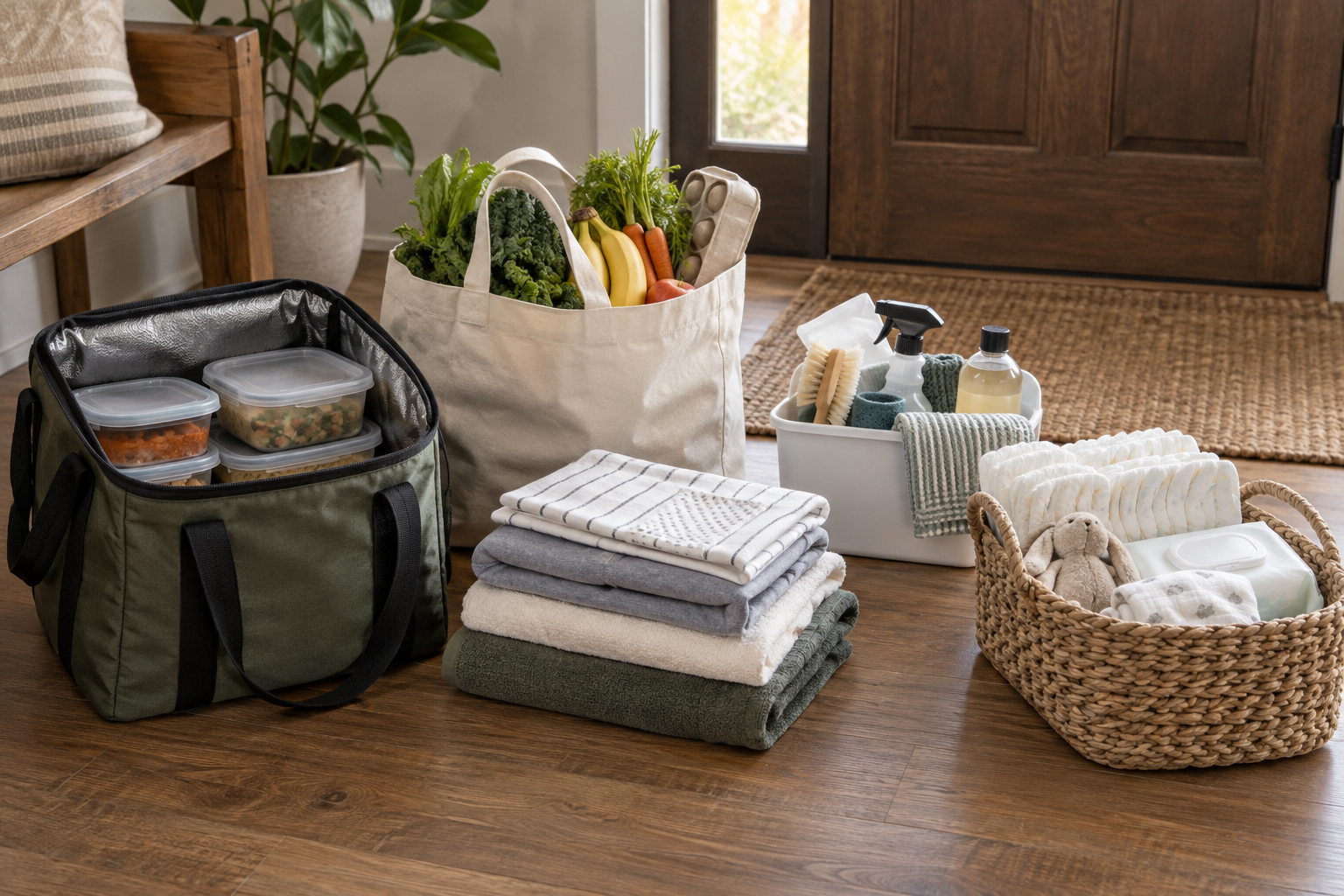
The best question is not “What is a traditional new-baby gift?” It is “What will this person be glad to receive in her actual home?” Practical and thoughtful presents can help a new mother feel cared for, but thoughtfulness depends on fit, not price or novelty.
Use this decision order:
- Check the registry. If an exact item is listed, buy that model, size or colour unless you have asked about a substitution.
- Ask one easy question. Offer a short choice such as, “Would food, household help or something just for you be most useful?”
- Remove logistics. Arrange delivery, include a gift receipt where appropriate and avoid requiring the recipient to host you.
- Keep the gift usable. Consumables should match the family’s preferences; gear should suit their space and plans; personal gifts should reflect the mother’s taste.
- Respect a no-visitors boundary. A doorstep delivery with a short message is still a complete gift.
If you are not close enough to know preferences, flexibility is thoughtful. A gift card for a shop or service the family already uses, paired with a personal note, is often safer than a strongly scented product, decorative object or specialized gadget selected on their behalf.
If you do visit, do not make holding the baby the price of your help. Arrive at the agreed time, keep the visit within the requested window and complete the useful task you offered. The parents should not need to clean, serve food or manage your expectations.
Know what to buy now and what can wait
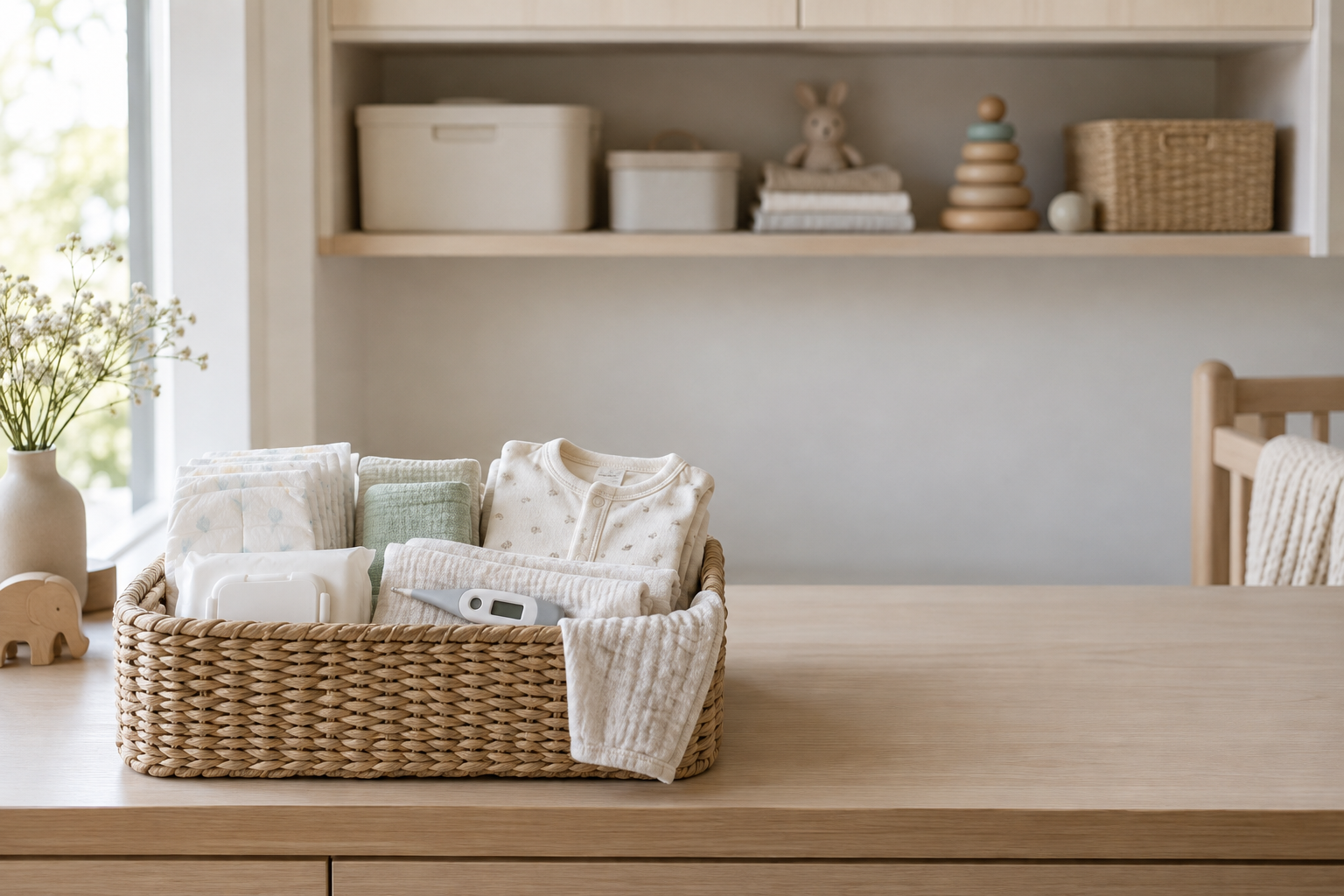
Buy or arrange the things that protect the first routine: an appropriate sleep setup, a starting feeding setup, basic diaper-changing supplies, practical clothing and the transport equipment required to bring the baby home and attend necessary appointments.
Leave room for later decisions when the purchase depends on preference. Extra soothing devices, large quantities of one toiletry, duplicate feeding equipment, extensive clothing in one size and nursery decor do not all need to arrive before the baby. Keep a short “consider later” list. When a recurring problem appears, you can buy for that problem with much better information.
For gifts, avoid turning surprise into burden. Oversized gear needs storage. Personalized items can be difficult to return. Products that require an app, subscription, assembly or regular replacement introduce commitments the family may not want. Ask before giving any of them.
Key takeaways
- Prepare one simple setup for sleeping, feeding, changing, dressing and leaving home; expand it only when a real need appears.
- Test every purchase against a specific job, storage location and maintenance burden.
- Treat the mother’s food, comfort, recovery preferences and practical support as part of newborn preparation.
- Choose exact registry items or ask a short, bounded question instead of guessing.
- Make your gift complete: handle delivery, respect visit boundaries and do not create work for the recipient.
Make two lists now: “needed for the first routine” and “decide after we meet the baby.” Then give anyone asking about gifts one exact item or one specific way to help. A smaller, clearer plan will serve you better than a room full of possibilities.
References
- My Baba – Graco’s Newborn Essentials At Argos: Everything You Need For Life With Baby
- BabyCenter – Best gifts for new moms