
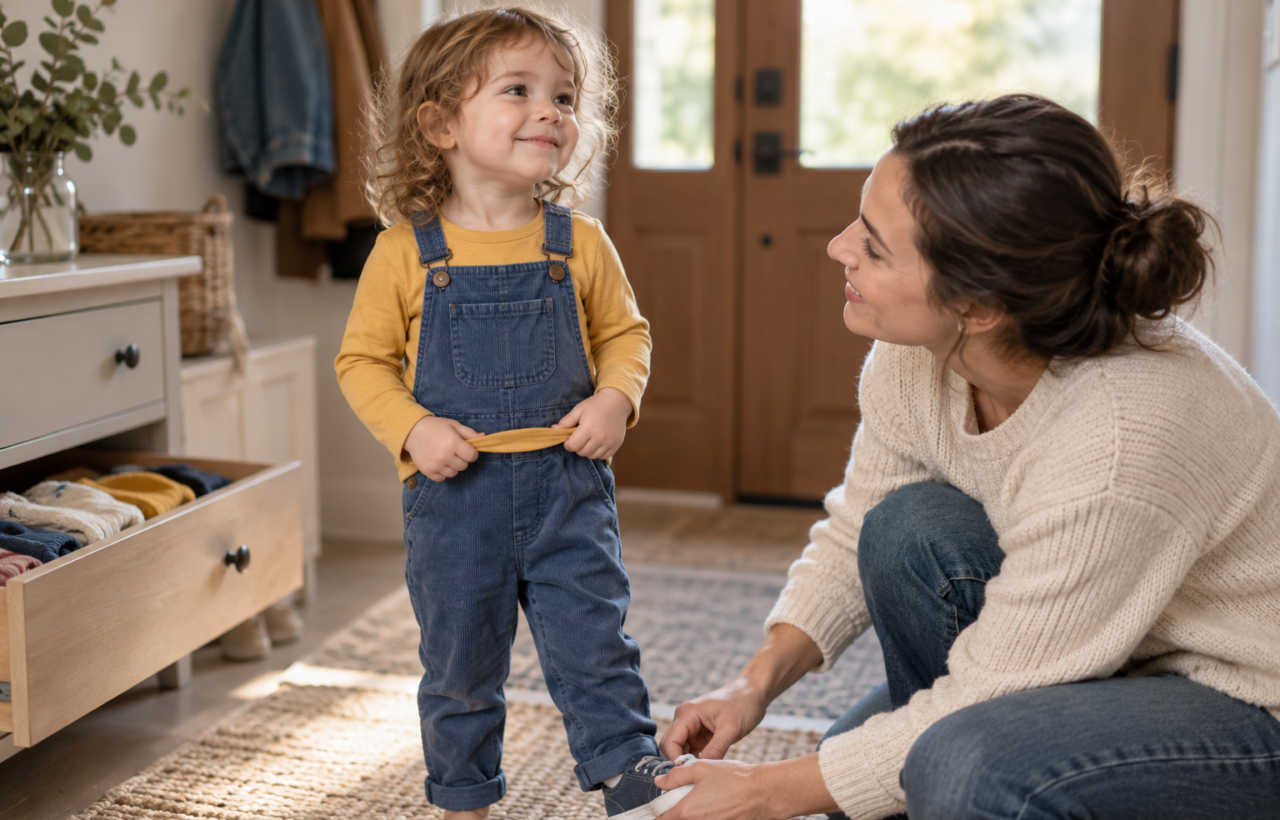
Your toddler reaches for the same shirt again. It is in the laundry, the weather has changed, or you simply hoped they might wear one of the other perfectly good outfits in the drawer. Suddenly, getting dressed has become the hardest part of leaving the house.
For a child approaching age 2 or 3, repeating an outfit is usually less about the clothes than what they provide: familiarity, comfort and one decision they can control. You do not necessarily need to stop the repetition. You need a workable boundary for cleanliness and safety, a plan for the days the favourite is unavailable, and a way to notice when the preference has become genuine distress.
Why the same outfit can matter so much at this age
Toddlers encounter new words, rules, movements and expectations all day. Familiar things ask less of them. The same clothes can feel predictable in the way that a repeated book or familiar routine does, and that predictability can be comforting when so much else is still being learned.
Clothing also gives a young child an unusually clear opportunity to exercise autonomy. They cannot decide when the family leaves, whether they attend child care or what the weather does. They can point to the striped trousers and say, in effect, “This one.” Insisting on that choice may be part of testing independence and developing a sense of identity, not a calculated attempt to make your morning difficult.
Sometimes the preference is sensory rather than symbolic. A child may like a soft, worn fabric, a loose waistband or a shirt without a bothersome seam. A replacement that looks almost identical may still feel completely different to them. Resistance to new clothes can therefore reflect control, sensory sensitivity or both.
Getting dressed is also a real developmental task. Your toddler has to choose an item, work out which way it goes, put their body through it and manage any buttons, snaps or zippers. That sequence uses planning, attention and developing fine-motor skills. A child who takes a long time or returns to the easiest familiar outfit is not automatically being defiant.
Key takeaways for the next clothing battle
- Repeating one outfit is often a normal toddler preference tied to familiarity, comfort and autonomy.
- If the garment is clean enough, intact and appropriate for the conditions, allowing it can remove an unnecessary power struggle.
- If the favourite cannot be worn, offer two or three acceptable alternatives instead of opening the whole drawer.
- Ask what feels good about the favourite, or observe which part of a different garment causes resistance.
- Look for help when clothing repeatedly causes severe distress, rigid routines or disruption to everyday life.
Use a yes-unless rule instead of renegotiating every morning
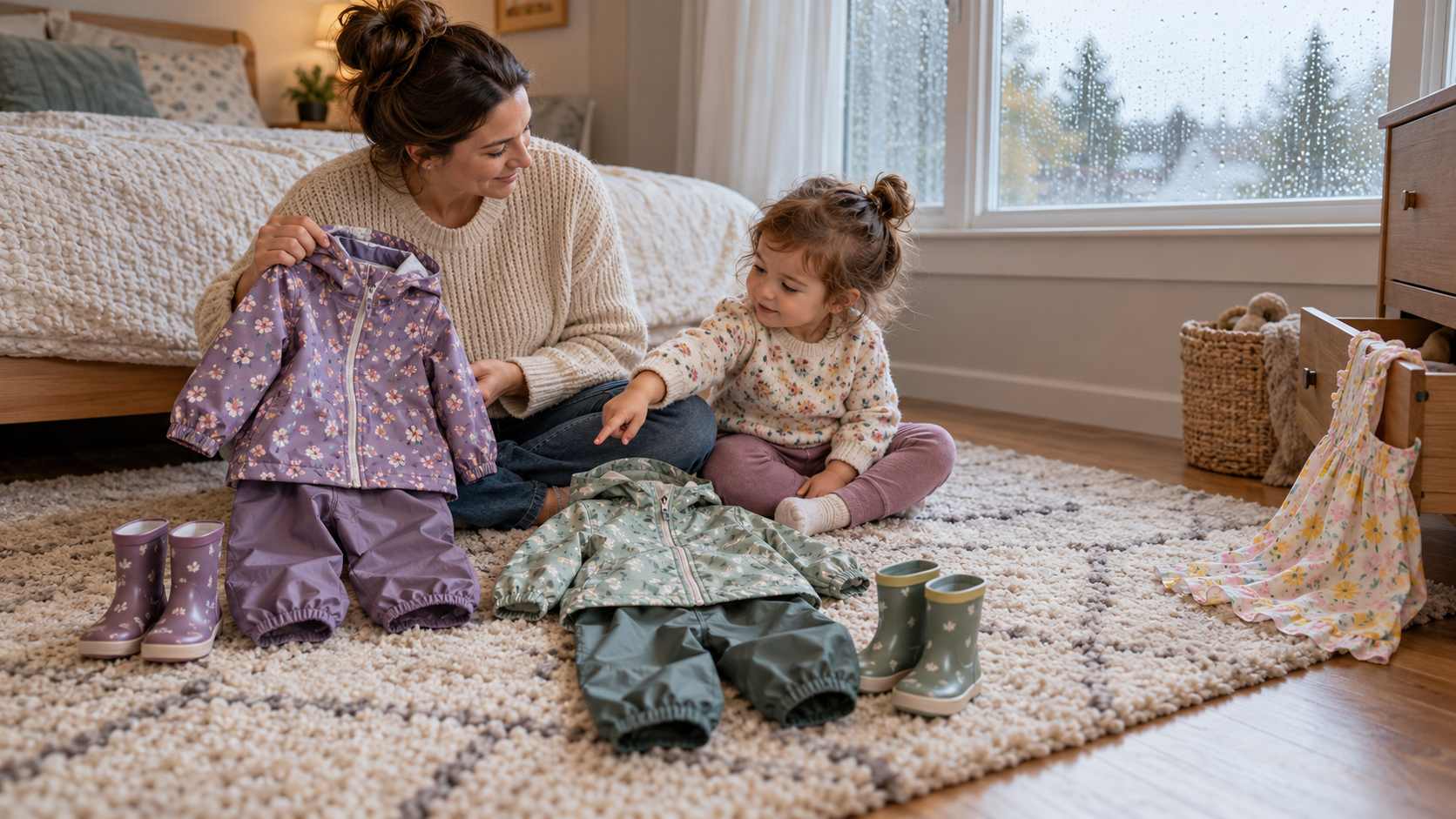
Decide what makes an outfit wearable before you start talking about it. A simple rule is: yes, unless the clothing is wet, significantly soiled, damaged, unsuitable for the weather or activity, or inconsistent with a child-care requirement. Those limits remain your responsibility. Colour coordination, repetition and another adult’s opinion do not need to carry the same weight as health or safety.
If the favourite passes that test, letting your toddler wear it may be the most proportionate response. A young child’s harmless clothing choice is not a parenting contest you need to win. Keep the item in the normal laundry rotation, and avoid treating permission to wear it as a special reward.
When the answer is no, make the reason concrete and brief: “That shirt is wet, so it needs to dry” or “Those pajamas are not warm enough for outside.” Then move directly to the available choices. Long explanations can turn a practical limit into an invitation to keep negotiating.
It also helps to separate a necessary boundary from an aesthetic preference. If a favourite top works under the coat, for example, the top may not need to become part of the weather argument. Preserve the choice that is harmless while holding the limit that matters.
Build a routine around the favourite, not against it
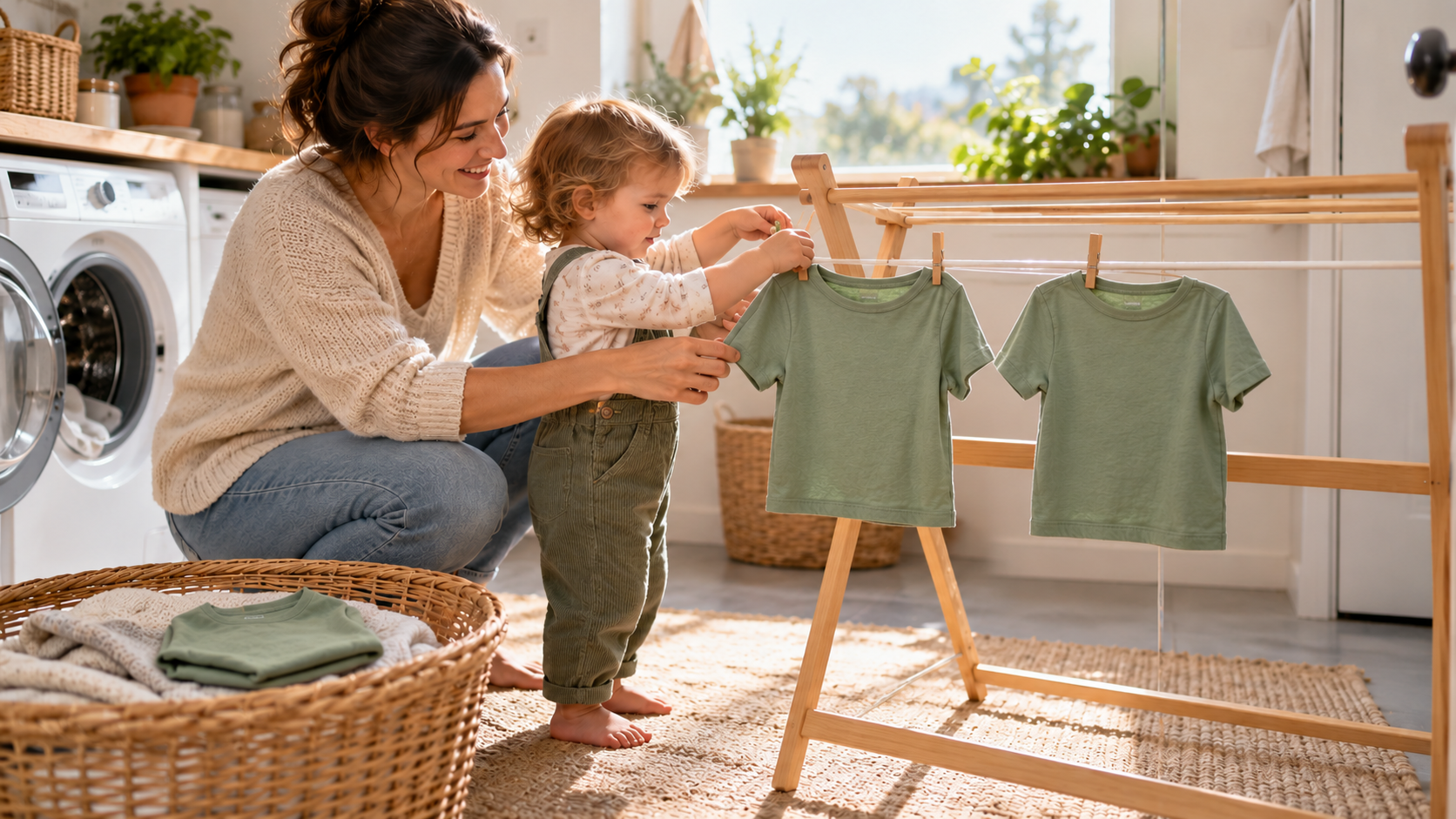
A workable routine starts by identifying what the outfit is doing for your child. You are not trying to talk them out of liking it. You are looking for enough information to make the next option tolerable.
- Ask a concrete question. Instead of “Why do you always wear that?” try “Is this shirt soft?” “Do you like the picture?” or “Does that waistband feel better?” A child with limited language may not be able to explain, so treat the answer as one clue rather than a test they must pass.
- Watch the point of refusal. Notice whether resistance begins at the head opening, sleeve, waistband, seam, label or fastener. If several rejected clothes share the same feature, you have a more useful lead than “They are being picky.”
- Match the important feature. Offer an alternative with the same sleeve length, softness, looseness or familiar character. Do not assume that visual similarity matters if the real attraction is how the garment feels.
- Offer limited control. When the favourite is unavailable, present two or three outfits that you can accept. “Blue shirt or green shirt?” is easier to process than “What do you want to wear?” and still leaves the final choice with your child.
- Choose before the morning rush. Pick the outfit together the night before and put it where dressing happens. Keep the hamper near the dresser so removing yesterday’s clothes and finding today’s clothes form one visible sequence.
- Allow more time than the adult version of the task takes. If you expect dressing to take five minutes, schedule ten. A visual timer can make the passage of time easier to see, but it should support the routine rather than threaten the child.
- Introduce new clothes when nobody is rushing. Let your toddler touch or briefly try the garment at a calm time. Praise the specific action – “You put your arm into the new sleeve” – without demanding that they wear it for the entire day.
Laundry needs its own predictable plan. Tell your child when the favourite is being washed and when it will be available again. If you are considering a duplicate, first work out whether the attraction is the design or the worn-in feel of that exact item. A new copy may help with the first and do little for the second, so treat it as an experiment rather than a guaranteed solution.
When the preference deserves a closer look
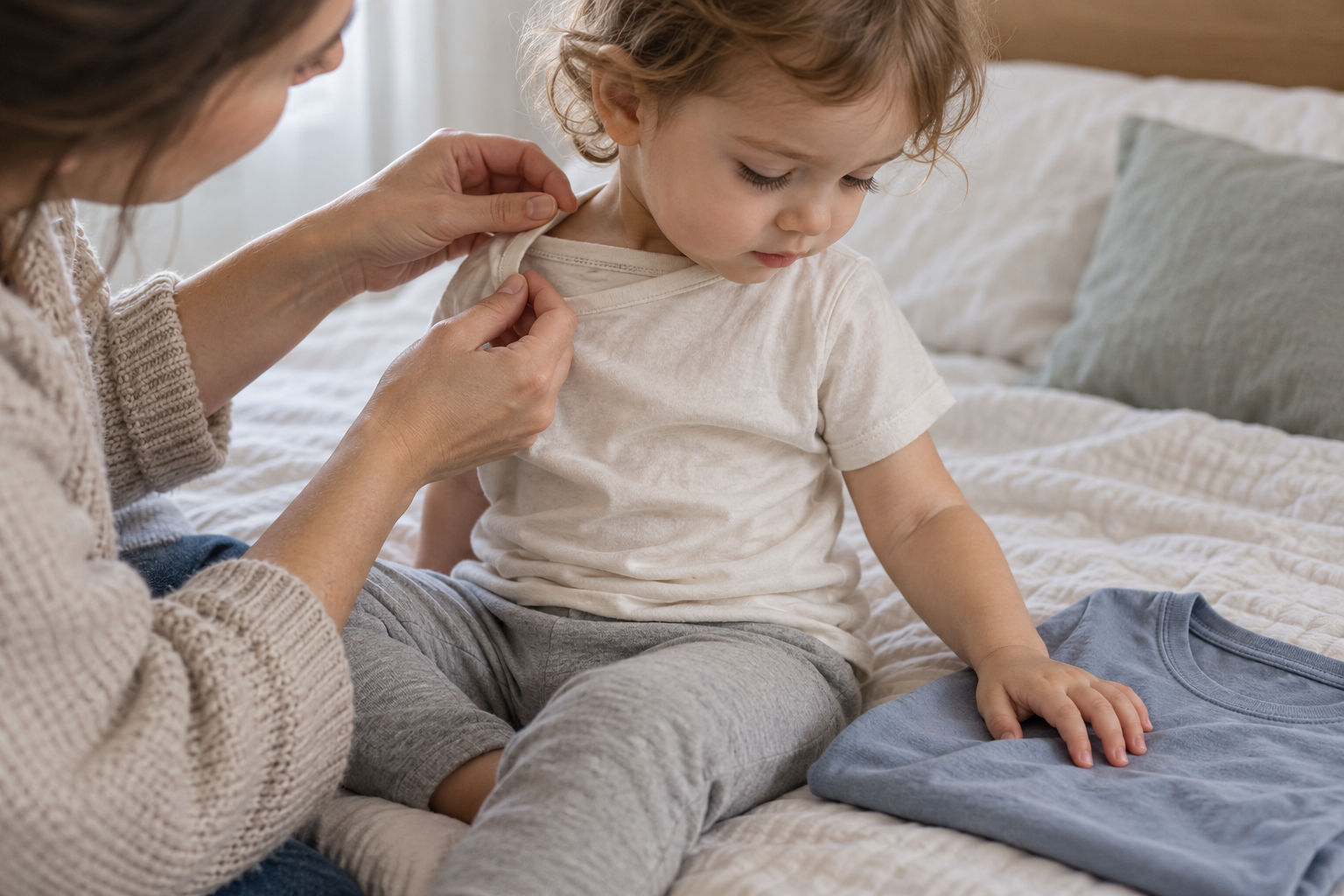
The most useful distinction is not how often the outfit appears. It is how your child functions when it cannot appear. A strong preference that bends with reassurance and limited choices is different from a rule so rigid that getting dressed repeatedly stops the family from leaving, attending child care or completing ordinary routines.
Pay closer attention if your child consistently avoids whole textures or categories of clothing, becomes extremely distressed when one garment is unavailable, or cannot tolerate even small changes to the routine. Examples that may warrant discussion include changing outfits five or more times every morning, frequent battles ending in tears or anger, or tantrums lasting more than 15 minutes. These examples are not a diagnostic checklist. Frequency, intensity and disruption matter together.
If you are concerned, note what happened just before the distress, which garments or sensations were involved, how your child responded and what helped them recover. Bring those observations to your child’s pediatrician. A pediatrician or child psychologist can help distinguish a typical developmental phase from anxiety, sensory challenges or broader rigidity. A favourite shirt by itself does not establish any diagnosis.
For the next dressing decision, start small: decide whether the favourite meets your practical limits, prepare two acceptable alternatives if it does not, and watch for the exact feature your child is protecting. That turns tomorrow morning from a contest of wills into information you can use.
References



