
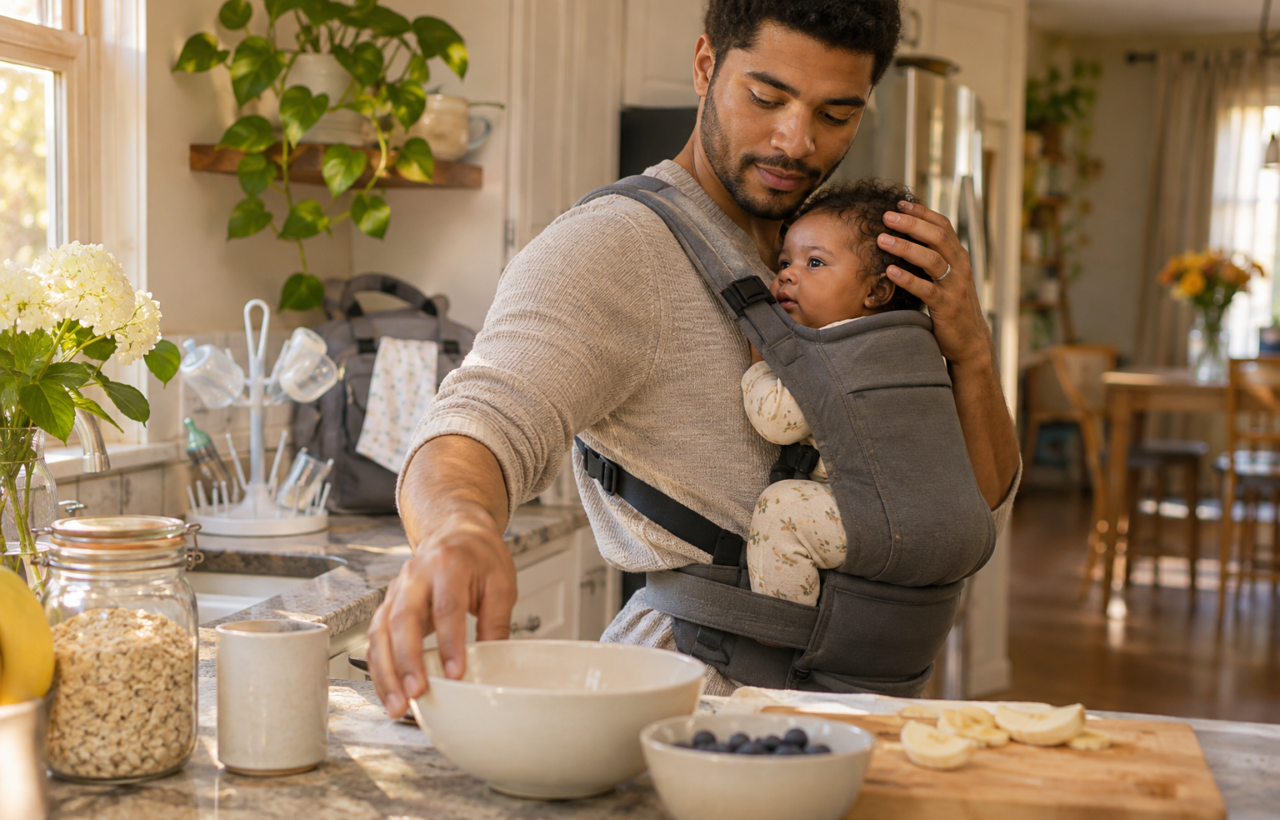
If you are wondering whether a baby carrier can help a father become more involved, the honest answer is yes, but only up to a point. It can put everyday care within easier reach. It cannot decide who notices the baby’s needs, prepares for an outing or takes responsibility when the plan falls apart.
BabyBjörn’s celebration of 65 years of supporting dads and their involvement in family life reflects a recognizable shift in how fatherhood is presented: the father is no longer standing beside the caregiver. He is the caregiver. For your family, the useful question is not whether dad wears the baby. It is whether he can independently own the care that happens before, during and after the carrier comes out.
A carrier removes friction, but it does not assign responsibility
A carrier can make involvement easier because it gives a father a practical way to hold the baby while walking, settling or getting through part of the day. It can create long stretches of close contact without requiring both hands. It may also make it easier for one parent to leave the house alone with the baby.
Those advantages matter, especially when a new father is still learning the baby’s signals. Repetition creates familiarity: how the baby moves before becoming upset, which sounds mean discomfort, and what helps during a transition. The father gets practice, and the other parent gets evidence that care can continue without constant direction.
But wearing the baby is only the visible part of the job. Someone still has to decide when to leave, check what the baby will need, find the carrier, adjust it, notice hunger or fatigue, change the plan and put everything away. If one parent manages all of that while dad performs the walk, the activity may look shared while the responsibility remains one-sided.
That distinction is the heart of modern hands-on fatherhood. Participation means doing a task when asked. Ownership means noticing that the task needs doing, making the decisions and completing the entire care loop.
Look for ownership, not occasional help
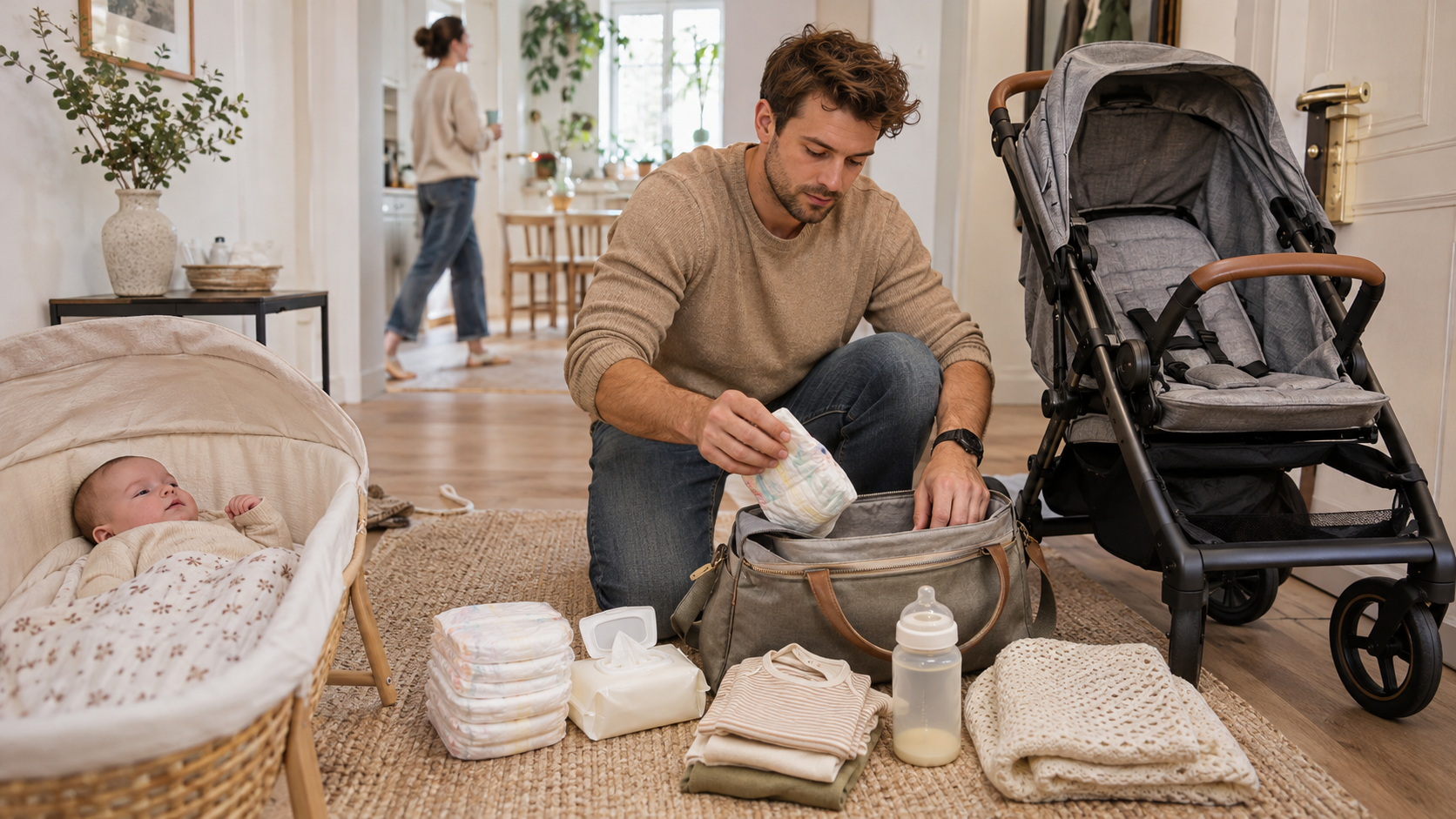
The word “help” can hide an unequal arrangement. A father who helps is implicitly assisting the person who remains in charge. A father who parents has areas of care he understands and handles without waiting for instructions.
You can see the difference in ordinary moments. Before a carrier outing, can dad decide what the baby needs without receiving a packing list? Does he know where the essentials are? Can he alter the plan when the baby needs feeding, changing, rest or a quieter environment? When they return, does he finish the job instead of handing over a tired baby and a half-unpacked bag?
A useful way to build that ownership is to give one parent a recurring care loop rather than a collection of isolated tasks. For example, dad might own a regular morning outing from beginning to end. That includes choosing the timing, checking the weather, dressing the baby, preparing what is needed, fitting the carrier, responding while away and resetting the gear afterward.
This should not become a test designed by the other parent. The aim is for dad to develop judgment, not demonstrate that he can copy somebody else’s exact method. Different soothing routines, packing habits and routes are fine. Step in for a genuine safety concern, but leave room for a capable parent to find his own way through ordinary fussiness and inconvenience.
Turn the carrier into a repeatable caregiving routine
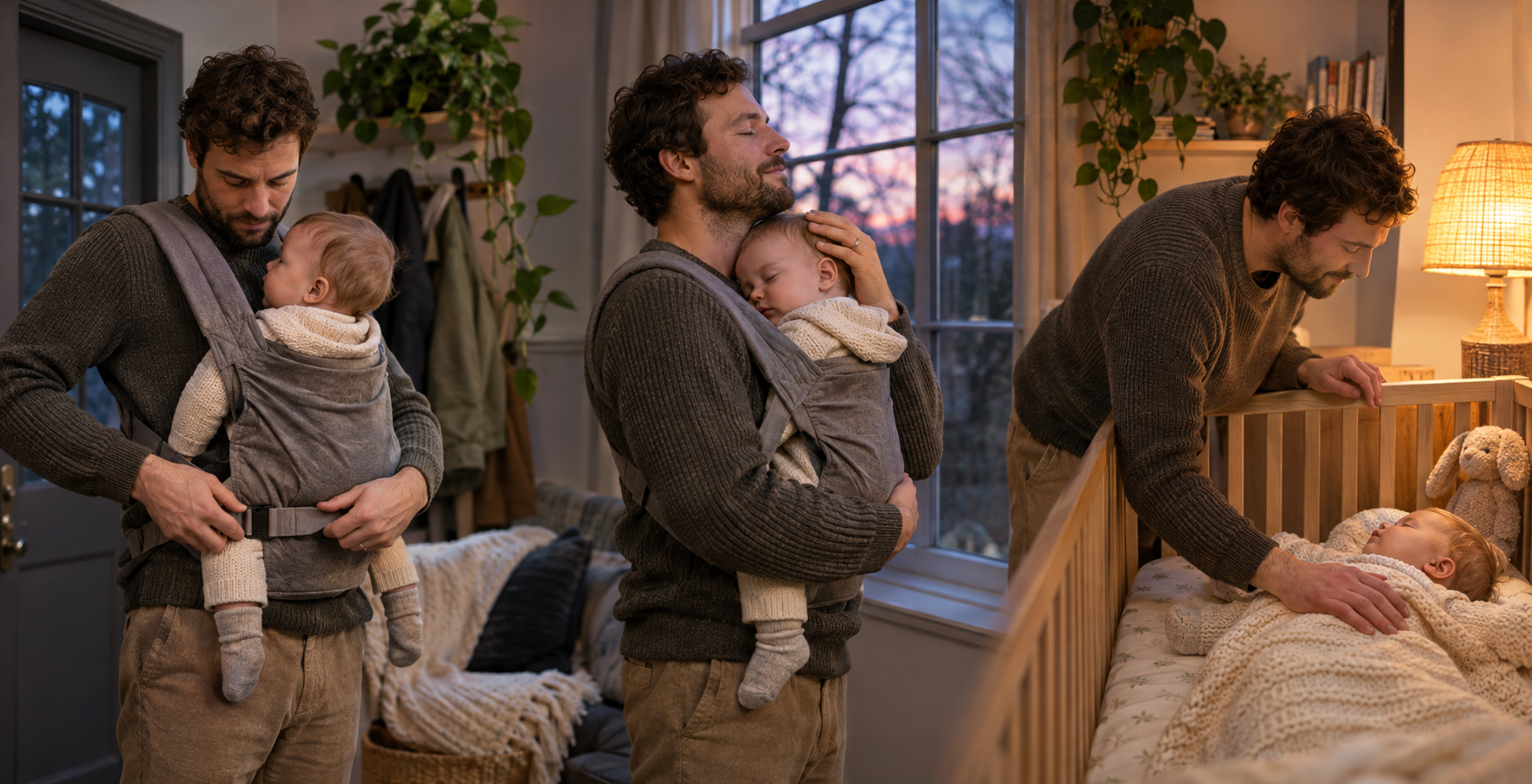
A carrier becomes useful for changing family roles when it supports a routine, not when it appears only for a special outing or photograph. Start with a predictable, relatively calm part of the day. Learning the carrier while the baby is already exhausted, hungry or very upset makes it harder for everyone to separate a fitting problem from an ordinary baby need.
- Choose one recurring window that dad can realistically protect. A modest routine that happens is more valuable than an ambitious plan that is repeatedly cancelled.
- Learn the exact carrier together once, using the current instructions for that model. Check the permitted age, size and carrying position rather than relying on a photograph, an older sibling’s setup or a different carrier’s rules.
- Adjust the carrier for each wearer. A safe, comfortable fit for one adult should not be assumed to fit another adult after a quick handoff.
- Let dad complete the setup. He should retrieve the carrier, make the adjustments, place the baby and perform the safety check himself.
- Keep the first outings simple. A familiar route with an easy return gives dad space to notice the baby’s responses without managing unnecessary complications.
- Afterward, discuss useful observations rather than issuing a performance review. “The baby settled when you kept moving” transfers knowledge. “You did it wrong” usually does not.
Carrier safety is not the place for improvisation. Follow the manufacturer’s current instructions for the exact model and for your baby’s stage. Make sure the baby’s face and breathing remain unobstructed, and stop to reposition if the baby’s posture or breathing concerns you. A carrier is not a substitute for an approved sleep space, and a sleeping baby still needs active monitoring while being worn. If your baby was premature, has a medical condition or has needs that make positioning uncertain, ask an appropriate health professional for individualized guidance before using the carrier.
No family needs a particular brand, or any carrier at all, to build an involved father-child relationship. The same ownership can grow through diaper changes, baths, bottle preparation where applicable, settling, daycare preparation or bedtime. The tool matters only when it makes sustained caregiving easier to practise.
When the baby appears to prefer one parent

A baby who settles more quickly with one parent is not delivering a verdict on the other parent’s ability. Familiarity matters. If one person has handled most feeding, soothing or daytime care, the baby has had more opportunities to learn that person’s voice, movement and sequence of responses.
The answer is usually more calm practice, not a dramatic handoff during the hardest part of the day. Let dad take the carrier during a settled period, then gradually own more of the routine around it. If feeding is tied to the other parent, he can still handle the care before and after: bringing the baby, changing, burping where appropriate, resettling and taking the baby for the next stretch.
Try not to transfer the baby back at the first sound of protest simply because one parent can settle the baby faster. That pattern prevents dad from learning what works and teaches both adults that discomfort automatically belongs to the default parent. At the same time, do not turn persistence into a contest. Respond to escalating distress, check for hunger, illness, discomfort and other needs, and reset when the situation is no longer productive.
Dad also needs permission to develop his own relationship with the baby. He may walk at a different pace, use a different voice or choose a different route. Safe care does not need to be identical care. In fact, a baby benefits from learning that comfort can come through more than one familiar pattern.
Build a fair system without turning parenting into a scorecard
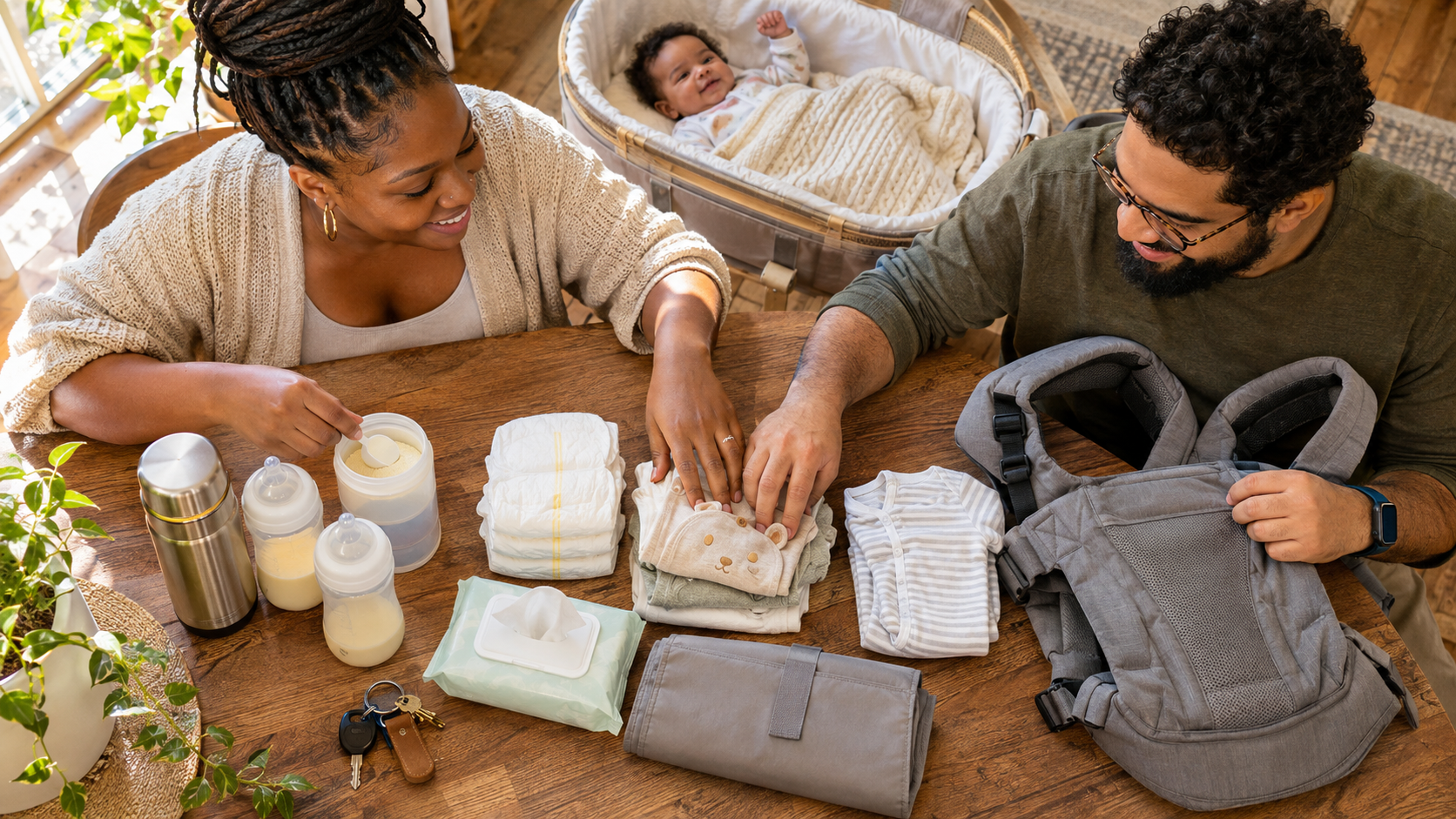
An involved father does not have to perform exactly half of every task. Work schedules, feeding arrangements, recovery after birth, parental leave and the baby’s changing needs can make equal minutes unrealistic. A better test is whether both parents are becoming competent caregivers and whether one person is carrying nearly all the noticing, planning and interruption.
A short weekly check can reveal more than a running argument about who did more. Ask concrete questions:
- Which care routines does each parent fully own?
- Who notices when supplies, clothing or plans need to change?
- Can either parent leave the house while trusting the other to manage without remote supervision?
- Does each parent get some protected rest that does not depend on first preparing everything for the other?
- Is one parent repeatedly doing the visible care while the other remains responsible for remembering and coordinating it?
Use the answers to move one complete responsibility at a time. If dad already enjoys carrier walks, the next step might be owning the preparation and return as well. If he already handles bedtime, he might also notice when the routine needs to begin and make sure the required items are ready. Small transfers of genuine ownership are more durable than a vague promise to be more involved.
A brand campaign can show how fatherhood is being represented, but it cannot prove that every household has changed. The meaningful change happens privately: a father knows what the baby needs, acts without being managed and remains responsible when care becomes inconvenient. The carrier can make that work visible. The routine around it makes the change real.
Key takeaways
- A baby carrier can create opportunities for closeness and independent care, but it cannot redistribute the mental load by itself.
- Give dad a complete, recurring care loop rather than isolated tasks performed under another parent’s direction.
- Use the current instructions for the exact carrier and adjust it separately for each wearer and each permitted carrying stage.
- Let each parent develop a safe personal soothing style; different does not automatically mean wrong.
- Measure progress by competence, initiative and ownership, not by a photograph or a perfect division of minutes.
Choose one routine this week that dad can own from first decision to final reset. Keep the handoff clear, keep safety non-negotiable and give the new arrangement enough repetition to become ordinary family life.
References



