

You are not trying to build a perfect nursery. You are trying to make the first night home workable: a safe place for your baby to sleep, a way to feed and change them, clean clothes, and bathing supplies you can use without stepping away.
That distinction cuts through most newborn shopping lists. An essential either makes routine care possible or prevents an unsafe improvisation. Products that promise convenience can wait until you know which problems your family actually has.
Key takeaways
- For sleep, start with a bassinet or crib, the correct firm mattress, a fitted sheet, and nothing else in the sleep space. The American Academy of Pediatrics recommends sharing a room, but not a bed, for at least the first six months.
- A practical clothing rotation is five to seven onesies, four to five footed sleepers, five to seven pairs of socks or booties, and one or two seasonal layers.
- Put diapers, wipes, a changing pad, and diaper-rash cream within reach before you place your baby on the changing surface.
- For bathing, you need a stable baby tub, soft washcloths, and a mild baby wash. Prepare everything first so your baby remains within arm’s reach for the entire bath.
- Specialized blankets, large clothing collections, and overnight diapers do not need to be first-day purchases. Buy them when your baby’s stage, the season, fit, or a recurring leak tells you what you need.
Build a first-day kit around five care jobs
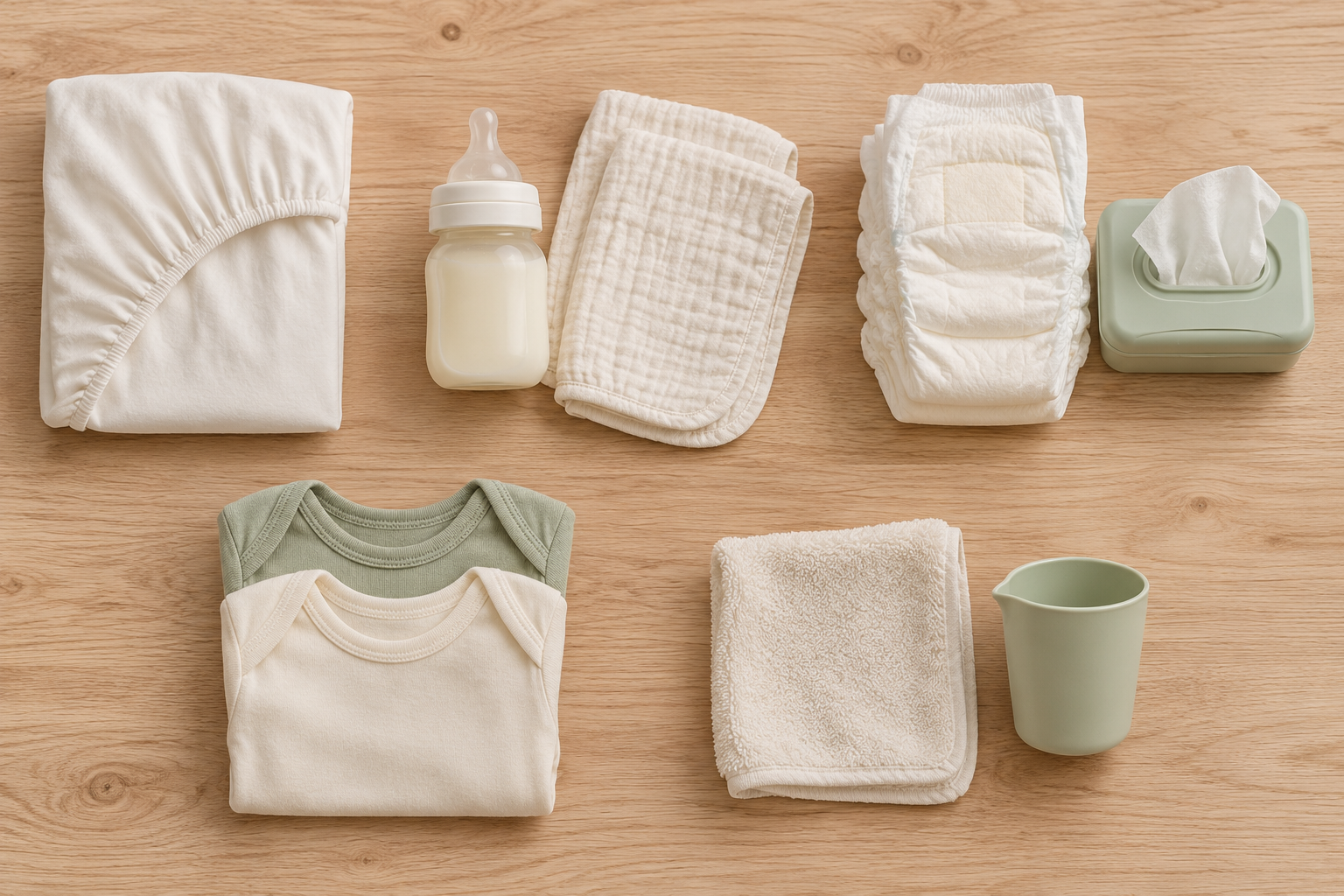
Your newborn does not need every possible product waiting at home. They need one reliable setup for each job you will repeat: sleeping, feeding, changing, dressing, and bathing. If those five setups work, you can add convenience later without panic-buying duplicates.
1. A complete sleep setup
Choose either a bassinet or a crib. A bassinet is smaller, often portable, and more likely to fit beside your bed. A crib takes more room but can serve your baby for years and avoids an early transition. Many babies outgrow a bassinet between four and six months, so check the manufacturer’s height, weight, and developmental limits rather than relying on age alone.
A bassinet should use only the mattress supplied or specified by its manufacturer. A crib needs a firm mattress that fits snugly, plus a properly fitted sheet. Do not try to make either space softer with loose bedding.
2. Feeding supplies for one workable plan
The equipment you need depends on whether your baby will breastfeed, receive expressed milk, take formula, or use a combination. Have the supplies required for your expected method cleaned and ready according to their manufacturer instructions, but do not feel obliged to buy every bottle, pump accessory, or feeding system before you know what works for you and your baby.
Put a burp cloth and your prepared feeding supplies where you expect to sit. Keep your health-care team’s contact information easy to find. If you are concerned that your newborn is not feeding normally, seek professional help promptly; changing equipment is not a substitute for assessing a feeding problem.
3. A contained diaper-changing kit
Start with diapers in your chosen format, wipes, a changing pad, and diaper-rash cream. These four items cover the task. An elaborate changing table does not.
Keep the supplies together in a basket or portable container. If you have more than one regular changing location, distribute wipes and a small supply of diapers between them. Useful locations can include your baby’s room, your bedroom, the diaper bag, and the car. The goal is to avoid walking away once your baby is on the changing surface.
4. A small, washable clothing rotation
Newborn clothes are working supplies. Spit-up and diaper leaks can create several clothing changes in a day, so ease of washing and changing matters more than outfit variety. One-piece garments also reduce the number of separate items you need to find during a tired change.
5. A bath setup you never have to leave
A baby bathtub creates a smaller bathing area inside a regular tub. Add soft washcloths and a gentle baby wash or shampoo. Place the cloth, cleanser, towel, and clean diaper where you can reach them before your baby goes into the water.
Keep your baby within arm’s reach and never leave them unattended in water. If you discover that something is missing, end the bath and take your baby with you rather than stepping away, even briefly.
Keep the sleep space deliberately bare
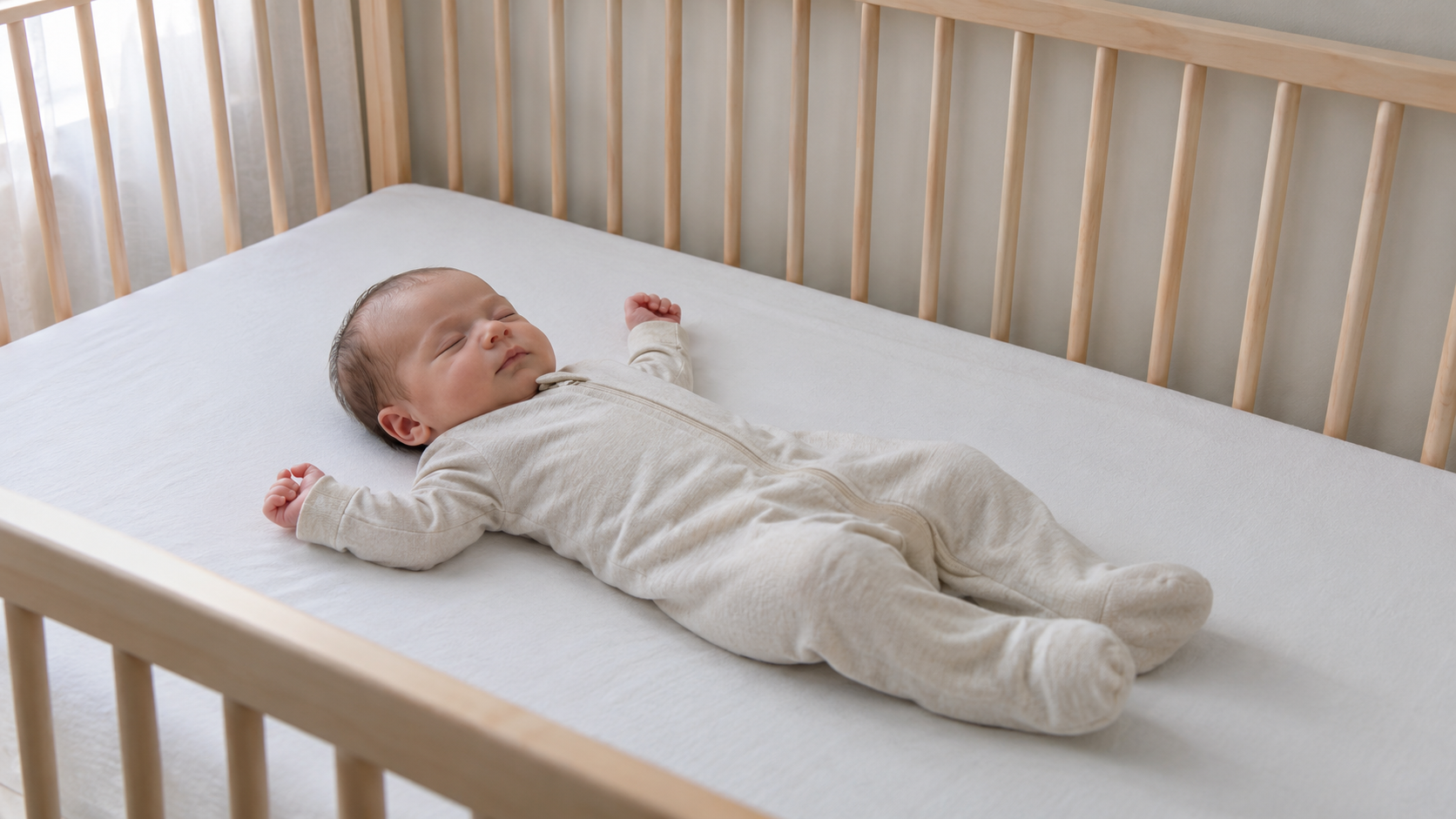
The newborn sleep list is short because extra softness creates risk. Inside the crib or bassinet, use the approved mattress and a fitted sheet. Pillows, loose blankets, bumpers, toys, positioners, and other soft objects do not belong in the sleep space.
A wearable sleep sack can provide warmth without becoming loose bedding. If you swaddle, the wrap should be snug around the upper body while leaving room for the hips and legs to move. Stop swaddling as soon as your baby shows signs of trying to roll; that can happen as early as two months. Do not wait for a completed roll.
Two or three sleep sacks, swaddles, or a combination of the two create a useful rotation while one is being washed. Make sure each item is appropriate for your baby’s size and use it exactly as its instructions specify.
Hats are for suitable outdoor conditions, not indoor sleep. Remove your baby’s hat indoors, particularly before sleep, to reduce the chance of overheating.
A blanket can still have a role during supervised, awake use, but it does not become safe crib bedding because it is labelled for babies. If you buy one, choose it for its intended use, washability, your baby’s stage, and the season. Keep that purchase separate from the sleep-space checklist.
Stock clothing and diapers around your reset routine
The useful question is not how much a newborn might wear. It is how many dirty items can accumulate before you wash, dry, and restock them. A sensible starting rotation is:
- Five to seven onesies.
- Four to five one-piece footed sleepers.
- Five to seven pairs of socks or booties for footless outfits.
- One or two sweaters or jackets, depending on the season.
- Two or three sleep sacks, swaddles, or a mixture of both.
- An outdoor hat suited to the weather.
- Winter mittens if cold-weather outerwear does not cover the hands.
Treat those quantities as a starting rotation, not a target you must exceed. After several days, add clothes only if you repeatedly run out before laundry is finished. This keeps you from building a large collection in a size your baby may not wear for long.
Diapers work the same way: begin with enough to create a reliable changing routine, then adjust to your baby’s fit and your restocking schedule. Store the bulk supply away from the changing surface and bring only a manageable stack into reach. Wipes and cream should be reachable with one hand.
Use diaper-rash cream as directed when it is needed. A rash that is severe, persistent, worsening, or accompanied by signs that your baby is unwell needs advice from a qualified health-care professional.
Overnight diapers are a problem-solving product rather than a universal newborn essential. If recurring nighttime leaks become an issue, first confirm that the diaper fits and is being used correctly. Then compare options for absorbency and wetness control; side-by-side testing of overnight diapers can be more useful than relying on packaging claims. Try a small quantity before committing to a large box.
Arrange supplies around reach, not appearance
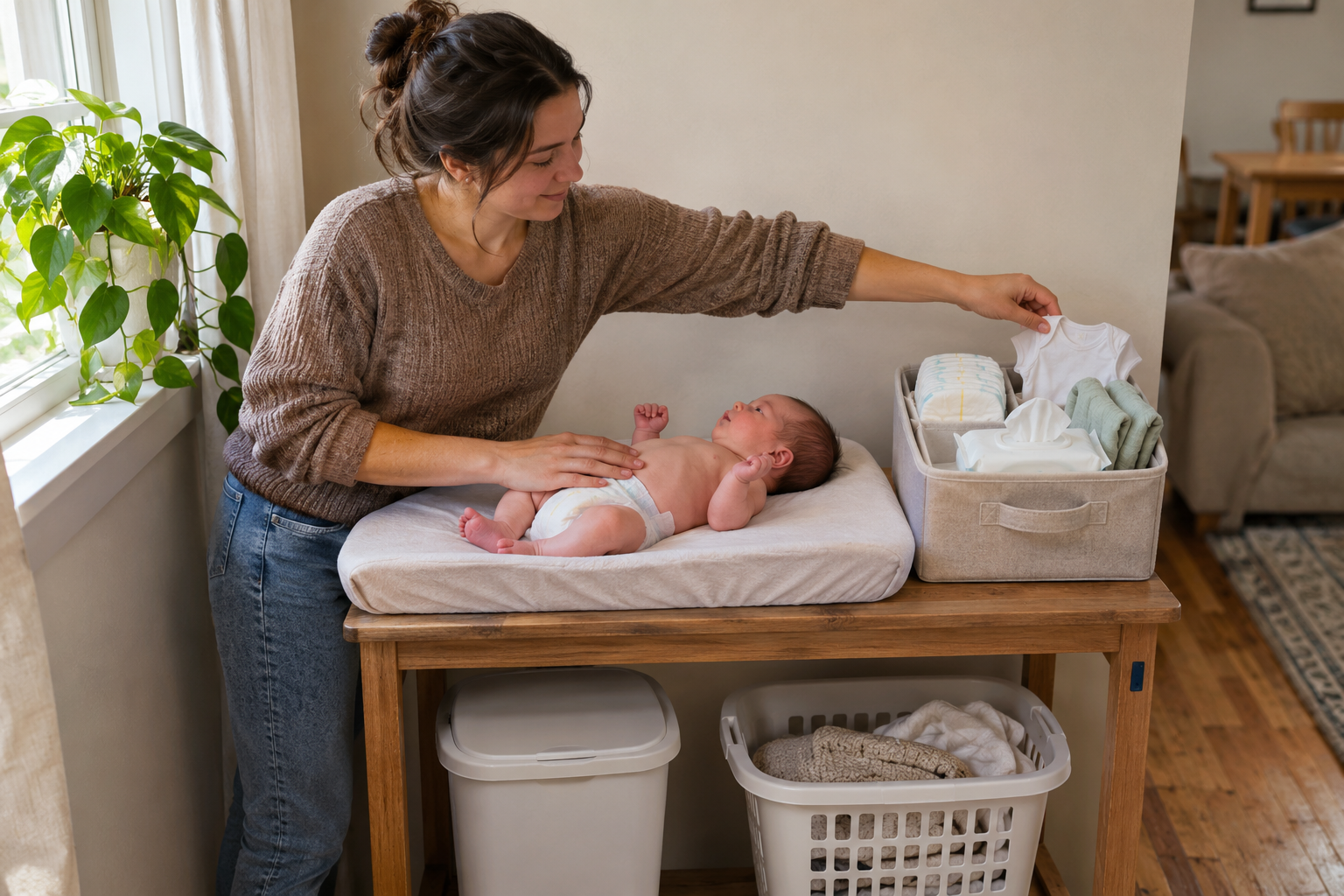
The safest setup is the one that lets you finish a task without leaving your baby. Before the birth, rehearse each care job with an empty bassinet, changing pad, or baby tub. Reach for every item in the order you will use it. If you have to turn your back, cross the room, or open a distant cupboard, move the supply.
- Make the sleep space ready with its correct mattress and fitted sheet. Store all other bedding elsewhere so it cannot drift into the crib during a tired night.
- Place a small stack of diapers, wipes, cream, and a clean outfit beside the changing pad. Refill the stack during the day rather than waiting for the final diaper.
- Pre-stage the bath towel, washcloth, cleanser, clean diaper, and clothes before filling the baby tub.
- Create a feeding spot with the supplies for your chosen method and a cloth for spills or spit-up. Clean and reset it after each use.
- Pack a portable changing pad, diapers, wipes, and a spare outfit in the diaper bag. If the trip home is by car, follow local requirements and the car-seat manufacturer’s installation instructions.
This setup also shows you which duplicates are worthwhile. Extra wipes near a second changing area solve a predictable reach problem. A second decorative organizer does not solve anything unless the first one repeatedly fails.
Let the first days tell you what to buy next
Leave room in both your home and your budget for information you do not have yet: your baby’s size, how often clothes become soiled, which diaper fits, how feeding unfolds, and which room you actually use at 3 a.m.
For the first 48 hours at home, keep a short list of friction points. Write down only problems that recur: the sleepers are always in the wrong room, wipes run out downstairs, the current diaper repeatedly leaks, or every sleep sack is in the wash. A repeated problem earns a change to the setup or a carefully chosen purchase. A product that merely looks useful can stay in the shop.
Do one dry run before your baby arrives: make the bed, complete a pretend diaper change, lay out two clothing changes, stage a bath, and reset the feeding area. Fix anything you cannot reach safely. Then stop shopping until real life gives you the next clear instruction.
References
- Newton Hush – Newborn Essentials: 36 Must-Haves for New Parents
- Parents – The Best Baby Blankets We Tested With Our Own Infants
- Parents – The 4 Best Overnight Diapers to Prevent Leaks and Wetness, According to Our Lab Tests



