
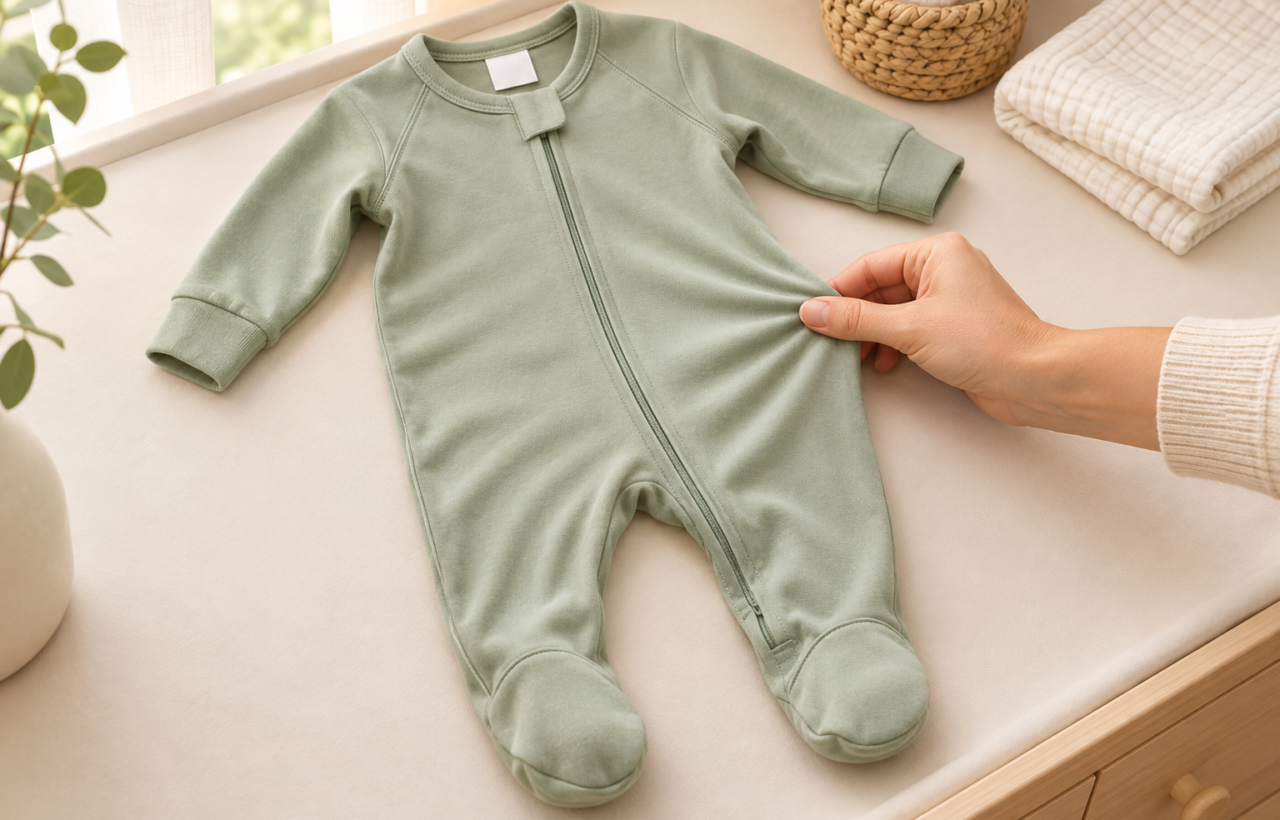
You are probably considering bamboo sleepwear for one of two reasons: the fabric feels unusually soft, or you have heard that a stretchy sleeper will last through more growth. Both can matter. Neither tells you whether a particular garment is the right bedtime choice for your baby.
The useful question is not whether bamboo is universally better than cotton. It is whether the exact sleeper has a clear fibre label, fits correctly now, stays functional after washing, simplifies overnight changes, and suits the way you actually do laundry. Here is how to make that decision without letting the fabric name do all the thinking.
Key takeaways
- Read the permanent fibre label. “Bamboo” on the front of a package does not tell you the complete fibre blend, construction, or care requirements.
- Choose for a safe, functional fit today. Stretch can extend a garment’s usable period, but it does not make an oversized sleeper appropriate.
- Treat fold-over cuffs, convertible feet, and closures as practical features. Check how they sit on your baby instead of assuming that more features mean better value.
- Buy one pair before stocking up. Wash, dry, dress, and inspect it using the same routine you will follow every week.
- Compare cost per realistic wear, not price alone. A sale is not a saving if the size, care routine, or design does not work for your family.
Start with the fibre label, not the word “bamboo”
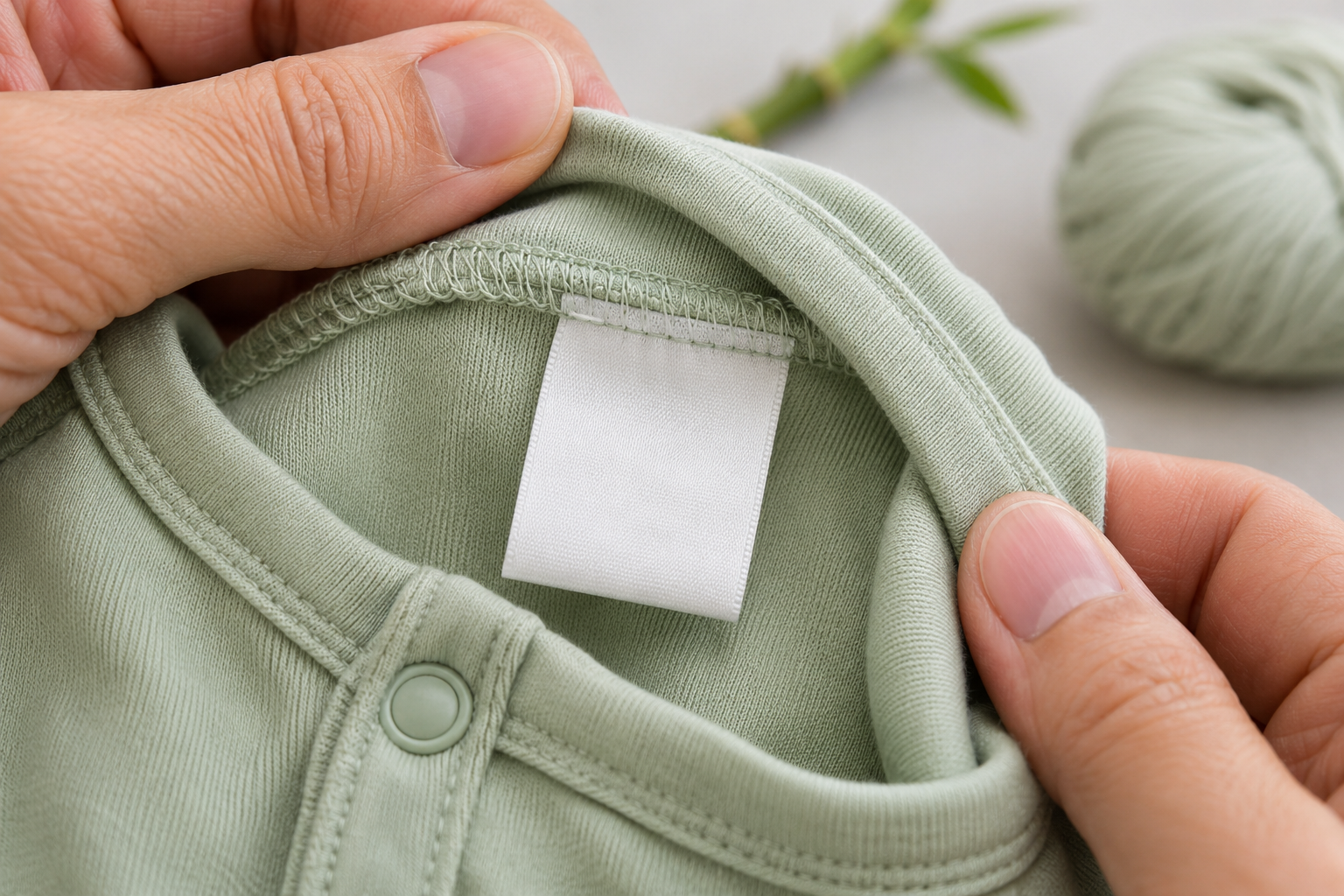
Baby clothing sold as bamboo is commonly made with viscose or rayon derived from bamboo. The plant material is processed into a regenerated fibre, so the finished fabric is not simply woven bamboo in its natural state. That distinction matters because the front-of-package word tells you where the cellulose began, while the permanent label tells you what the garment contains.
Look for the exact fibre names and percentages. A sleeper may be mostly bamboo-derived viscose with another fibre added for stretch. Its elasticity can also depend on the knit and garment construction. Do not assume that every item carrying the bamboo name will stretch, recover, feel, or wear in the same way.
- Fibre content: Check the full blend and percentages rather than relying on the product name.
- Care instructions: Confirm that the required wash and drying routine is realistic for you. A garment that needs special handling may spend more time waiting for laundry than being worn.
- Fit and use directions: Follow the permanent label and any warnings supplied with the garment. Those instructions apply to that specific product.
- Fabric weight: Compare the actual thickness and construction. The word “bamboo” alone does not tell you how warm the complete sleep outfit will feel.
Be equally careful with broad claims such as “hypoallergenic” or “temperature regulating.” The fibre name by itself does not prove either claim for a finished garment. Dye, seams, elastic, finishes, fabric weight, and the rest of your baby’s sleep clothing can all affect how a sleeper performs. If a particular benefit is important to you, look for evidence attached to that exact product rather than transferring the claim to all bamboo sleepwear.
Judge stretch by the current fit, not promised months of wear
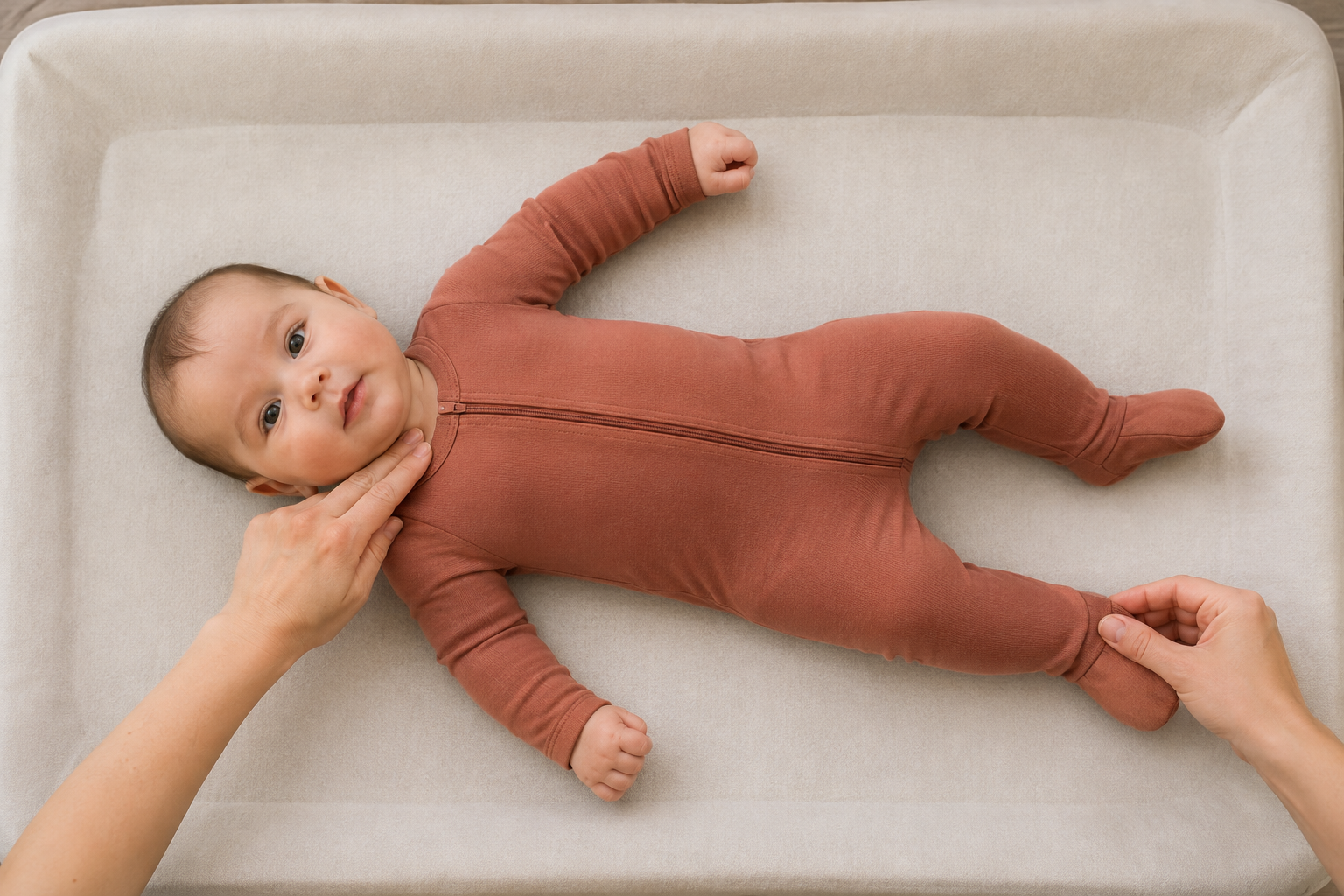
Stretch is one reason bamboo sleepers attract attention. Little Sleepies, for example, combines custom bamboo viscose, fold-over cuffs, and substantial elasticity, with a claim that its sleepers can remain wearable for as much as three times the fit window of traditional cotton sleepers. Treat that as a claim about a particular product design, not a rule for bamboo clothing generally and not a promise that every baby will get the same use from it.
A longer fit window is useful only while the sleeper continues to fit correctly. Babies grow in different proportions. One child may outgrow the torso first, another the feet, and another the neckline or cuffs. A highly elastic body cannot compensate for every dimension.
Check the dressed garment in several places:
- Neckline: It should sit flat rather than gaping, slipping, or riding upward.
- Shoulders and torso: The fabric should lie smoothly without long, loose folds, while still allowing normal movement.
- Crotch and inseam: The garment should not pull downward from the shoulders or strain around the diaper.
- Legs and feet: Toes should not be pressed against the end, and convertible foot sections should lie flat in whichever position you use.
- Wrists and ankles: Cuffs should stay in place without obvious pressure or restriction.
- Closure: The zipper or snaps should close easily. If you have to stretch or pull the garment into alignment, the advertised size range is no longer the important fact; the current fit is.
Do not size up simply to capture more months of wear. Growth room and loose fabric are not the same thing. Choose the size that fits your baby now, then retire the sleeper when any part becomes too tight, too short, damaged, or unable to stay in its intended position.
Make every convenience feature earn its place
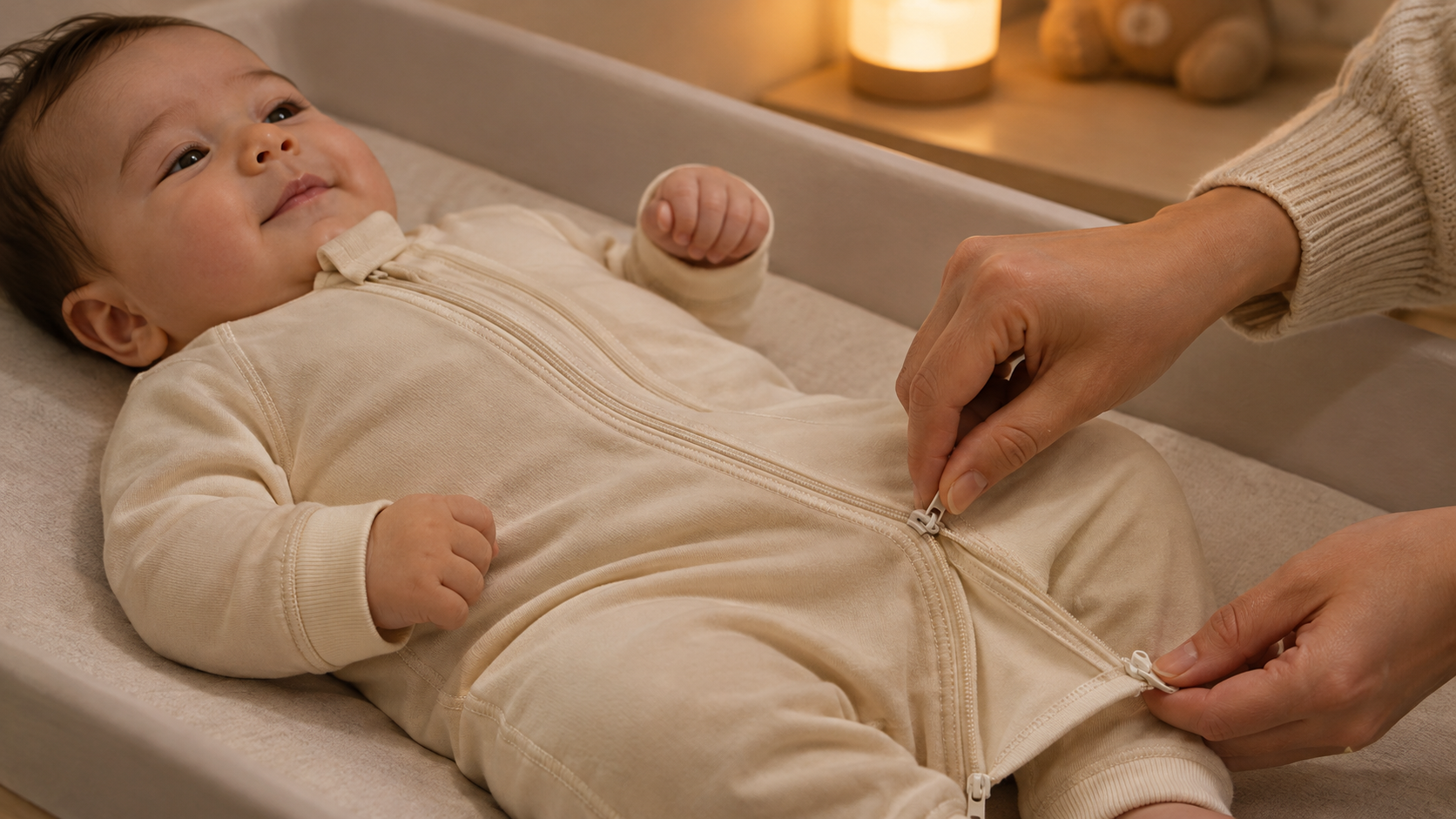
A feature list can make a sleeper look versatile while hiding the only question that matters: will you use those features at 2 a.m.? Before removing the tags, rehearse a diaper change and convert every cuff you expect to use.
- Fold-over hand cuffs: Open and close them, then check that the folded layers sit smoothly. If you plan to leave hands uncovered, make sure the unused cuff does not bunch around the wrist.
- Convertible feet: Test both configurations. The opening should not twist, and the folded fabric should not create a bulky ridge under the foot.
- Zippers: Close the sleeper fully and inspect the top and inner backing. The zipper head and surrounding fabric should remain away from the skin rather than rubbing or buckling.
- Snaps: Fasten every snap once. Misaligned or stiff snaps become more frustrating during a dark-room change, especially when a baby is moving.
- Seams and labels: Run your fingers along the inside. Thick joins, rough edges, or a prominent label may be more important to comfort than the softness of the main fabric.
Also consider the whole sleep outfit. A soft fibre name does not determine the warmth of multiple layers. Look at fabric weight, room conditions, and everything your baby is wearing together. If the garment comes with layering or use instructions, follow those product-specific directions.
Run a one-pair test before filling the drawer
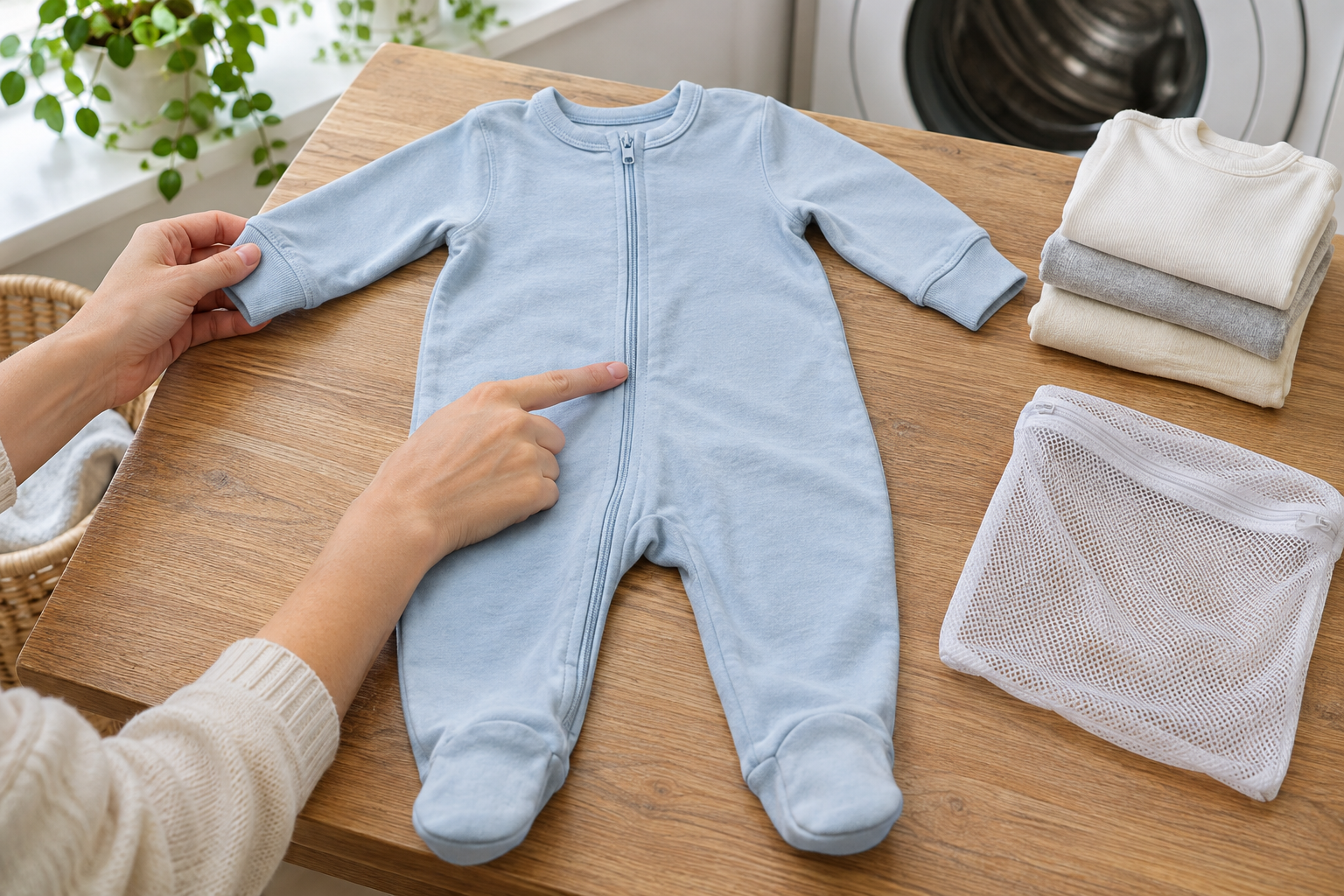
The fabric you touch in a shop or fresh from a delivery bag is not yet the garment you will live with. Washing can reveal whether the shape, closure, cuffs, and care burden work for your household. One test pair gives you more useful information than a stack of unworn sizes.
- Photograph or note the original fit. Pay attention to the neckline, torso length, cuffs, and feet.
- Wash and dry it exactly as directed. Do not use a special routine unless you are willing to repeat it for the life of the garment.
- Inspect it before reuse. Look for twisting, stretched openings, puckering around the zipper, damaged seams, or a closure that no longer lies flat.
- Dress your baby again. Repeat the fit check rather than assuming that a soft, stretchy garment is unchanged.
- Review it after actual use. Check whether cuffs stayed where intended, whether the closure made diaper changes easier, and whether you can get the pair washed and ready again when needed.
Stop using the sleeper if it develops damage, no longer fits correctly, or appears to irritate your baby’s skin. Persistent or worsening skin irritation is a reason to speak with your child’s health-care professional rather than trying to solve the problem by switching fabric labels alone.
Only after this test should you consider additional colours or future sizes. Buying ahead creates a sizing gamble: your baby may reach the expected age range with different torso, foot, or cuff needs than you anticipated.
Sales deserve the same discipline. Little Sleepies is known for offering few steep sitewide discounts outside its Black Friday promotion, but a lower price does not correct the wrong size or an impractical care routine. If you wait, wait for a garment you have already tested rather than using a rare discount to justify an unfamiliar multi-size order.
Your next move can be small: choose one current-size pair, read every line of its label, and put it through your normal wash-and-bedtime routine. If the fit remains sound and the features genuinely help, you have a reason to buy another. If not, you have learned that before filling the drawer.
References



