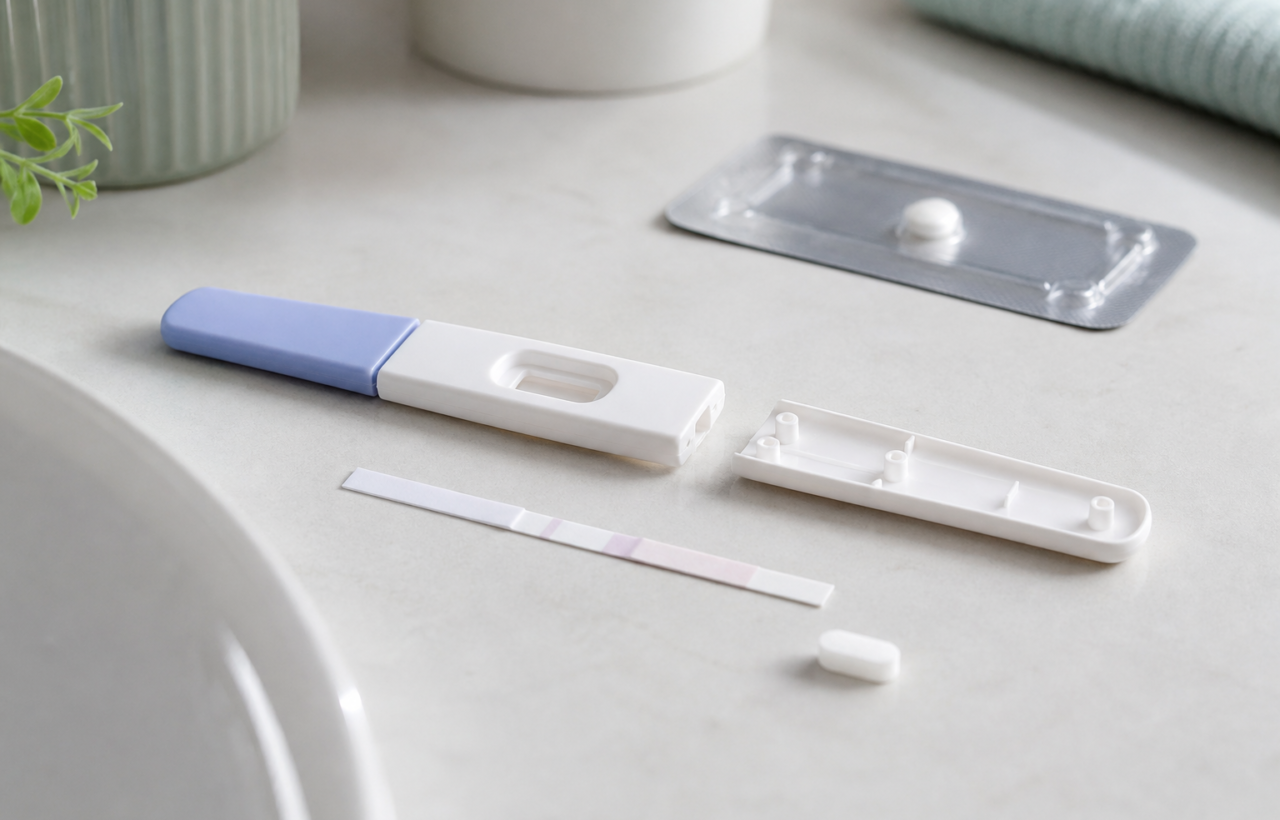
A viral misunderstanding can turn an ordinary home pregnancy test into a source of real anxiety: the small pill-like piece sometimes seen inside the plastic casing is not Plan B. Parents identifies the confusion in its article title and URL, but the available source text does not provide further details about the specific test brand, video, or incident behind the warning.
That limitation matters. The useful takeaway is still clear: a pregnancy test should be treated as a single-use medical-style product, not as a container for medication. If something inside the device looks like a tablet, it should not be swallowed, saved, or treated as emergency contraception.
What Parents Reported
According to the Parents source information provided for this article, the piece focuses on a public service warning that the apparent “pill” inside a pregnancy test is not what some people may assume. The source URL specifically frames the point as: that is not a Plan B pill inside the pregnancy test.
Because the full article text was not available in the feed material, this article cannot responsibly add brand names, safety claims, quotes, dates, or social media details. The safer editorial approach is to explain the practical distinction and avoid inventing facts around a thin source.
Why the Confusion Matters
Pregnancy tests are designed to detect pregnancy-related hormones in urine and show a result through the test window. They are not designed to dispense medication, and they should not be opened as part of normal use.
Plan B is commonly understood as emergency contraception, but a pregnancy test and emergency contraception serve completely different purposes. One is used to check whether pregnancy may already be present; the other is medication taken after unprotected sex or contraceptive failure to reduce the chance of pregnancy. A home test cannot replace a pharmacy product, clinician guidance, or the instructions on an actual medication package.
Key Takeaways
- Parents flagged that the pill-like item inside a pregnancy test is not Plan B.
- The available source material does not include enough detail to identify a specific product, brand, or case.
- A pregnancy test should be used only according to its package directions.
- Anything found inside a test should not be treated as medication.
- Anyone unsure about contraception, pregnancy testing, or accidental ingestion should seek qualified medical or pharmacy advice.
What to Do Instead of Opening the Test
If someone is taking a pregnancy test, the most reliable next step is usually to follow the directions that came with that specific product. Timing, sample collection, waiting period, and result-reading windows can vary by test, so the package instructions matter more than assumptions based on another product.
If the concern is emergency contraception rather than pregnancy confirmation, a pregnancy test is not the right tool for that decision. A pharmacist, doctor, clinic, or other qualified health professional can explain options and timing in a way that fits the individual situation.
The Larger Lesson for Parents and Teens
This story is also a reminder that health misinformation often spreads through objects that seem familiar. A small piece of material inside a consumer health product can look meaningful, especially to a young person or someone already stressed about a possible pregnancy.
For families, the practical response is not panic. It is clearer conversation: tests test, medications medicate, and anything involving pregnancy prevention, possible pregnancy, or accidental exposure deserves instructions from the product label or a qualified professional. The less guesswork involved, the better.
Inspired by this post on Parents.