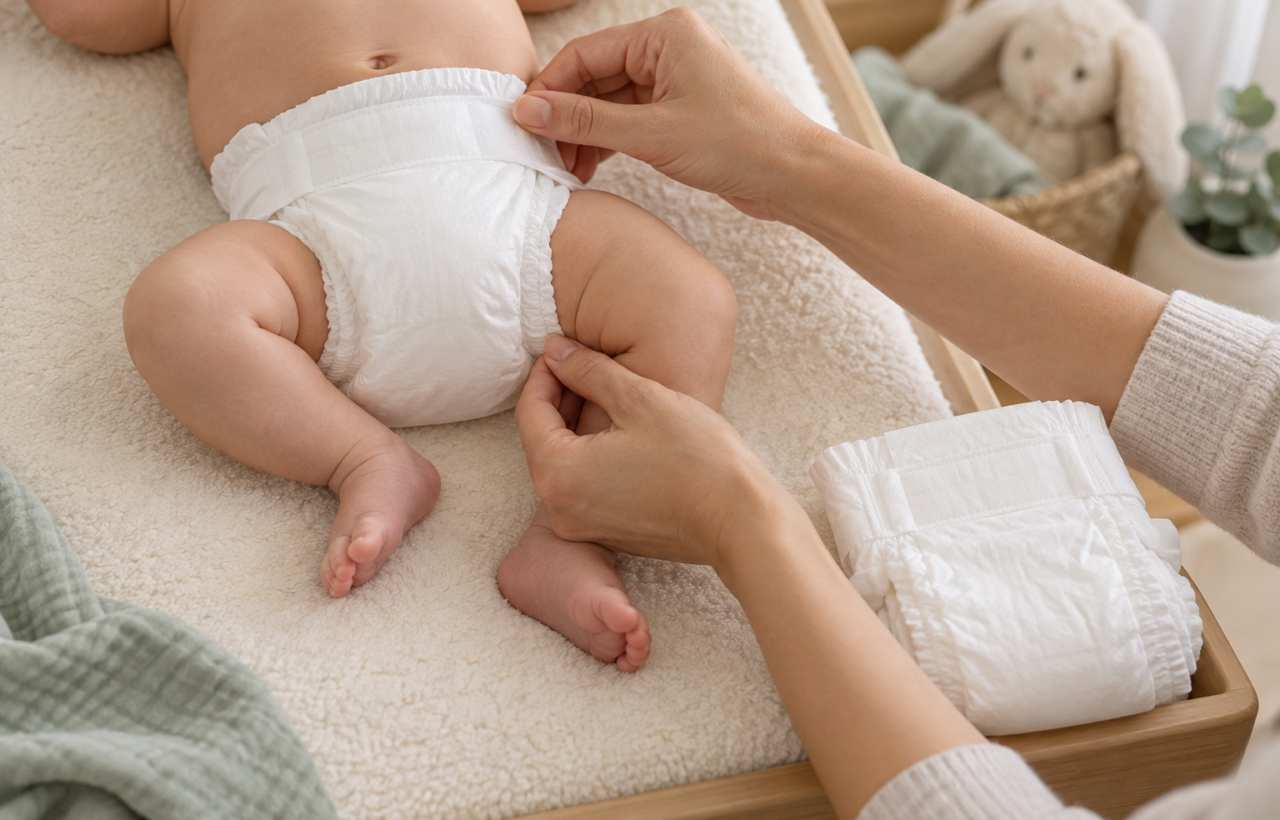
Two diaper packs can both include your baby’s weight on the label and still fit very differently. That is why choosing between newborn and Size 1 is less about finding the “correct” printed number and more about checking the waist, thighs, back, and umbilical area.
You do not need to predict every diaper your baby will use before birth. Start with a small, practical supply, learn what a secure fit looks like, and let that first week guide your next purchase.
Use the weight range as a starting point, not the final answer
Newborn diapers commonly fit babies weighing up to 10 pounds, while Size 1 often begins around 8 pounds. Because those ranges overlap, a 9-pound baby may fit either size. The exact limits also vary from one brand to another.
That overlap is useful. It gives you room to choose the shape that fits your baby rather than forcing a decision based on one number. A newborn diaper is generally shorter and narrower around the leg cuffs. Size 1 may work better for a baby with a longer torso, a fuller waist, or larger thighs, even when newborn size remains technically within the weight range.
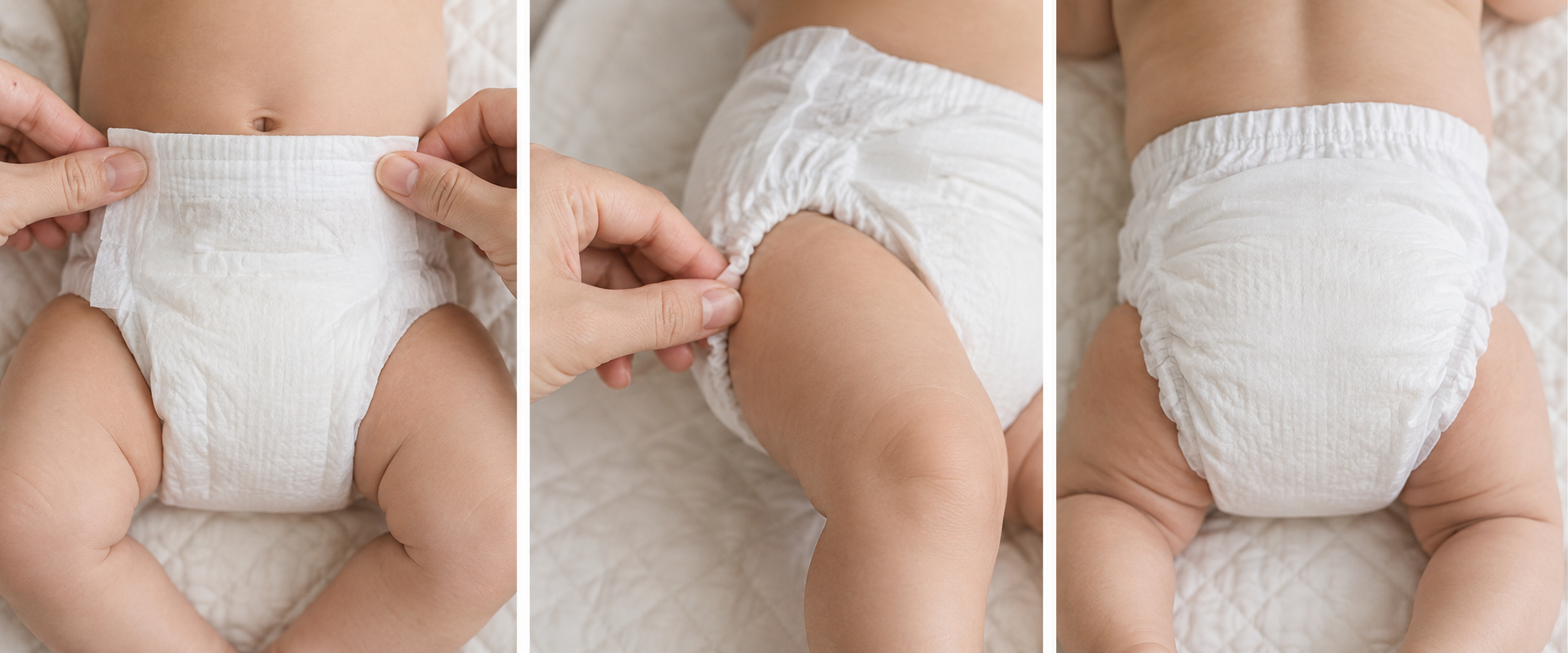
Check the fit at each of these points after fastening the diaper:
- Waist: The waistband should sit evenly without digging into the skin. Red marks around the waist are a practical sign that the diaper is becoming too tight.
- Thighs: The leg cuffs should meet the thighs without obvious open spaces. Gaps or repeated leaks around the legs mean that the diaper is not sealing against your baby’s shape.
- Back: The back should sit high and flat rather than folding inward. If stool repeatedly escapes up the back, recheck the position and fit before assuming that you simply need a more absorbent diaper.
- Umbilical area: Until the stump falls away, the front should remain below it rather than rubbing or covering it.
Red marks at the waist or thighs are a clear reason to try the next size. Leg gaps require a little more diagnosis: check that the tabs are even and the cuffs are positioned correctly, then try another size or a differently shaped brand if the opening still does not seal. Do not keep tightening a poorly shaped diaper until it leaves marks.
A bigger newborn needing Size 1 has not “skipped” a stage, and a smaller baby staying in newborn size is not behind. Diaper sizes are inventory labels, not developmental milestones.
Keep the diaper below the healing umbilical stump
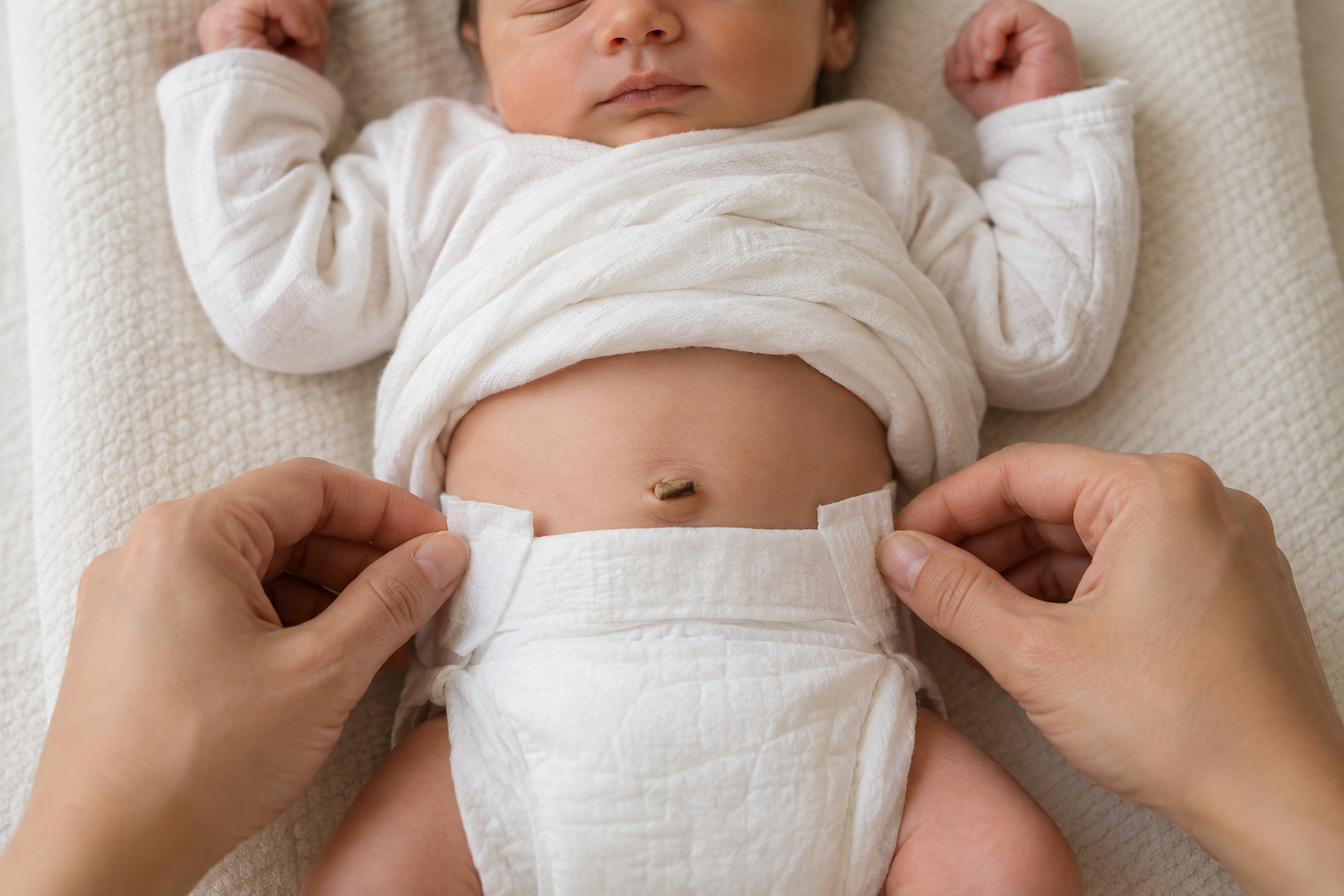
The umbilical stump typically falls away within 7 to 21 days, the timeframe noted by the AAP. During that period, the diaper’s job is to stay out of the way. A contoured notch can make that easier, but it does not replace basic dry cord care.
- Fasten the diaper with its front edge below the stump. If the waistband is straight, fold the front down so it cannot rub the area.
- Leave the stump exposed to air rather than covering it with the diaper.
- If stool or another fluid gets around the stump, clean the area with a wet cotton swab and pat it dry.
- Do not apply rubbing alcohol unless your pediatrician has specifically told you to use it.
The cord area deserves medical attention when something changes in a concerning direction. Call your pediatrician if bleeding gets worse, thick fluid oozes from the stump, the surrounding area becomes red or tender, there is a foul smell, or your baby has a fever. If your baby was born prematurely, follow the cord-care instructions from the NICU team.
Choose features for the problem you actually need to solve
A long feature list cannot compensate for a poor fit. First find a size and cut that seal at the legs and sit correctly at the waist. Then use the details below to narrow your choice.
For repeated leaks or back blowouts
Look at the construction around the back waist as well as the absorbent core. Pampers Swaddlers, for example, includes a rear blowout barrier as part of its All-Around LeakGuard design. The same diaper also has a wetness strip that changes from yellow to blue. Those features make it a reasonable small-pack trial when back leaks or an easy visual wetness check are priorities, but they are not a guarantee against leaks from an incorrect size.
For a larger newborn or fuller thighs
Check the individual brand’s weight range instead of jumping directly from “newborn” to any package marked Size 1. Rascals Premium lists Size 1 for 10 to 14 pounds and Size 2 for 12 to 18 pounds. Its stretchy side tabs, adjustable waist, and stretchy back are intended to accommodate larger newborns. Size 2 does not include a cord-stump cutout, so its waistband needs to be folded below the stump when the cord is still attached.
For ingredient preferences
Read the exact package rather than relying on a brand’s general reputation. As of its June 2026 reformulation, Pampers describes Swaddlers in every size as fragrance-free, hypoallergenic, elemental chlorine-free, paraben-free, and free from natural rubber latex. Hello Bello describes its diapers as free from chlorine, synthetic fragrances or odour inhibitors, parabens, and soy products. Coterie markets fragrance-free, hypoallergenic diapers with a premium cloth-like feel.
These are manufacturer descriptions, not proof that one diaper will suit every baby’s skin. Treat them as filters for a trial pack. Also recheck the current package when an ingredient exclusion matters to you, since formulations can change.
For a lower cost per change
Compare package price divided by the number of diapers, not package price alone. Store brands such as Rascals Premium typically cost less per diaper than major name brands, while larger boxes generally reduce the unit cost. The catch is that a cheap diaper your baby has already outgrown is not a saving. Confirm the fit with a small pack before buying a bulk count.
Stock for a trial period, not the entire newborn stage
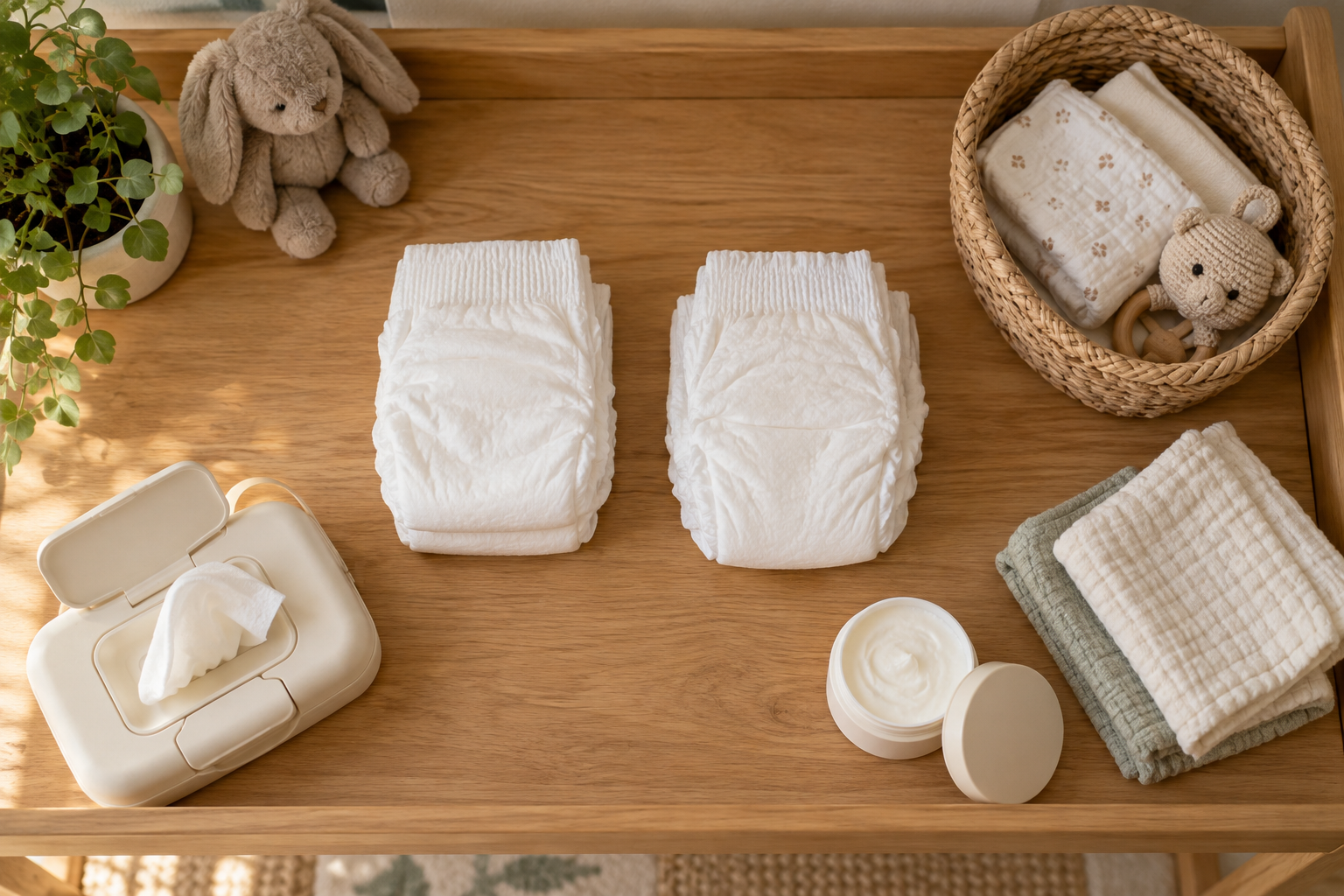
The AAP recommends 8 to 12 diaper changes per day in the early weeks. That produces a substantial first-month total, but it does not mean every one of those diapers should be newborn size.
| Period | Expected changes in the early weeks |
|---|---|
| One day | 8 to 12 diapers |
| One week | 56 to 84 diapers |
| About one month | 240 to 360 diapers |
Many babies outgrow newborn diapers within the first two to four weeks. Before birth, one small box of newborn diapers plus an accessible pack of Size 1 gives you enough flexibility to respond to the fit you see. Keep additional packs unopened until you know which size and cut work.
Once the fit is proven, calculate the cost per change and decide whether a bulk box makes sense. Check current retail prices when you are ready to reorder; diaper prices change too often for an old unit-price comparison to settle the decision.
Newborn diaper FAQ
What sizing is available for a premature baby?
Huggies Little Snugglers is available in Nano Preemie for babies up to 2 pounds, Micro Preemie for babies up to 4 pounds, and Preemie for babies up to 6 pounds. These versions are shaped for smaller legs and include a cord-stump cutout. Use the size and changing routine recommended by your baby’s NICU care team rather than changing sizes based only on a retail chart.
Is a wetness indicator necessary?
No. It is a convenience feature, not a fit or safety requirement. A colour-changing line can make a quick check easier, particularly during overnight changes, but the waist and leg seal still determine whether the diaper fits properly.
Should you start a diaper subscription before the baby arrives?
A subscription is most useful after you know which diaper fits. Hello Bello lets customers schedule diaper-and-wipe bundles and adjust the order as a baby changes sizes. If you want that convenience, begin with a trial quantity or make sure the first delivery can be changed; otherwise, you may build up a recurring supply in a size or cut that does not work for your baby.
For your first setup, place one newborn pack and one Size 1 pack beside the changing area. At the first few changes, inspect the waist, both thighs, the back, and the cord. Those four checks will tell you more about the right next order than the word printed on the front of the box.
References