A good senior-friendly joke does not need to be complicated, edgy, or ageist to land. The collection published by Scary Mom is built around the kind of light wordplay, gentle self-awareness, and familiar family humor that can be shared at a kitchen table, in a group chat, or during a visit with an older relative.
Instead of simply treating the list as a batch of punchlines, it helps to look at what makes these jokes easy to share: they are brief, mostly clean, and designed for a broad audience. That matters when humor is being used to connect generations rather than put anyone on the spot.
Why Simple Jokes Often Work Best
Many of the jokes Scary Mom gathered rely on puns, classic setup-and-punchline timing, or everyday situations. That is part of their usefulness. A quick joke about bagels, lawyers, golf, or getting older does not require everyone in the room to know the same show, meme, celebrity feud, or internet reference.
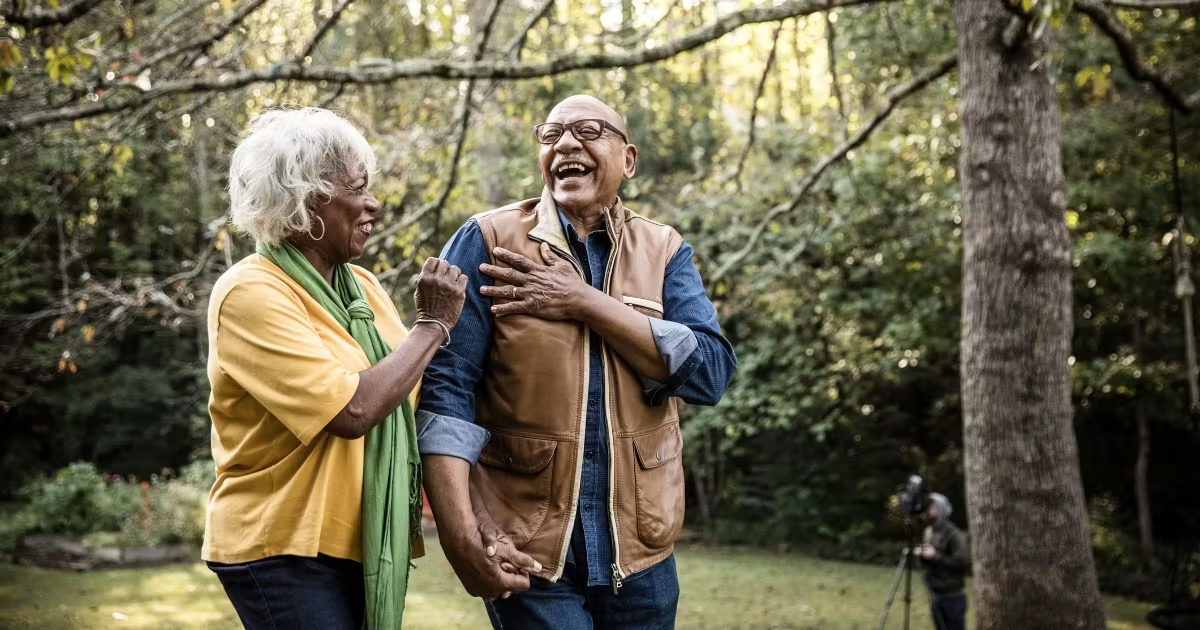
For families, that simplicity can be an advantage. A grandparent can tell the joke to a child, a parent can drop one into a birthday card, and a caregiver can use one as an easy conversation starter. The humor is not about proving who is cleverest; it is about giving people a shared moment.
The Difference Between Aging Humor and Mean Humor
The source article makes a clear point that jokes should not be funny at someone else’s expense. That distinction is especially important with jokes about aging. A good joke can acknowledge stiff joints, changing memory, retirement, hearing mix-ups, or the strange math of time passing without turning older adults into the punchline.
There is a practical test: if the joke invites the older person to laugh with everyone else, it is probably on safer ground. If it depends on embarrassment, helplessness, or humiliation, it is better skipped. Humor about aging works best when it feels affectionate, not corrective.
Key Takeaways
- According to Scary Mom, senior jokes can be a low-pressure way to spark connection and brighten a moment.
- The most shareable options are short, clean, and easy to understand across generations.
- Wordplay and gentle everyday humor are less risky than jokes that mock age, health, or ability.
- A joke that works in one family may not work in another, so the listener’s comfort matters more than the punchline.
How to Choose the Right Joke for the Moment
Scary Mom’s list includes many joke types: puns, doctor-office setups, retirement humor, family exchanges, and classic bar or restaurant scenes. Choosing among them depends less on the joke itself and more on the setting. A quick pun may be perfect for a text message. A longer story joke may work better when everyone is already relaxed and listening.
For children sharing jokes with grandparents, shorter is usually better. Lines built around obvious wordplay are easy to remember and repeat. For adults visiting an older parent or relative, gentle observational humor can work well because it leaves room for the person to respond with their own story.
Health-related jokes need more care. The source includes jokes about physical therapy, hearing aids, arthritis, and memory, but those topics can feel very different depending on a person’s lived experience. If someone is dealing with a fresh diagnosis, recent loss, or a painful limitation, a lighter category may be kinder.
Using Jokes as a Family Connection Tool
For parents, senior-friendly jokes can be a small bridge between children and older relatives. Kids often like jokes because they are structured and repeatable: setup, pause, punchline. Older adults may enjoy the same thing for a different reason: a joke gives the conversation an easy starting point without requiring anyone to perform a long update about school, health, work, or family logistics.
That does not mean every visit needs to become a comedy routine. A single joke tucked into a card, a phone call, or a family dinner can be enough. The point is not to fill silence at all costs; it is to make room for warmth, especially when a relationship has fallen into repetitive check-ins.
What to Avoid When Sharing Senior Jokes
Even clean jokes can miss if the timing is wrong. Avoid making age-related humor when someone has just expressed frustration, grief, pain, or fear about getting older. A joke can lighten a room, but it should not be used to shut down a serious feeling.
It is also worth avoiding jokes that depend on stereotypes about older people being out of touch, incapable, or burdensome. The stronger choices are the ones that give everyone a reason to laugh without asking one person to absorb the sting.
The best senior jokes are not really about age. They are about recognition: the odd little truths of family life, bodies, memory, habits, and time. Shared carefully, they can make a regular conversation feel a little more human.
Inspired by this post on Scary Mom.