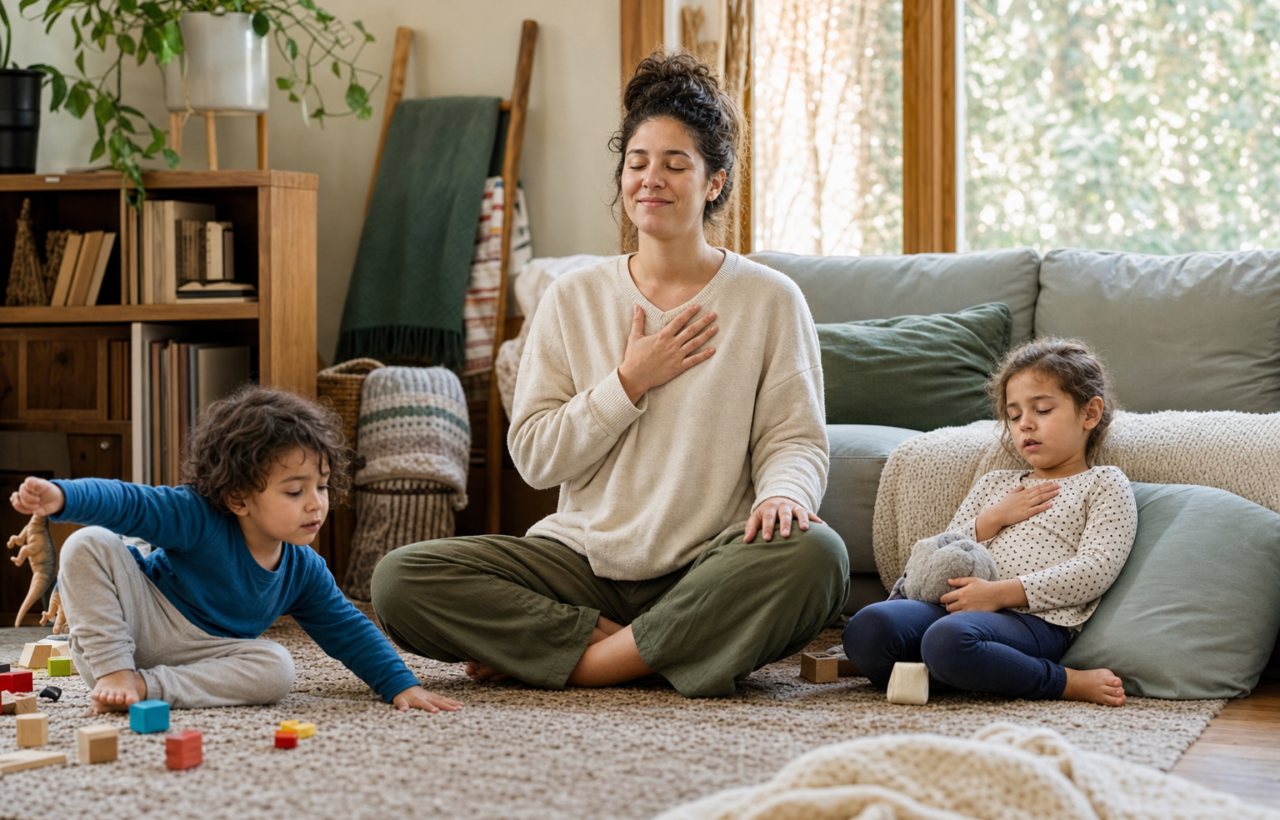
When a home feels loud, rushed, and emotionally overloaded, meditation can sound either helpful or completely unrealistic. The source article from Parents frames the question around kids who would rather move than sit still, and notes that some overwhelmed families use meditation as a way for both children and parents to feel calmer.
Because the provided source material is brief, the most useful takeaway is not a detailed list of therapist instructions. It is a practical way to think about family meditation without turning it into another battle over behavior.
Restless Kids Do Not Make Meditation Impossible
The headline of the Parents piece points to a common parenting tension: adults may picture meditation as quiet, seated, and still, while children may experience their bodies as ready to wiggle, talk, climb, or interrupt. That mismatch can make the idea feel doomed before it starts.
A more realistic frame is that meditation is not only a posture. In general terms, it can also mean practicing attention, noticing breath, pausing before reacting, or taking a calm moment together. For young children especially, a short and flexible approach is often more workable than expecting long silence.
Why Parents May Be Drawn To It
According to Parents, some families who feel similarly swamped use meditation to help both kids and adults feel more calm. That matters because stress in a household is rarely isolated to one person. A child having a hard moment can affect a parent, and a tense parent can affect the emotional tone of the room.
The appeal is not that meditation magically removes family chaos. The more grounded promise is smaller: it may give everyone a shared pause, a repeatable calming cue, or a way to shift out of escalation. That can be useful even if the practice lasts only a few minutes.
Key Takeaways
- Parents reports that some overwhelmed families use meditation as a tool for calm.
- The source frames the challenge around kids who prefer movement over sitting still.
- A family meditation practice does not have to look formal to be useful.
- Parents should avoid treating calm as a performance children must achieve on command.
How To Keep The Idea From Becoming Pressure
The risk with any calming strategy is that it becomes another demand: sit down, be quiet, relax now. For a restless child, that can create resistance rather than calm. A gentler approach is to make the practice low-stakes and brief, especially at first.
Parents can also separate the goal from perfect stillness. A child who fidgets while listening, takes one slow breath, or stays nearby for a short pause may still be participating in a developmentally reasonable way. The point is to create a calmer rhythm, not to grade the child on adult standards of meditation.
Where This Fits In Family Life
The source material does not provide specific therapist quotes, study findings, ages, or step-by-step instructions, so those details should not be assumed. What it does support is a broader idea: families dealing with everyday chaos may look to meditation as one calming option among many.
That option may fit best when it is treated as a small family ritual rather than a cure-all. It can sit alongside sleep routines, outdoor time, conversations about feelings, and other supports that help a household regulate. For kids who would rather wiggle, the first success may simply be learning that calm can be practiced in tiny, repeatable moments.
Inspired by this post on Parents.