
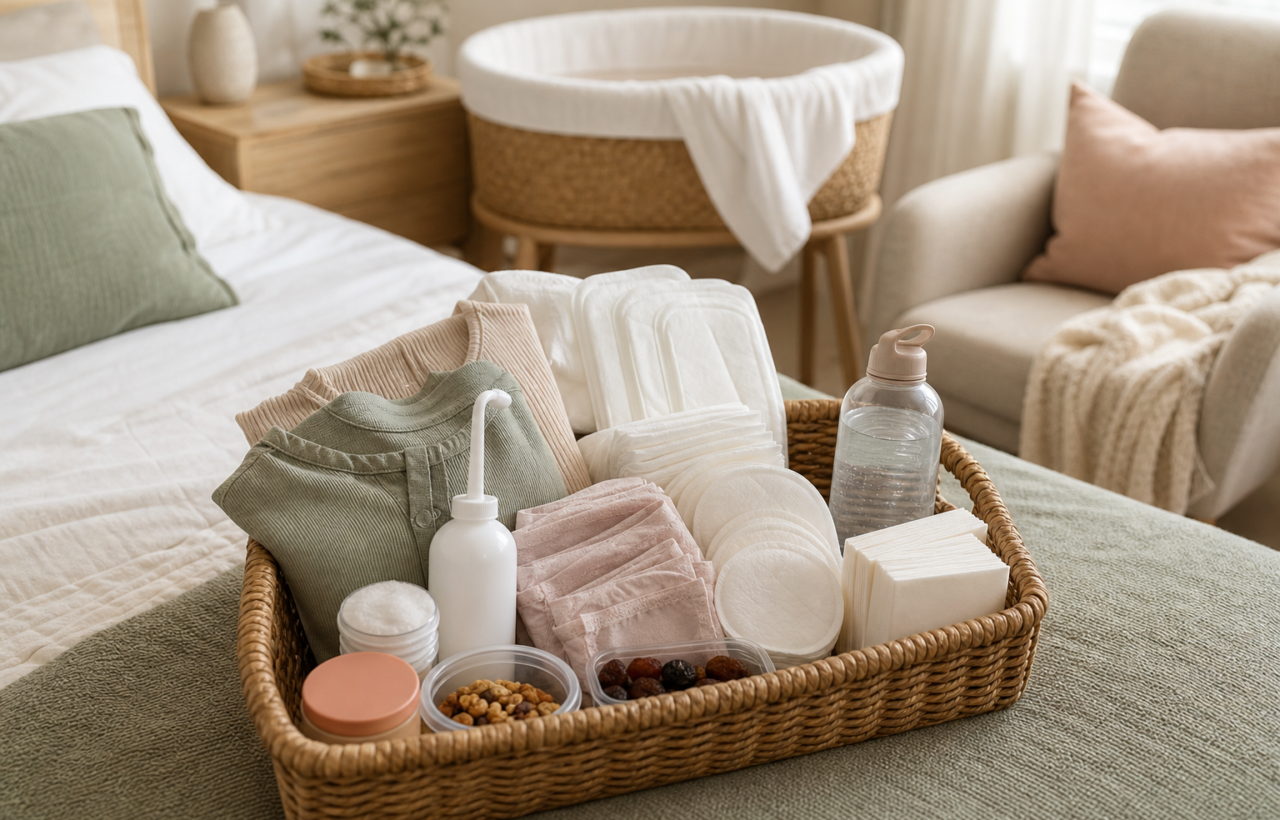
Postpartum shopping can turn into a long, confusing list very quickly. The useful question is not how many products a parent can buy before birth, but which supplies reduce friction during recovery, feeding, hydration and the first weeks at home.
Using hibobbie Blog as the source, this guide reorganizes the recommendations into a more practical checklist: what to have ready, what may depend on the type of birth, and which extras are really about support rather than recovery gear.
Key takeaways
- According to hibobbie Blog, the most useful postpartum products tend to fall into recovery, feeding, hydration, nutrition and everyday support.
- Core supplies include postpartum underwear or disposable underwear, large pads, a water bottle, nipple cream or butter, easy snacks and comfortable clothing.
- Vaginal recovery items may include a peri bottle, witch hazel pads, cooling pads or ice packs, and postpartum pads.
- Hospitals commonly provide some basics, but the source notes that supplies vary and parents may need items at home after discharge.
Start with the products used most often
The strongest through-line in the source is restraint. Hibobbie Blog argues that most new parents do not need every trending postpartum item; they need practical basics that make repeated daily tasks easier.
That means starting with items that are likely to be used every day: postpartum underwear or disposable underwear, extra large pads, a large water bottle, nipple cream or nipple butter, snacks that are easy to grab, and soft clothing that does not add discomfort. These are not glamorous purchases, but they match the realities of bleeding, feeding, thirst, soreness and interrupted routines.
A helpful way to sort the list is by location. Bedside or couch-side supplies should include water, snacks, feeding items and comfort basics. Bathroom supplies should focus on cleaning, pads and recovery care. This keeps the list practical instead of turning preparation into a scavenger hunt.
Match recovery supplies to the type of healing
Postpartum recovery is not the same for every parent, and the source separates vaginal recovery supplies from broader body comfort. For vaginal birth, hibobbie Blog lists a peri bottle for gentle cleaning, witch hazel pads for perineal discomfort, cooling pads or ice packs for temporary relief, and postpartum pads or disposable underwear for bleeding.
The source also mentions perineal spray as an item some mothers may like during early healing. As with any recovery product, comfort is personal, so this type of item fits better in the optional column unless a clinician or hospital specifically recommends it.
For C-section recovery and general body recovery, the emphasis shifts. High-waisted postpartum underwear, a comfortable nursing bra, loose clothing and a heated neck wrap are the kinds of products the source frames as useful for reducing pressure, tension and general discomfort while the body adjusts.
Feeding gear should reduce stress, not add pressure
Feeding takes up a large share of the newborn stage, so the source includes products for breastfeeding, pumping, bottle feeding and combination feeding. Its suggested feeding supports include a breast pump or silicone pump, nursing pads or absorbent breast pads, nipple cream for sore nipples and a nursing pillow.
Hibobbie Blog also points readers to Bottle Service, described in the source as an educational guidebook with research-based education and practical tips for bottle feeding. The broader point is useful even without buying a specific book: feeding preparation should account for the method a family expects to use and the possibility that plans may change after the baby arrives.
For families considering formula or combo feeding, the source frames having options ready as a way to reduce stress. That is an important distinction. The goal is not to build a perfect system before birth; it is to make feeding feel less fragile when everyone is tired.
Food, water and help are postpartum supplies too
Some of the most useful postpartum preparation is not medical-looking at all. According to hibobbie Blog, hydration and nutrition basics include a large water bottle, one-handed snacks, nutrient-dense snack pouches such as Mamala Organics Support Snacks, and quick protein-rich foods such as nuts.
The practical standard is simple: if nourishment is hard to reach, it may not happen consistently. Stocking a recovery station with snacks and water can make self-care less dependent on having a free hand or a quiet moment.
The source also treats services as part of postpartum support. It names delivery memberships such as Instacart or DoorDash, meal delivery, extra childcare, expert-led support groups and the Good Inside Baby membership as examples of support that can reduce the mental load. These are optional, budget-dependent choices, but they belong in the same planning conversation as pads and nursing supplies because they address the daily strain around recovery.
What to expect from the hospital
Hibobbie Blog reports that hospitals commonly provide mesh underwear, maxi pads, peri bottles and basic postpartum recovery supplies, while noting that what is included can vary. That makes the hospital a helpful starting point, not a complete home plan.
Parents can use that expectation to avoid overbuying before delivery. It may be enough to prepare a small home supply of the items most likely to be needed beyond the hospital stay, then adjust once recovery needs are clearer.
A focused postpartum setup is less about owning every possible product and more about removing small points of friction. The most useful checklist is the one that keeps healing supplies, feeding support, water, food and practical help close enough to use when the newborn stage is at its most demanding.
Inspired by this post on hibobbie Blog.