
You can cut the cost of a Boston weekend without turning the trip into an endurance test. The planning mistake that usually gets expensive is treating the room, local travel, meals and activities as separate purchases. With a baby or toddler, each choice changes the cost and difficulty of the others.
Build the weekend around your child’s reliable rhythms, your carrying capacity and the few experiences you care about most. You will have fewer bookings to manage, fewer moments when convenience spending feels unavoidable and a budget that can survive a missed nap or slow morning.
Key takeaways for a cheaper Boston family weekend
- Set one maximum cost for the entire trip before comparing rooms or transportation.
- Judge lodging by its final price plus the local travel, food and effort the location creates.
- Give each full day one anchor activity. Keep the rest nearby, flexible and easy to abandon.
- Choose your arrival meal and first breakfast before you leave home so hunger does not make the decision for you.
- When using the subway with a stroller, bags or a solo parent, favor a simple route over a clever route with several transfers.
- Keep part of the budget uncommitted. A plan that spends every dollar before arrival has no room for ordinary family disruptions.
Decide what the weekend must do before shopping for deals
A low advertised price is useful only if the trip built around it still works. A cheaper arrival that lands near bedtime, for example, may lead to a more expensive ride, an unplanned meal and a difficult first night. A room farther from everything may save money at checkout but return the cost through repeated local travel.
Start with a short trip brief. Keep it visible while you compare options:
- Who is travelling, who can carry what and whether one adult will be managing the child alone.
- Your total spending ceiling, including transportation to Boston.
- Your child’s usual sleep, feeding and changing pattern.
- The mobility setup you expect to use: stroller, carrier or both.
- One experience that would make the trip worthwhile for the adults.
- The parts you are willing to change: dates, number of nights, room type, location or paid activities.
If you are the only adult, the margin matters even more: there is no second person to watch the luggage, occupy a restless toddler or work out the subway while you handle the other jobs. Spending slightly more on the option with fewer handoffs can therefore be the genuinely cheaper decision. It lowers the chance that you will need a last-minute ride, replacement item or convenience meal simply because your hands are full.
Plan the day in phases rather than filling an hourly calendar. Give yourself an arrival phase, one useful family window and a retreat phase. That structure still tells you what happens next, but it does not depend on a baby waking, eating or settling at an exact time.
It also helps to name the first point of failure. If your toddler refuses the stroller, can you still reach the day’s main activity? If the room is not ready, can you feed and change the baby without opening every bag? If the morning starts late, which booking becomes stressful? Change the plan while those answers are still free.
Price the whole weekend, not the attractive first number

Open a note or spreadsheet and use the same six budget lines for every version of the trip. Enter the final amount for your actual dates, not a starting price or nightly rate.
- Getting to Boston: fares, baggage, parking, fuel and the trip between the terminal or station and your lodging.
- Sleeping: the full room total, taxes, mandatory charges and any equipment you would otherwise need to bring.
- Moving locally: subway trips, other transportation and any likely late-night or bad-weather alternative.
- Eating: travel-day meals, breakfasts, snacks, groceries and the restaurant meals you intentionally want.
- Doing: admission, reservations and any paid child or adult activity.
- Recovering from disruption: money kept available for a missed connection, forgotten essential, changed meal plan or unexpected ride.
The calculation is simple: subtract all committed and planned spending from your total ceiling. What remains is your uncommitted reserve. Do not quietly count that amount as extra activity money once the major bookings are complete. Its job is to stop an ordinary problem from becoming a financial problem.
If the budget works only when every connection is made, every meal is the cheapest possible choice and no plan changes, it does not yet work. Change one large variable instead of shaving small amounts from every part of the day. One fewer night, a different travel time, a more practical location or one less paid activity will usually create more breathing room than asking the family to make dozens of tiny compromises.
Check the cancellation and change conditions before paying. A nonrefundable option is not automatically a bargain when a young child’s illness or disrupted routine could cancel the trip. Compare the exact savings with the amount you would lose, then decide whether that risk belongs in your budget. Save the confirmation and policy that applied when you booked.
If you will pay in a different currency, budget in the currency that ultimately leaves your account. Include the exchange rate your payment method applies and any foreign transaction charge shown in its terms. Otherwise, a plan that looked safely below your ceiling can cross it without any change to the itinerary.
Let your Boston lodging remove work from the day
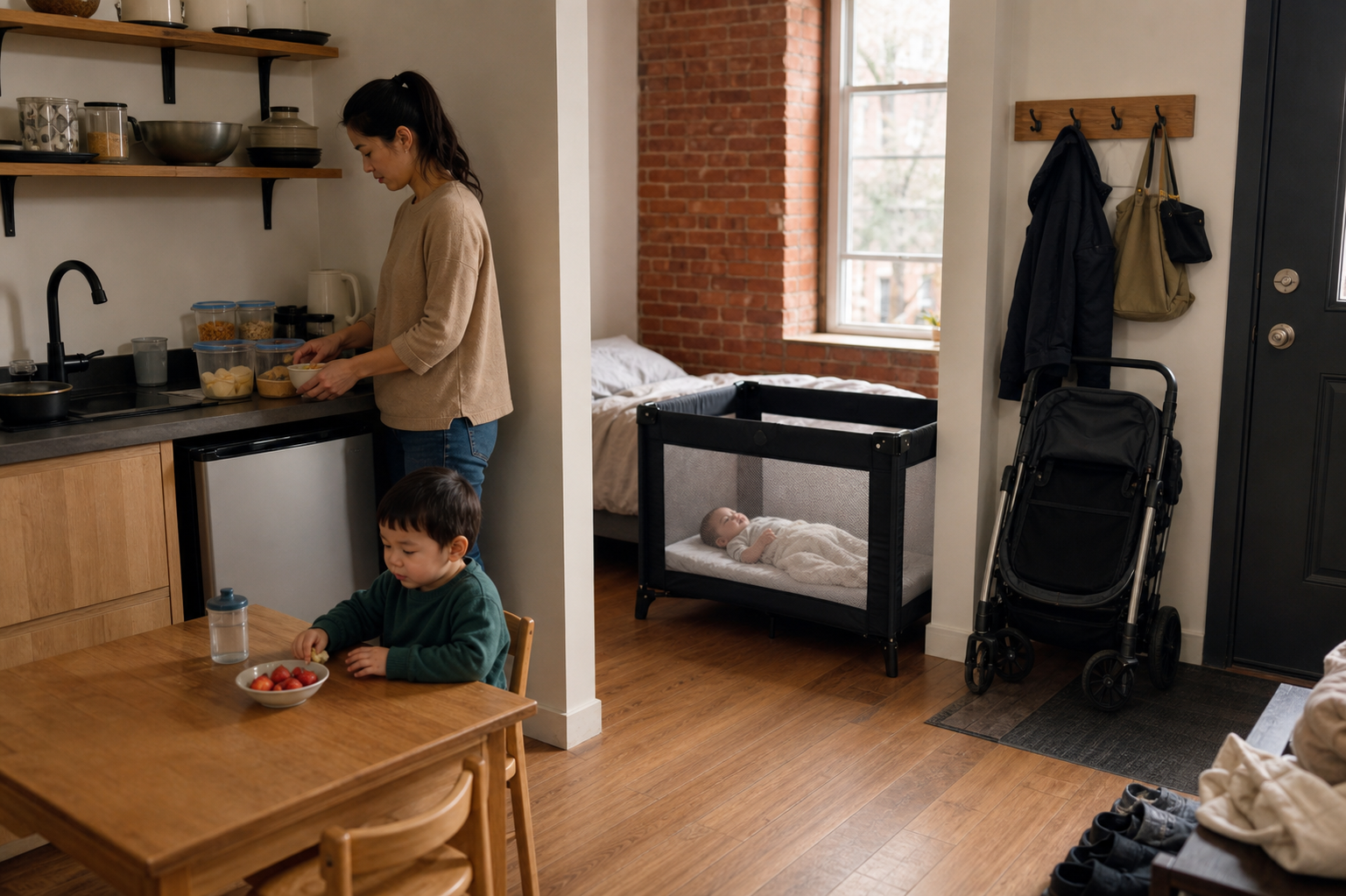
The cheapest room is not necessarily the lowest-cost base. Calculate a family-adjusted total: the final lodging bill, expected local transportation, food access, time spent moving back and forth and the practical burden of carrying your child and bags.
Before reserving, verify the details that your plan actually depends on:
- The final price for the full stay after required taxes and fees.
- The cancellation deadline and what happens if you shorten or miss the stay.
- Check-in timing, especially if your arrival overlaps with a meal, nap or bedtime.
- The route from the entrance to the room, including stairs or elevator access if you are bringing a stroller.
- The sleep arrangement. If you need a cot or another item, ask whether it is confirmed or merely requested.
- Food storage or preparation facilities only if your meal plan relies on them.
- Whether bags can be handled before check-in or after checkout if your travel schedule creates a gap.
- The real route to simple food, the subway and your main activity, measured door to door rather than by a vague neighbourhood label.
Do not pay for an amenity just because it sounds family-friendly. Pay for the feature that removes a repeated cost or a predictable point of friction. A slightly dearer room may make sense if it eliminates several rides and lets you return easily for a nap. A room with food facilities may be worthwhile if you will genuinely use them for breakfast and familiar meals. Neither is a universal rule; compare the added room cost with the spending it is likely to replace.
Think through the room during your child’s sleep. If everyone will share one space, decide what the adults can realistically do while the baby or toddler settles. A bargain room that makes every nap impossible may push the whole family out for longer, increasing food and activity spending. Keep the sleep practices you use safely at home in mind, and do not improvise an unsuitable setup simply to reduce the room price.
Build a flexible itinerary that prevents convenience spending
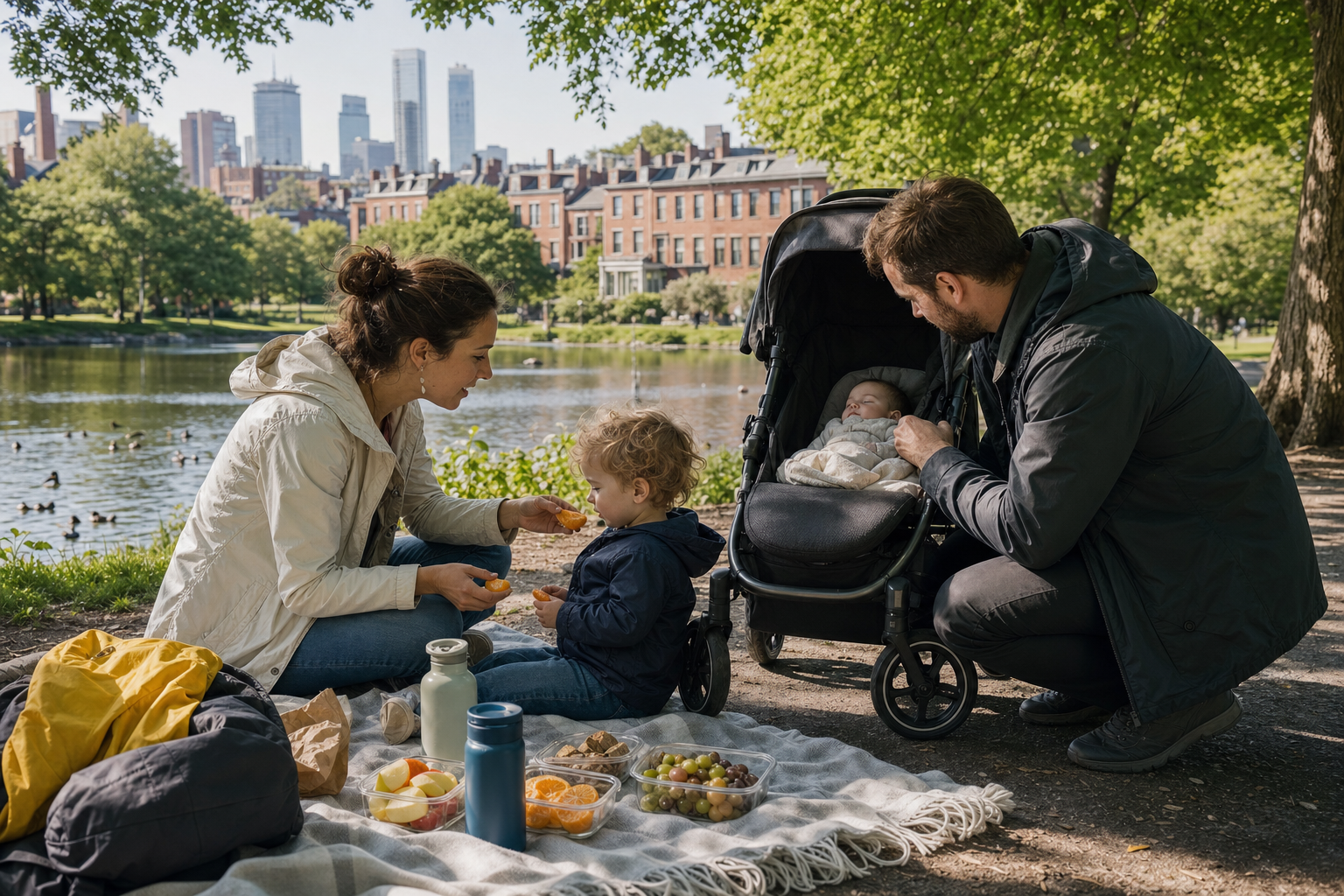
Give each full day one anchor
An anchor is the one place or activity you would be disappointed to miss. Put it in the part of the day when your child is usually most adaptable. Then select a nearby free or low-commitment option and a simple route back to the room. This keeps the day satisfying without making every hour depend on the previous hour going perfectly.
A practical weekend can follow this shape:
- Arrival day: reach the room, obtain any basic food or supplies you deliberately chose not to carry, and take an easy walk or other flexible outing nearby.
- Full day: do the anchor activity during your child’s best window, eat somewhere already identified, protect the usual rest period and leave the second half of the day flexible.
- Departure day: choose something close, free and easy to leave. Avoid placing the trip’s most important nonrefundable reservation before a fixed departure.
When comparing activity tickets, look beyond the admission price. Check whether the booking fixes you to a time, whether everyone in your party needs a ticket and what happens if you arrive late. A discount that removes all flexibility can cost more than it saves when the alternative is missing the booking entirely.
Plan food before anyone is hungry
Travel-day hunger is one of the easiest ways to lose control of a small budget. Choose the arrival meal before departure. Decide whether breakfast will come from the room, a grocery stop or a nearby place you have already identified. Carry the feeding supplies and familiar foods your child normally needs rather than assuming the next convenient option will suit them.
You do not need to prepare every meal yourself. Choose where restaurant spending adds value and simplify the rest. A sit-down meal can be part of the trip; three unplanned sit-down meals caused by poor timing are just leakage. Group any grocery purchase into one stop so the supposed saving does not consume several parts of the weekend.
Choose subway routes for the family you actually have
Compare local routes door to door. Count transfers, walking, stairs, time spent waiting and how often you will need to fold, carry or reorganize your gear. The route with the shortest scheduled travel time may not be the easiest one with a sleeping baby, stroller and bags.
If step-free access is essential, inspect the exact route shortly before travelling rather than assuming every entrance works the same way. Save the route where you can reach it without relying on a strong phone signal, and keep enough battery to revise the plan. When the difference in travel time is small, the option with fewer transfers is often easier to recover if the child needs to stop.
Make the stroller-versus-carrier decision for each major outing, not for the whole trip. A stroller may carry supplies and support naps; a carrier may simplify a short route with awkward transitions. Bringing both can add flexibility, but only if one adult can safely manage both pieces of equipment alongside the child and luggage.
Run the plan through its roughest moments
Before booking the last nonrefundable item, test the itinerary against four ordinary disruptions: a late arrival, a skipped nap, bad weather and a parent who is too tired to make another transfer. For each one, identify what you would drop, how you would get back and which part of the reserve might be used.
You do not need a backup attraction for every attraction. You need a low-cost fallback category: time near the room, an indoor option you can choose at the time, an uncomplicated meal and permission to end the day early. Check current operating details, transportation conditions and the forecast close to the trip because those can change after you make the original plan.
Before opening another booking tab, finish the trip brief and the six-line budget. If the numbers leave no reserve, change one big variable now. If the itinerary has several timed commitments in a row, remove one. A budget Boston weekend with a baby or toddler works best when the plan asks less of your money, your schedule and your hands at the same time.