The first-day outfit probably isn’t what threatens your clothing budget. The total climbs when you replace every basic at once, add clothes for a daycare or preschool cubby, and buy a few appealing bargains that don’t solve an actual shortage.
You can avoid that oversized receipt without sending your child in clothes that are too small or impractical. Start with the week you really live, buy for specific jobs, and make each discounted item earn its place.
Build the list from real fit and your laundry routine
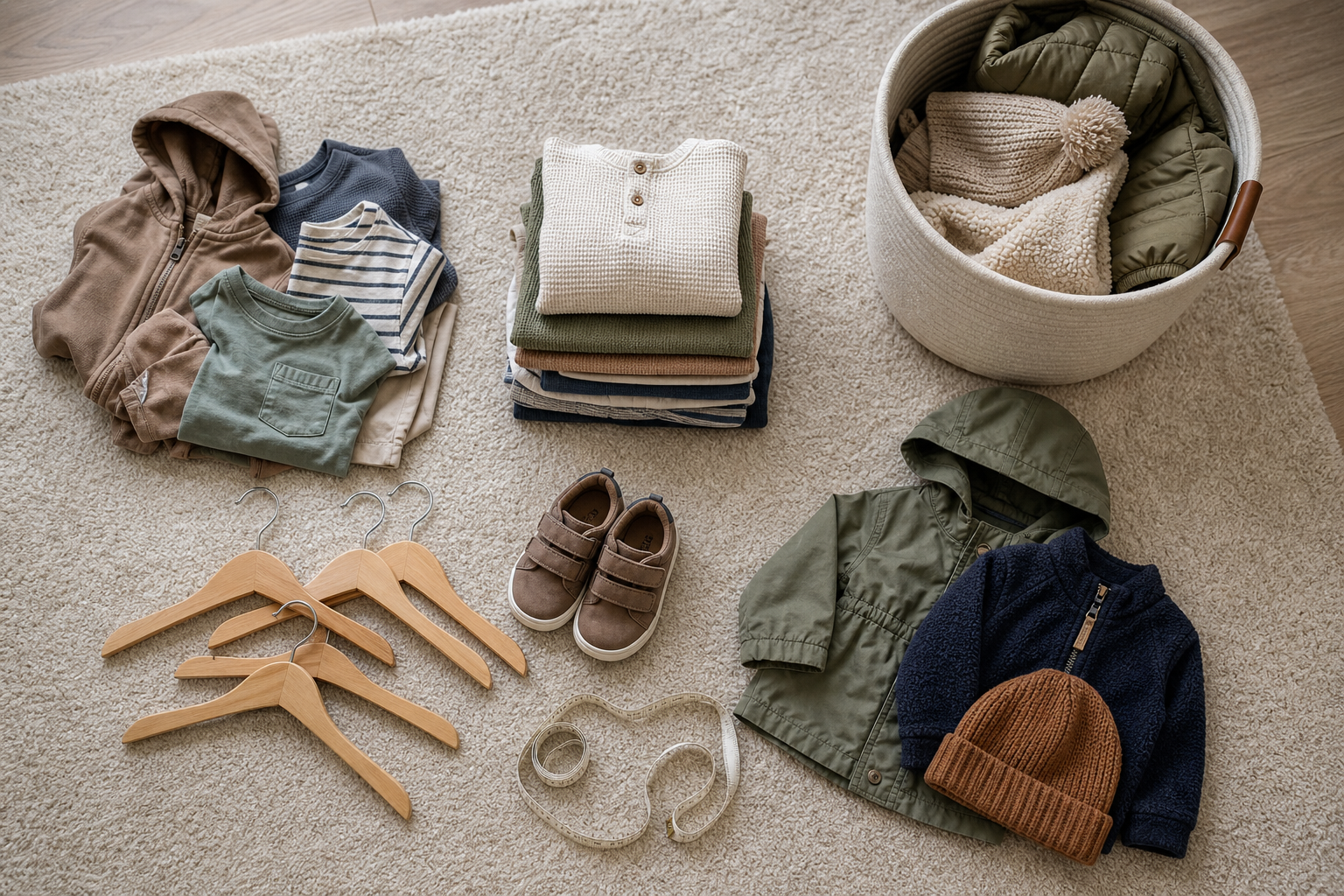
Before you shop, gather clothes from the dresser, laundry basket, seasonal storage, daycare bag, and any other place they tend to collect. Looking in the drawer alone can make a wardrobe seem smaller than it is.
Sort each garment by what it can do now:
- Ready for daycare or preschool: It fits, feels comfortable, meets the program’s requirements, and can handle ordinary play.
- Useful at home: It still fits but is too stained, worn, or impractical for the school day.
- Not ready yet: It is genuinely too large or belongs to a later season.
- Ready to leave the wardrobe: It is too small, damaged beyond use, or consistently rejected because it pinches, scratches, or restricts movement.
Judge fit on your child rather than trusting the size printed on the label. Check the waistband, rise, cuffs, neck opening, and room through the seat. If your child cannot sit, squat, reach, crawl, or walk comfortably, that garment isn’t part of the usable inventory.
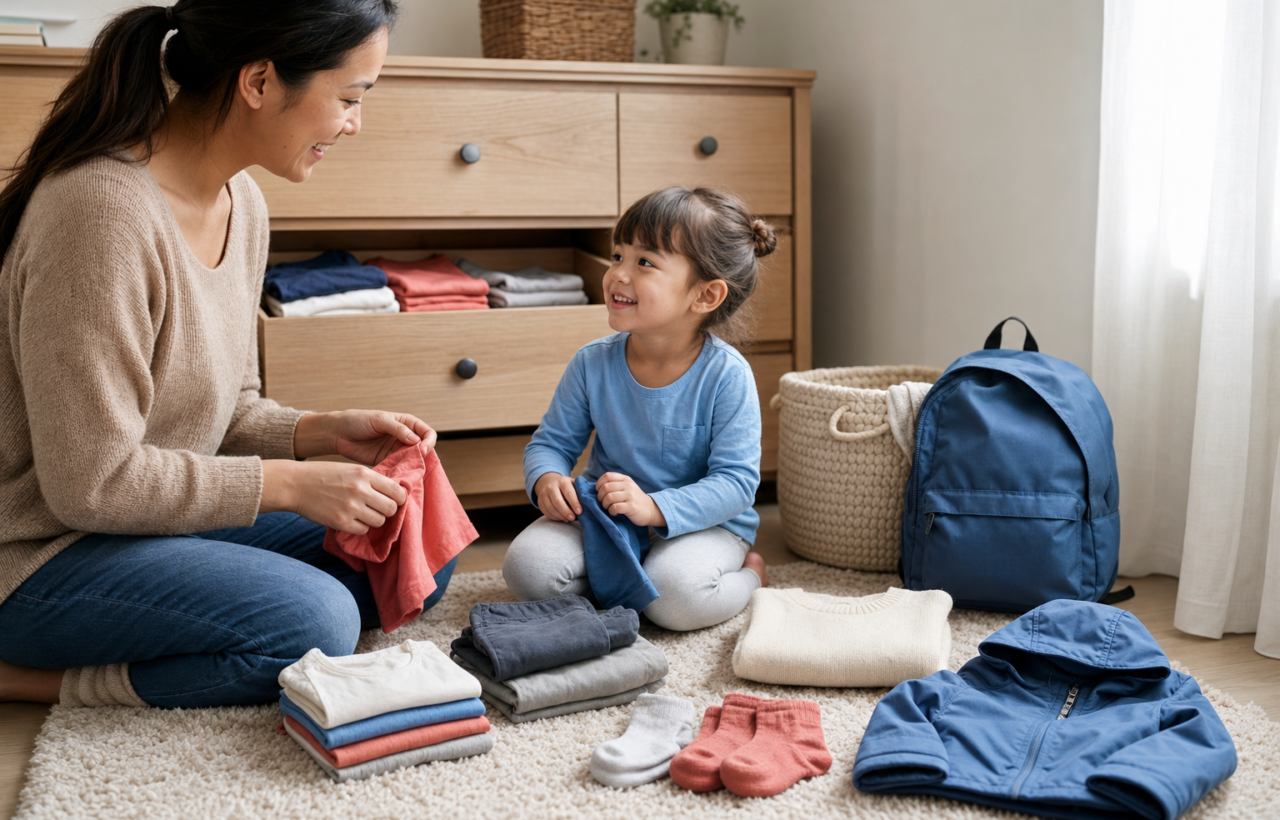
Next, plan around the longest ordinary gap between laundry loads. Lay out enough complete combinations to cover that stretch, then account for whatever spare clothing the classroom expects you to keep on site. Ask the program if the requirement isn’t clear. A cubby outfit that stays at school cannot also cover Tuesday morning at home.
Write the shortfall by function, not by vague category. “Pull-on pants for toilet practice” is more useful than “bottoms.” “Washable long-sleeved top that works under the existing layer” is more useful than “new shirt.” Add the size that currently fits and any dress-code or uniform restriction. This turns the shopping trip into a repair job instead of a wardrobe reset.
Buy the clothes that do the most work
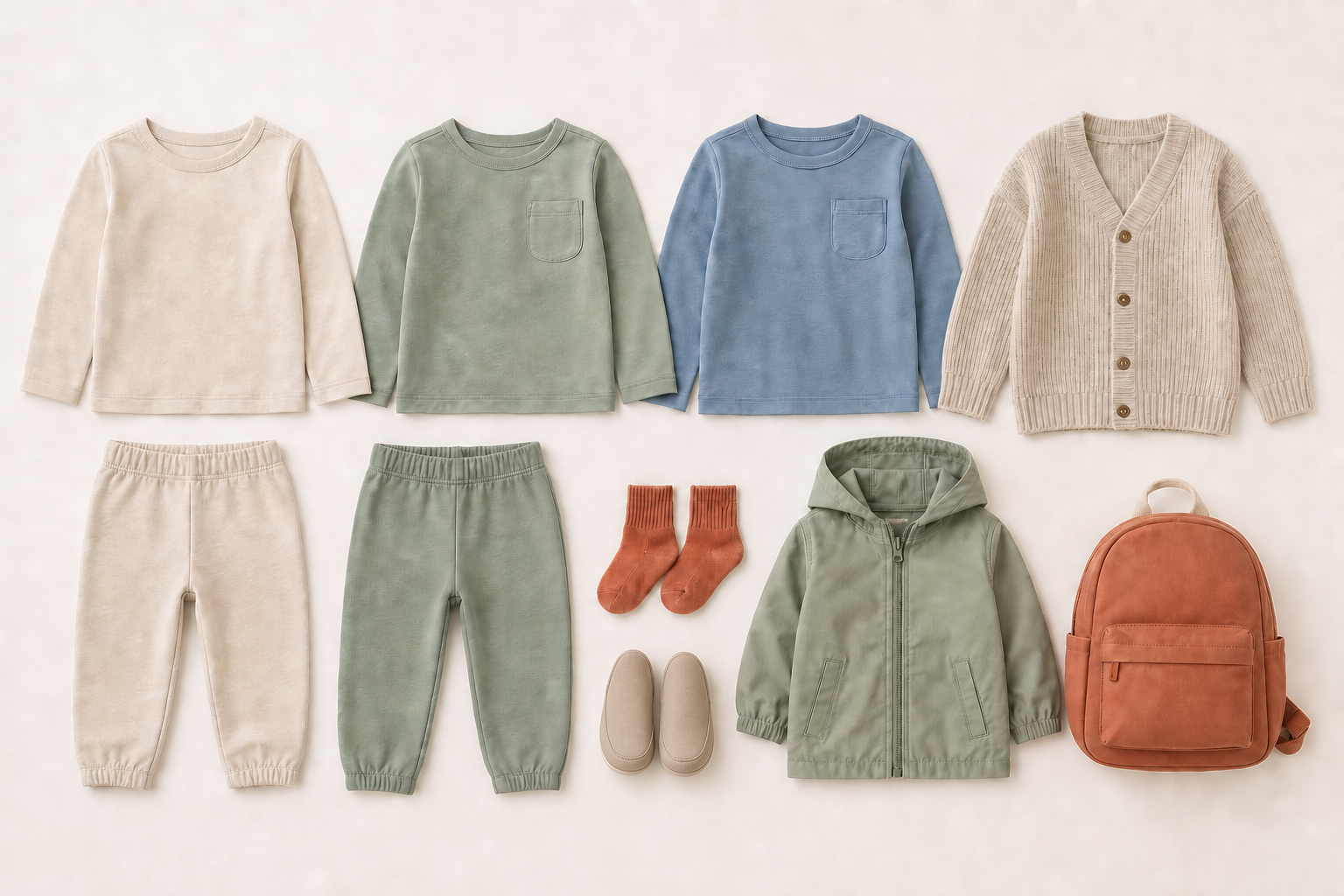
Spend first on garments that are used frequently and are hard to substitute. Daily tops and bottoms, socks, underwear when applicable, required uniform pieces, and spare pants usually matter more than a coordinated first-day look. These inexpensive basics are also where the total can get away from you: shirts, spare pants, socks, underwear, and uniform items can collectively turn into a three-digit receipt.
Your child’s current stage should decide which details are worth paying for. For a toddler still in diapers, choose bottoms that make changes straightforward for caregivers. During toilet learning, easy-up, easy-down waistbands are usually more useful than decorative fasteners. For messy meals, paint, water play, and outdoor time, a garment you are willing to wash and send back is more valuable than one that needs to be saved for the right occasion.
Make new pieces compatible with what survived the sort. A top that works with the existing bottoms immediately expands the usable wardrobe. A piece that depends on a particular matching item creates another dependency and may sit unworn whenever half of the set is in the wash.
Be cautious about buying duplicates before your child has worn the first version. A low-cost shirt is not a dependable staple if the neck opening is awkward, the fabric bothers your child, or the cut rides up during play. Confirm that the design works, then decide whether another would fill a documented gap.
Make every low price pass the checkout test
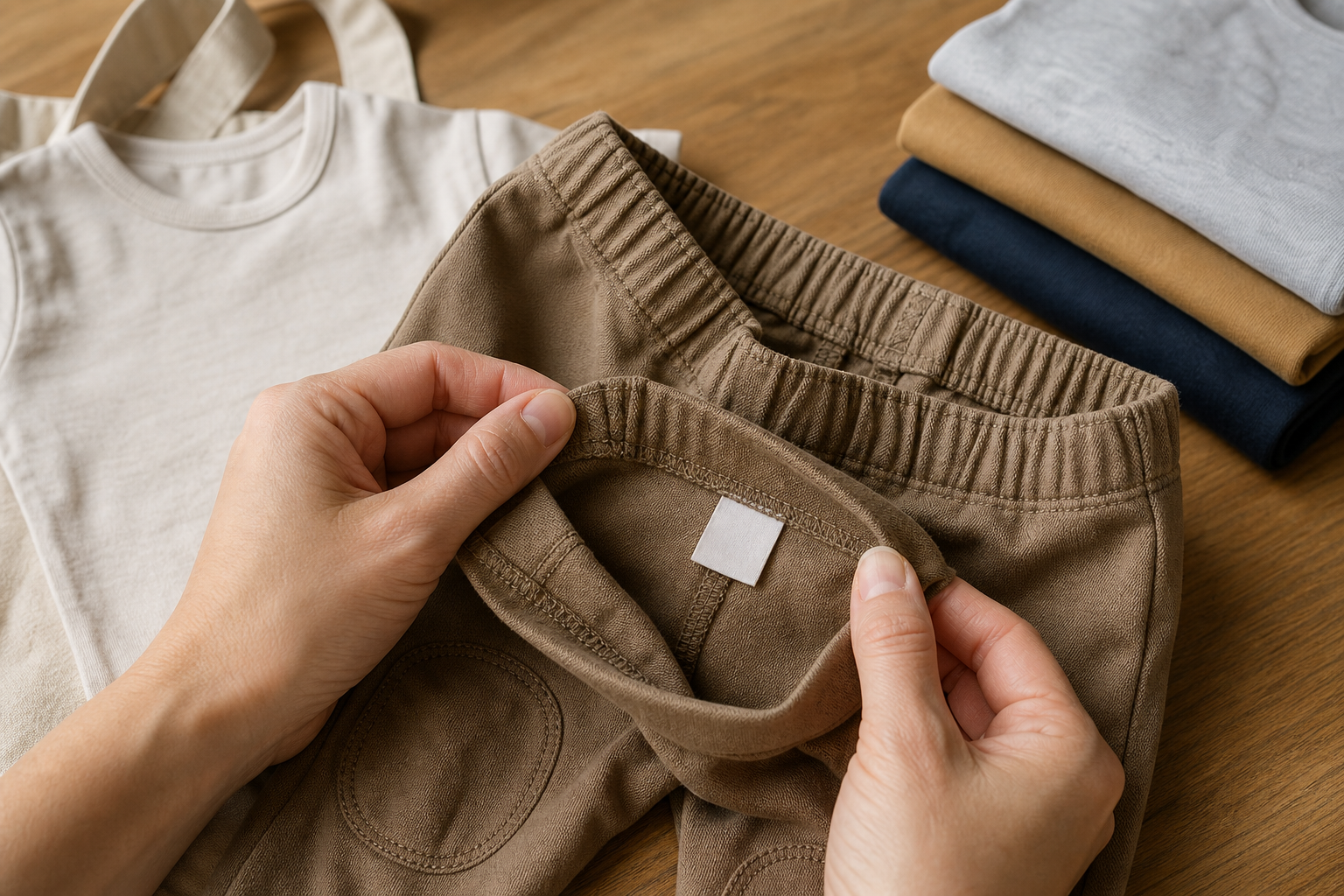
A sale price answers only one question: what does this item cost? It does not tell you whether the item fits, whether your child will wear it, or whether you need it.
Run each prospective purchase through this check:
- Does it fill a named shortage? Match it to a line on your list. “Cute for school” is not a wardrobe function.
- Is the exact variation discounted? Confirm the price for the color and size in your hand or cart, not the lowest price printed on the display.
- Does it fit now? If possible, compare its measurements and shape with a garment that currently fits your child well.
- Can it join ordinary laundry? Read the care label before buying. Special handling can turn an inexpensive basic into something you avoid using.
- Would you still choose it without the sale sign? You need not pay full price, but you should want the garment’s function rather than the sensation of getting a deal.
Target’s back-to-school selection has included children’s clothing under $10, with clearance sometimes limited to particular colors and sizes. That last detail matters. If the useful size is full price or the reduced color conflicts with a uniform rule, the advertised bargain is not the purchase in front of you.
Check the final cart line by line. Retail displays can pull your attention toward the best available price, while the register or product page charges for the precise variation you selected. Put an item back if the actual price exceeds the limit you chose for that wardrobe gap.
Buying far ahead also deserves a higher bar. Your child may reach the size in a different season, skip the expected fit, or need a different clothing function by then. If you do buy ahead, choose a predictable basic, record what you bought, and store it where it will be checked before the next shopping trip. An unseen future-size stash is an easy way to purchase the same need again.
Keep the wardrobe working after school starts
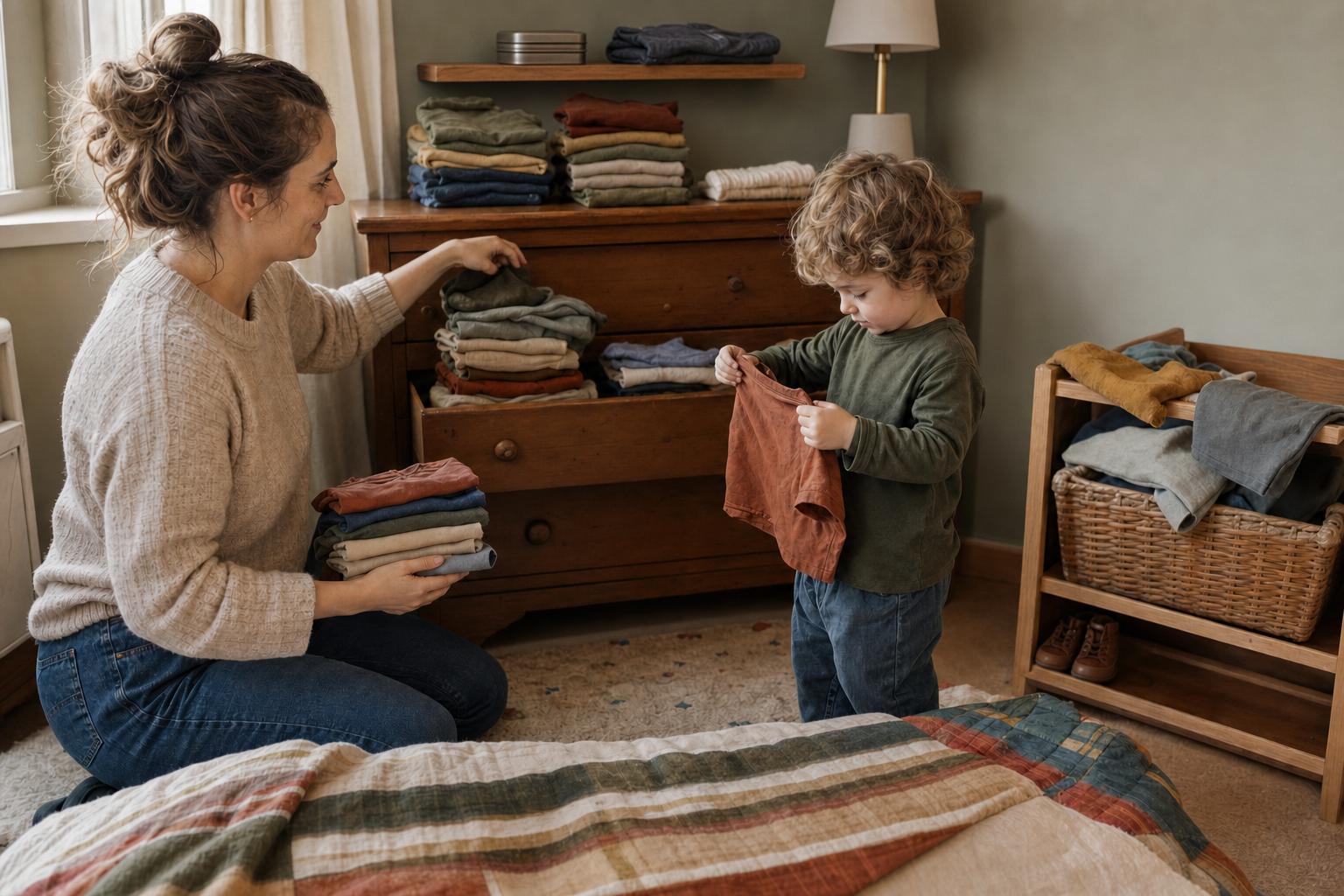
The budget plan is not finished at checkout. A poor fit discovered after tags come off, an unlabeled cubby item, or a forgotten pile of clean clothes can erase the value of a careful purchase.
Use this simple handoff routine:
- Check the return conditions before removing anything. Keep the receipt and packaging while you test fit within the retailer’s stated rules.
- Try clothes on with the usual base layer. A waistband that works over underwear may feel different over a diaper. Include the shoes your child normally wears when checking pant length.
- Test movement, not just appearance. Have your child sit, squat, reach, and walk. Look for slipping waists, tight seats, dragging hems, and neck openings that resist comfortably going over the head.
- Label items before they enter the classroom. Follow the program’s preferred method and include removable layers as well as spare clothes.
- Record what stays in the cubby. A quick note or photo helps you distinguish “missing from home” from “stored at school.” Replace cubby clothes when they come home so the spare supply does not quietly disappear.
At home, make the full wardrobe visible. Put freshly washed clothes behind the remaining clean clothes and dress from the front so the same favourites do not carry the entire workload. Keep next-size garments separate and clearly marked; mixing them into the current drawer creates clutter without adding usable outfits.
Create a replacement trigger rather than continuing to browse after the main shop. Buy again when the usable wardrobe no longer covers your normal laundry gap or the required classroom spares. A stain that remains school-appropriate may not require action. A waistband that no longer allows comfortable movement does. This distinction keeps ordinary wear from becoming a reason to redo the wardrobe.
Key takeaways for a smaller clothing bill
- Count only garments that fit now and can actually be worn to the child’s program.
- Build the shopping list from your laundry gap, classroom spare requirements, and dress code.
- Spend first on frequently used basics that have no good substitute.
- Verify the price of the exact color and size before treating a clearance item as a bargain.
- Test movement, label school clothing, and track what remains in the cubby.
- Return to the store only when a real wardrobe function is no longer covered.
Your useful first move is not opening a shopping app. Put the clothes your child can wear into complete combinations, identify exactly what is missing, and carry that short list when you shop. Then a low price fills a real gap instead of creating another item to wash, store, or forget.