You are buying for a very small child, but most back-to-school displays are designed around books, homework and children who carry their own belongings. A baby or toddler needs something different: a bag that works with the care setting’s routine, holds the real daily load and does not make an already busy handoff harder.
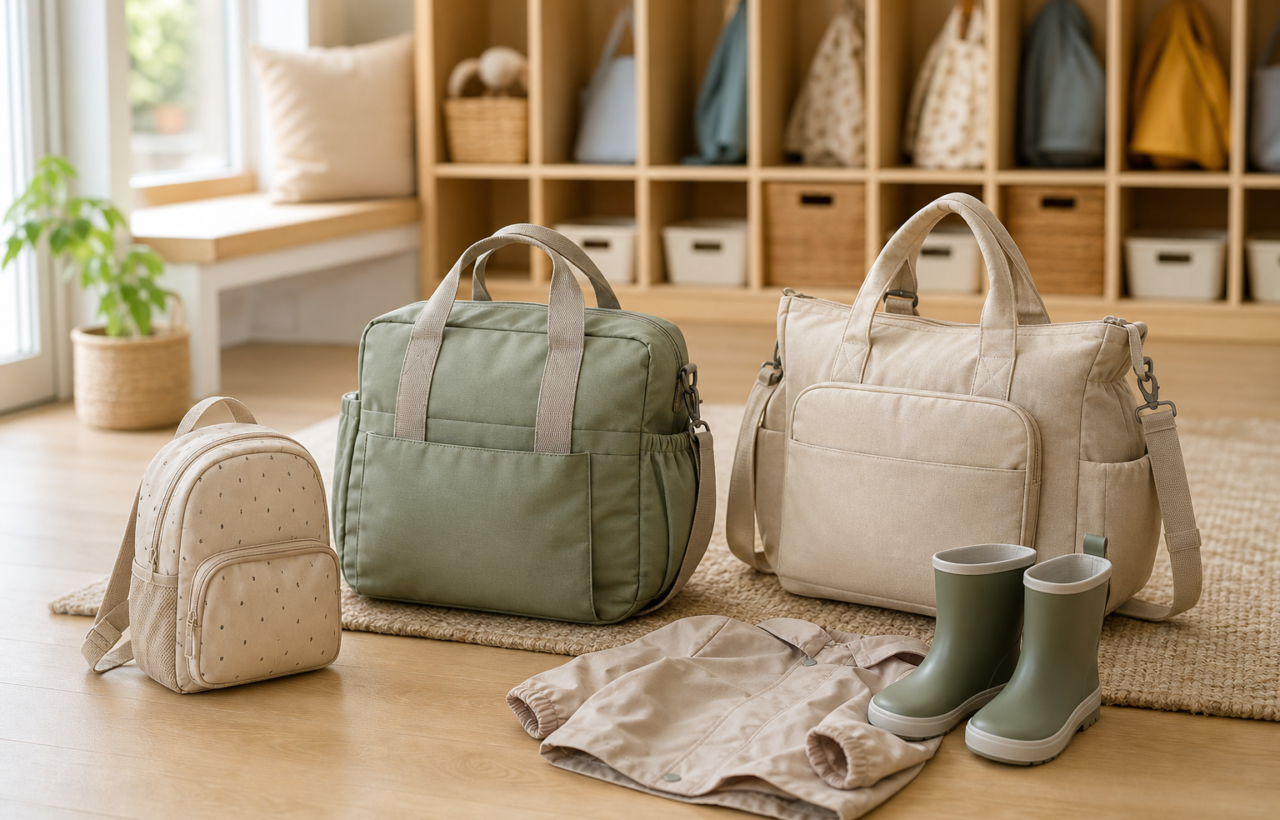
The right choice may be a tiny rucksack, a caregiver-sized daycare bag or the diaper bag you already own. Decide what the bag must do before you decide what it should look like.
Choose the job before you choose the bag
Start with one question: who will carry this bag most of the way? That answer changes almost every useful buying criterion.
- If an adult will carry it: prioritize usable capacity, a wide opening, comfortable adult straps and one-handed access. A miniature rucksack can look appropriate for a toddler while being awkward for a parent to carry and too small for the required gear.
- If your toddler will wear it: prioritize a compact shape, adjustable shoulder straps and a light everyday load. The bag should stay close to the body without interfering with walking, sitting or moving the arms.
- If the bag has a shared role: look for straps that work for the child but are not miserable for an adult to hold. Test the grab handle as carefully as the shoulder straps because adults may use it during most handoffs.
For a baby, the bag is mainly a logistics tool. For a toddler, it may also support a little independence: carrying a comfort item, recognizing their own bag or helping place it in a cubby. That does not mean the child needs to carry the entire daycare load.
Do not assume a new purchase is necessary. If your current diaper bag fits the centre’s storage space, closes securely and can be cleaned easily, it may already be the most practical option. A child-sized rucksack becomes useful when the setting requests one or your toddler is ready to manage a small, appropriate load.
Whichever format you choose, take the bag off when your child arrives and store it where staff direct. A backpack is for transporting belongings, not for wearing during play or sleep.
Pack the daycare list before you shop
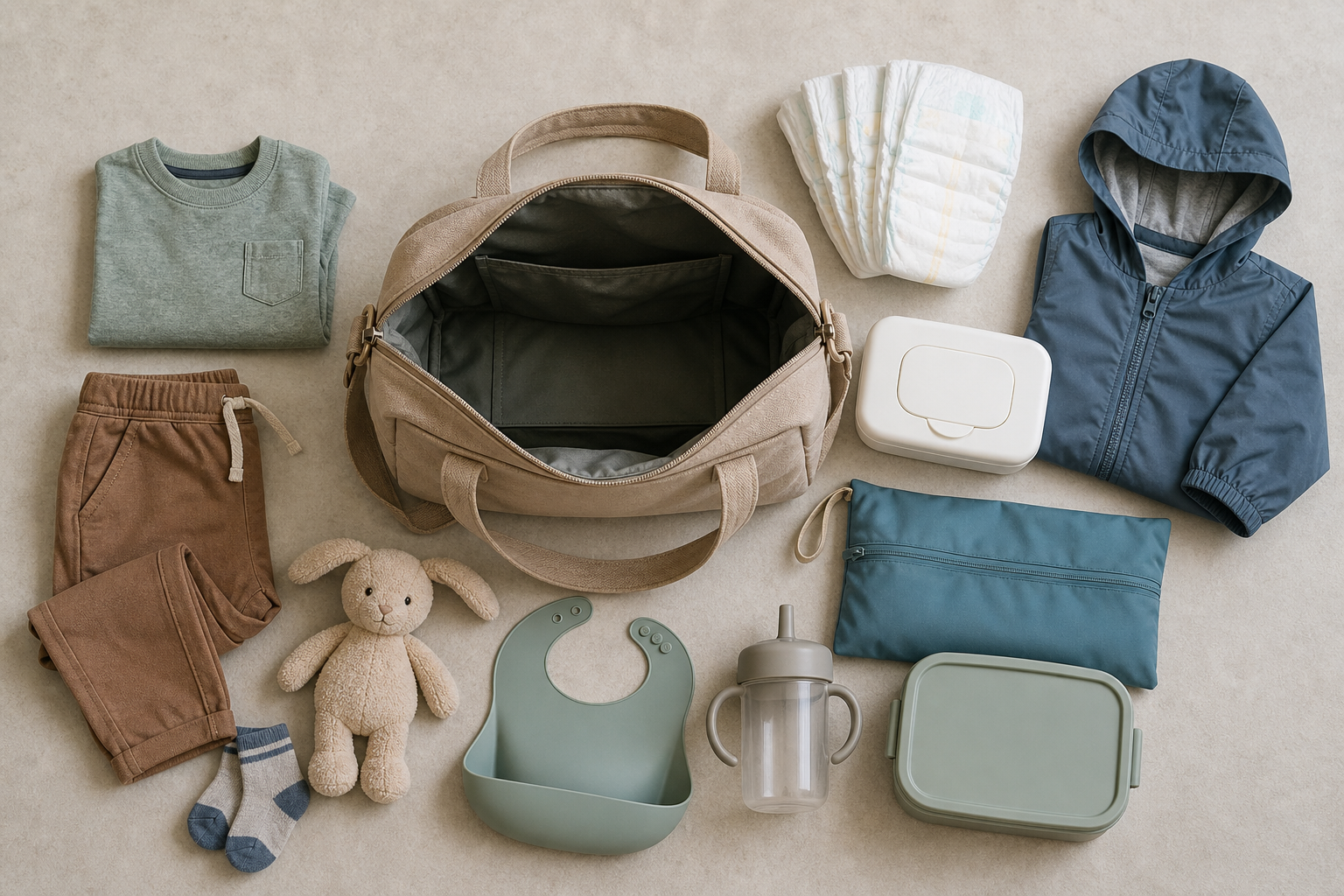
A bag cannot be judged accurately while it is empty. Before comparing sizes, ask the care setting for its current packing and storage rules. Policies vary, and a bag that works beautifully at one centre may not fit the routine at another.
- Which belongings travel back and forth every day?
- Which supplies can remain at the centre?
- Do food, bottles, cups or bedding need separate containers?
- Is there a cubby, hook or other storage space the bag must fit?
- How should spare clothes and wet or soiled items be packed?
- Where should identification be placed?
- How must medication, forms or other restricted items be handed to staff?
Gather a representative day’s belongings before you buy. Use the actual spare-clothing pouch, lunch container, bottle or cup, footwear and weather gear your setting requests. You are not trying to create the largest possible load. You are checking whether an ordinary day fits without crushing soft items, forcing the zipper or hiding essentials at the bottom.
The best capacity is usually the smallest bag that accepts the normal load comfortably and leaves a little flexibility for something sent home unexpectedly. Excess capacity has a cost: it encourages overpacking and can make a child-worn bag bulky. Too little capacity creates a different problem, with strained closures and separate loose items that are easier to forget.
Pay attention to the opening as well as the stated dimensions. A deep bag with a narrow zip may hold everything on paper but still make staff dig for a change of clothes. A slightly smaller bag with a wide opening can be much more usable.
Medication should never be placed loose in a pocket your child can access. Follow the centre’s required handoff, documentation and storage procedure instead of treating the backpack as medicine storage.
Run a real-life fit and handoff test
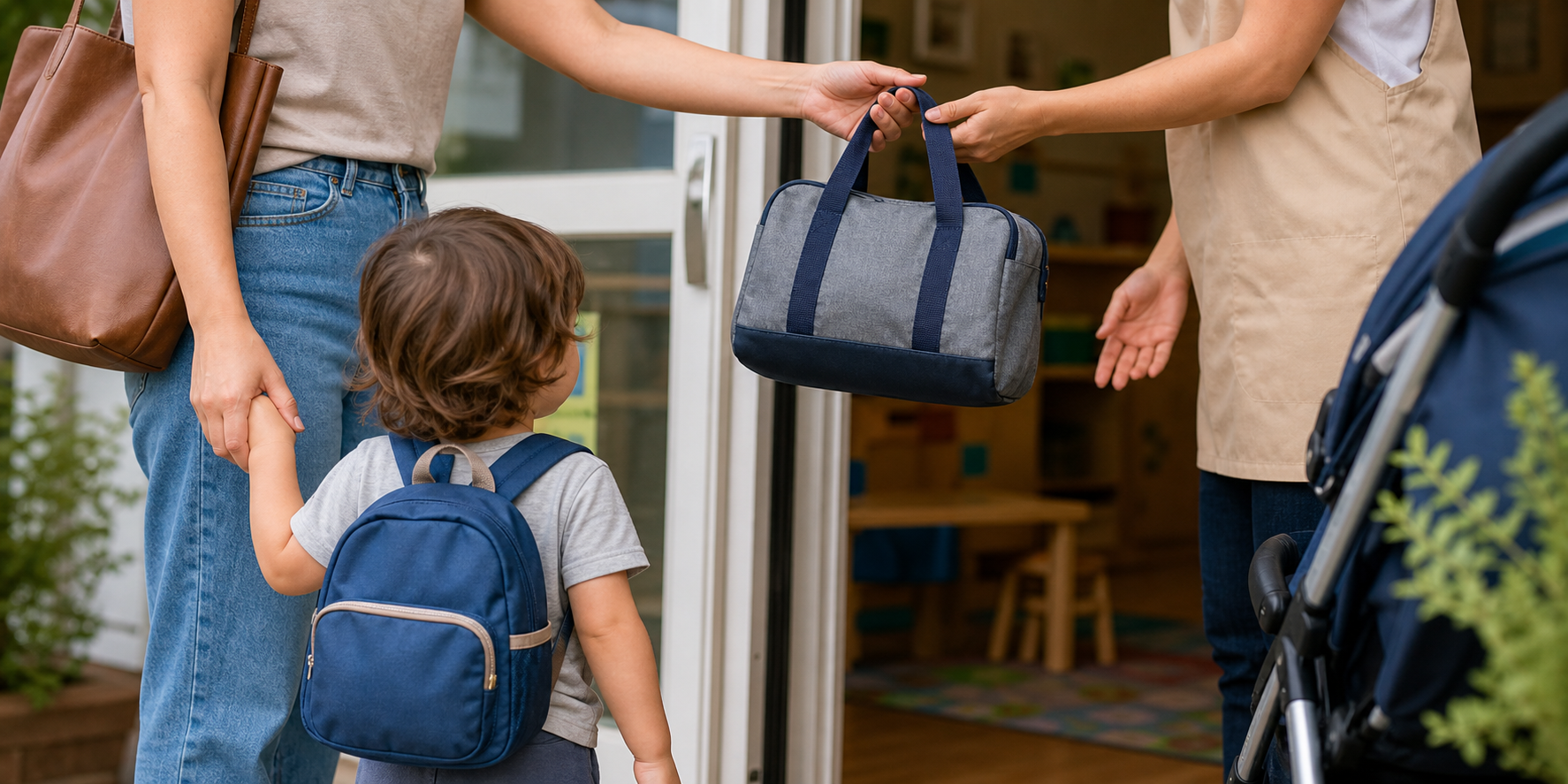
Keep the receipt and tags while you test the bag with its intended contents. Empty-bag comfort tells you very little about how straps, zippers and seams behave once the load is real.
- Load the usual gear. Put every item where you expect it to live. Close all zippers without pressing down on the contents or pulling the fabric into place.
- Test the adult journey. Pick up the packed bag while carrying or holding the other things that normally leave the house with you. Check whether the handle is comfortable and whether you can open the main compartment without emptying it.
- Test the child’s movement. If your toddler will wear the rucksack, adjust both shoulder straps and let them walk, turn, crouch and sit. Watch the bag rather than asking only whether it feels comfortable.
- Test access. Ask your toddler to find an approved item and close the bag again. Then repeat the task yourself with one hand, as you might during a rushed drop-off.
- Test the destination. Compare the packed shape with the centre’s cubby or hook requirements. A soft empty bag may become much wider or less stable after packing.
A child-worn bag should not swing dramatically, slide off the shoulders or alter how your toddler moves. If your child leans forward, repeatedly shrugs the straps back into place or cannot sit comfortably, reduce the load or let an adult carry it. Buying a larger rucksack for a child to grow into can create a poor fit now, when the bag is actually needed.
Check that strap adjustments stay in place. Long loose strap ends and detachable decorations can catch on surrounding objects, while small accessories can come off. Secure excess strap length and remove charms, cords or clips that are not necessary, especially around babies and young toddlers.
Prioritize cleaning, access and sensible organization
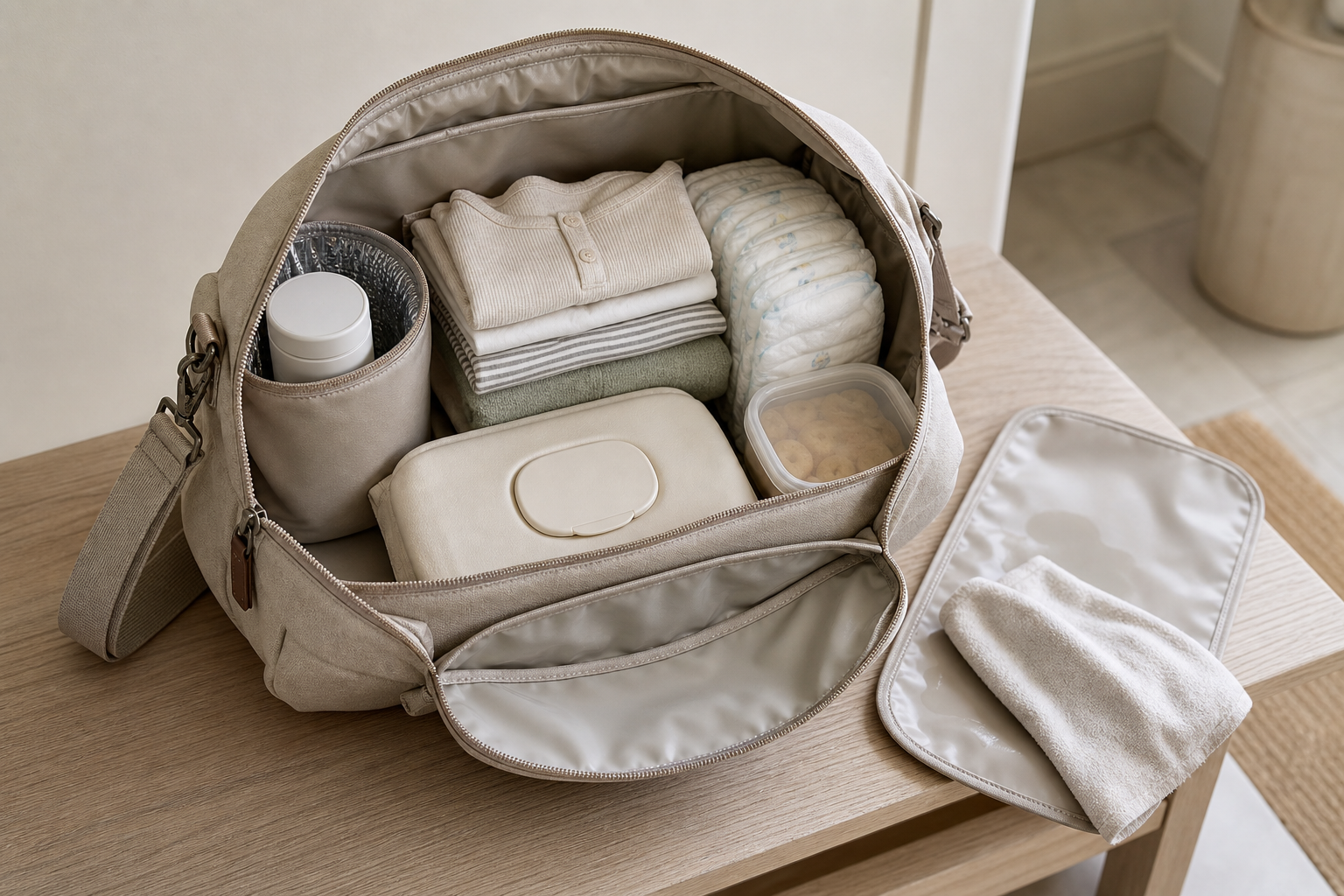
A daycare bag lives close to food, outdoor gear, damp clothing and changing supplies. Its useful features are the ones that make those ordinary messes easier to contain and clean.
- A care method you will actually use: read the cleaning instructions before buying. Wipe-clean fabric and machine-washable fabric are not the same promise. Check the label instead of assuming the entire bag can go into the wash.
- A wide, visible opening: staff should be able to identify the contents quickly. A lighter interior can also make small items easier to see than a dark, deep lining.
- A simple pocket layout: one main compartment and a few purposeful pockets are often easier to manage than many small sections. Every extra pocket becomes another place to check before leaving.
- A secure place for containers: test exterior sleeves with the actual bottle or cup you plan to send. It should not fall out when the bag is lifted or placed on its side.
- Separation for messy items: use the centre-approved pouch or bag for wet or soiled clothing. A removable pouch is easier to unpack than relying on a permanent pocket that may be forgotten.
- Easy-to-operate closures: large zipper pulls can help a toddler practise independence. Reserve child-accessible pockets for safe, approved belongings.
Label the bag and its removable contents according to the centre’s instructions. Use only the personal information needed to reunite belongings with your child. If an exterior name is required, a first name or the centre’s preferred identifier may be sufficient; avoid displaying an address or other unnecessary information.
Looks still have a place. A colour, pattern or character your toddler recognizes can make the bag feel like part of the back-to-school occasion. Give your child a choice between bags that have already passed your checks for fit, capacity and cleaning. That preserves the fun without asking a toddler to evaluate a zipper, lining or strap system.
Before the first day, decide where everything belongs and use the same arrangement each time. Spare clothes in one labelled pouch and approved comfort items in a consistent pocket are easier for you, your child and the care team to find. The bag does not need an elaborate organization system; it needs one that remains obvious on a busy morning.
Key takeaways
- Ask the care setting what travels daily, what stays there and how the bag will be stored before you shop.
- Choose for the person who will carry the bag most often, whether that is your child or an adult.
- Size the bag around a representative daily load, not an empty display model or an unusually demanding day.
- If your toddler will wear it, test walking, turning, crouching and sitting with the real load inside.
- Prefer a wide opening, cleanable materials and a few predictable compartments over decorative complexity.
- Keep medication out of child-accessible pockets and follow the centre’s direct handoff procedure.
- Let your toddler choose the look only after you have narrowed the options to bags that work.
Do one fully packed trial before removing the tags, then place the bag by the door using the same layout you will use on care days. If the routine feels awkward at home, change the bag or the packing system now, before a rushed first drop-off makes the problem harder to solve.