When the grocery bill keeps climbing, a full cupboard can still leave you with nothing that feels like dinner. The problem is usually not a shortage of food. It is a shortage of ingredients that connect easily, cook on the kind of evening you actually have, and can be served in a way that works for your family.
You do not need a large stockpile to fix that. A small pantry built around meals you already eat can lower waste, reduce last-minute shopping, and give you a dependable answer when the original dinner plan falls apart.
Build your pantry around meals, not bargains
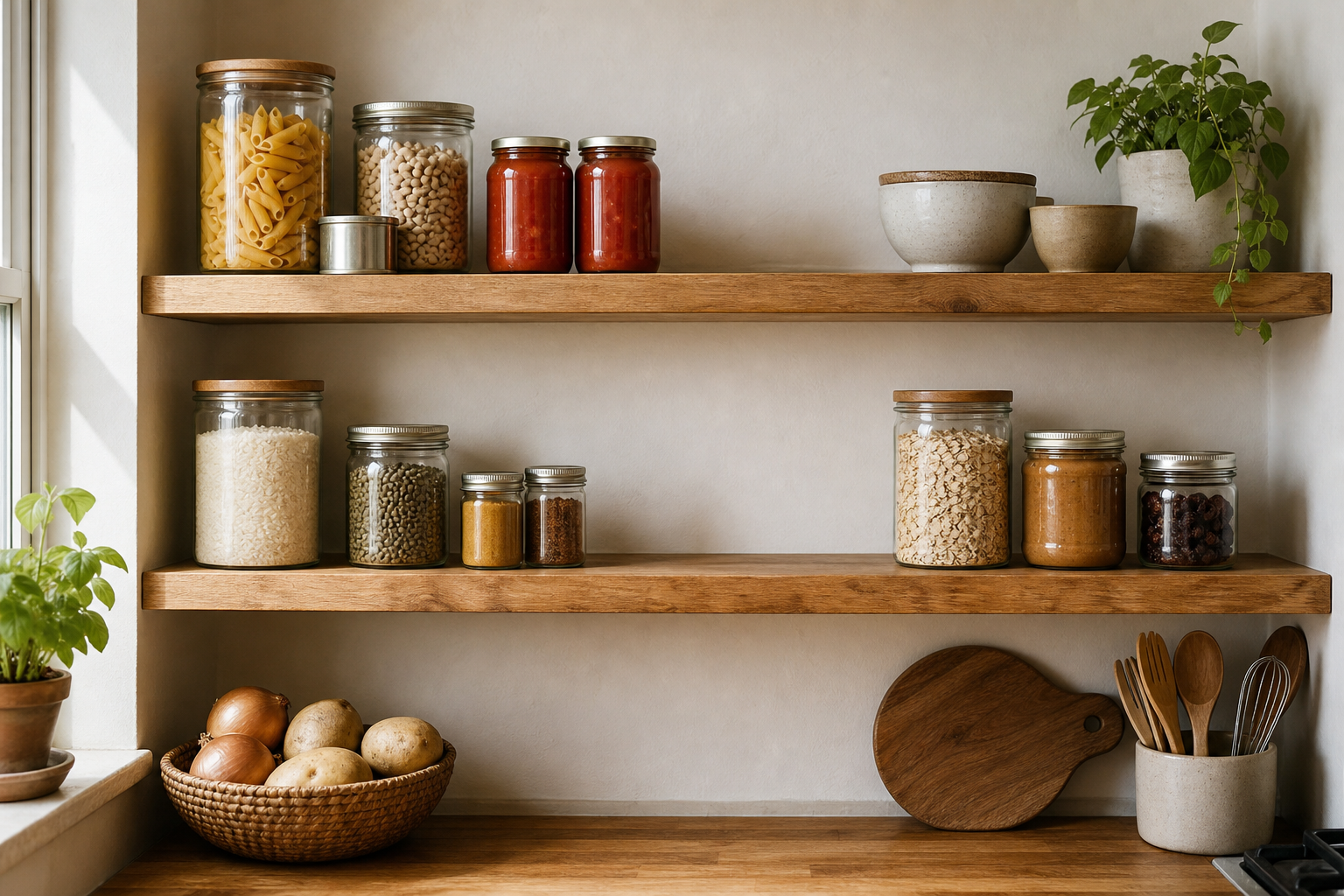
Start in your kitchen, not in the store. Write down the simple meals your family reliably accepts, including the plain or separated versions you serve to a baby or toddler. Then identify the shelf-stable ingredients that make those meals possible.
The most useful core is deliberately ordinary. Rice, beans, pasta, baking basics and quick-meal helpers can support breakfast, lunch or dinner without requiring a complicated recipe. Their value comes from how well they work together, not from how interesting they look on the shelf.
Give each item a clear job:
- A base: Rice or pasta gives you somewhere to start when the fridge looks sparse.
- A substantial meal component: Canned or dried beans can turn that base into a more useful family meal.
- A sauce or binder: Canned tomatoes can become pasta sauce, part of a rice dish, or the beginning of a soup.
- Familiar flavour: Oil, dried herbs, spices and condiments help the same core ingredients fit different meals.
- A fast helper: A shelf-stable broth, canned vegetable or sauce your household already uses can shorten the path from ingredients to dinner.
- A baking option: Flour and other baking basics make sense when you regularly prepare pancakes, flatbreads or simple baked foods. They are not bargains if they sit untouched.
Keep an ingredient when you can immediately name more than one way your household will use it. Leave it at the store when the plan is merely that it might be useful someday. Cheap food that expires, gets buried, or requires a recipe nobody wants is still wasted money.
If you have a selective eater, plan with components rather than insisting that every pantry meal be mixed together. Rice, beans and sauce can be one bowl for an adult and separate familiar foods for a child. You are using the same ingredients without turning dinner into a second cooking shift.
Use flexible formulas instead of collecting recipes
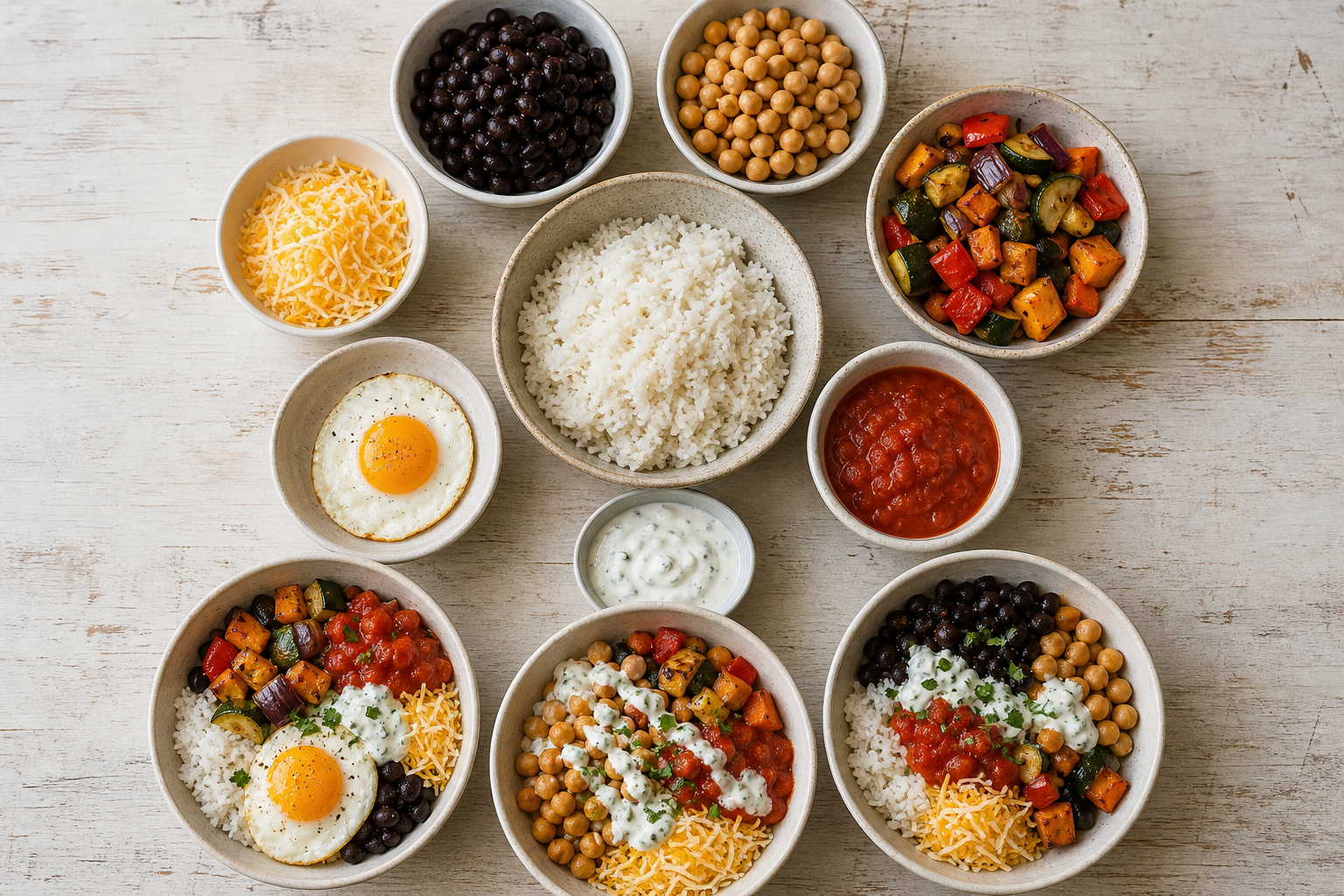
A recipe can fail when one ingredient is missing. A formula gives you room to use what is available. These combinations are intentionally loose, so you can add fresh or frozen foods when you have them without making those extras essential to the plan.
- Rice meal: Combine cooked rice, warmed beans and canned tomatoes or a familiar sauce. Add a frozen vegetable, leftover cooked food or a preferred topping if available. Serve it mixed, layered or separated.
- Pantry pasta: Warm canned tomatoes with beans and the seasonings your family likes, then add pasta. Reserve some plain pasta before combining the meal if that makes the serving easier for your child.
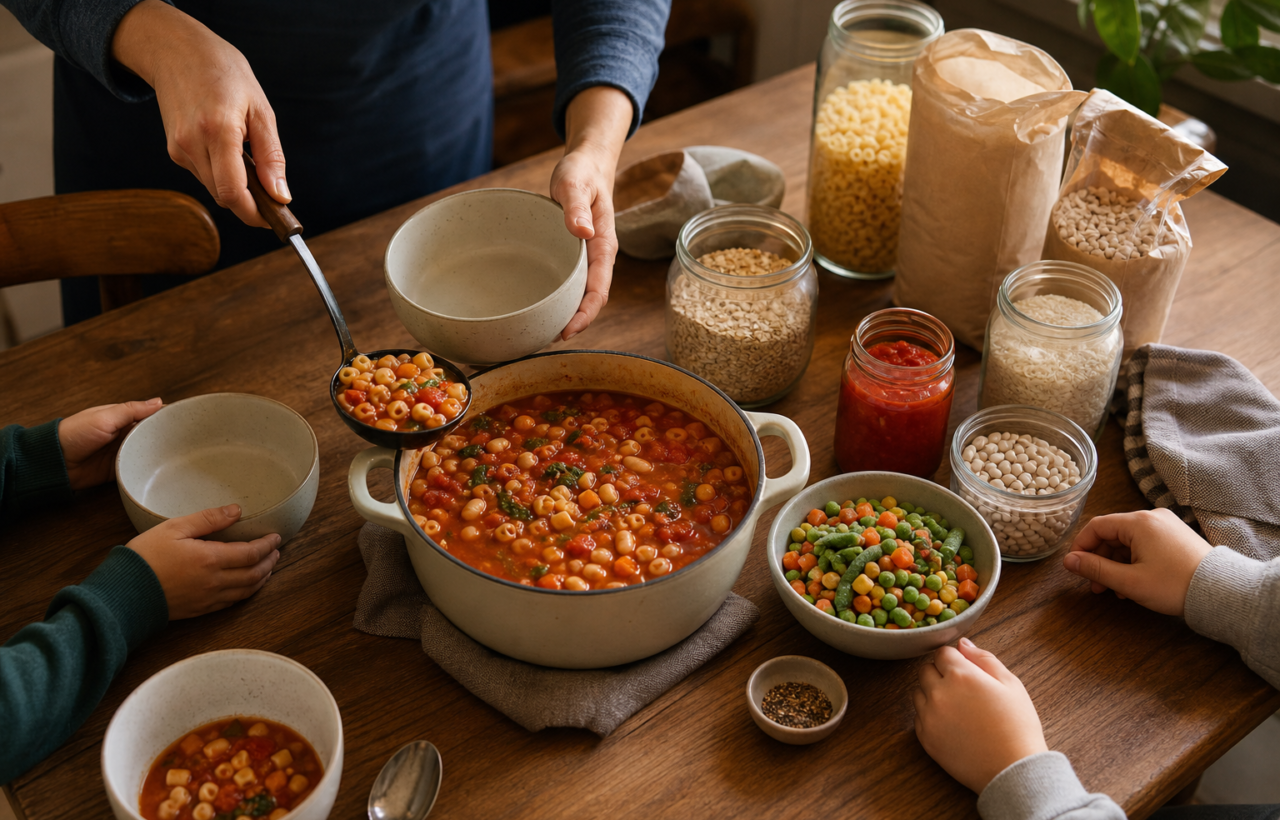
- Soup or thick stew: Start with beans and canned tomatoes, add water or shelf-stable broth, and use rice or pasta to give the meal more body. This is also a practical destination for a small amount of leftover cooked food.
- Simple baking meal: Use the flour or baking mix you already trust for pancakes, quick breads or flatbreads. This option is useful only when the required wet ingredients are normally in your home and the preparation fits your routine.
Change the flavour with ingredients you already use rather than buying a new sauce for every variation. The same rice-and-bean base can take on a different character with a different familiar seasoning, but the meal remains recognizable and the shopping list stays short.
These formulas are planning tools, not a claim that every combination is a complete diet. Use fresh and frozen foods when they are available, and vary what you serve over time. For a baby or young toddler, a pantry ingredient is not automatically ready to eat straight from the package. Prepare the final food in the texture and serving format that matches how your child currently eats safely. Any allergy, medical or feeding guidance you have for your child takes priority over a general meal formula.
Shop for usable value, not the lowest shelf price
Affordability has several parts: purchase price, how much of the package you use, the time required to prepare it, and whether it prevents a more expensive last-minute decision. A low sticker price can distract from the cost of waste.
- Compare like with like. Use the unit price when package sizes differ, but also consider how much of the contents your family will actually eat.
- Choose the format that fits your time. Dried beans require advance preparation. Canned beans are quicker. The better value is the version that will reliably become dinner in your home.
- Question oversized packages. A larger package is useful only if you can store it properly and finish it. Otherwise, the smaller package may cost less in practice.
- Compare store brands without assuming. Look at package size and unit price beside the familiar brand. Either one can be the better buy in a particular store.
- Buy sale items with a meal attached. Before adding an extra package, name the meal it will support and check that you already have its companion ingredients.
- Prioritize flexible staples. An ingredient that works across breakfast, lunch and dinner is usually easier to finish than one bought for a single aspirational recipe.
Keep a short price note for the staples you replenish. Record the normal unit price rather than trying to memorize every sale. That gives you a useful comparison when a package shrinks, a promotion looks unusually good, or a bulk size appears cheaper. Prices and package sizes change, so a remembered dollar amount is less dependable than a current side-by-side comparison.
Convenience belongs in the calculation. A faster pantry option can cost more by weight and still be the sensible choice if it fits a demanding evening and keeps the family from abandoning the meal plan. The goal is not to win the lowest theoretical cost. It is to build an affordable routine that survives real family life.
Make the backup meal easy to see and start
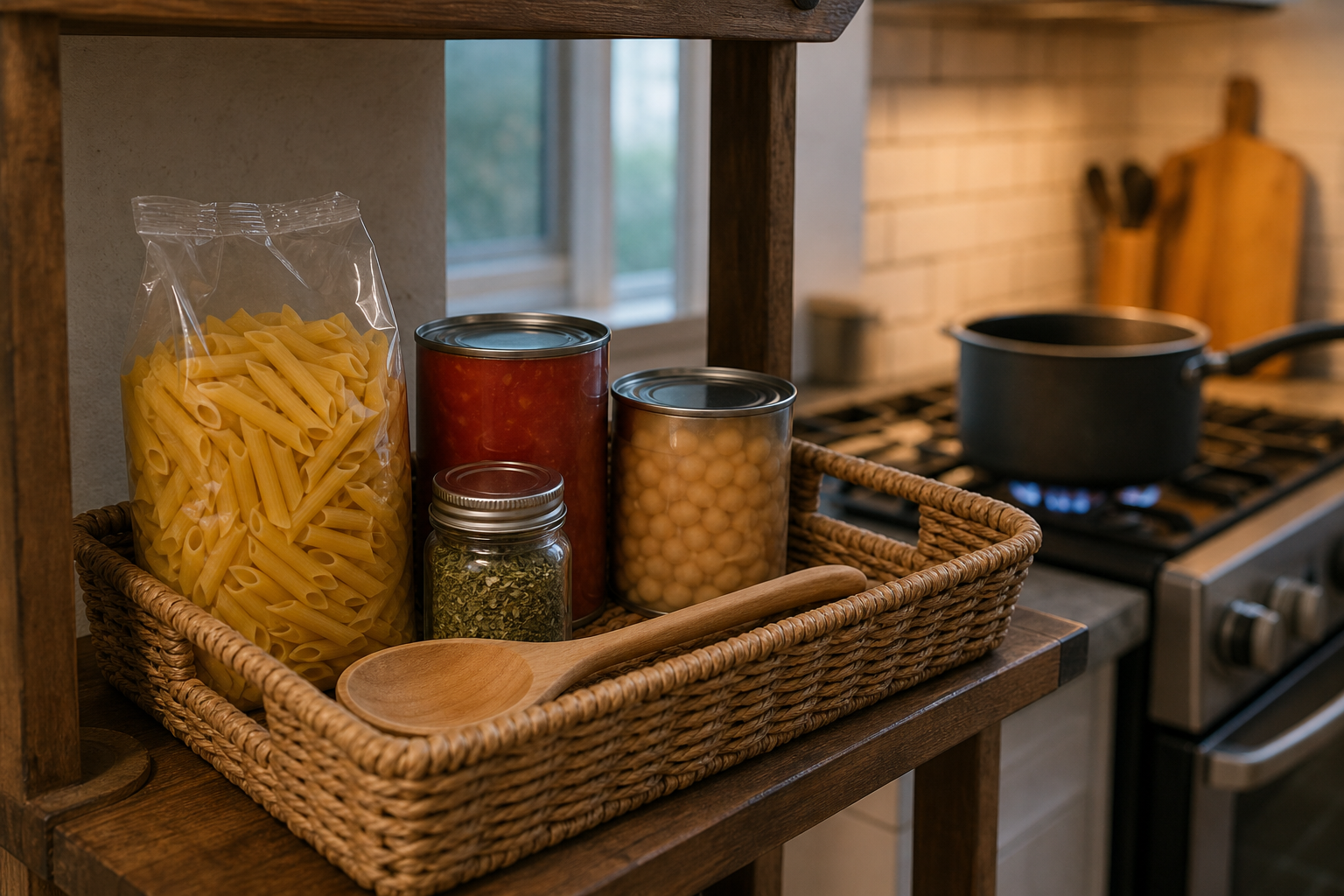
A useful pantry can still fail when its ingredients disappear behind unrelated packages. Arrange the cupboard so the connection between staples and meals is obvious at dinner time.
- Post a small meal map. Write down your dependable combinations, such as rice with beans and tomatoes or pasta with tomato sauce and beans. Keep the note inside the cupboard door.
- Store connected foods near each other. When practical, place the beans and tomatoes close to the rice or pasta they usually accompany. You should be able to see the beginnings of a meal at a glance.
- Move older packages forward. Put newer purchases behind what you already have so the older food gets used first.
- Add replacements to the list when the backup is opened. Waiting until the cupboard is empty makes it more likely that you will discover the gap when you need the meal.
- Protect the easiest combination. Avoid using its final required ingredient for an elaborate recipe unless you already have another quick meal available.
Test the system on a normal busy evening. If you still have to search for a recipe, thaw several ingredients, or make a separate shopping trip, the meal is not yet a dependable pantry backup. Remove a step, replace the awkward ingredient, or choose a simpler formula.
Keep the successful meals in rotation long enough to learn what your household actually finishes. That evidence is more useful than a generic list of foods every family is supposedly meant to stock.
Key takeaways
- Start with meals your family already eats, then buy the shelf-stable ingredients that connect those meals.
- Give every staple a job as a base, substantial component, sauce, flavour, quick helper or baking ingredient.
- Use flexible formulas so a missing extra does not cancel dinner.
- Compare unit prices, package sizes, preparation time and likely waste before deciding what is cheapest.
- Keep backup-meal ingredients visible, connected and replenished.
- Adapt the final texture and serving format to your child’s current feeding skills and individual guidance.
Before your next grocery trip, choose one pantry meal your family would willingly eat this week. Check whether you have its base, substantial component and sauce. Buy only the missing link, make the meal, and note what was left. Once that combination works in your real routine, you have something worth stocking.