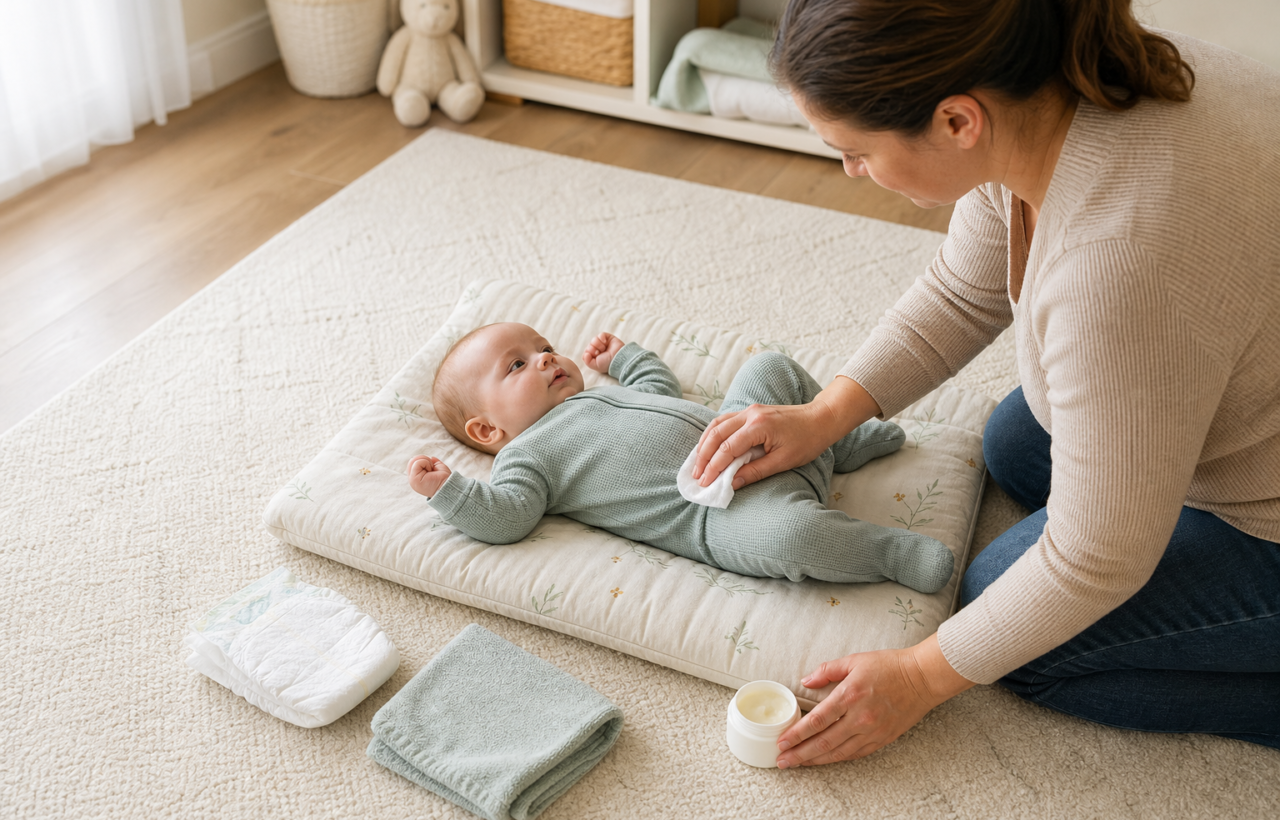
If you are reaching for baby powder because your baby’s diaper area feels damp or a rash is starting, the safest routine is also the simplest: you can leave loose powder out. Frequent diaper changes, gentle drying, and a suitable cream or ointment usually address the problem without putting fine particles into the air.
Baby powder is not automatically dangerous when it is used carefully. The preventable risk is the dust cloud created during application, especially when powder is shaken near a baby’s face. If you still want to use it, the ingredient and the way you apply it both matter.
The main risk is inhalation, not ordinary skin contact
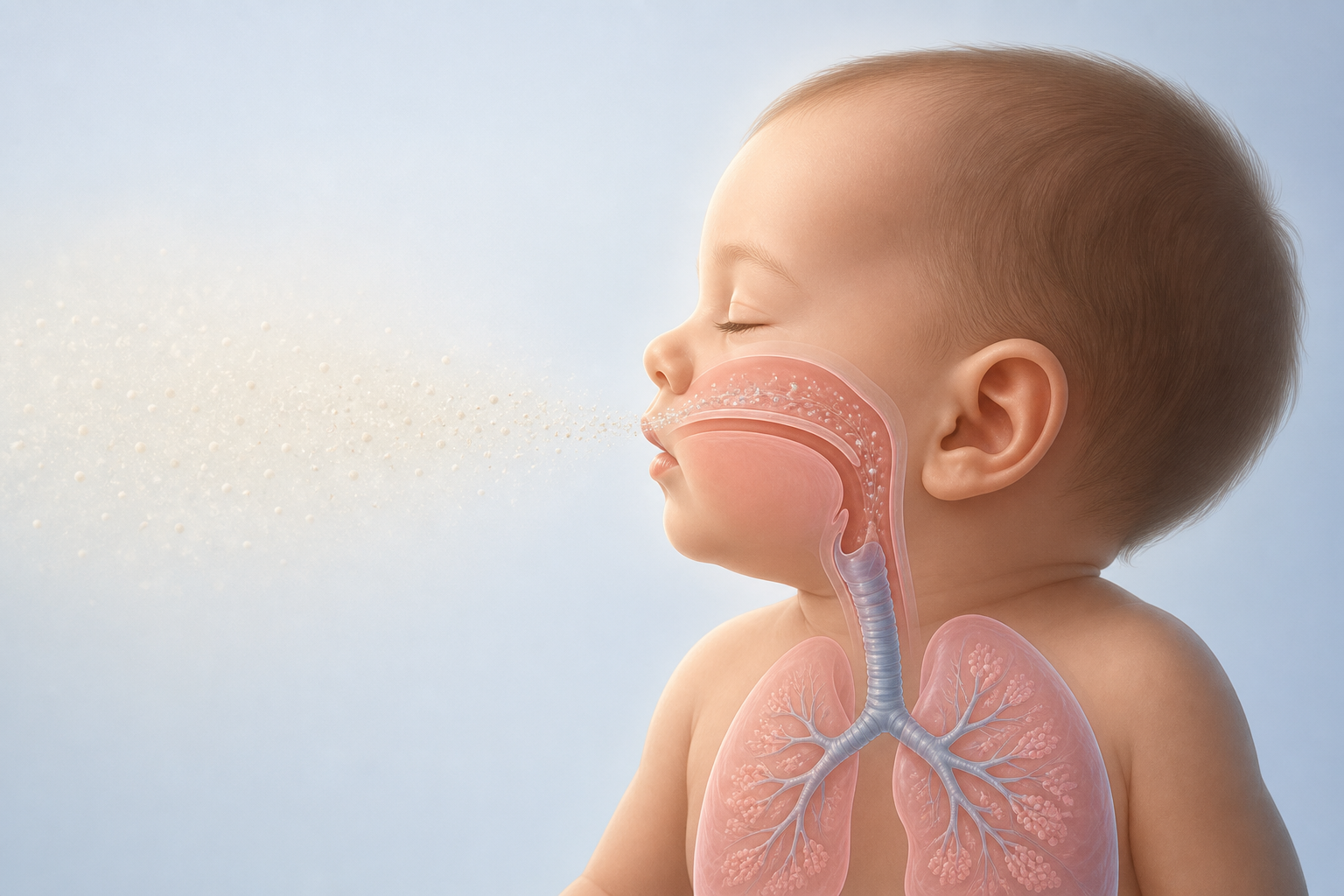
The word “baby” on the bottle can make powder seem harmless. The important distinction is between powder resting on the skin and powder floating in the air. A baby can inhale fine particles when someone shakes a bottle directly over the diaper area, applies a large amount, or accidentally tips the container near the baby’s face.
Talc is a naturally occurring mineral used for its ability to absorb moisture. Its very fine particles can enter the lungs, and a sufficiently large inhaled amount can seriously harm an infant. The American Academy of Pediatrics’ 2018 pediatric environmental guidance advised keeping talcum powder out of the nursery to prevent talc pneumoconiosis, a lung condition caused by inhaling talc particles. Accidental inhalation has been associated with infant deaths.
This is why a bottle tipping toward a baby’s face is more than a messy inconvenience. It can release a concentrated cloud before you have time to turn the baby’s head or pick them up.
Cornstarch-based powders contain larger particles and are considered less of a threat to the airway than talc-based powder. “Less” does not mean that you should create a cloud of cornstarch around a baby. Any loose powder should be handled in a way that keeps it out of the nose and mouth.
A powder-free diaper routine is usually the easier option
Powder is not required at every diaper change, and it cannot compensate for time spent in a wet or soiled diaper. The most useful prevention step is to shorten that contact time.
- Change a wet or soiled diaper promptly rather than waiting for the diaper to feel full.
- Clean the skin gently. Avoid rubbing an already irritated area.
- Pat the skin dry before fastening the next diaper. Do not scrub it dry.
- If the skin needs protection, use an appropriate cream or ointment instead of loose powder. Oil-based lotions, ointments, and creams are powder-free alternatives for preventing or managing diaper irritation.
- Watch the skin over the next several changes. A rash that is worsening, spreading, blistered, open, or accompanied by fever or an unwell baby needs advice from a pediatric clinician rather than another layer of powder.
If a rash keeps returning, do not assume that moisture is the only cause. Irritation, friction, and different types of rash can look similar at first but may not need the same care. A pediatrician or other qualified clinician can help identify what you are dealing with.
If you use powder, change how you apply it
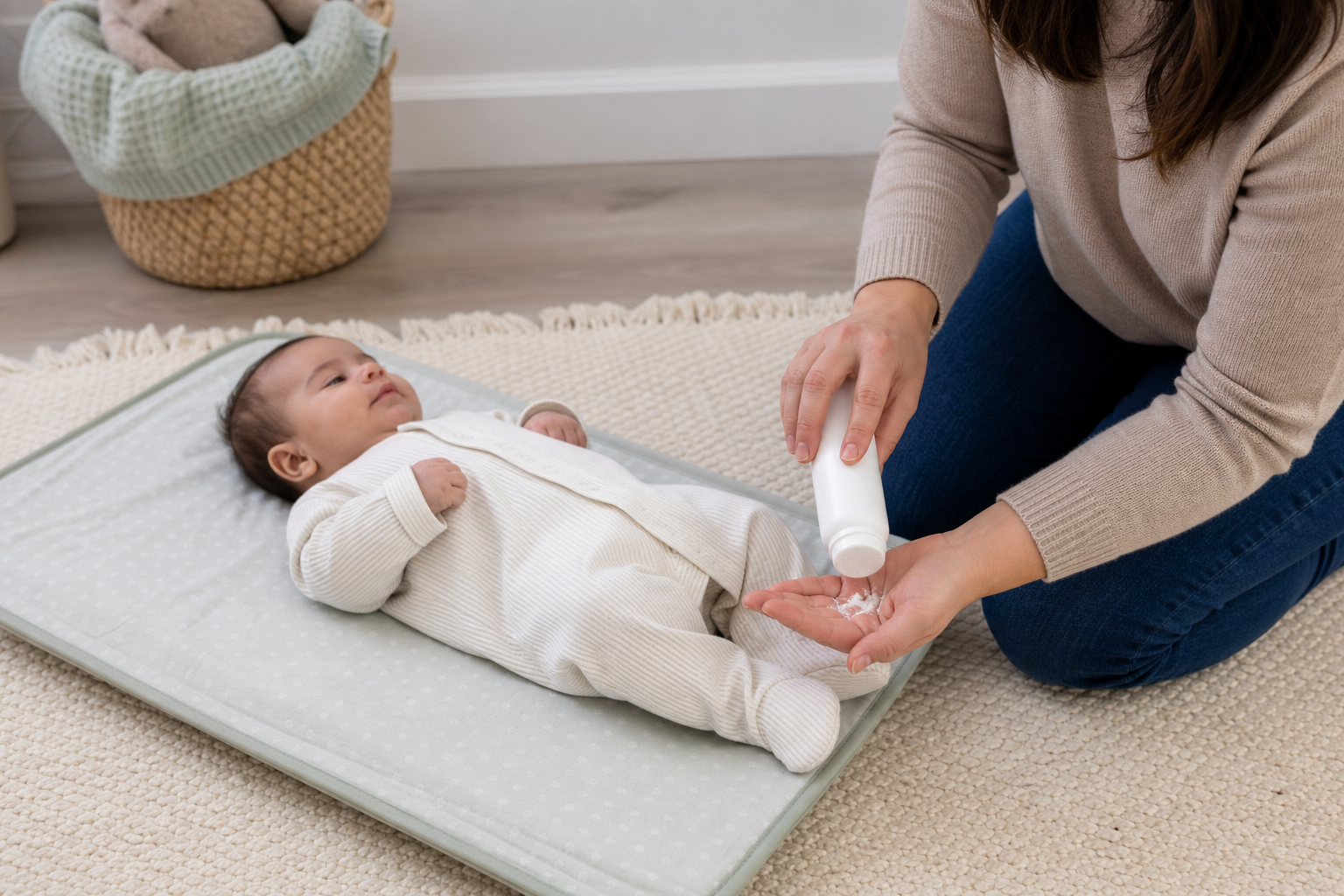
You do not need to panic if powder is already part of your routine. The immediate improvement is to stop shaking it over your baby. Use this method instead:
- Read the ingredient list. Confirm whether the product is talc-based or cornstarch-based rather than relying on the words “baby powder” on the front.
- Place your baby safely on the changing surface and keep the open container beyond the baby’s reach.
- Step back from your baby’s face before dispensing anything. Put a very small amount into your own palm, keeping your hand low so powder does not drift through the room.
- Apply a thin amount to the baby’s bottom with your hand. Putting powder on your hands before touching the skin helps prevent the plume produced by shaking a bottle directly over the baby.
- Never sprinkle powder near the face, pour it into the diaper while the baby is underneath, or try to coat the skin until it looks white.
- Close the container immediately and store it where a child cannot grab, squeeze, or tip it.
What to do after a powder spill
If a spill creates a visible cloud near your baby’s face, move the baby away from the airborne powder. Do not brush, blow, or dry-sweep the spill while the baby is nearby, because that sends more particles into the air. Once the baby is elsewhere, use a damp cloth to collect the powder rather than dispersing it.
Call emergency services if your baby has any difficulty breathing, bluish or grey lips, unusual sleepiness, or poor responsiveness. Persistent coughing or wheezing after an exposure also warrants prompt medical assessment. If a substantial amount may have been inhaled but the baby appears well, contact your local poison centre or pediatric clinician for case-specific guidance and keep the product container available.
The talc and cancer question is separate from the airway risk
Much of the public discussion about baby powder has focused on cancer lawsuits and the possibility of asbestos contamination. Talc can be found in underground deposits that also contain asbestos, a known carcinogen, which is why testing and contamination have been central concerns.
The evidence about talc and ovarian cancer is not a simple cause-and-effect story. A 2020 analysis of four studies involving more than 250,000 people with ovaries did not find strong evidence that genital powder use was associated with ovarian cancer. That adult-use question does not settle the infant-safety question, however. A product can have an uncertain or unsupported cancer association and still pose a clear inhalation hazard when a cloud enters a baby’s lungs.
Product names can also obscure what is actually inside the bottle. Johnson & Johnson stopped selling its talc-based baby powder in the United States and Canada in 2020 while continuing its cornstarch-based version. Talc-based products may still be available elsewhere, and other products can have different formulations. Check the current ingredient list on the bottle in your home instead of assuming that all baby powder is talc or that all of it is cornstarch.
Key takeaways
- You can skip loose powder. Prompt diaper changes, gentle drying, and a suitable cream or ointment offer a powder-free routine.
- The main immediate danger is inhaling airborne particles, particularly a concentrated cloud of fine talc.
- If you want to use powder, cornstarch-based powder presents less of an airway threat than talc, but it still should not be shaken around your baby’s face.
- Dispense a very small amount into your hands away from the baby, then apply a thin layer to the bottom.
- Keep every powder container closed and out of reach so it cannot tip or be squeezed near a child’s face.
- Breathing difficulty after a spill is an emergency. Significant suspected inhalation deserves advice from a poison centre or pediatric clinician even when you are unsure what entered the airway.
For your next diaper change, make one concrete adjustment: move the powder bottle off the changing surface and check its ingredient list. If you do not have a specific reason to keep using it, replace it with a straightforward change-clean-dry-protect routine. If you choose to keep it, applying a tiny amount from your hands keeps the product on the skin instead of in the air your baby breathes.
References