

You have finished the bath, found the right pajamas, read the book and delivered the final hug. Your toddler responds by asking for water, another story, a different stuffed animal or one more minute with you. By the time you leave the room, everyone is more alert and upset than when bedtime began.
The way out is not to choose between being comforting and setting a boundary. Your toddler may genuinely need connection at the end of the day, and bedtime still needs a clear ending. The practical plan is to offer that connection before the routine, keep the routine short and respond to delays with the same calm limit every time.
Key takeaways for tonight
- Start by treating resistance as a mix of normal toddler independence and difficulty separating, not deliberate misbehaviour.
- Give your child a small period of undistracted connection before the bedtime routine begins.
- Use a short sequence with a visible endpoint, such as bath, teeth, pajamas, one book and bed.
- Once the routine starts, offer limited choices but do not negotiate whether bedtime will happen.
- Use one brief closing phrase for extra requests and getting out of bed. Calm repetition is more useful than a longer explanation.
- If persistent refusal, waking or repeatedly leaving bed continues to concern you, talk with your child’s pediatrician.
Why bedtime becomes a push-and-pull
At the end of the day, you are ready for the demands to stop. You may need to clean up, prepare for tomorrow, spend time with your partner or simply sit without being touched. That makes every delay feel as if your child is taking away the last usable part of your evening.
Your toddler can arrive at the same moment with the opposite goal. If the day included daycare or time with a nanny, grandparent or other caregiver, the hours before bed may be the main chance to reconnect with you. Then bedtime introduces the longest separation of the day. You are trying to close the interaction while your child is trying to extend it.
There is another force at work too: saying no and practising independence are normal parts of toddler development. A child who has very little control over the day’s schedule can discover that bedtime produces plenty of opportunities to make decisions. One request becomes another because each request successfully postpones the transition.
This does not mean every delay is calculated. It means a real need for closeness can become entangled with a newly discovered ability to resist. Respond to the closeness before bedtime, then stop rewarding the delay with an ever-expanding routine.
Listen to the pattern of the requests. A toddler who becomes upset as soon as you prepare to leave may be struggling most with separation. A toddler who accepts each answer and immediately invents a new request may have learned that the routine has no firm endpoint. Many children will show both patterns. You do not need to diagnose the motive before responding; you need a plan that makes room for connection without making bedtime optional.
Put connection before the bedtime boundary
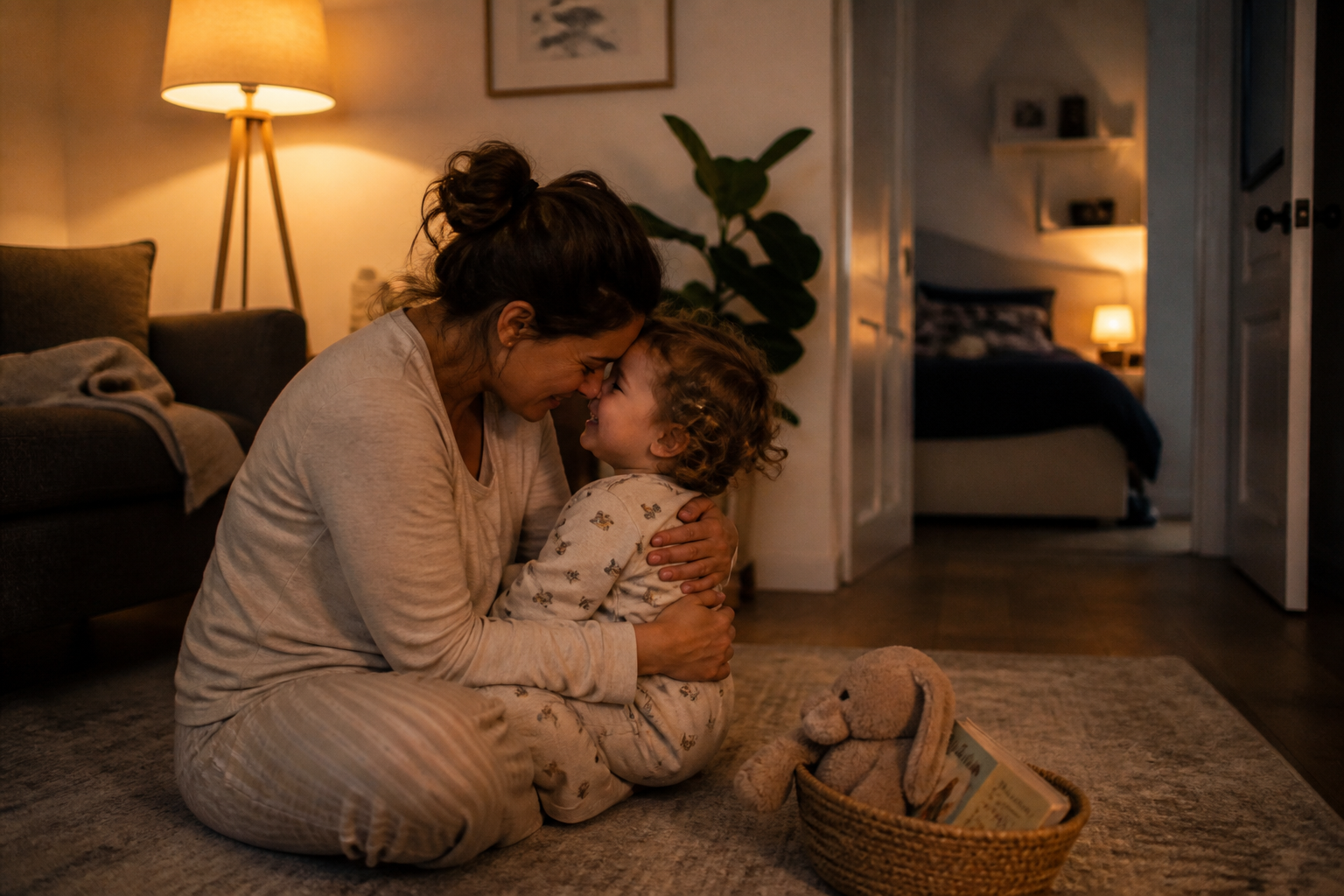
Do not wait until you are standing at the bedroom door to supply all the closeness your toddler has been seeking. Look for a calm opportunity earlier in the evening, before the formal routine begins. The activity matters less than your attention.
- Put your phone away and let your child lead one simple, calm activity.
- Sit together with a picture book, a familiar toy or a quiet conversation about the day.
- Give affection in the form your child usually welcomes, such as a cuddle, sitting close or singing together.
- Say what will happen next: first this time together, then the bedtime routine.
This connection should be intentional, not elaborate. You are not responsible for filling every minute with entertainment or making your toddler perfectly content about going to bed. The goal is to make your availability unmistakable before you ask for separation.
Connection also works better when it is not delivered through repeated exceptions. Five additional books after lights-out may keep you physically present, but they also teach your child that protest changes the plan. A focused moment together before the routine is clearer than a long bedtime in which you are present but increasingly frustrated.
If your toddler wants control, offer it inside the plan. Let your child choose between two acceptable pairs of pajamas, select the bedtime book or decide which stuffed animal will sleep nearby. Do not turn the essential boundary into a choice. The child can choose the pajamas; the child cannot choose whether bedtime happens.
Build a short routine that actually ends

A useful routine is simple enough to repeat when you are tired. A workable sequence is bath, brush teeth, pajamas, one book and bed. If a nightly bath does not suit your household, leave it out. What matters is that the remaining steps happen in a familiar order and lead to a recognizable ending.
Before entering the bedroom, handle the predictable care tasks that apply to your child: teeth, a diaper or toileting visit, pajamas and any usual drink. Decide in advance how many books or songs belong in the routine. Once you have moved into the bedroom and begun the final sequence, do not reopen negotiations for additional activities.
Keep the atmosphere slow and unexciting. Screens are best left out of bedtime. If a screen has become difficult to remove immediately, avoid gaming and fast-action content, which can be stimulating. A calm audiobook, story podcast or familiar audio story is a gentler alternative, provided it has a clear stopping point.
The final cue should be brief and consistent. It might be a hug, a goodnight phrase and the light going off. Avoid adding a new promise every time your child protests. The more complicated the ending becomes, the more material there is to negotiate tomorrow.
You can prepare a few short responses before bedtime so that exhaustion does not turn the conversation into an argument:
- For another book: Books are finished. It is bedtime now.
- For a different set of pajamas after the choice was made: You chose these pajamas. We can choose again tomorrow.
- For another hug: Here is our last hug. Then I am leaving the room.
- For general protest: You want more time with me. It is hard to stop. It is still bedtime.
- For leaving bed: It is bedtime. I am helping you back to bed.
Acknowledging the feeling is not the same as changing the answer. Keep your words short, lower your voice and avoid presenting fresh reasons your toddler can debate. If your child comes out again, return them with the same line and as little extra activity as possible.
Your own pace matters. Toddlers notice when a parent enters bedtime rushed, anxious or angry, and that tension can make them seek even more reassurance. You do not have to feel perfectly calm. Slow your movements, use fewer words and pause before answering the next request. If you become sharp, reset your tone without inventing a new rule.
A bedtime limit is not a reason to ignore a genuine care need. Respond when your child truly needs care, then return to the established sequence rather than turning the interruption into another round of books, songs and negotiation.
Change the part of bedtime that is causing the friction

When bedtime remains difficult, resist the urge to add a more elaborate system immediately. Watch where the struggle begins, then adjust that part of the evening. Changing one element at a time also makes it easier to notice what is helping.
| What you notice | What to check first |
|---|---|
| Your child becomes distressed when you begin to leave | Add focused connection earlier in the evening, then keep the final goodbye brief and consistent. |
| Every fulfilled request produces a new request | Give the routine a fixed endpoint and stop adding activities after it has been reached. |
| Bedtime follows gaming or fast-action screen content | Remove that stimulation from the routine; if you need a transitional option, try calm audio instead. |
| You enter the routine already rushed or angry | Simplify the sequence, prepare routine items beforehand and use fewer words when resistance starts. |
| Refusal, waking or repeatedly getting out of bed continues | Discuss the pattern with your child’s pediatrician rather than continuing to expand the routine. |
Some bedtime resistance is developmentally ordinary, but you do not have to troubleshoot an ongoing sleep problem alone. If your toddler continues refusing sleep, waking or getting out of bed despite a clear routine, or if the pattern otherwise worries you, bring the details to your pediatrician. They can consider whether an underlying health concern needs attention and help you work through the specifics of your child’s sleep.
For tonight, choose one quiet connection ritual, write down the bedtime sequence and decide on one closing phrase. Then let the routine end where you said it would. Your toddler does not need you to make separation appealing; they need you to make it warm, clear and predictable.
References