
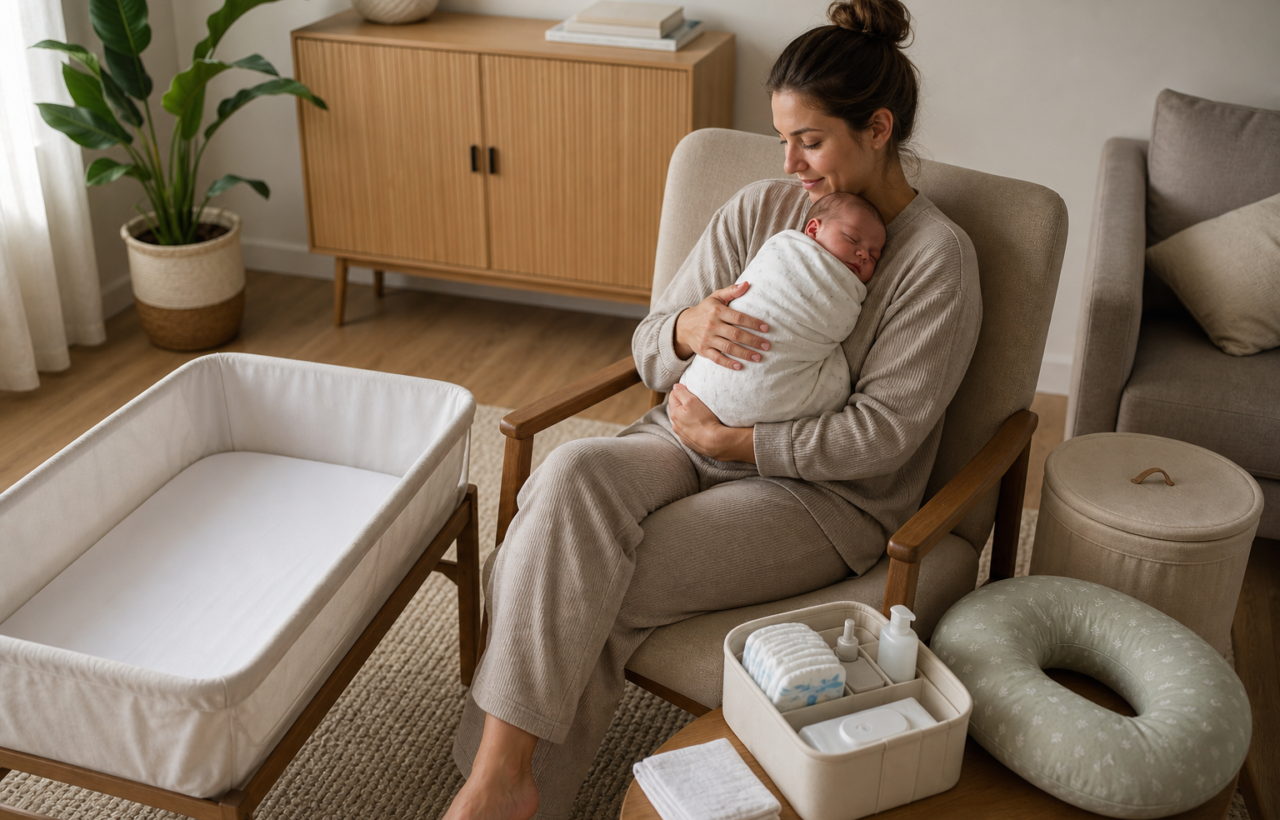
If your registry has turned into dozens of open tabs and no clearer idea of what to buy, stop trying to predict every version of newborn life. You need a workable setup for the care jobs you will repeat every day, not a fully stocked answer to every possibility.
Use one rule: buy confidently when the use is certain, and start small when fit, feeding, tolerance or your baby’s preferences will decide. You will be prepared without filling your home with products that solve problems you never have.
Key takeaways
- Build your newborn setup around feeding, changing, safe sleep and cleanup.
- Put supplies where each task will happen instead of storing everything in the nursery.
- Diapers and wipes are certain needs, but the right size, fit and product may take some trial.
- If you expect to formula feed, have a modest amount available rather than committing to a large supply of one variety.
- Choose strollers and other large gear for your home, storage and usual route, not for someone else’s routine.
Start with the four jobs your newborn creates
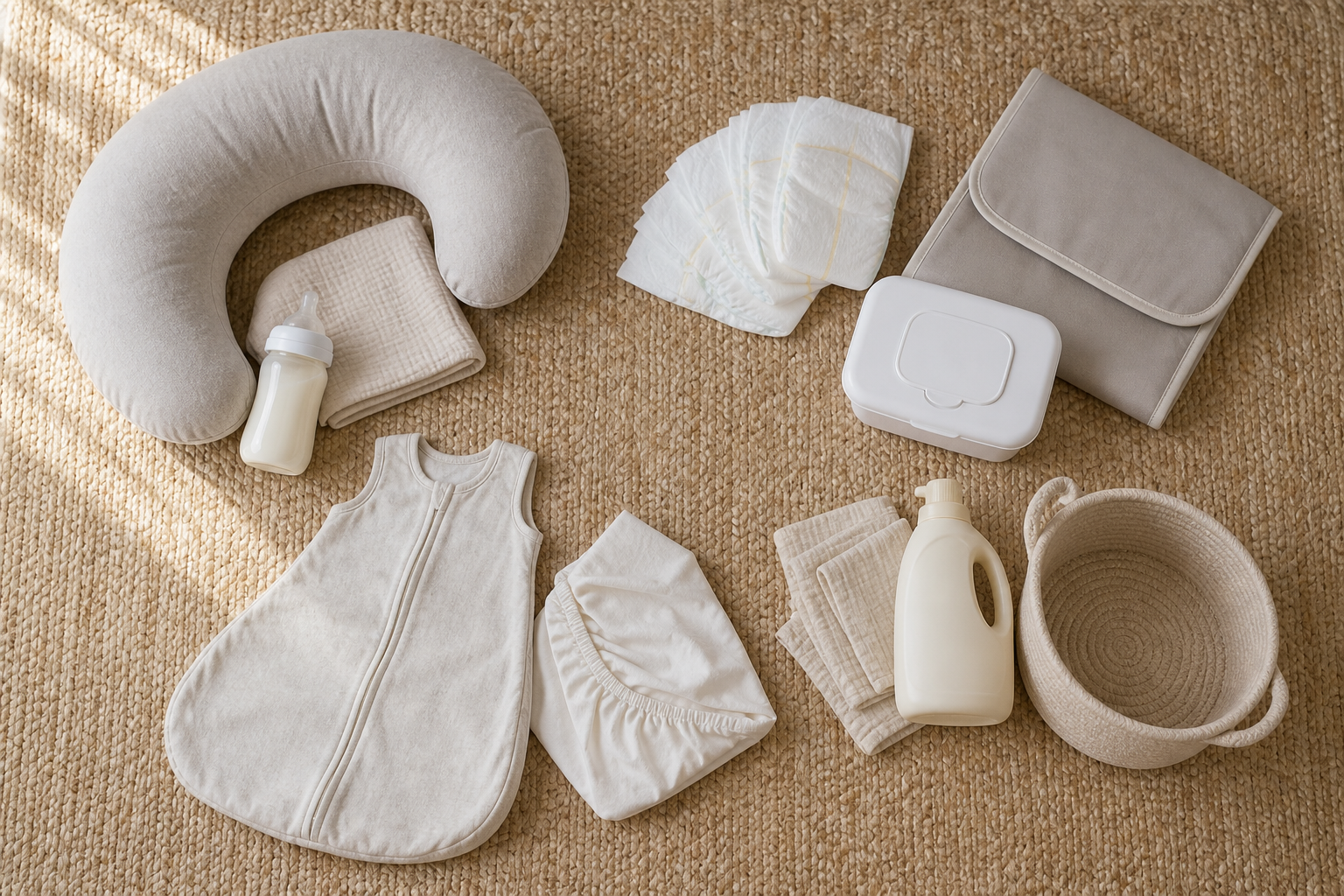
The most useful newborn purchases are usually the things you will reach for repeatedly, sometimes while tired and using one hand. Begin with the work, then choose the products.
- Feeding: What supports the feeding plan you currently expect to use? Where will clean supplies wait, and where will used ones go?
- Changing: Where will you change the baby during the day and overnight? Can you reach a clean diaper, wipes, fresh clothing and your waste setup without leaving the baby?
- Sleeping: Where will the baby have a suitable sleep space near the adults providing care? Does that plan work both overnight and during the parts of the day you spend elsewhere in your home?
- Cleanup: Where will you keep burp cloths, wipes, bath supplies and laundry? Can messes move from dirty to clean without creating piles in every room?
For every product, finish this sentence: I will use this in [place] when [specific task] happens. If you cannot fill in both blanks, move the item to a wait-and-see list. Asking where and when you would use something is a better test than asking whether babies generally need it.
- Need it immediately: Add it to the before-baby list.
- Need depends on size, tolerance or feeding: Buy a starter amount and keep the rest of the budget flexible.
- Need depends on a routine you have not lived yet: Save the link and wait.
- Already solved by something you own: Skip the specialized version unless a real problem appears.
Apply a stricter standard to sleep products. Convenience does not make an improvised cushion, lounger or seat a suitable sleep space. Use a sleep space intended and set up for sleep, and follow current healthcare guidance and the manufacturer’s instructions.
Build care stations around your real home

A beautifully organized changing table is useful only when you are standing beside it. Newborn care happens wherever you feed, rest and spend the night, so place small groups of supplies at those points. You do not have to make every diaper change a trip to the nursery.
- Overnight changing station: Keep correctly sized diapers, wipes, a changing surface, spare clothing and a waste plan within easy reach.
- Daytime station: Use a caddy with the same changing basics near the room where you actually spend the day.
- Feeding and cleanup zone: Put burp cloths, the feeding supplies you expect to use and a clear place for used items beside your usual seat.
- Leaving-home station: Keep the diaper bag stocked near the exit. If you travel by car, a small backup stash can prevent an ordinary delay from becoming a failed outing.
If your home has more than one floor, a second suitable sleep space and changing supplies on each level may help more than elaborate nursery decor. In a compact home, portable caddies may make more sense than duplicate furniture. The useful choice follows the distance you must walk and the storage you actually have.
Keep unopened supplies in one central reserve and refill each station from there. Set a restocking point before you are down to the last few diapers or wipes. That gives you the convenience of several stations without losing track of what remains.
Buy certainty now and trial the variables
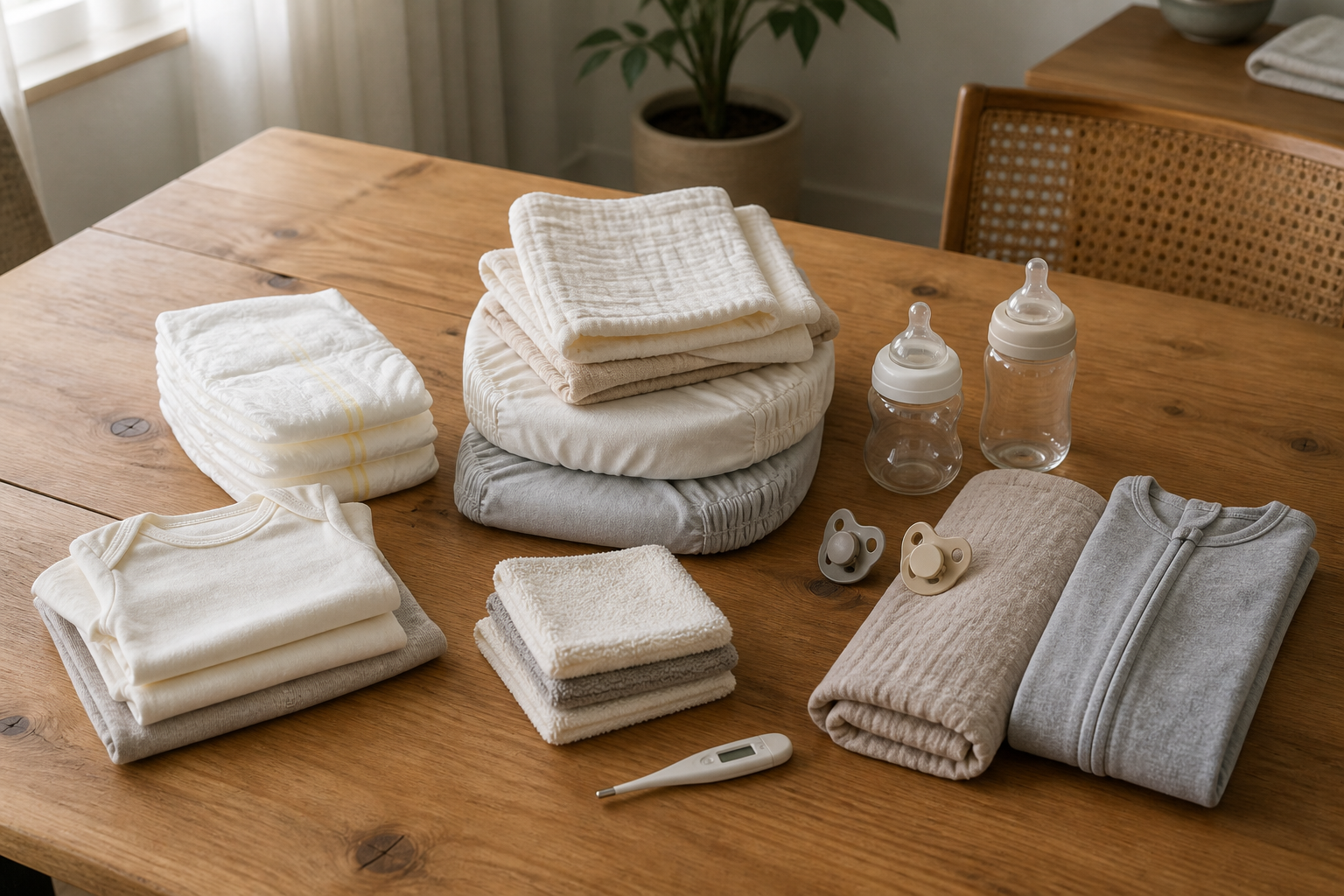
Some categories are guaranteed to be used. The uncertainty is which version will suit your baby and your routine. Treat those as trial decisions rather than lifetime commitments.
Diapers and wipes: stock the task, not one exact answer
Diaper changes will be frequent, and wet and dirty diaper patterns can help parents and healthcare providers assess how feeding is going. Have a dependable starting supply and a backup pack, but remember that size, fit, skin response and leak performance are learned through use.
- Keep some packages unopened and retain receipts until you know the size and product work for your baby.
- Check fit and performance before buying a long run of the same size.
- Expect wipes to handle more than diaper changes; they are often used for milk dribbles and other small messes as well.
- If irritation persists or your baby’s skin concerns you, contact a healthcare professional rather than treating repeated product changes as medical care.
Read the exact package when ingredients or testing claims matter to you. Broad terms such as natural should prompt you to verify the label and its specific exclusions. Fragrance-free claims, ingredient exclusions and dermatological credentials can help you narrow the shelf, but they do not tell you whether a diaper will fit well or prevent leaks for your baby. Those questions still require observation.
This distinction keeps marketing in its proper place. A detailed label can answer what a product contains or omits. Your baby’s skin and the product’s real-world fit answer whether it works in your home. Feeling informed and prepared matters more than finding a universally best product for every family.
Formula: prepare without creating a warehouse
If you expect to formula feed, it is reasonable to have a small amount available. It is less useful to buy a long-term supply of one variety before you know what your baby will tolerate or whether a healthcare provider will identify a specific feeding need. There is no single formula choice that suits every baby.
Use the same restraint with bottles and feeding accessories. Begin with what supports your immediate plan, then add more when you know what the baby accepts and what you can comfortably clean. If feeding, diaper output or your baby’s condition worries you, contact the baby’s healthcare provider; buying different gear is not a substitute for clinical advice.
Larger gear: make your routine the test
A stroller can be excellent and still be wrong for your life. Before choosing one, picture the route from storage to street. Consider whether you must carry it on stairs, fit it into a vehicle, take it on transit or steer it over the surfaces you use. A large travel system may be helpful for one family and impractical in a walk-up where a lighter stroller is easier to manage.
Use that test for every substantial item: Where will it live? Who must lift or move it? What recurring task does it shorten? What will you use instead if you do not buy it? If the benefit remains abstract, postpone the purchase.
A nursery mobile, for example, can add visual interest and is often chosen for visual and cognitive engagement. It is still an optional extra, not a missing part of your feeding, changing, sleep or cleanup setup. If you choose one, install and use it according to its instructions.
Turn your registry into a plan you can revise
A useful registry is not the longest one. Divide yours by how much you can know before meeting your baby.
- Open and use immediately: Everyday supplies such as diapers, wipes, burp cloths, basic bath items, diaper cream and the initial feeding supplies your plan requires, along with appropriate sleep and transport essentials.
- Keep flexible: Bulk formula, many packages of one diaper size, a full collection of one bottle type, large duplicates and accessories that depend on routines you have not tested.
- Add for meaning or enjoyment: Keepsakes, special clothing, a mobile and other items that are lovely to have but do not need to carry the practical setup.
For flexible categories, ask for a starter quantity, gift cards or gifts with a workable return path. Keep packaging intact until you are ready to use the item. This preserves your ability to respond to the baby you have rather than the baby a product list imagined.
Before you declare the setup finished, do one dry run. Stand beside the baby’s sleep space and walk through an overnight change. Sit where you expect to feed and check whether supplies and cleanup are reachable. Pack the diaper bag, then put it by the door. If you are buying a stroller, practice its fold and confirm where it will be stored. Remove any registry item for which you still cannot name a place and task.
Then stop shopping. Leave some storage, money and decision-making capacity uncommitted. Set up the products that make the next ordinary care task easier, and let your baby’s actual fit, feeding needs and daily rhythm guide what comes next.
References
- Scary Mommy – The New Parent Shopping Rule I Wish I’d Known Sooner
- Scary Mommy – What The Best For Baby Really Looks Like
- Scary Mommy – The Newborn Advice That’s Actually Worth Listening To
- Scary Mommy – How To Build A Baby Registry You’ll Actually Use
- Parents – The 10 Best Baby Mobiles for Beautiful, Captivating Nurseries




