You are changing another pair of underwear, your toddler seems unbothered, and you are wondering whether potty training is working at all. A poop accident does not prove that your child is not ready or that you have handled training badly. Accidents are part of learning to use the toilet.
The useful question is not, Why did you do that? It is, Where did the sequence break down? Your child has to notice the body signal, stop what they are doing, reach the bathroom, manage their clothes, sit comfortably, and release the poop. Find the difficult step, and you can make the next attempt easier.
Key takeaways
- Treat an accident as information, not misbehaviour.
- Watch for the pattern: missed body signals, reluctance to stop playing, difficulty reaching the toilet, fear, or painful stool.
- Use a short, neutral cleanup routine. Shame, lectures, and punishment can turn the toilet into a bigger conflict.
- Make success physically easy with simple clothing, stable foot support, a comfortable seat, and a potty that is easy to reach.
- Praise useful steps such as noticing, telling you, walking to the bathroom, or sitting. Do not reserve all encouragement for a poop in the toilet.
- Contact a health-care provider if pooping is painful, stools are consistently hard, you see blood, your child regularly withholds, or your child seems unwell.
Find the step your toddler is missing
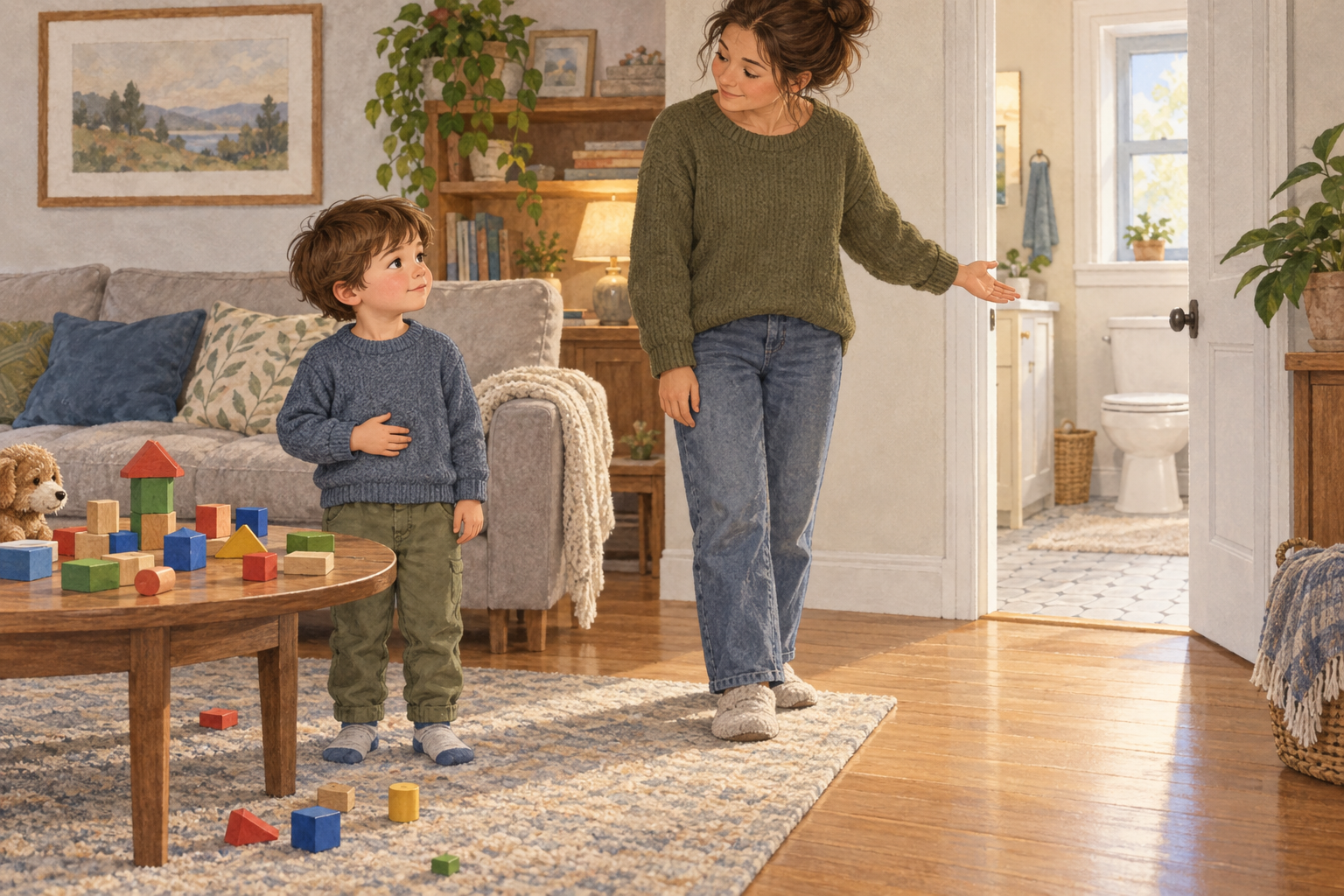
Before changing the whole potty-training plan, observe the next several bowel movements. Make a brief note of when the accident happened, where your child was, what they were doing, whether they showed any warning signs, and whether the stool seemed soft, hard, or painful. You are looking for repetition, not building a perfect record.
Different patterns call for different responses:
- Your child appears surprised by the accident. They may not yet recognize the signal early enough. Name observable cues without interrogating them: Your body got very still. That can mean poop is coming. Then guide them toward the potty when you see the cue again.
- Your child knows poop is coming but does not want to stop playing. The barrier may be the transition rather than the toilet. Give a calm prompt near their usual poop time and keep the potty close to the activity area when practical.
- Your child hides, stiffens, refuses to sit, or seems frightened. Check whether the seat feels unstable, the flush is upsetting, the room lacks privacy, or a previous poop hurt. More reminders will not fix a comfort or fear problem.
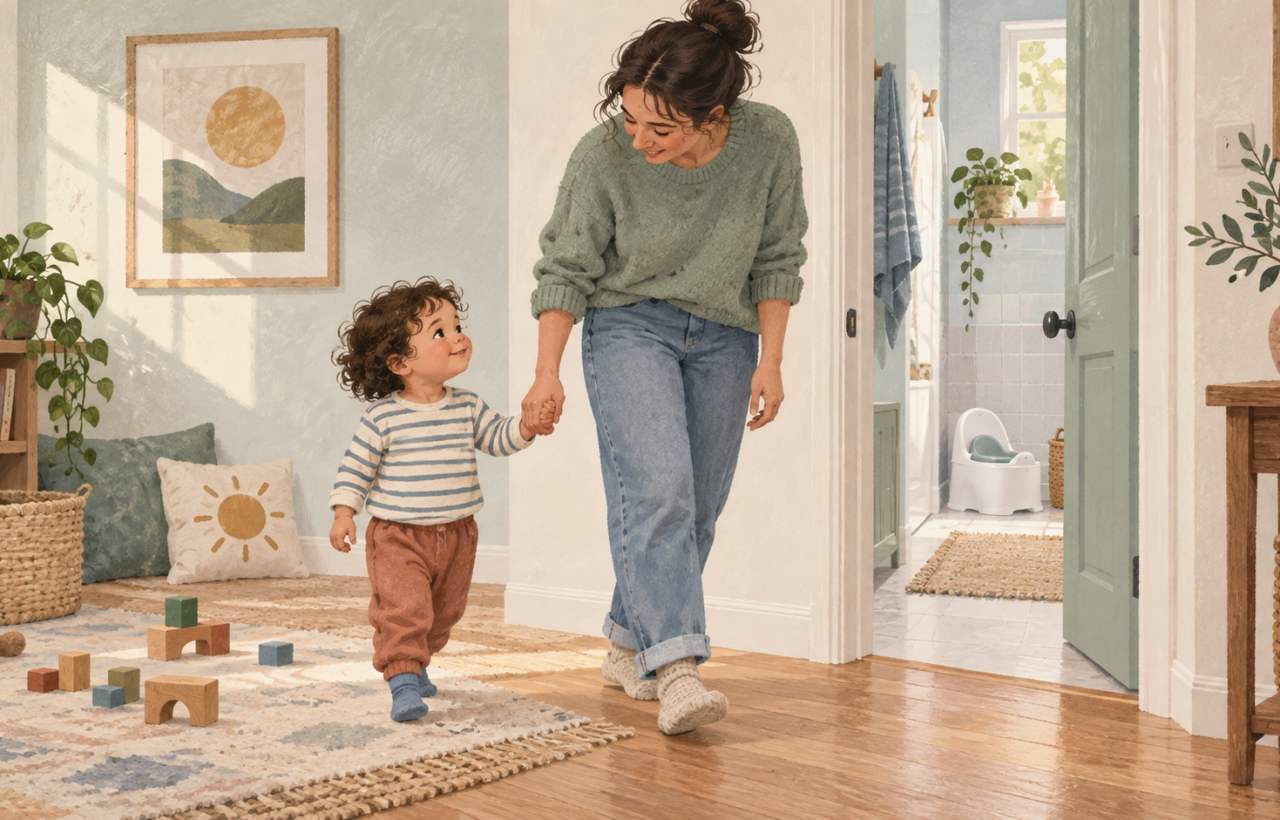
- Your child reaches the bathroom but cannot manage their clothes in time. Temporarily choose elastic-waist bottoms that come down easily. Overalls, complicated fasteners, and tight layers add steps when time is short.
- The accident happens when stool is loose or your child is unwell. Pause the training expectations and focus on care, hygiene, and recovery. Illness-related accidents are not a behaviour problem.
A pattern is not a diagnosis. It simply helps you choose a useful adjustment instead of adding more pressure. If you cannot see a pattern yet, keep the response neutral and continue observing.
Handle the accident without creating a toilet battle
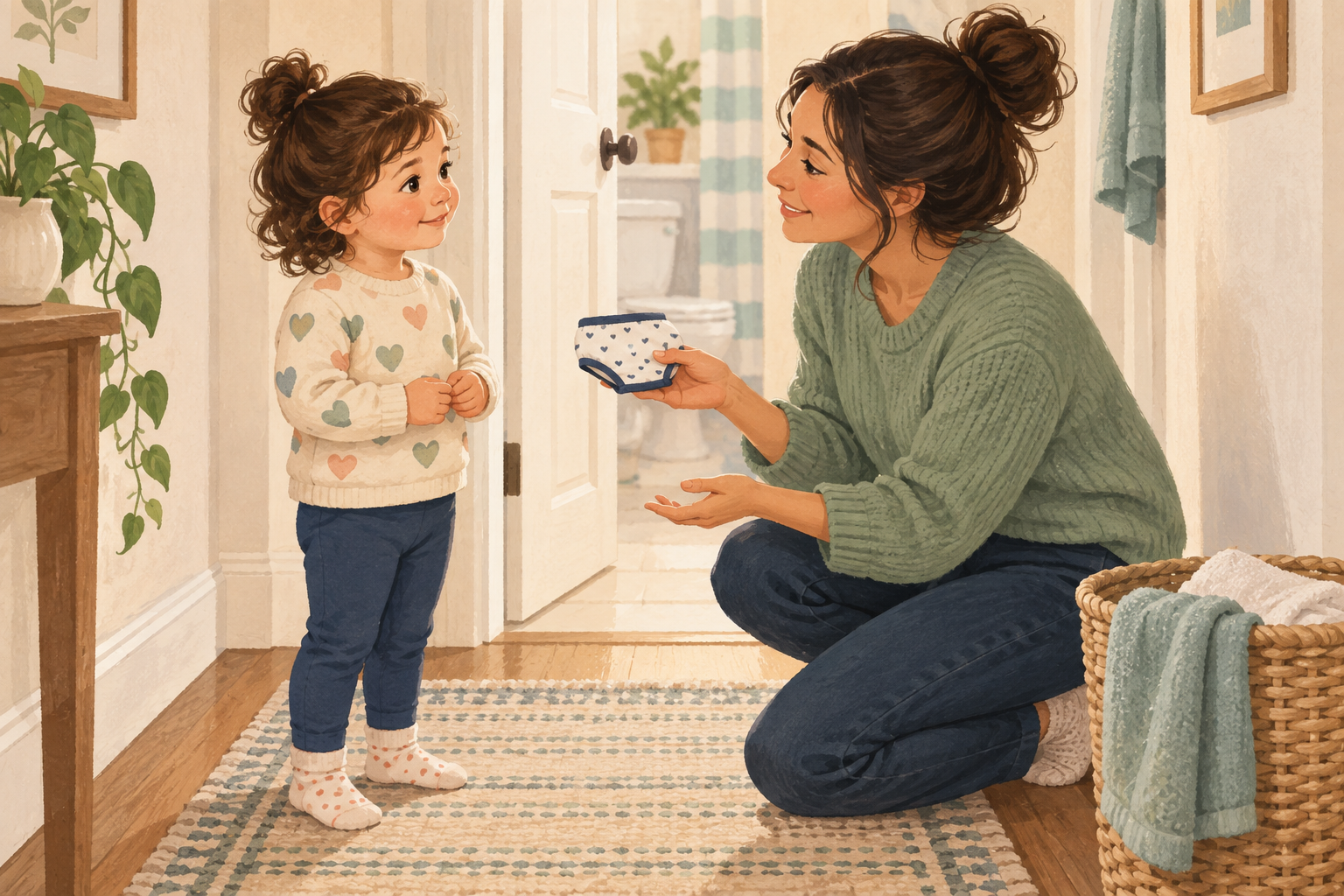
Neutral does not mean ignoring what happened. It means dealing with the poop clearly and calmly, without turning cleanup into punishment. Use the same short sequence each time:
- Pause the activity and say what happened in plain language: The poop came out in your underwear. Poop goes in the potty.
- Move to the bathroom or your usual changing area. Keep your tone matter-of-fact even if the timing is frustrating.
- Handle the hygienic parts of cleanup yourself. A toddler can take an age-appropriate role, such as putting clothes in a designated container, fetching clean clothes, or helping pull them on. Do not make a child touch feces as a consequence.
- Wash hands and reset the bathroom together.
- Give one forward-looking cue: Next time, tell me when your belly or bottom says poop. Then return to the day.
Avoid asking why it happened immediately after an accident. Many toddlers cannot explain a body signal or a split-second decision, and repeated questioning can sound accusatory even when you are trying to understand. Your observations will usually tell you more.
Do not hide your frustration behind sarcasm, disgust, or jokes about smell. Toddlers read faces and tone long before they can explain the feeling those reactions create. If you are getting angry, make the cleanup script shorter rather than turning it into a lesson.
Make the next poop easier to catch
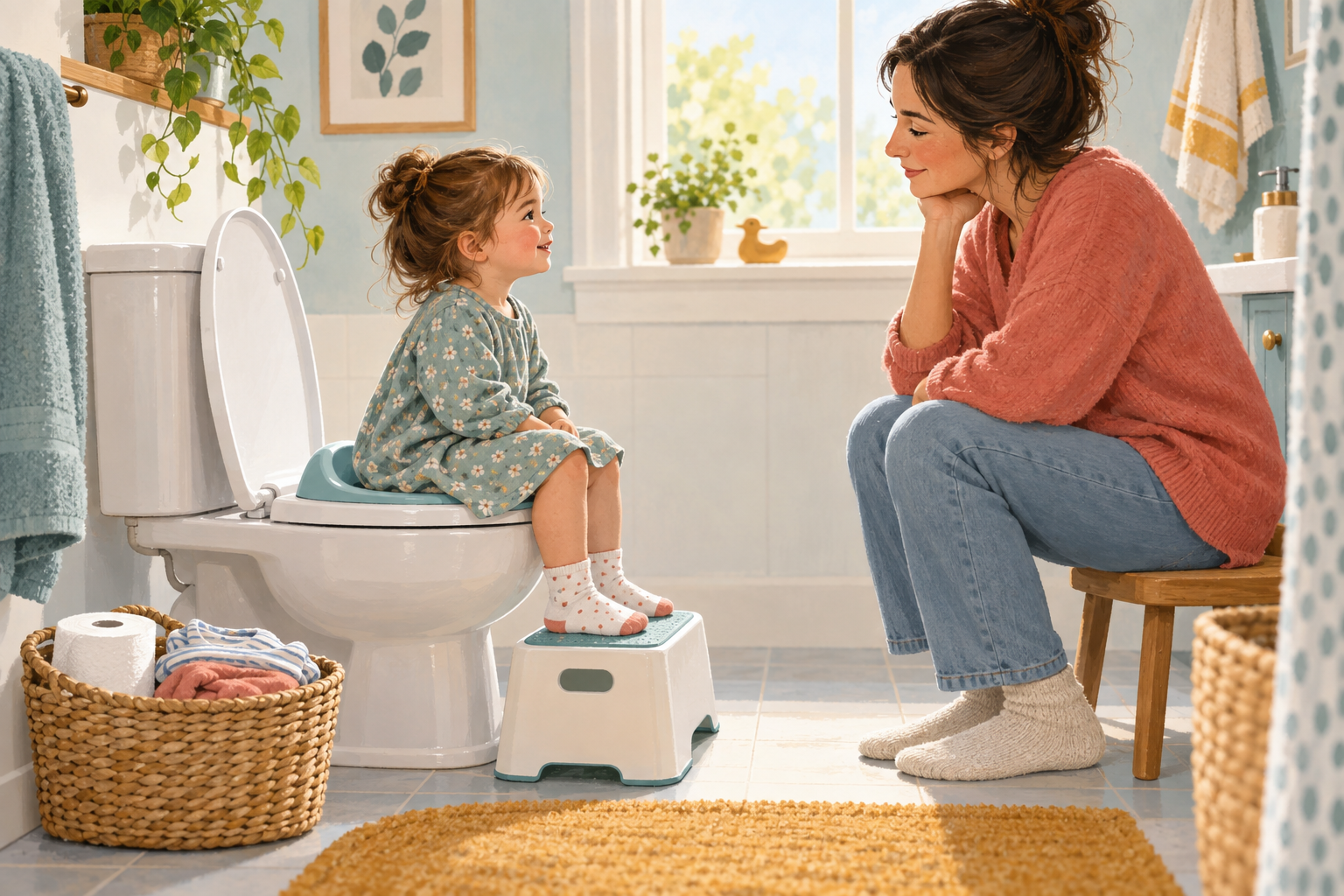
Once you know the likely barrier, change one or two parts of the setup. Changing everything at once makes it harder to tell what helped and can make the toilet feel like a major new project.
- Use your child’s actual timing. Offer a relaxed toilet sit near the time accidents usually occur. Keep it brief enough that sitting does not feel like detention.
- Give a bounded choice. Try: It is time to try. Potty chair or toilet? A choice about where to sit gives your toddler some control without making the entire routine optional.
- Support the body. Use a stable potty chair or an appropriately sized toilet insert. If your child’s feet dangle, add secure foot support so they do not have to balance while trying to poop.
- Simplify the route. Keep the potty easy to reach, clear obstacles, and use clothing your toddler can lower quickly. During this phase, function matters more than the perfect outfit.
- Respect reasonable privacy. Some children want a little space to poop. Stay close enough for safety and help, but avoid hovering, staring, or repeatedly asking whether anything is happening.
- Praise the process. Notice concrete actions: You stopped playing and told me, or You pulled your pants down by yourself. Those are skills your toddler can repeat even when no poop appears.
- Keep rewards small and predictable. If you use a sticker or another simple incentive, connect it to a behaviour your toddler controls, such as telling you or sitting. Never remove an earned reward because of a later accident.
- Use the same plan across caregivers. Share the cue words, likely timing, cleanup response, and spare-clothing plan with child care providers or relatives. A toddler should not meet encouragement in one place and shame in another.
If your child cannot yet notice the urge, communicate it, or cooperate with the basic routine, reduce the pressure. You can still teach body words, offer the potty, and practise clothing skills without treating every bowel movement as a test. A pause in pressure is not the same as abandoning potty learning.
Know when the main problem may not be training
A child who expects pooping to hurt may resist sitting, hide, or try to hold the stool. Treating that response as stubbornness can intensify the struggle while leaving the reason untouched. If stools are consistently hard or painful, your child regularly withholds, or accidents continue despite a calm and accessible routine, contact your child’s health-care provider. Ask whether constipation or another physical issue needs to be assessed rather than trying to solve the problem through discipline.
Seek medical advice promptly if you see blood in the stool, your child has persistent or severe belly pain, repeated vomiting, a swollen abdomen, unusual low energy, or otherwise appears unwell. New, frequent accidents after a child had been reliably using the toilet also deserve a conversation with a clinician. If symptoms are severe or worsening quickly, use urgent medical care rather than waiting for a routine potty-training adjustment to work.
For the next poop, keep the job small: notice what happened just before it, use the same neutral cleanup words, and remove one practical barrier. If pain enters the picture, stop treating the accident as a training problem and bring in your child’s health-care provider.
References