

When measles cases are rising, a national headline cannot tell you whether your child is in immediate danger. It can tell you that this is the right time to confirm your family’s protection and decide what you would do if an exposure notice arrived.
More than 3,400 measles cases have been reported in the United States in 2026. If you have a baby or toddler, especially one who is not yet fully vaccinated for their age, your safest next steps are practical: check records, ask age-specific questions, and know how to contact care without exposing a waiting room.
Start with a vaccination check, not a risk guess

Your child’s risk depends on more than the national case count. Vaccination status, local transmission, travel, and a known exposure all matter. Replace assumptions with documented answers.
- Open the actual immunization record. Check your child’s patient portal, paper record, or vaccination card for documented MMR vaccination. Do the same for parents, siblings, and other regular caregivers. If a record is missing or unclear, contact the clinician who administered the vaccines; your current clinician may also be able to check an immunization registry.
- Ask whether your child is up to date for their age. Do not compare your baby with an older sibling or another child at daycare. The appropriate schedule depends on age and circumstances.
- Describe upcoming travel. Tell your child’s clinician where and when you are going, particularly if you will use airports, attend a large gathering, or visit an area reporting measles. Ask whether the travel or outbreak changes the recommended vaccination plan.
- Flag medical circumstances in the household. A baby below the routine vaccination age, a pregnant family member, or a person with a weakened immune system needs individualized advice. Each person should speak with their own clinician rather than arranging an extra vaccine independently.
MMR vaccination is the central preventive measure against measles. General online advice cannot determine whether a particular child should receive a dose earlier than usual or how an early dose affects later routine doses. That decision belongs with a pediatric clinician who knows the child’s age, health history, records, and exposure risk.
Save the pediatric office’s daytime and after-hours numbers now. Also identify the local public-health department for the place where you live or will be traveling. Those contacts are much easier to find before anyone is sick.
If your child may have been exposed, call before going anywhere

Measles spreads through the air and is highly contagious. An exposure may involve sharing indoor air rather than touching the same person or object. That is why an unexpected visit to a clinic, pharmacy, or emergency waiting room can put other families at risk.
If you receive an official exposure notice or learn that your child shared a location with someone who had measles, take these steps:
- Write down the exposure details. Record the place, date, approximate time, how long your child was there, and who else from your household attended. Keep the notice or message that alerted you.
- Call promptly, even if your child feels well. Contact your pediatric clinician and follow the instructions of the public-health department handling the exposure. Some post-exposure decisions are time-sensitive and depend on age, health, pregnancy, immune status, and vaccination history.
- Say “possible measles exposure” before an in-person visit. The care team may use a separate entrance, arrange a different location, or give other arrival instructions. Do not enter a waiting room unannounced unless emergency personnel direct you to do so.
- Ask about childcare and family contacts. Do not decide on your own that a well-looking child can return to daycare, a playgroup, or a family gathering. Public-health staff can determine whether the exposure was meaningful and whether anyone needs to stay home.
- Follow the full monitoring instructions. Save the last date on which you have been told to watch for symptoms. A child who is well immediately after an exposure has not necessarily been cleared.
Do not wait for a rash before making the first call. Measles can spread before its characteristic rash appears, and its early symptoms can resemble other respiratory illnesses. Likewise, do not use a national map or social-media report to diagnose an exposure. Your clinician and local public-health team can assess the specific setting and timing.
Recognize possible symptoms and know when care is urgent
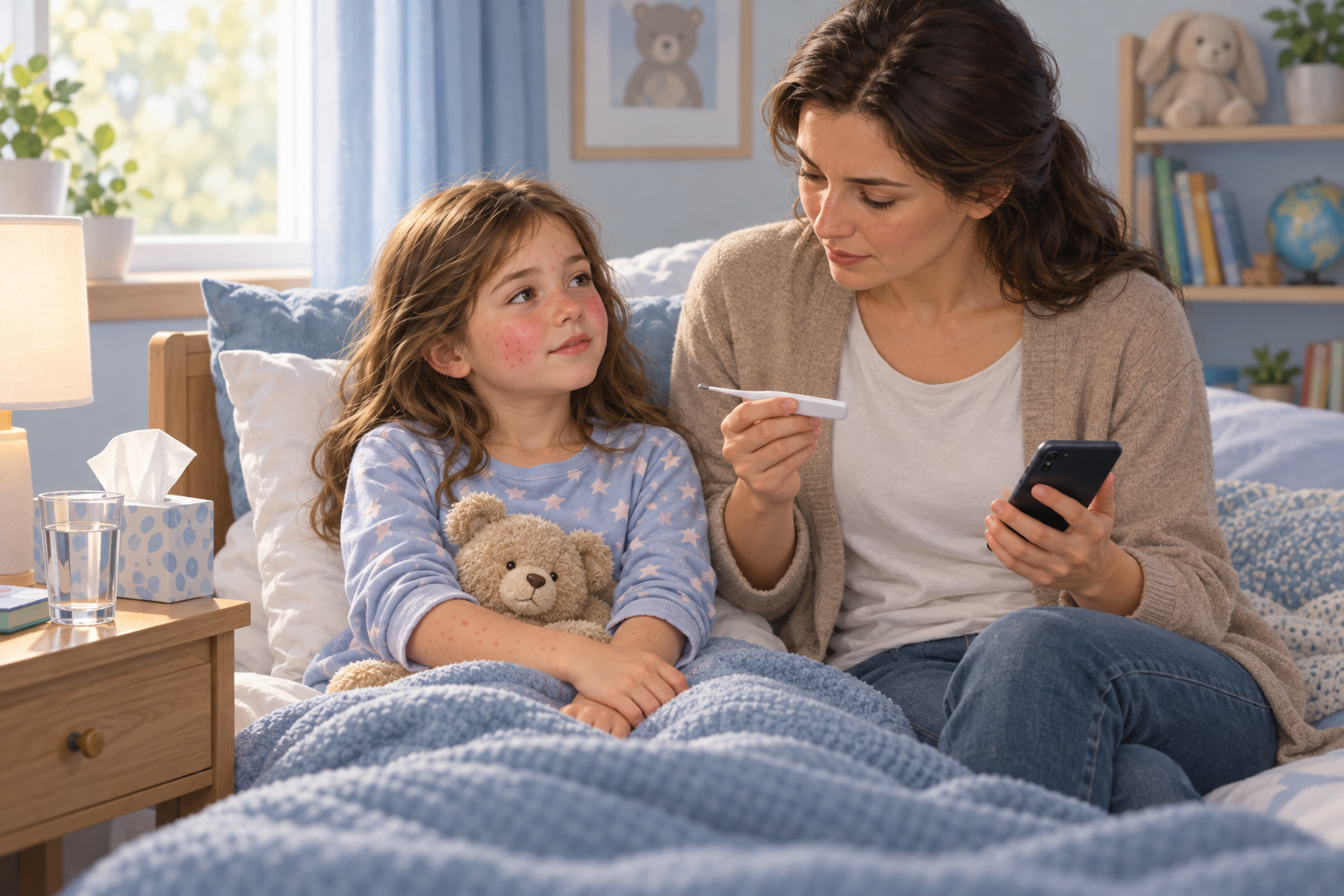
Possible measles symptoms include fever, cough, a runny nose, red or watery eyes, and a rash. Not every fever or rash is measles. The combination matters more when your child has a known exposure, recent travel, or incomplete protection.
If those symptoms appear after a possible exposure, keep your child away from other people and call the pediatric clinician immediately. Tell the person answering the phone about the exposure, symptoms, vaccination status, and when each symptom began. Ask exactly where to go if an examination or test is needed.
A young infant with a fever needs prompt clinical guidance even if no rash is visible. The urgency of fever assessment varies with age and the baby’s condition, so call rather than relying on a general temperature rule from the internet.
Seek emergency help for difficulty breathing, bluish or gray lips or skin, a seizure, severe dehydration, or a child who is unusually difficult to wake. Tell emergency dispatchers or the receiving facility about the possible measles exposure before arrival so they can prepare.
While you wait for professional instructions, do not give vitamin A, concentrated supplements, leftover medicine, or someone else’s prescription as a measles treatment. Vitamin A may be used under medical supervision in some measles cases, but it is not a substitute for vaccination and an incorrect dose can cause harm.
Measles questions parents of babies often ask

What can I do if my baby is too young for the routine MMR schedule?
Make sure eligible household members and regular caregivers have verified their own vaccination records. Ask your baby’s clinician for a plan before travel or if measles is circulating locally. Avoid contact with anyone who is ill, respond promptly to exposure alerts, and make sure every caregiver knows to call before taking the baby into a medical office after a possible exposure.
Does a vaccinated child still need to follow an exposure notice?
Yes. Vaccination provides important protection, but an official notice still deserves a call. Give the clinician or public-health team the child’s documented vaccination history and let them decide whether any monitoring, testing, or temporary change to childcare attendance is necessary. Do not self-clear a child based only on memory of a vaccine.
Should we stop going to every indoor public place?
A national case count alone does not require every family to withdraw from daily life. Use local exposure notices and advice from your child’s clinician to make targeted decisions. Vaccination records, destination-specific travel advice, and a rapid response to a real exposure will protect your family more effectively than trying to disinfect every surface or reacting to unverified posts.
Before you move on, spend ten minutes opening your child’s vaccination record, saving the pediatric office’s after-hours number, and sending the call-ahead plan to anyone who cares for your child. If an exposure occurs, you will already know whom to call and what information to provide.
References




